If you manage a commercial property, construction site, industrial facility, or parking lot in Nashville or anywhere across Middle Tennessee, stormwater runoff from your pavement is subject to federal and state environmental regulations that govern how pollutants reach Tennessee's waterways.
The National Pollutant Discharge Elimination System — NPDES — is the federal permit program that controls stormwater and wastewater discharges, and understanding how Tennessee's NPDES permit requirements affect property owners and sweeping contractors gives Davidson County businesses a concrete compliance framework for managing pavement maintenance responsibly.
What Tennessee's NPDES Permit Program Is and How It Works
The National Pollutant Discharge Elimination System is a federal permit program administered under the Clean Water Act that requires facilities and operators who discharge pollutants into the waters of the United States to obtain permits governing those discharges.
In Tennessee, NPDES permits are administered by the Tennessee Department of Environment and Conservation — TDEC — which issues permits, conducts inspections, and enforces compliance with state and federal stormwater requirements across Davidson County and the broader Middle Tennessee region.
Tennessee's NPDES program covers two primary permit categories relevant to Nashville property owners and sweeping contractors. Individual NPDES permits are facility-specific permits issued to high-volume dischargers including industrial facilities, municipal separate storm sewer systems, and construction sites above a certain acreage threshold. General permits — including Tennessee's Construction General Permit and its Multi-Sector General Permit for industrial stormwater — cover categories of similar dischargers under a single permit framework that requires permit coverage through a Notice of Intent filing rather than an individual permit application.
The
TDEC's NPDES permit program resources publish the complete Tennessee NPDES permitting framework, coverage requirements, and Notice of Intent filing procedures that Nashville and Davidson County property owners and contractors can reference when evaluating their permit obligations.
How NPDES Requirements Apply to Nashville Construction Sites
Construction site stormwater is one of the most significant NPDES compliance categories for Nashville and Middle Tennessee property owners and their contractors. Tennessee's Construction General Permit requires operators of construction activities that disturb one or more acres of land to obtain permit coverage and implement a Stormwater Pollution Prevention Plan that controls sediment and other pollutants from leaving the site through stormwater runoff.For Nashville construction site managers, understanding how sweeping connects to NPDES compliance gives context to what might otherwise seem like routine pavement maintenance.
Construction sites generate significant quantities of sediment, concrete washout, construction debris, and other materials that stormwater can carry into storm drains and ultimately into Cumberland River tributaries if not managed through effective controls. Regular sweeping of construction site access points, haul roads, and surrounding pavement removes accumulated sediment and debris before rainfall events mobilize those materials into the stormwater system — a concrete operational practice that supports the sediment control requirements that Tennessee's Construction General Permit mandates.
The Tennessee's Construction General Permit stormwater resources document the specific Stormwater Pollution Prevention Plan requirements and best management practice standards that Nashville construction operators must implement to maintain permit compliance.
.jpg)
What NPDES Requirements Mean for Industrial and Commercial Properties in Nashville
Beyond construction sites, Nashville's industrial facilities, commercial properties, and parking lots face their own stormwater compliance landscape under Tennessee's NPDES program. Understanding how the Multi-Sector General Permit and Nashville's Phase II MS4 permit affect commercial and industrial property owners helps Davidson County businesses recognize where professional sweeping supports their compliance obligations.
Tennessee's Multi-Sector General Permit covers industrial facilities whose operations create stormwater exposure to pollutants — including vehicle maintenance facilities, construction material suppliers, scrap metal operations, and other industrial categories whose outdoor operations can contribute pollutants to stormwater runoff. Facilities covered under the Multi-Sector General Permit must implement stormwater best management practices, conduct routine facility inspections, and maintain records documenting their stormwater management activities.
Nashville's Phase II MS4 permit governs stormwater discharges from the city's municipal separate storm sewer system and includes requirements that affect commercial property owners whose parking lots and impervious surfaces drain to Nashville's storm sewer network.
Parking lot sweeping removes oil, grease, heavy metals, and debris from pavement surfaces before rainfall carries those materials into storm drains — a best management practice that directly supports both facility-level NPDES compliance and Nashville's broader MS4 permit commitments. The
EPA's NPDES stormwater program resources for commercial and industrial facilities document the federal framework that underlies Tennessee's stormwater permit requirements for Nashville industrial and commercial property operators.
What Nashville Property Owners Should Ask About Sweeping and NPDES Compliance
Understanding Tennessee's NPDES permit requirements gives Nashville and Middle Tennessee property owners specific questions to ask any sweeping contractor before establishing a service relationship. These questions establish whether the contractor understands the compliance context their work supports and whether their service approach aligns with your property's stormwater management obligations:
• Does the sweeping contractor understand your property's specific NPDES permit category — whether construction general permit, multi-sector general permit, or MS4-related requirements — and can they explain how their service supports your compliance documentation needs?
• Does the contractor provide service records that document sweeping dates, areas covered, and materials removed — creating the paper trail that NPDES permit compliance and Stormwater Pollution Prevention Plan documentation may require?
• For construction sites, does the contractor offer flexible scheduling that responds to changing site conditions, including post-storm cleanup to address sediment tracked onto public roads by construction traffic?
• Does the contractor use equipment appropriate for the specific materials present on your site — including vacuum sweeping for fine sediment on construction sites and regenerative air sweeping for parking lot debris?
• Can the contractor provide references from comparable Nashville-area properties with similar NPDES compliance contexts — demonstrating experience with the stormwater management requirements your property faces?
A Nashville sweeping contractor who understands NPDES compliance requirements and provides documentation that supports your permit obligations is one delivering value beyond basic pavement cleanliness. The
TDEC's stormwater best management practices resources document the Tennessee-specific best management practice standards that Nashville and Davidson County property owners can reference when evaluating any sweeping contractor's compliance-oriented service approach.
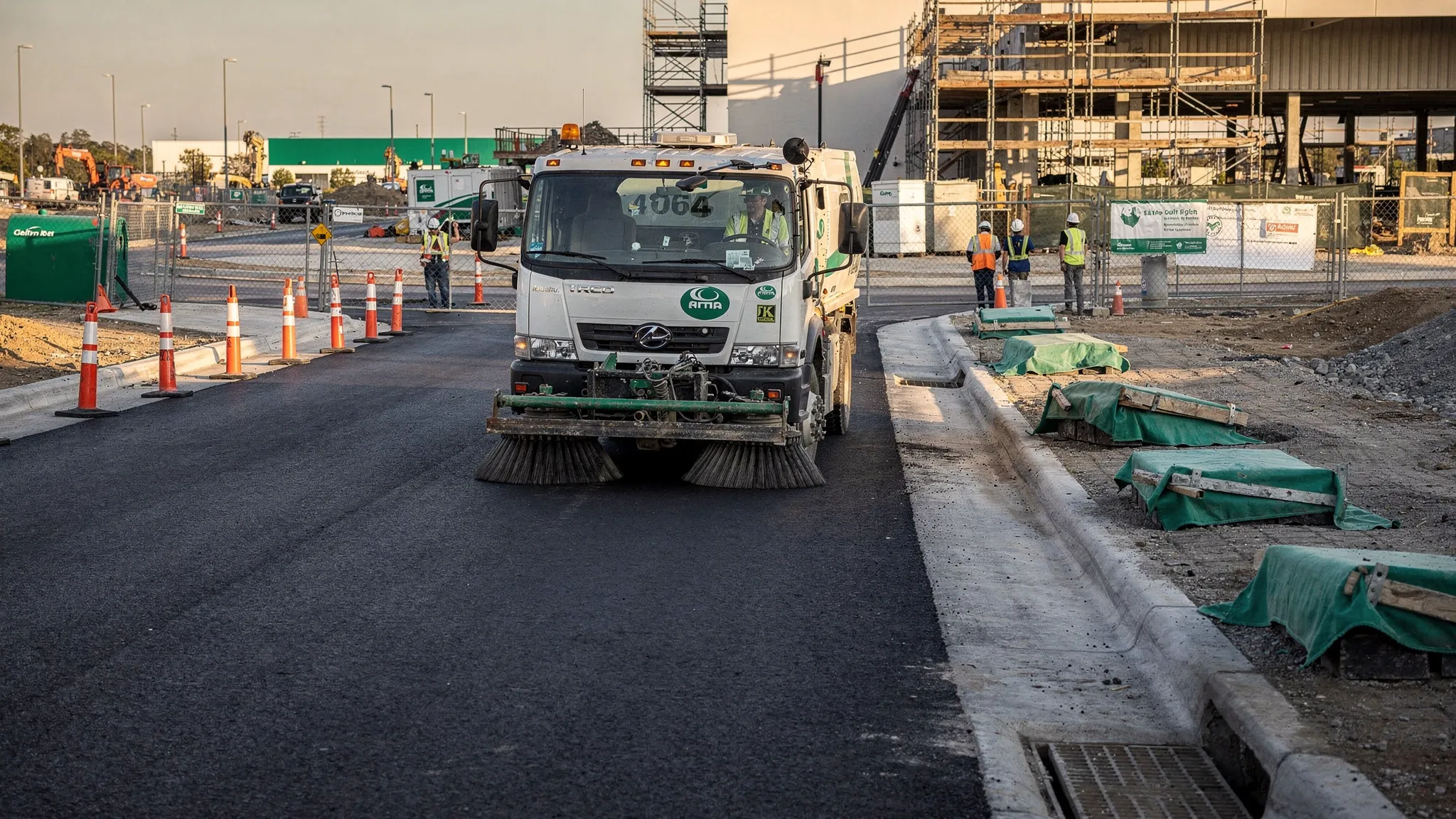
Nashville Street Sweeping Built for Compliance, Cleanliness, and Site Accountability
Understanding Tennessee's NPDES permit requirements gives Nashville and Middle Tennessee property owners a concrete environmental compliance framework for evaluating any sweeping contractor — one that connects regular pavement maintenance directly to the stormwater management obligations that protect Davidson County's waterways and your property's permit standing.
Reliable Sweepers serves Franklin, Brentwood, Hendersonville, Antioch,
Madison, Hermitage, Mount Juliet, La Vergne, Smyrna, and surrounding Middle Tennessee communities with professional sweeping for commercial properties, construction sites, industrial facilities, and municipal roads.
Whether you need
asphalt paving cleanup,
industrial and warehouse sweeping, or
construction site sweeping that keeps your site compliant and your surrounding pavement clean, our team delivers reliable service and site accountability across Middle Tennessee.
Contact Reliable Sweepers for a custom quote and find out what professional sweeping looks like for your Nashville property.

