
Environmental compliance on a construction site is not just a paperwork issue. It is the difference between a smooth schedule and a job that gets slowed down by neighbor complaints, failed inspections, tracked mud on public roads, clogged inlets, or rework after a rain event.
For construction cleanup, “environmental compliance” usually boils down to controlling what leaves your site, especially sediment, debris, and dust, and proving you did it consistently. This guide covers the environmental compliance basics to help Nashville and Middle Tennessee project teams build a simple, repeatable cleanup approach that supports stormwater requirements, keeps roads clear, and reduces risk.
(General note: This is practical information, not legal advice. Always follow your project’s permit conditions, SWPPP, and any local requirements.)
Construction cleanup often gets treated as appearance and safety only. In reality, cleanup is one of your most visible environmental controls. Most compliance issues tied to “messy sites” fall into a few buckets:
If you want a field-ready “why,” here it is: sediment is one of the most common pollutants from construction activity, and it is also one of the easiest to spot during inspections because it shows up in gutters, inlets, and downstream puddles.
In the U.S., construction stormwater is regulated under the Clean Water Act through the NPDES stormwater program. Many projects must operate under a Construction General Permit (CGP) or an approved state equivalent and follow a Stormwater Pollution Prevention Plan (SWPPP).
In Tennessee, stormwater permitting is administered by the state (TDEC). If your project is in Middle Tennessee, you should confirm the exact permit coverage and local program requirements that apply to your site.
Even when inspection checklists vary by project, most enforcement and “owner walk” problems trace back to a handful of visible misses:
Cleanup is the maintenance piece. Controls fail when nobody owns the daily and post-weather work.
A simple way to explain stormwater compliance to a field team is this:
Street sweeping and track-out removal are often the first corrective action when sediment shows up in the wrong place because it is immediate, measurable, and visible.
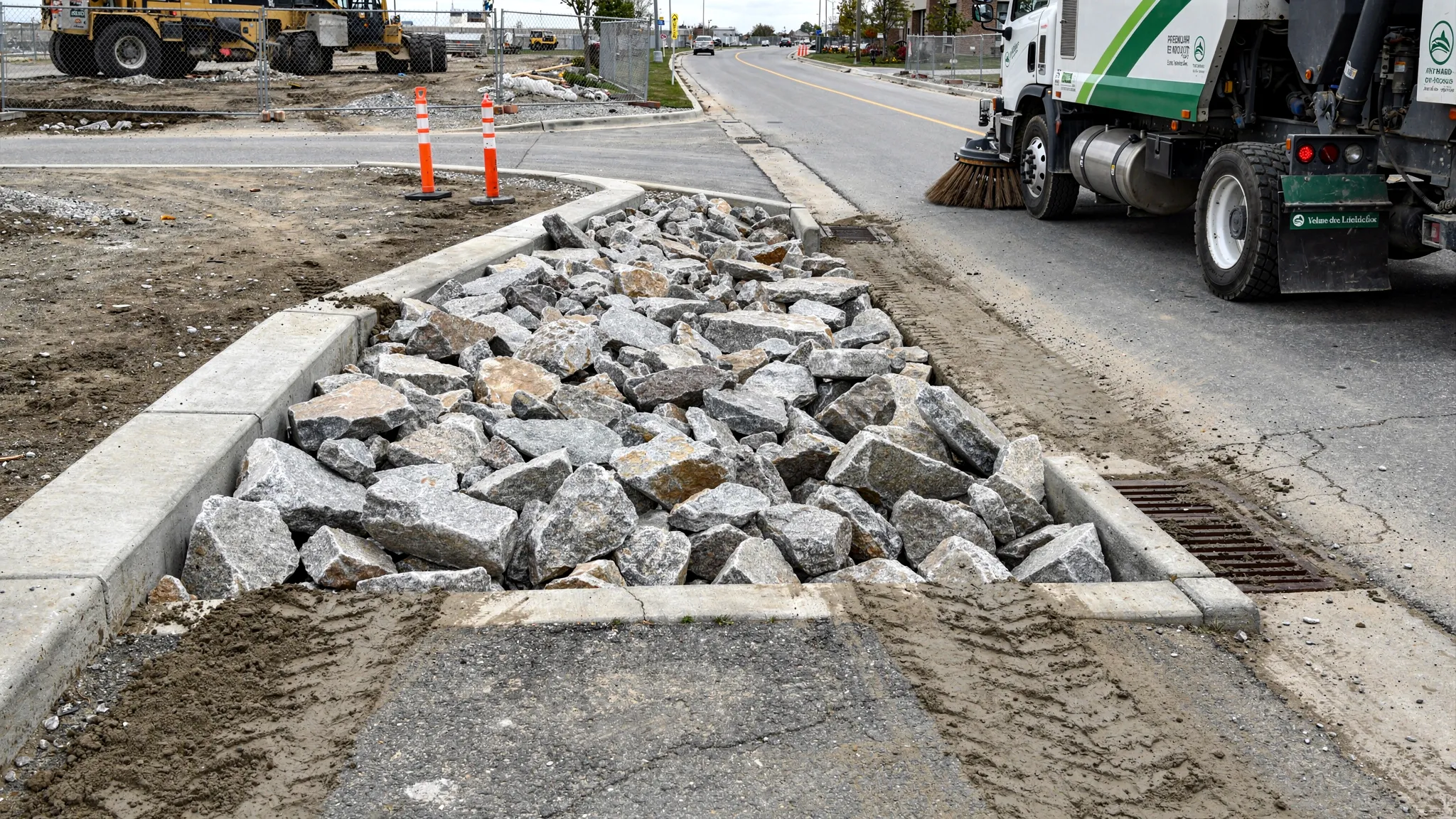
Track-out is more than an appearance problem. Mud and aggregate on public roads can:
Most track-out comes from predictable site conditions:
If you want an operations-friendly cadence, use triggers instead of guessing.
If you are building a repeatable “client-ready” system (not just a one-time cleanup), this pairs well with a structured approach like Contractors Cleaning: Keeping Job Sites Client-Ready.
Dust is often treated like a comfort issue until it becomes a complaint, a visibility problem, or a housekeeping hazard. From an environmental standpoint, dust is tied to particulate pollution. The EPA’s overview of particulate matter is helpful background: Particulate Matter (PM) Basics.
On active construction sites, the dust-control goal is straightforward: reduce generation, reduce tracking, and clean what accumulates.
A key field lesson: if you only spray water but never remove accumulated fines from pavement, the next rain can move that sediment straight to the drain. Sweeping closes the loop.
Some of the highest-risk “construction mess” issues are material-specific because they move differently and leave obvious evidence.
Concrete residue becomes a major problem when it is allowed to flow across pavement or toward inlets. Your SWPPP (or project requirements) typically defines how washout must be handled.
Construction cleanup best practice is to treat concrete byproducts as a “contain and remove” task:
Asphalt and paving phases often generate loose rock, tack overspray, and debris along curb lines and transitions. Loose aggregate is also a traffic hazard.
Timing matters here: cleanup right after paving activities reduces rework and prevents material from being ground into the surface or washed into drainage.
Metal fragments are a safety issue, but also a cleanup and liability issue, especially around:
This is where magnet sweeping is commonly used as a targeted control during active construction and again before turnover.
“Trash” violations are rarely about a single cup. They are about patterns: unsecured dumpsters, overflow, windblown packaging, and staging areas with no daily reset.
A compliance-friendly debris plan is simple:
If your site regularly gets hit by wind, you can also plan “wind day” checks the way you plan rain-event checks.
Environmental compliance is partly performance and partly proof. When something goes wrong (a complaint, a surprise inspection, a question from an owner’s rep), documentation prevents arguments.
You do not need a complicated system. A lightweight approach usually works:
If you outsource sweeping, ask for visit confirmation and photo documentation when it makes sense for your project.
If you are building a plan from scratch, focus on repeatability. You want something a superintendent can actually run, not a perfect binder that gets ignored.
Most sites have the same few locations that create 80 percent of the problems:
A schedule helps, but triggers keep you compliant when the project changes week to week.
Use triggers such as:
The difference between “we try to keep it clean” and “we stay compliant” is ownership.
Decide:
For teams that want a structured turnover sequence, Reliable Sweepers’ guide on Construction Clean Up: A Step-by-Step Site Turnover Guide can help you map the final phases. This article is focused on the compliance basics that apply throughout the build.
In-house labor can handle some cleanup, but environmental compliance often fails at the edges: curb lines, inlets, and track-out that reappears daily.
Consider bringing in a professional sweeper when:
If you are vetting providers, this checklist can help you compare options: Street Sweeping Companies Near Me: What to Ask Before Hiring.
For a clearer picture of scope and expectations, see: Cleanup Services for Commercial Sites: What to Expect.
Is street sweeping actually part of environmental compliance on construction sites? Often, yes. Sweeping helps control sediment and debris that can otherwise enter storm drains, and it is a common corrective action when track-out shows up on public roads.
What is the difference between SWPPP maintenance and construction cleanup? SWPPP maintenance focuses on keeping stormwater BMPs effective (like inlet protection and perimeter controls). Construction cleanup is the day-to-day removal of sediment, debris, and track-out that can undermine those controls. They overlap in practice.
How often should we sweep during active construction? It depends on hauling intensity, weather, and site layout. Many projects use trigger-based sweeping, such as after rain, after heavy hauling, and before inspections, plus a baseline cadence for perimeter roads.
Does dust control count as environmental compliance? It can. Dust affects air quality and can lead to complaints or project requirements for fugitive dust control. Practically, dust control is also tied to stormwater because settled dust becomes sediment when it rains.
What areas should we document to prove cleanup and compliance? Entrances/exits, curb lines and gutters, inlets near the site, dumpster areas, and any recurring hot spots. Before/after photos plus a simple service log are usually enough to support conversations with owners and inspectors.
Can a sweeping contractor help with emergency response? Many can, especially for sudden track-out, storm debris, or urgent cleanup ahead of inspections. Confirm response windows and scheduling flexibility before you need it.
Reliable Sweepers provides construction site sweeping, magnet sweeping for debris, dust and mud control, asphalt paving cleanup, and emergency response across Middle Tennessee. If you want help building a compliance-friendly sweeping plan around your project’s real triggers, visit Reliable Sweepers and request a quote or site walkthrough.
