
Searching “street sweeping companies near me” usually happens for one of two reasons: you have an upcoming inspection, or you are tired of reacting to track-out, debris, and complaints after they happen. Either way, the fastest path to a clean, compliant site is hiring a provider who can match your debris type, schedule, and documentation needs, not just show up with a sweeper.
Below is a practical set of questions you can use on calls, during a site walk, and when comparing bids. It is written for property managers, facility teams, and contractors in and around Nashville and Middle Tennessee.
You will get more accurate quotes and fewer change orders if you can answer these basics up front:
If you want a deeper primer on what a typical visit includes (and what it usually does not), this overview is helpful: Cleanup services for commercial sites: what to expect.
You are not buying “a truck for an hour.” You are buying an outcome.
Ask how they define a clean pass, for example:
A solid provider will translate your standards into a clear scope and confirm limitations (for example, sweeping is not the same as stain removal or pavement repair).
Different sweepers excel at different debris and surfaces. Ask what type of sweeper they plan to use and how they decide.
Good follow-ups:
If you want a plain-English explanation of how sweepers work and where they struggle, read: Street sweepers: how they keep lots clean and compliant.
For many sites, the biggest risk is not just appearance, it is sediment reaching storm drains. In construction and industrial settings, sweeping often supports your stormwater plan.
Ask:
For general reference, the EPA’s construction stormwater resources explain why sediment control matters and how it ties to permits: EPA construction stormwater.
This is where “near me” providers can vary wildly. Two bids can look similar but produce very different outcomes.
Ask what is included for your site:
For a deeper breakdown of pricing drivers and scheduling strategies, see: Street sweeping services: pricing, schedules, and results.
Street sweeping has moving equipment, blind spots, and interactions with public traffic, tenants, and job-site operations.
Ask:
A professional provider will ask you questions too, especially about access and hazards.
Do not skip this. Ask for a certificate of insurance (COI) that matches your requirements.
Minimum questions:
(Insurance needs vary by site and contract, so align this with your internal requirements.)
The best sweeping plans are the ones that actually happen on time.
Ask:
If your property has frequent “sweep now” triggers, this guide can help you set an effective cadence: Parking lot sweeping services: when and how often to sweep.
Construction sweeping is not just cleanup, it is schedule protection.
Ask:
If you are approaching turnover, these resources are more specific than a generic “near me” checklist:
You are balancing curb appeal, safety, and tenant operations.
Ask:
Industrial sites often have heavier debris, more tracking, and wider operational constraints.
Ask:
Neighborhood sweeping can be seasonal and event-driven.
Ask:
You do not need a perfect vendor, but you should avoid predictable problems.
Watch for:
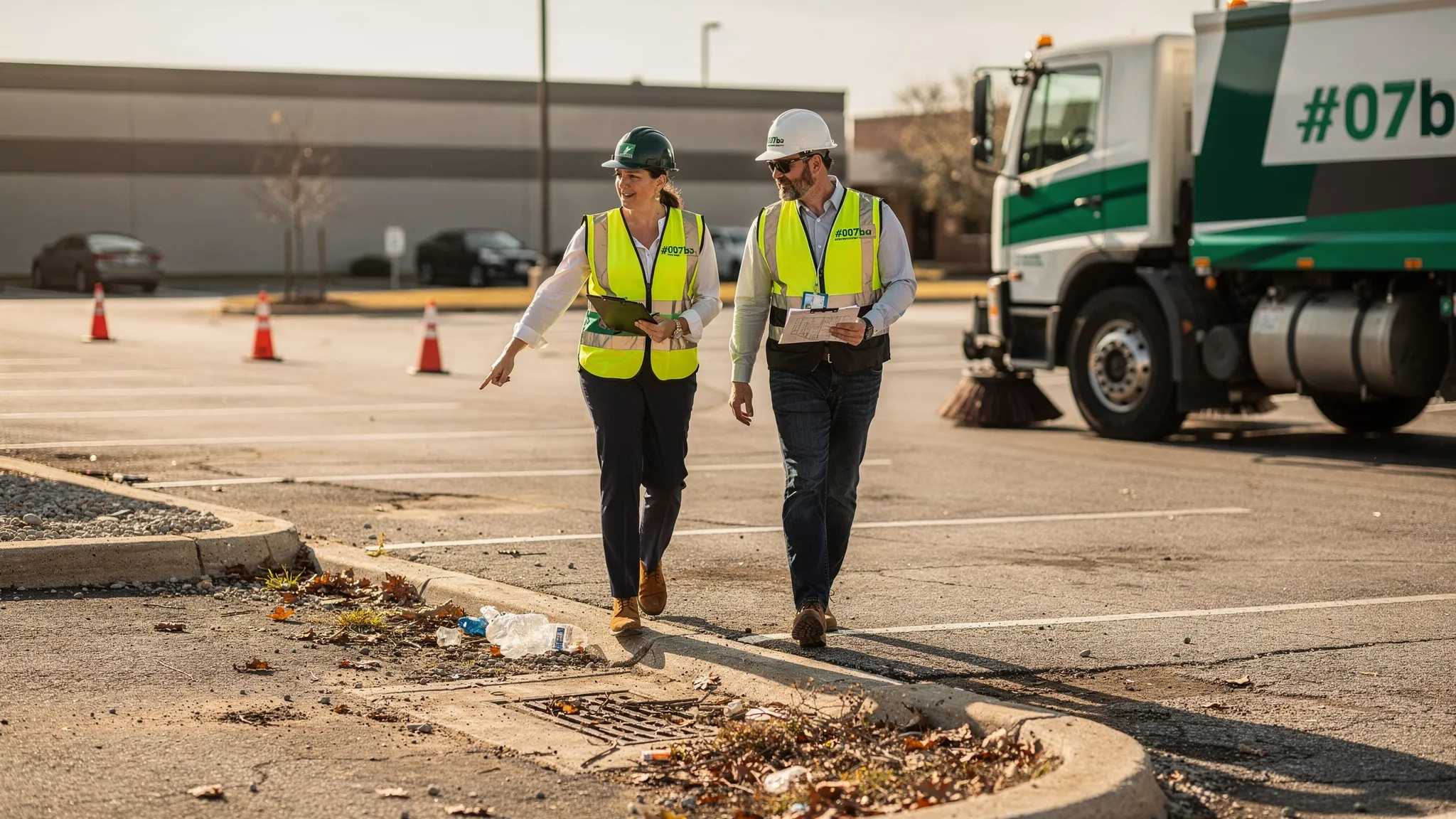
When you receive proposals, compare them using the same three buckets:
Price matters, but it is rarely the only cost driver. The expensive option is often the one that requires repeat visits, triggers complaints, or risks noncompliance.
How often should I schedule street sweeping? The right frequency depends on traffic, debris load, trees/seasonality, nearby construction, and your appearance or compliance standards. Many properties start with a baseline cadence, then add event-based sweeps after storms, heavy deliveries, or track-out.
What should a street sweeping quote include? A useful quote clearly states areas covered, frequency, equipment approach, what is included (curb lines, entrances, magnet sweeping if applicable), disposal terms, scheduling windows, and any add-on rates.
Do I need magnet sweeping? If your site has construction activity, roofing work, pallet banding, or frequent metal debris (nails, screws, wire), magnet sweeping can reduce tire damage risk and improve turnover readiness.
Can a street sweeper clean oil stains or spills? Sweeping removes loose debris and sediment, but it typically will not remove set-in oil stains or fully remediate spills. Ask your provider what they recommend for your specific surface and spill type.
How do I know a sweeping company is truly local and responsive? Ask where their equipment and operators are staged, typical response times in your area, and how they handle urgent add-on visits. Local presence often shows up in faster scheduling and better familiarity with common site conditions.
If you are evaluating street sweeping companies near you in Middle Tennessee, Reliable Sweepers can help you scope the right approach for your property, whether you need routine sweeping, construction support, magnet sweeping, dust and mud control, or emergency response.
Learn more about services and request a quote at Reliable Sweepers.
