
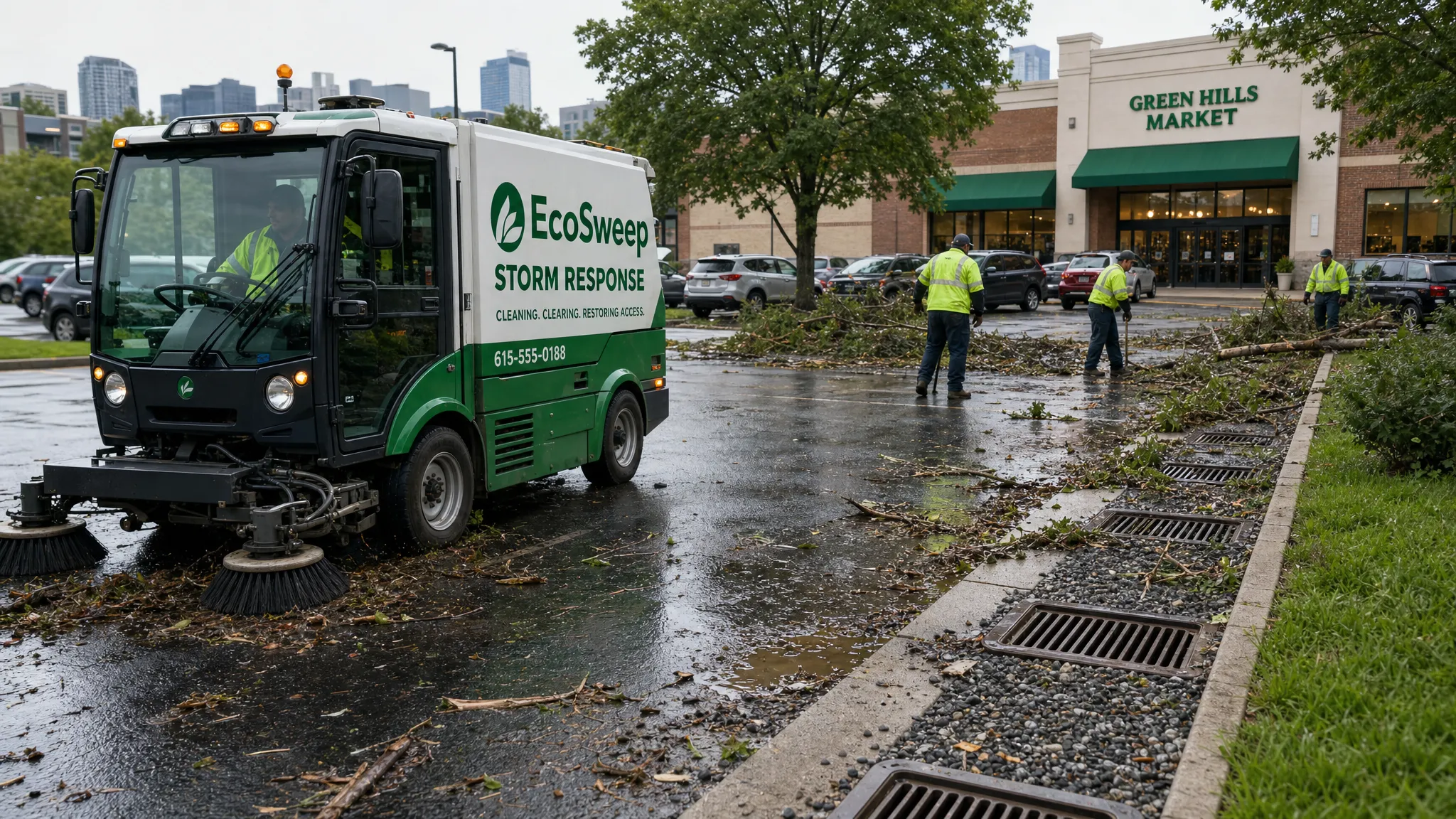
Storms move fast in Middle Tennessee. One hour your parking lot is open and orderly, and the next it is covered with branches, mud, loose gravel, trash, leaves, and sediment pushed into every curb line. For property managers, facility teams, contractors, and HOA boards, the question is not just how the lot looks after the rain. It is whether customers can enter safely, storm drains can function, and debris will spread onto nearby streets.
Emergency cleanup after storms in Nashville parking lots works best when it follows a simple priority order: make the site safe, protect drainage, remove debris before it migrates, then document the result. A rushed cleanup that only clears the center drive lanes may look acceptable from a distance, but it can leave the highest-risk areas untouched.
Nashville storms can drop heavy rain quickly, and parking lots are designed to move that water toward curb lines, gutters, inlets, and low points. That means the same areas that manage drainage also become collection zones for sediment, mulch, leaves, litter, and construction track-out.
Middle Tennessee clay soil adds another challenge. Dry dust can turn into slick mud, then harden into packed sediment once the sun returns. If that material sits along curb lines or near storm drains, the next rain can carry it farther into the drainage system or spread it back across drive lanes.
Storm debris also creates operational problems. A retail center may need entrances cleared before morning traffic. A medical office may need ADA routes opened immediately. A contractor may need track-out removed before an inspection or before complaints start coming in. A multifamily or HOA parking area may need fast cleanup to prevent residents from driving over branches, screws, gravel, or pooled sediment.
That is why storm cleanup should be treated as a response plan, not a random sweep after the weather clears.
Before any sweeping or debris removal begins, the site should be checked for hazards that require special handling. Not every storm mess is safe for a sweeper or maintenance crew to approach immediately.
Start with a quick triage pass from a safe location. Look for downed power lines, unstable tree limbs, floodwater, chemical spills, broken glass, sharp debris, damaged light poles, loose signage, and blocked fire lanes. If any hazard involves utilities, hazardous materials, or unsafe water depth, the cleanup should pause until the right authority or qualified specialist addresses it.
For routine storm debris, sort the lot into three priority levels:
This sequence keeps the response focused. It also helps teams avoid spending time on low-risk cosmetic cleanup while a blocked inlet or muddy entrance continues creating problems.
After a storm, the center of the parking lot usually gets attention first because it is the most visible. The bigger issues often sit at the edges.
Curb lines collect sediment, leaves, cigarette waste, mulch, and trash. If those materials are not removed, they can keep washing back into the lot. Storm drain inlets collect everything moving downhill, which makes them a key inspection point after heavy rain. Entrances and exits can collect mud from adjacent roads, construction traffic, or landscaped edges. Loading docks and dumpster pads can trap wind-blown trash, pallet fragments, and organic debris.
Parking garages and covered decks need attention too. Water and debris can move down ramps, collect at drains, or create slick areas near pedestrian routes. If your property includes a garage, coordinate the lot cleanup with garage entrances and ramp areas so debris is not tracked from one zone into the other.
For a deeper look at drainage-focused lot care, Reliable Sweepers has a related guide on parking lot cleaning that improves appearance and drainage.
The most effective cleanup order is usually dry-first. That means removing loose and recoverable material before using water. Rinsing too early can push sediment, trash, and pollutants toward storm drains, which creates more work and can raise stormwater concerns.
A practical sequence looks like this:
This approach reduces rework. It also helps protect stormwater systems, keeps debris from migrating off-site, and gives property teams a cleaner result that lasts beyond the first dry day.
In-house maintenance teams can handle small branches, isolated litter, and light touch-up work. Professional help becomes more valuable when the debris is widespread, when access is time-sensitive, or when the lot has drainage and compliance exposure.
Call a professional sweeping crew when mud or sediment covers drive lanes, when curb lines are packed with debris, when storm drains are partially blocked, or when debris is affecting customer access. Professional support is also a good fit when a storm hits before an opening, inspection, tenant event, delivery window, paving schedule, or turnover deadline.
Storm cleanup on construction-adjacent properties often needs more than a basic pass. Track-out, gravel, fasteners, concrete dust, asphalt material, and mud can require mechanical sweeping, edge work, magnet sweeping, and dust or mud control. If the mess is urgent, use a response process like the one outlined in Reliable Sweepers’ emergency cleaning plan for exterior messes.
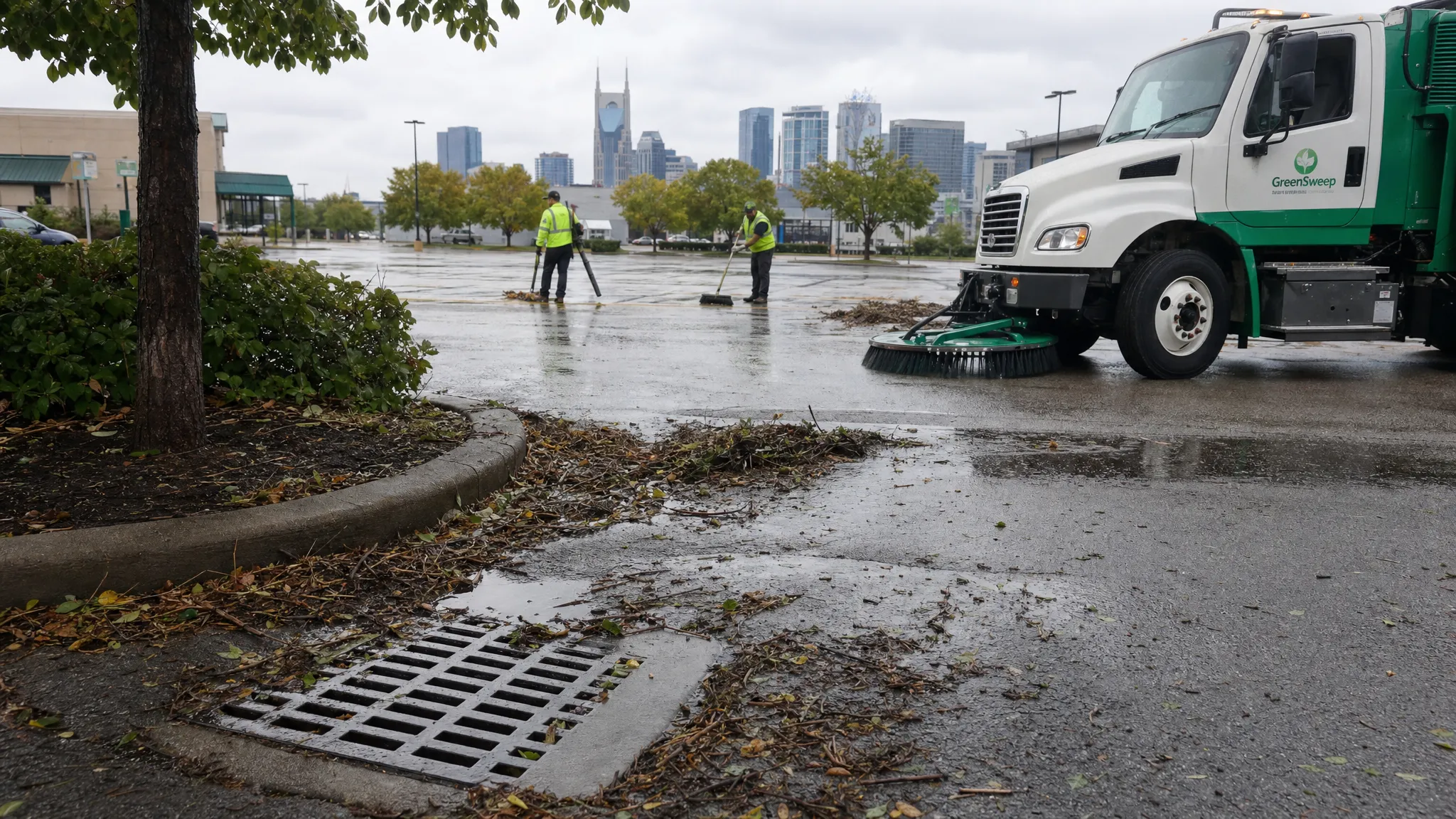
Storm drains are one of the most important parts of any parking lot cleanup after severe weather. If they are blocked, water can pond across drive lanes and pedestrian routes. If debris is pushed into them, the site may look cleaner while the drainage problem gets worse.
The best practice is to pull material away from inlet areas before sweeping the surrounding pavement. Remove leaves, mulch, gravel, sediment, and litter around the inlet opening. If there is standing water, identify whether it is caused by temporary blockage, heavy rainfall that has not drained yet, or a deeper drainage issue that needs repair.
Avoid blowing, sweeping, or rinsing debris directly into gutters or inlets. That may move the problem out of sight, but it does not remove it from the property’s drainage path. For properties with recurring runoff problems, a stormwater-friendly maintenance plan can reduce emergency calls over time. Reliable Sweepers covers those basics in its guide to Nashville environmental cleaning and stormwater-friendly cleanup.
A clean lot is important, but during a storm event, communication is part of the service outcome. Tenants, customers, residents, vendors, and ownership teams may all want updates, especially if entrances are blocked or parking areas are temporarily limited.
Property managers should keep messages simple. Confirm what happened, which areas are affected, when cleanup is expected, and whether any entrances or parking rows should be avoided. For multi-site operators or customer-facing brands with a high volume of inquiries, dedicated CX and managed support resources can help keep customer communication organized while local facilities teams focus on restoring safe access.
Documentation also matters. Take before and after photos of the highest-risk areas, including entrances, curb lines, drain inlets, ADA paths, dumpster pads, and any construction access points. Record the time of the storm, the time cleanup was requested, the areas serviced, and any areas that were inaccessible due to parked vehicles, flooding, utilities, or safety concerns.
This creates a useful record for ownership, tenants, insurance discussions, vendor accountability, and future planning.
The best emergency cleanup plans are written before the weather turns. A simple playbook helps managers act quickly, even when storms hit after hours or during a busy operating day.
Your storm response playbook should identify the property’s highest-priority zones, preferred access points for service crews, after-hours contact information, gate or lockbox instructions, and the conditions that trigger emergency sweeping. It should also define what good looks like after cleanup. For example, entrances open, drive lanes free of loose debris, curb lines cleared, drains visible, and pedestrian routes safe for normal use.
A baseline sweeping schedule can also reduce storm damage. Lots that are already packed with leaves, loose gravel, trash, or construction dust will perform worse when heavy rain arrives. Routine sweeping removes the fuel that storms use to create bigger messes.
For Nashville properties, a seasonal plan is especially useful because spring storms, summer dust, fall leaves, and winter grit all create different debris patterns. If you are updating your maintenance schedule, review this guide on parking lot sweeping in Nashville by season.
The faster a sweeping provider understands the site, the faster they can scope the response. A vague request like need lot cleaned is harder to act on than a request with zones, debris types, and access details.
Include the following when you request emergency cleanup:
Clear information helps a provider determine whether the response calls for mechanical sweeping, manual debris pickup, magnet sweeping, dust or mud control, or a combination of services.
Reliable Sweepers provides professional street sweeping and exterior property maintenance services across Nashville and Middle Tennessee. For storm-related parking lot cleanup, the work often includes parking lot sweeping, curb-line attention, debris removal support, dust and mud control, construction site cleanup, parking garage cleaning, magnet sweeping for metal debris, and emergency response services when conditions require quick action.
Because every storm affects properties differently, the right scope depends on site layout, debris type, drainage patterns, traffic needs, and timing. A retail lot with customer traffic needs a different plan than an industrial yard, HOA street, construction entrance, or mixed-use parking garage.
The goal is not just to make the lot look better. It is to restore access, reduce slip and trip risks, keep debris out of drainage paths, protect pavement, and help your property return to normal operations with less rework.
How soon should a parking lot be cleaned after a storm? As soon as it is safe to inspect and access the site. Entrances, fire lanes, ADA routes, and storm drains should be checked first. If debris is blocking access or drainage, emergency cleanup may be needed the same day.
Can my maintenance team handle storm cleanup without a sweeper? Yes, for small branches, light litter, and isolated touch-up work. Professional sweeping is usually better when mud, sediment, leaves, gravel, or construction debris is spread across drive lanes, curb lines, or drainage areas.
Should storm debris be power washed away? Not as a first step. Dry debris should be removed and captured before any wet cleaning. Rinsing too early can push sediment and pollutants into storm drains or spread debris across the lot.
When is magnet sweeping needed after a storm? Magnet sweeping is useful when storms affect construction areas, roofing work, fencing projects, industrial yards, or lots where nails, screws, wire, or metal fragments may be present. It helps reduce tire damage and puncture risks.
What areas of a Nashville parking lot should be inspected first? Start with entrances, exits, fire lanes, ADA parking, sidewalks, storm drain inlets, curb lines, loading docks, dumpster pads, and any construction access points. These areas usually carry the highest safety and drainage risk.
Storm debris can turn into a safety, drainage, and access problem quickly. If your Nashville parking lot needs emergency cleanup after heavy rain, wind, mud, or construction track-out, Reliable Sweepers can help you restore order with professional exterior sweeping and debris control services.
Contact Reliable Sweepers to request a site-specific cleanup plan or emergency response for your property in Nashville or across Middle Tennessee.