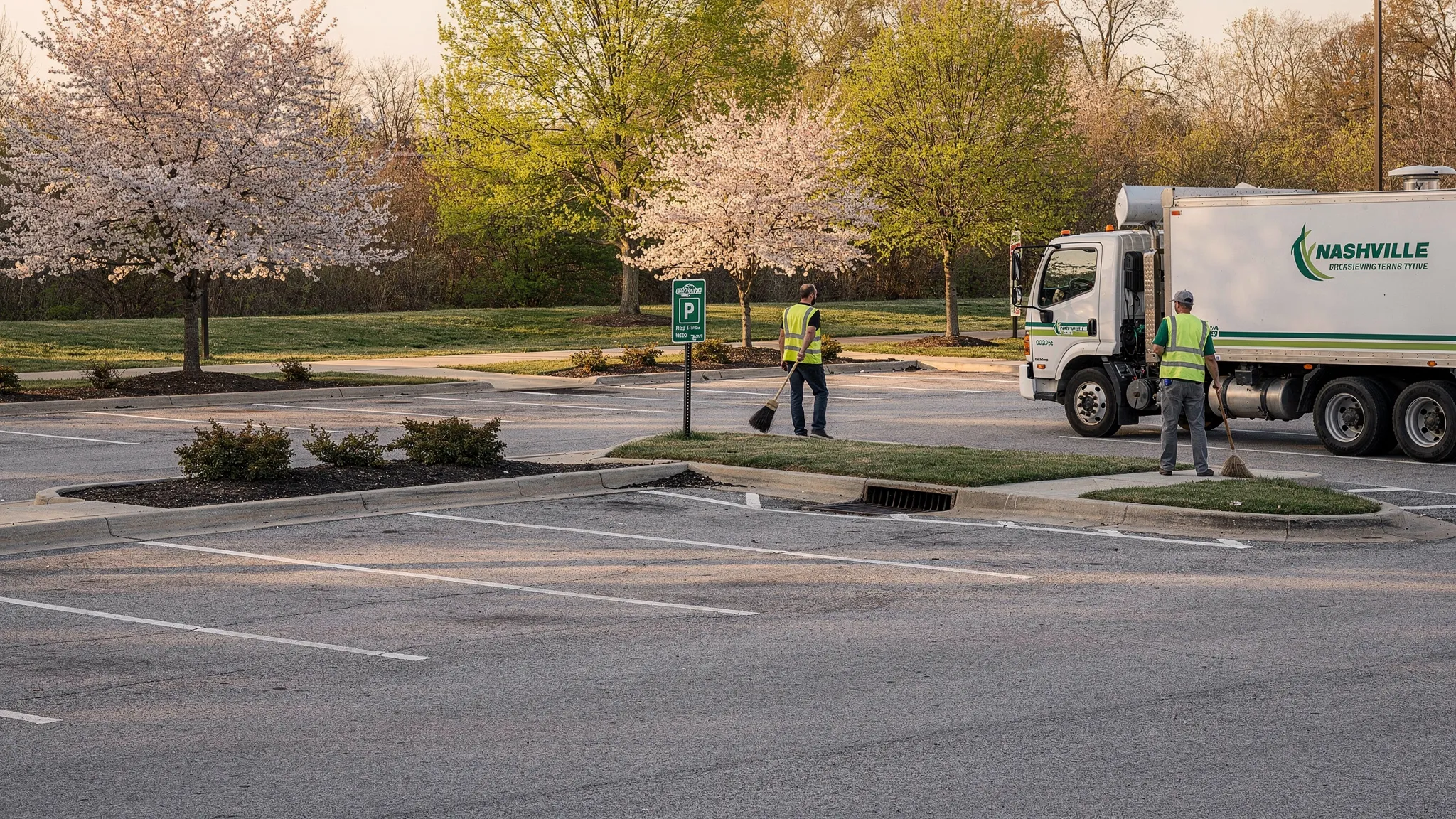
A parking lot in Nashville does not get dirty in a steady, predictable way. It gets hit in waves, spring pollen that turns into slick film after rain, summer storms that move sediment into curb lines, fall leaf drop that clogs drains, and winter grit that stays put until you physically remove it.
That is why the most cost-effective plan is rarely “every X weeks, forever.” A seasonal schedule keeps your property looking better, drains working, and slip and trip risks lower, without paying for unnecessary visits in low-debris months.
Below is a practical, field-tested seasonal approach to parking lot sweeping in Nashville, built around how Middle Tennessee conditions actually load your pavement.
If you only take one idea from this guide, make it this: build your plan with three layers.
Your baseline is the minimum frequency that keeps curb lines, entrances, and high-traffic lanes from accumulating visible debris between visits.
Baseline is driven by:
If you want a deeper framework for choosing baseline frequency by property type, see our related guide: Parking Lot Sweeping Services: When and How Often to Sweep.
Seasonal boosts are scheduled upsizes you plan in advance because you know they are coming, pollen season, leaf drop, storm season, and freeze-thaw grit.
Triggers are the moments when waiting for the next baseline visit costs you more in complaints, tracking, liability exposure, and drainage problems.
Common Nashville triggers:
For a broader, year-round property program view, this companion post can help you coordinate sweeping with other exterior maintenance: How to Maintain Clean Properties Year-Round in Tennessee.

Spring is the season that surprises managers who only plan for leaves. In Nashville, pollen can be heavy, and it does not just look bad. Mixed with light rain and vehicle traffic, it can turn into a thin film that:
Focus on the places where spring debris concentrates:
If drainage performance is one of your recurring issues, pair sweeping with a simple inlet and curb-line check. This guide explains what to look for: Parking Lot Cleaning: How to Improve Appearance and Drainage.
Summer in Middle Tennessee is less about leaves and more about weather. Thunderstorms can shift debris fast, especially on lots with slopes, construction-adjacent streets, or exposed soil nearby.
A key operational point: storms do not create debris, they relocate it. That relocation typically ends at:
If your property is near construction or you have vendor trucks cutting across unpaved areas, consider adding magnet sweeping periodically as well. Metal fragments are a summer problem because projects and repairs are active, and because visibility is lower when fines cover fasteners.
For more on safety and liability prevention tied to debris control, see: Sweep Safe: Simple Ways to Reduce Debris and Liability.
Sediment and debris are not only “messy.” They can contribute to stormwater pollution when material is carried into storm drains. The EPA’s stormwater program highlights controlling pollutants in runoff as a core goal of permitting and MS4 programs (EPA stormwater overview). Keeping lots free of loose debris is one of the simplest upstream controls.
Fall is the highest-risk season for drainage complaints in many Nashville properties, because organic debris loads spike quickly. Leaves, needles, and acorns are light enough to travel, then they mat together in curb lines and at grates.
This is also the season where a clean lot reduces tenant complaints the most, because the problem is obvious to every customer walking in.

Nashville winters are usually milder than farther north, but that can create a planning trap. Because snow events are less frequent, properties often skip winter sweeping entirely, then carry months of grit into spring.
Even without heavy snowfall, winter brings:
This is also a good season to plan a “deep edge reset” for lots that fight chronic curb-line buildup, because removing grit before spring rain helps prevent it from washing into inlets.
Instead of over-optimizing, aim for a plan your team will follow.
Checkpoint 1 (late February to early March): Set your spring baseline, schedule one spring reset, and identify where pollen and fines collect.
Checkpoint 2 (late August to early September): Plan your fall ramp-up, confirm who is responsible for inlet checks, and decide what counts as a trigger sweep during leaf drop.
If your current sweeping plan is “the whole lot, same detail everywhere,” you may be paying for low-impact areas while curb lines stay dirty.
A more effective seasonal scope calls out:
This zone approach is a consistent theme across our maintenance content because it improves outcomes without automatically increasing frequency. If you manage multiple exterior areas beyond the lot, this guide can help you set priorities: Commercial Building Cleaning: High-Traffic Areas to Prioritize.
You do not need a totally different seasonal plan for every site, but you should adjust the baseline and triggers.
Retail lots typically need the strongest combination of baseline plus triggers because:
Seasonal note: fall leaf drop plus holiday traffic is a common “double spike.” Plan for it.
These sites often do well with a steady baseline, plus spring pollen and fall leaf boosts.
Seasonal note: entrances and sidewalks matter as much as stalls. Sweeping is often most effective when paired with targeted walkway cleaning when needed.
These sites usually need:
Seasonal note: summer storm movement and winter grit can both create fine dust issues that travel indoors.
The difference between “we have a schedule” and “our lot stays clean” usually comes down to execution details.
If your site struggles with mud, dust, and fast-moving debris after weather or construction activity, this related resource goes deeper on removal methods and sequencing: Pavement Cleaning Services: Remove Mud, Dust, and Debris Fast.
A seasonal schedule works best when it reflects your actual “debris engines,” your traffic patterns, tree cover, nearby construction, and where water moves on the pavement.
Reliable Sweepers provides parking lot and garage cleaning, construction site sweeping, magnet sweeping for debris, dust and mud control, flexible scheduling, and emergency response across Middle Tennessee. If you want a seasonal sweeping schedule that your team can run month after month, start with a quick site walkthrough and a scope built around zones and triggers.
Learn more about our services at Reliable Sweepers.