If you manage a commercial property, “commercial building cleaning” is not just about looking good. The busiest parts of your site are where complaints start, slip and trip risks increase, and debris is most likely to reach storm drains. The good news is you do not need to clean everything at the same intensity. You need to prioritize the high-traffic zones that create outsized risk and visibility.
This guide focuses on exterior, high-traffic areas (entries, sidewalks, lots, docks, dumpster pads, and the routes between them). If you also manage interior janitorial, you can use the same prioritization logic, but Reliable Sweepers specializes in exterior sweeping and site cleanliness across Middle Tennessee.
High-traffic areas are where your property experiences the most friction:
When you are deciding where to spend time and budget, score each area using three questions:
Think entrances, drive lanes, crosswalks, loading zones, and garage ramps.
If people see it before they see anything else, it gets priority.
The consequence might be a fall risk, blocked drainage, tenant complaints, pest attraction, or track-out onto public roads.
If you want a repeatable system, pair this approach with your broader maintenance rhythm. Reliable Sweepers already covers planning cadence in their commercial property maintenance checklist. This article narrows in on the busiest zones and what “done” should look like.
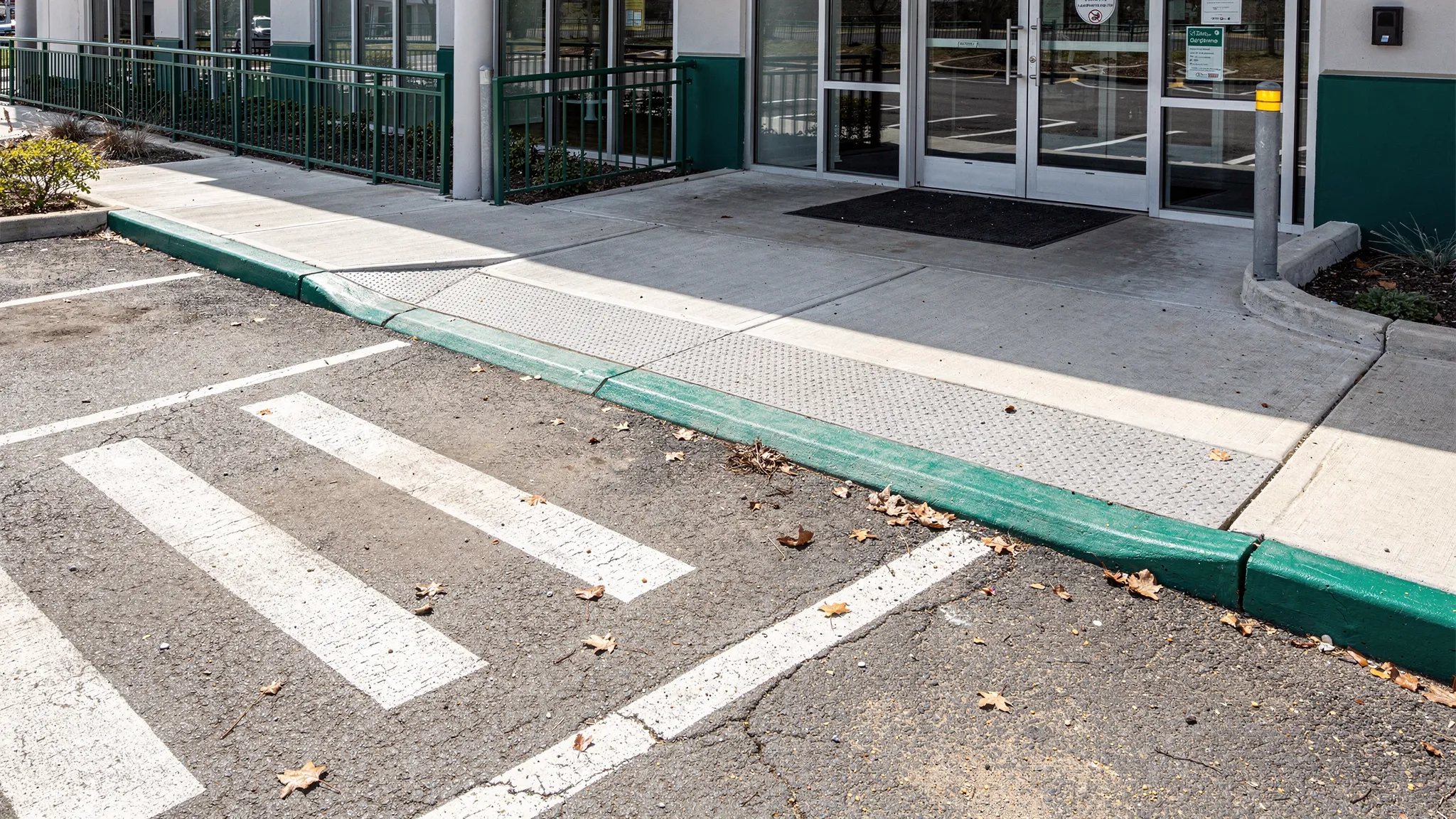
Why they matter: They are the highest-visibility area on most sites and often the first place slip hazards show up.
What to look for:
What “good” looks like: Walkways are clear, corners and edges are detailed, and there is no visible debris line where the sidewalk meets the curb.
Practical tip: Treat the entrance like a “front-of-house” zone. Even if the lot is on a weekly schedule, the entry may need touch-ups multiple times per week during peak seasons.
Why they matter: People do not walk the map in your site plan. They walk the shortest route. Those shortcuts concentrate grime and wear.
Common hotspots:
What “good” looks like: The full width of the walking path is clear, including edges, and corners do not accumulate debris piles that get kicked back into the path.
Why they matter: Transitions are where slips happen, and where small debris becomes a bigger problem (loose gravel underfoot, slick pollen film, wet leaves).
What to prioritize:
What “good” looks like: Ramps and landings are free of loose grit and leaf buildup, and paint markings remain visible.
Why they matter: Most debris does not settle in the middle of a stall. It migrates to the lanes and turns where tires push material outward.
What to look for:
What “good” looks like: Lanes are visibly clean and corners do not have piles that re-disperse with every pass of traffic.
If you are setting service frequency, Reliable Sweepers breaks down practical triggers in parking lot sweeping services: when and how often to sweep.
Why they matter: These stalls have constant turnover and foot traffic. They also collect small litter, broken glass, and fast-food debris.
What to prioritize:
What “good” looks like: No loose trash, no glass, and no debris clusters around wheel stops and curbs.
Why they matter: Curb lines are the “debris conveyor belt” of a property. Everything rolls, washes, or gets blown there.
What to look for:
What “good” looks like: The curb line is reset, meaning there is no continuous debris stripe and corners are detailed.
Why they matter: Even a clean-looking lot can fail you if the low points are clogged. Blocked inlets increase puddling, accelerate pavement deterioration, and move pollutants during the next storm.
What to prioritize:
What “good” looks like: Grates are visible, the perimeter around the inlet is not ringed with sediment, and water can flow freely.
For a deeper dive on how cleanliness ties to drainage, see parking lot cleaning: how to improve appearance and drainage.
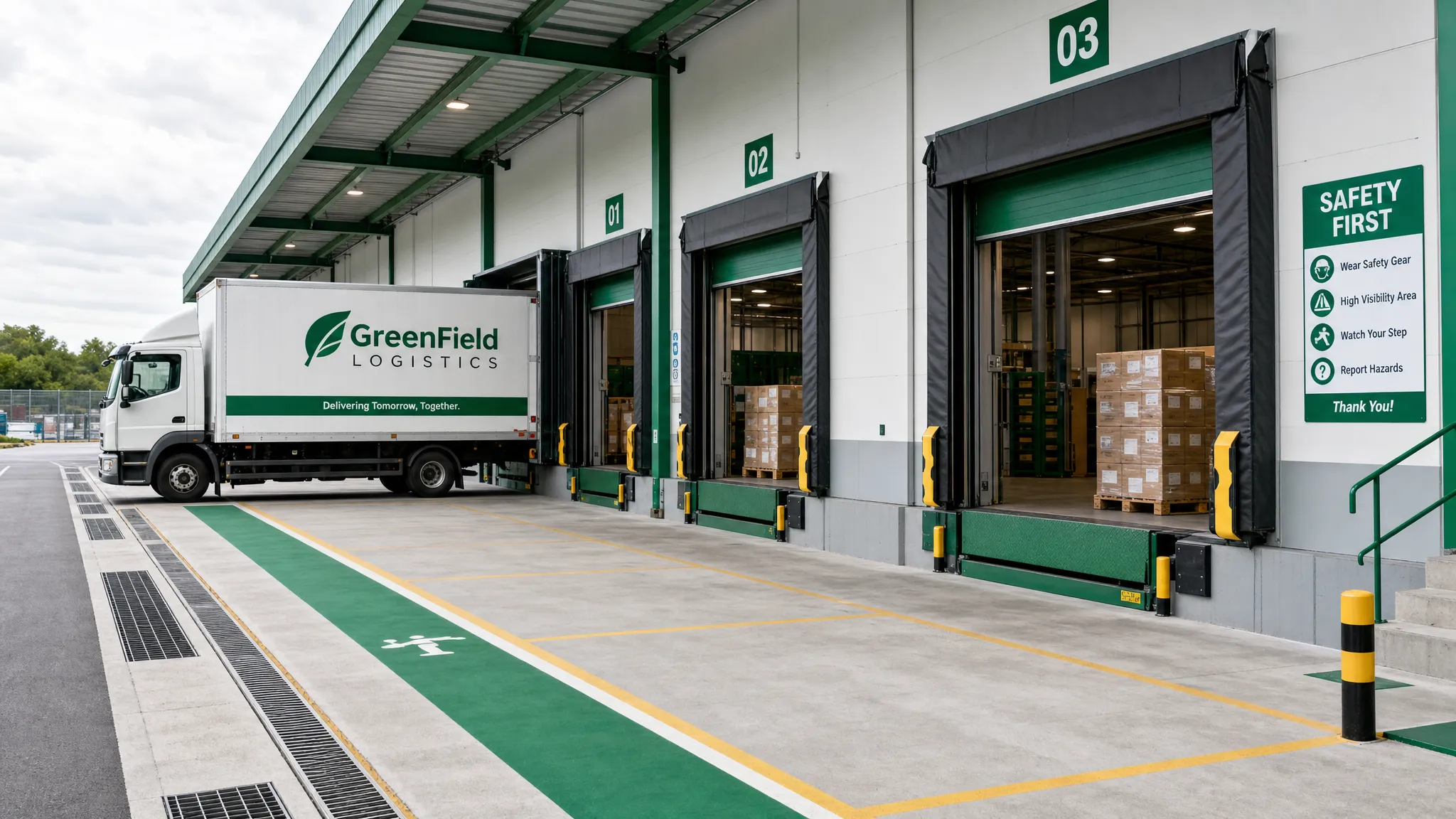
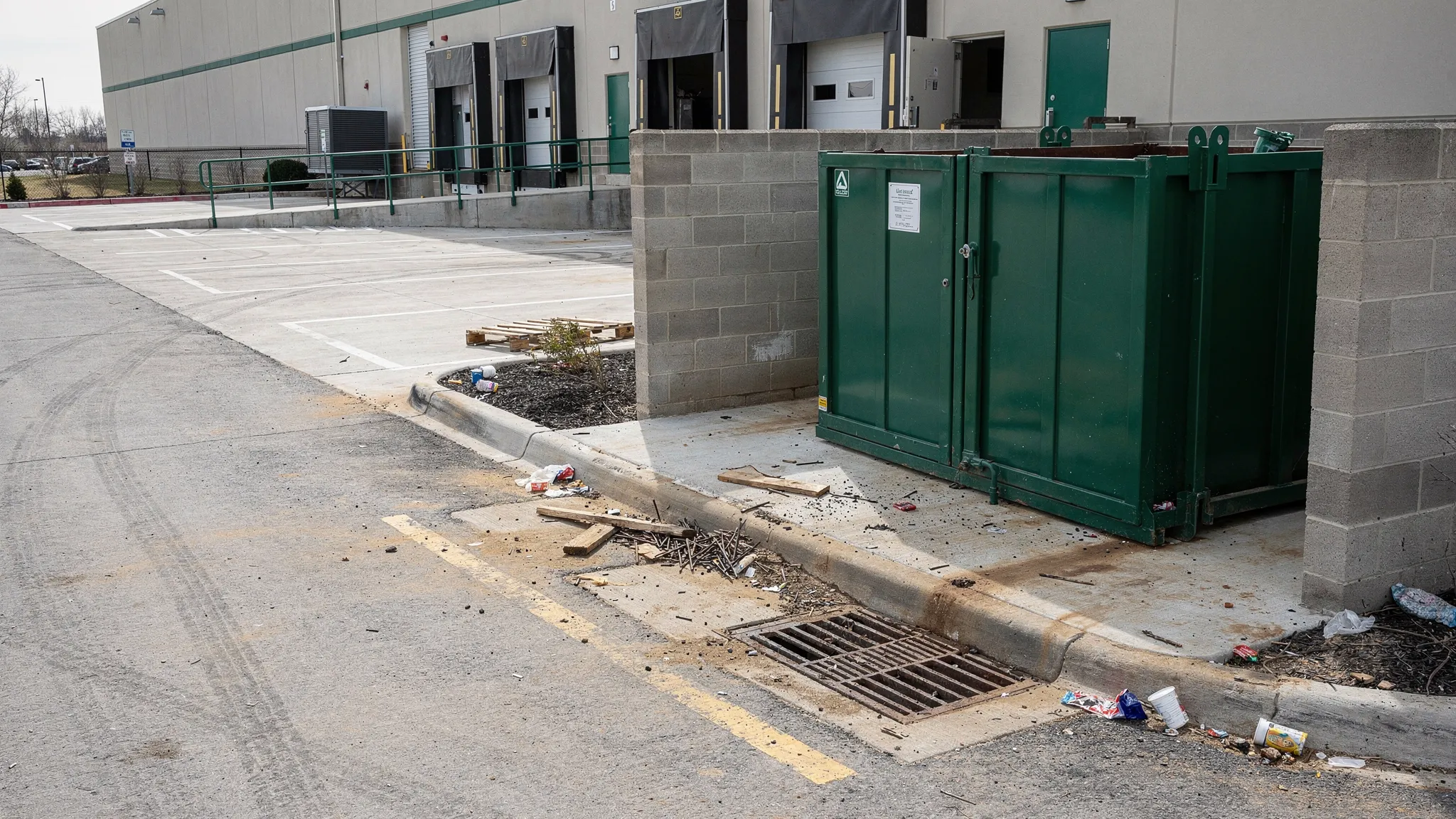
Why they matter: Dock areas generate a unique mix of debris (banding, pallets, shrink wrap, nails, wood chips, broken product) and constant equipment movement.
What to look for:
What “good” looks like: Dock plates and staging areas are clear, and travel paths are free of puncture hazards.
When to add magnet sweeping: If you routinely receive pallets, have ongoing repairs, or are adjacent to construction or paving, magnet sweeping can reduce punctures and callbacks.
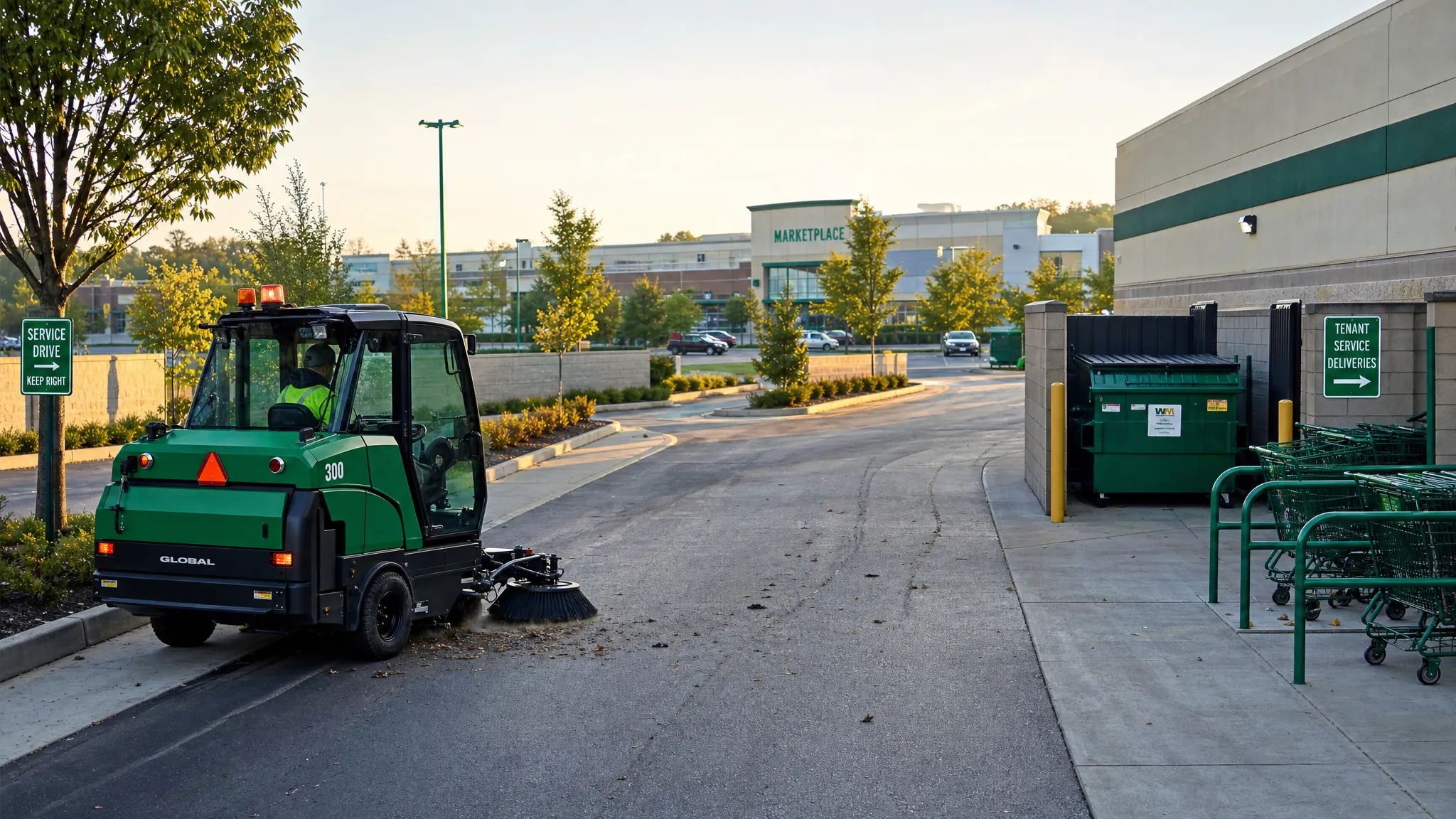
Why they matter: Dumpster areas combine moisture, food waste, cardboard, and windblown litter. They also create repeat complaints because they are both smelly and visible.
What to look for:
What “good” looks like: The pad is clear of loose trash, the perimeter is detailed, and the approach lane is not littered.
Why they matter: Garages concentrate fine dust and track-out. Ramps and stair landings are common slip zones.
What to prioritize:
Reliable Sweepers has two dedicated resources if your site includes a garage: parking garage cleaning: how to cut dust and track-out and parking garage cleaning services: scope, timing, and safety.
Why they matter: Patios, benches, smoking areas, and outdoor break spots accumulate small litter fast. They also affect tenant satisfaction disproportionately.
What to look for:
What “good” looks like: Surfaces are free of litter clusters and the space looks intentionally maintained, not “occasionally cleaned.”
Why they matter: If your property is next to tenant improvements, paving, utility work, or nearby development, your clean areas can get dirty quickly.
What to prioritize:
If you deal with track-out, dust, or sudden mess, Reliable Sweepers outlines rapid, practical options in pavement cleaning services: remove mud, dust, and debris fast.
Instead of choosing a single schedule for the entire property, use a two-layer plan:
Set a realistic rhythm based on typical traffic and debris drivers. Many properties do well with a weekly baseline for broad areas, plus more frequent attention to entries.
Triggers prevent you from waiting until the next scheduled visit when conditions change. Common triggers include:
This trigger-based thinking is also helpful for emergency response planning. If that is a recurring need, see emergency clean up services: rapid response for job sites.
The fastest way to improve results is to define “done” by zone, not by hours.
Examples that are easy to verify:
You do not need a full photo report of the entire property. Ask for before and after photos of:
Documentation supports internal reporting, tenant communications, and compliance narratives when needed.
For a broader seasonal playbook, see how to maintain clean properties year-round in Tennessee.
What is the most important area to prioritize in commercial building cleaning? The main entrance and the walking route from parking to the door. It is the most visible zone and a common location for slip hazards and complaints.
How do I know if my curb lines are a problem? If you see a continuous debris stripe along the curb, piles at corners, or sediment rings around inlets, your curb-and-gutter detailing is not keeping up.
Should I clean storm drains as part of routine exterior cleaning? You should at least keep the area around inlets clear so water can reach the grate. If you routinely see sediment and trash collecting there, increase cleaning frequency and address upstream sources.
Do I need magnet sweeping on a commercial property? Magnet sweeping is most useful when your site has ongoing construction, frequent deliveries that shed nails and metal, or paving and repair work nearby. It can reduce tire punctures and call-backs.
How often should a busy commercial property be swept? There is no single number. Start with a baseline schedule, then add event triggers for rain, landscaping, leaf drop, and construction activity. High-traffic entrances often need more frequent attention than the rest of the lot.
If your property is fighting recurring curb-line buildup, track-out, dusty lanes, or messy dumpster areas, a zone-based plan is the fastest way to stabilize results.
Reliable Sweepers provides professional exterior cleaning and sweeping across Middle Tennessee, including parking lot and garage cleaning, construction site cleanup, magnet sweeping, dust and mud control, and emergency response. To get a scope that matches your highest-traffic areas (and your real-world triggers), request a quote at ReliableSweepers.com.
Reliable Sweepers provides comprehensive street sweeping and property maintenance services across Middle Tennessee. Whether you're managing a construction site, commercial property, or residential development, our experienced team delivers the professional cleaning solutions you need.