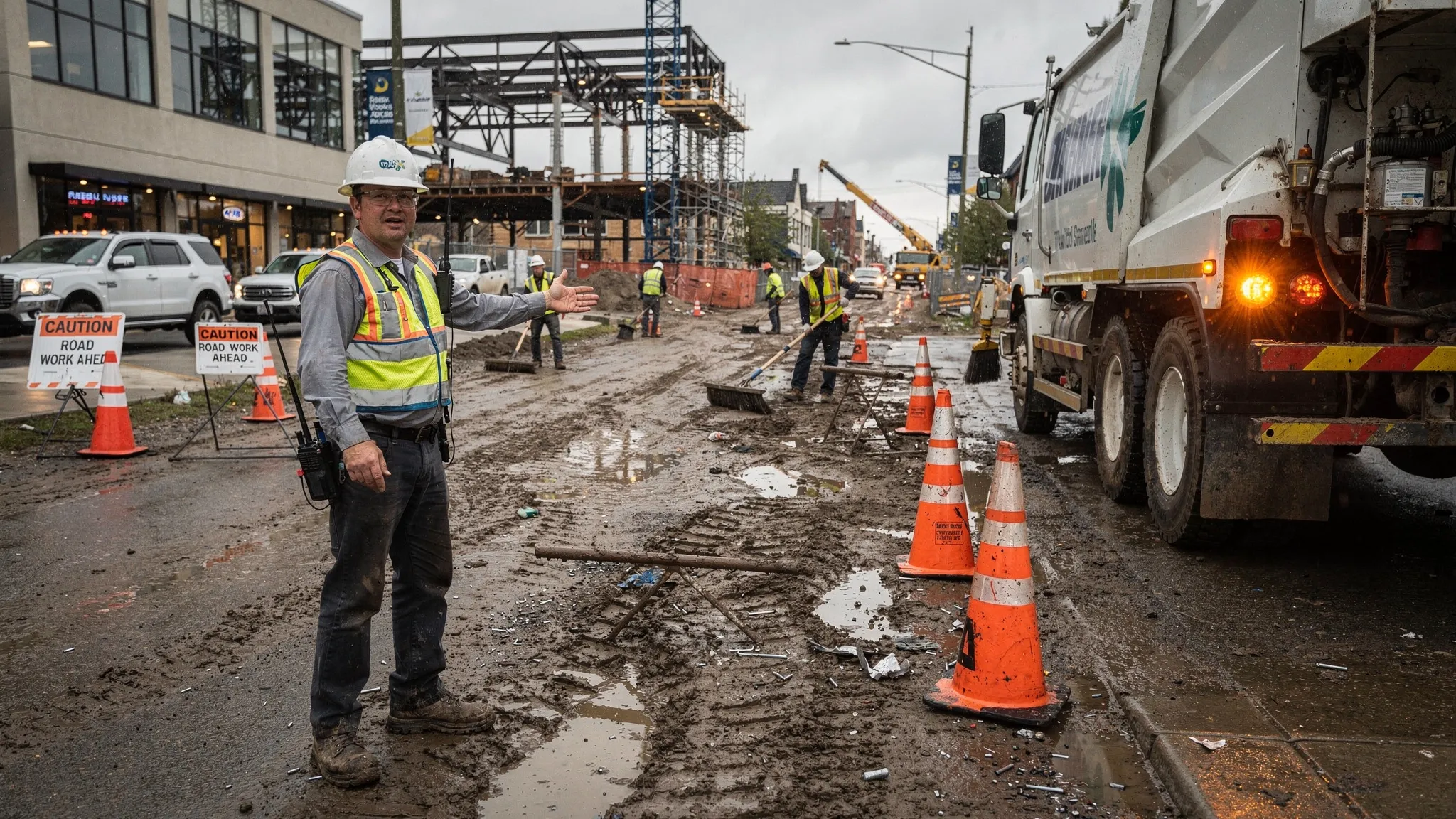
Every job site has “normal mess” and then there is the mess that stops work: mud tracked onto the public road after a downpour, loose aggregate scattered across an entrance, nails and metal shards after framing, or debris blowing into adjacent lots before an owner walk.
That is where emergency clean up services earn their keep. The goal is not cosmetic perfection. It is to restore safe access, protect schedules, and reduce compliance risk when conditions change fast.
In construction and commercial exterior maintenance, emergency clean up is a rapid, dispatchable response to unexpected site conditions that create one or more of these problems:
For most projects, emergency cleanup focuses on exterior conditions like pavement, curb lines, entrances, sidewalks, and haul routes. It often involves sweeping, debris pickup, magnet sweeping, and dust or mud control.
It is also important to define what it is not. Most sweeping contractors are not hazardous materials remediation firms. If you have a chemical spill, unknown drums, or regulated hazardous waste, you typically need a specialized environmental response provider and the correct reporting path.
Emergency call-outs usually come from a handful of predictable triggers. If you plan for these ahead of time, you can respond faster and with less disruption.
These are not rare events in Middle Tennessee. Fast weather swings, heavy thunderstorms, and clay soils can turn a clean entrance into a compliance headache quickly.
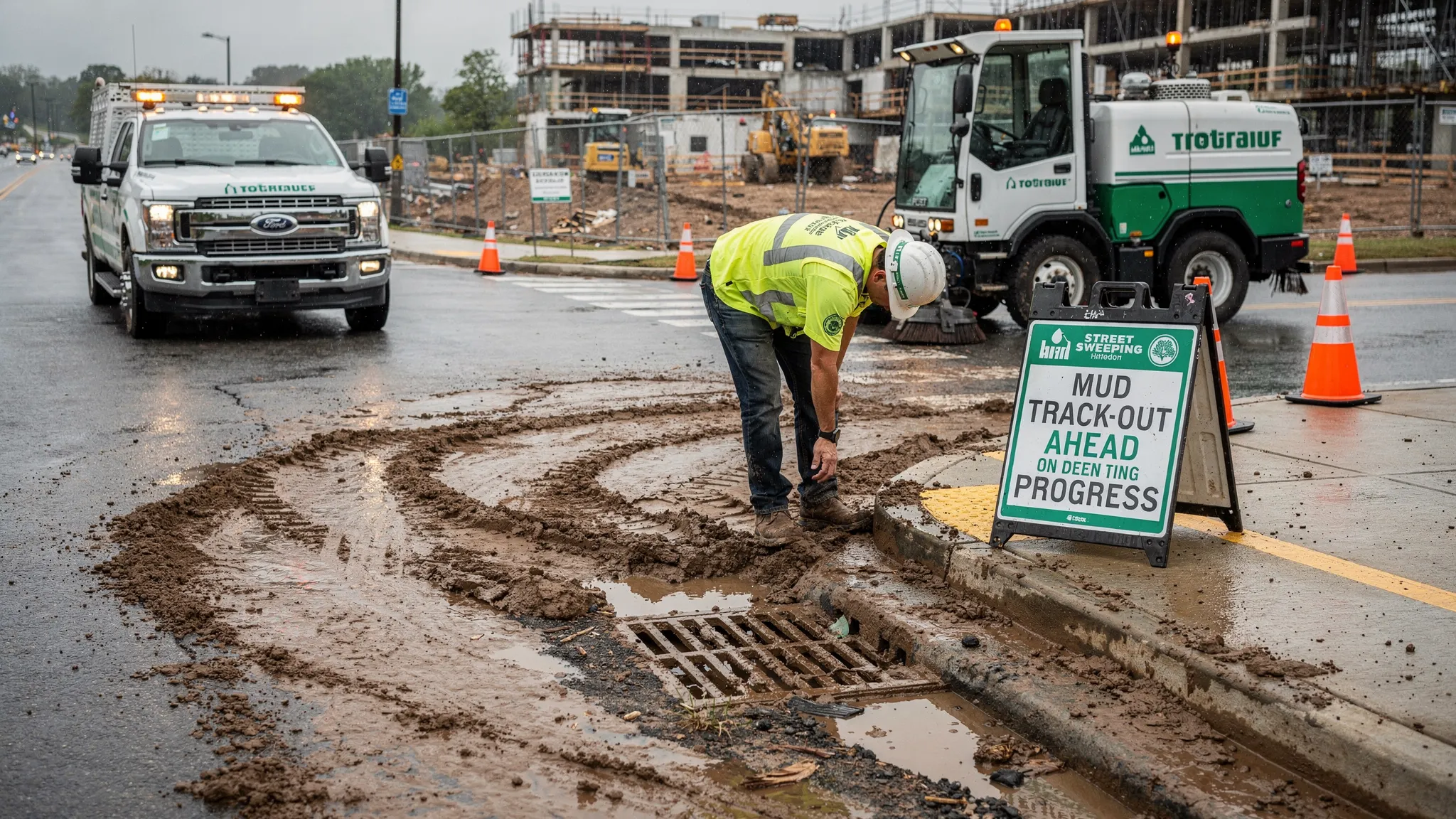
A good emergency response is more than “send a sweeper.” It is a short, repeatable workflow that prioritizes safety and containment first, then restores a clean, verifiable condition.
On most job sites, the first priorities are:
This is also where you get the fastest “visible win,” which matters when a city inspector, owner rep, or neighboring property manager is already paying attention.
Emergency cleanup goes wrong when the method is mismatched to the debris.
A professional operator will adjust the approach based on what is actually on the ground, not just what was on the work order.
Emergency conditions are when shortcuts happen. That is also when incidents happen.
Basic housekeeping and site cleanliness are tied directly to safety expectations. OSHA’s construction housekeeping requirement (29 CFR 1926.25) is a useful reference point when you are building internal standards and accountability for cleanup.
If cleanup occurs near active traffic, delivery lanes, or open-to-public areas, you should plan for cones, signage, and a clear spotter or point of contact.
When cleanup is “emergency,” it is usually tied to a complaint, an inspection, or a schedule-critical milestone. Documentation helps you close the loop.
A simple set of before and after photos plus a short service note can support:
For construction projects, this also aligns with the broader expectation that sites implement and maintain controls to prevent off-site discharge. EPA’s construction stormwater resources provide helpful context if you are building a compliance-minded cleanup plan (see the EPA Construction General Permit overview).
You can reduce response time and improve results by preparing a few details before the vendor arrives.
If gates are locked, deliveries are stacked at the entrance, or there is no place to turn around, emergency cleanup turns into delay.
Be ready to share:
Tell the crew if there are known hazards in the cleanup area, such as:
This is not paperwork. It is what keeps a “quick cleanup” from becoming an incident.
“Sweep the lot” is vague. A better emergency request sounds like:
Outcome-based requests help the crew prioritize and help you verify completion.
On exterior job sites, emergency cleanup often includes a mix of:
Common exclusions or “needs clarification” items include hazardous materials, unknown substances, and anything requiring regulated remediation. If you suspect the material is hazardous, treat it as such and route it through the appropriate specialty provider.
If you want a clearer picture of how sweeping and pavement cleanup are scoped for commercial and construction sites, see Pavement Cleaning Services: Remove Mud, Dust, and Debris Fast.
Emergency response goes smoother when you make a few decisions before the first storm hits.
Instead of guessing, agree internally on what triggers a call-out. Examples:
Then assign a response expectation that fits your project reality. Some sites need same-day action, others can plan for the next morning. The key is to decide before the pressure is on.
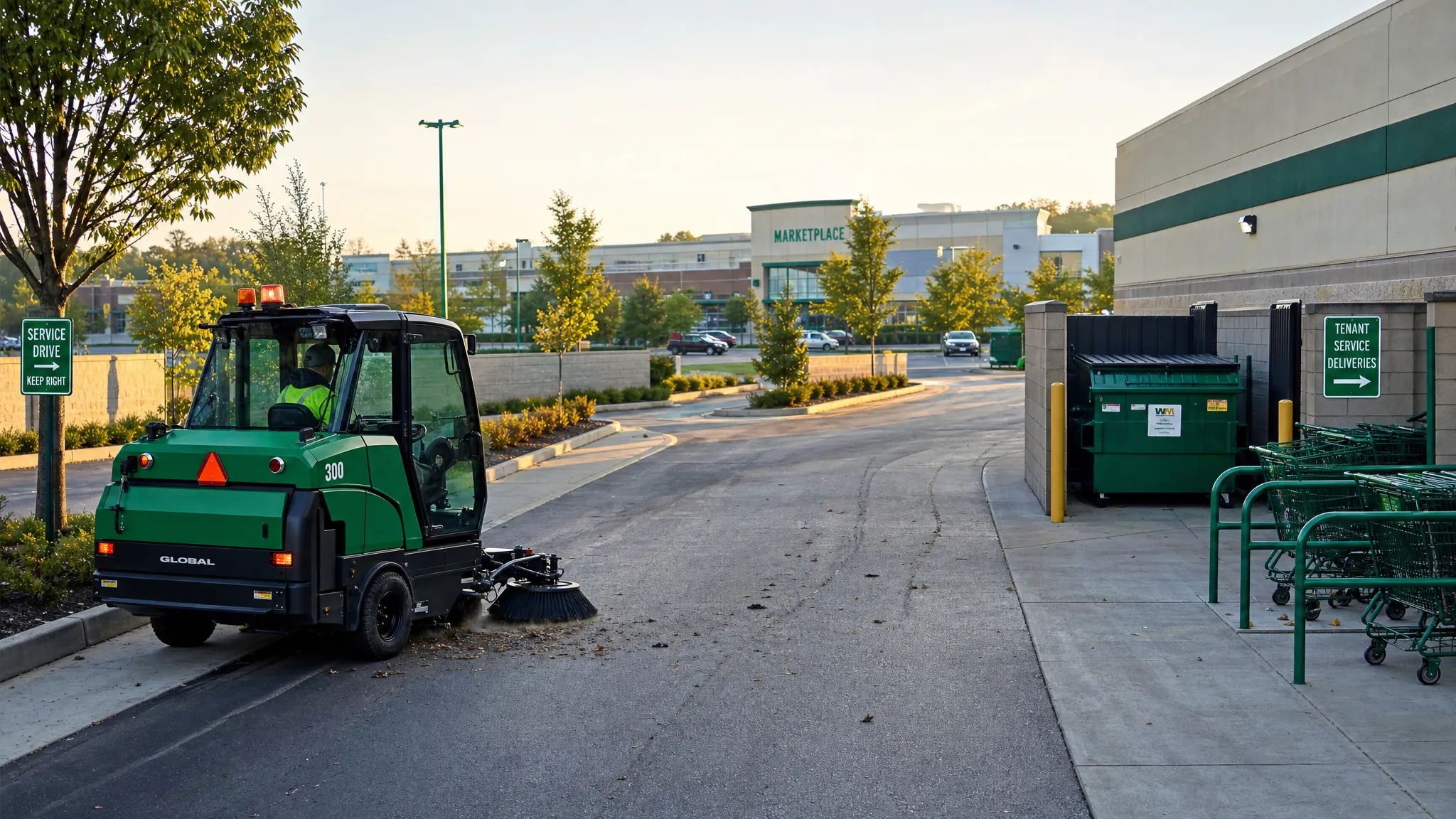
Most sites have predictable trouble spots: stabilized entrances, dumpster pads, curb returns, and low points where sediment migrates.
A simple site map with “priority zones” helps a sweeping crew move quickly and helps your superintendent inspect the right areas after the work is done.
Emergency cleanup frequently happens outside normal hours because that is when it is safest and least disruptive.
To avoid delays, consider:
For more construction-focused planning and turnover readiness, Construction Clean Up: A Step-by-Step Site Turnover Guide is a solid companion resource.
When you are comparing providers for emergency clean up services, the best differentiator is not the lowest price. It is reliability under pressure.
Look for a partner that can clearly answer:
You can also ask how they handle schedule variability, because emergency work often becomes recurring work during high-activity phases.
If you are vetting multiple providers, this guide helps you compare them consistently: Street Sweeping Companies Near Me: What to Ask Before Hiring.
Reliable Sweepers provides professional street sweeping and exterior cleanup support across Middle Tennessee, including emergency response services for construction sites, commercial properties, and facilities that need fast help restoring safe, clean conditions.
Typical emergency requests involve track-out cleanup, entrance and haul route sweeping, magnet sweeping for metal debris, and dust or mud control measures, with flexible scheduling based on what the site needs.
If you need help right now, or you want to set up an emergency-ready plan for an active project, start here: Reliable Sweepers. You can also review expectations and scoping details in Cleanup Services for Commercial Sites: What to Expect.
Reliable Sweepers provides comprehensive street sweeping and property maintenance services across Middle Tennessee. Whether you're managing a construction site, commercial property, or residential development, our experienced team delivers the professional cleaning solutions you need.