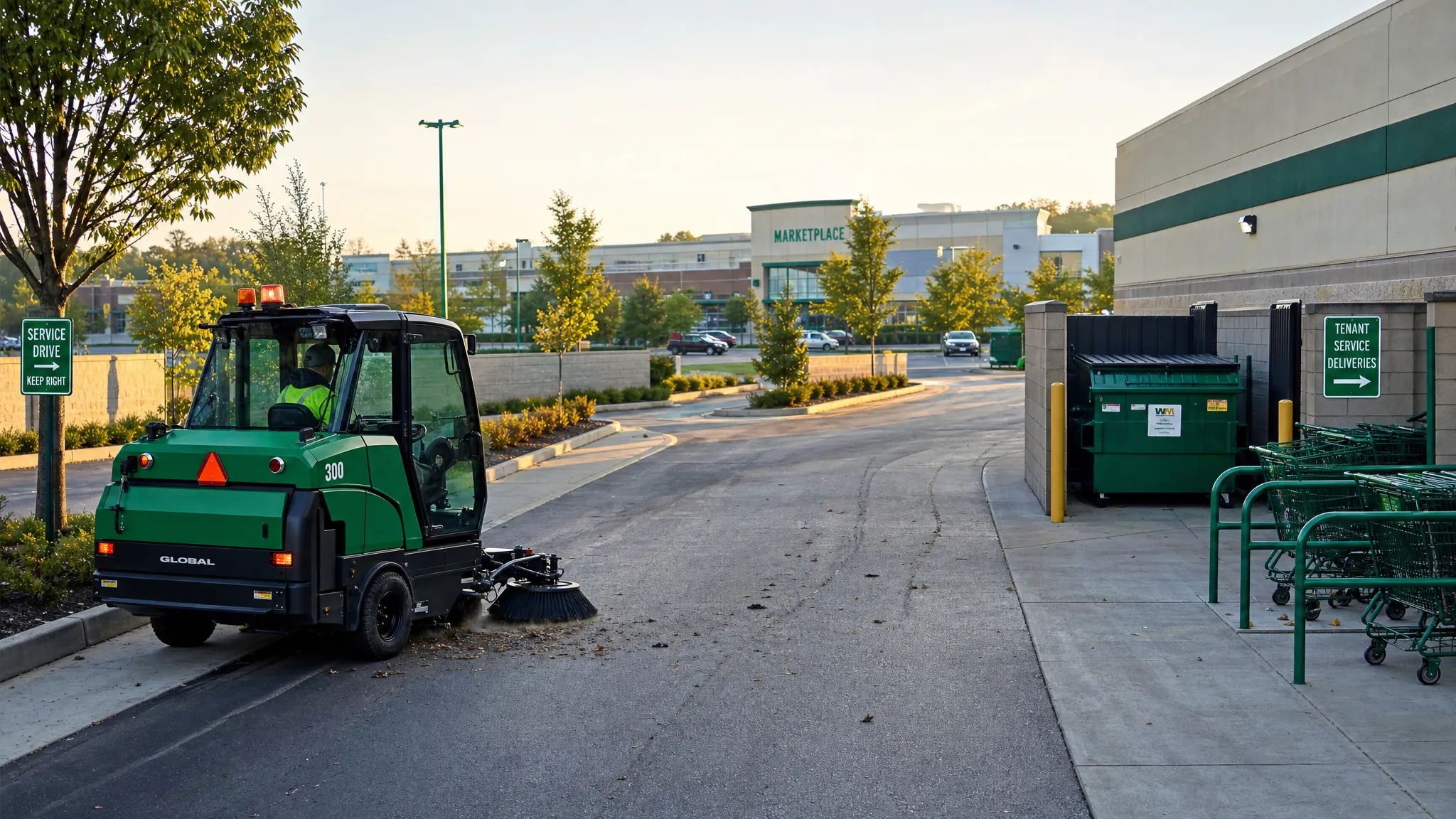

A clean handoff should feel calm, not like a scramble. Yet on many projects, the final days get eaten up by mud tracked across new pavement, fasteners left in parking areas, sediment sitting at curb lines, and last-minute calls to re-clean areas that were already finished.
The fix is not simply more labor at the end. To clean up after construction without slowing turnover, you need a cleanup plan that moves with the schedule, protects finished zones, and uses professional sweeping where it creates the most time back.
For contractors, superintendents, and property teams in Nashville and Middle Tennessee, that means treating exterior cleanup as a closeout workflow, not a final-week chore.

Construction cleanup becomes a schedule problem when it is disconnected from the actual sequence of work. A crew cleans an area, then a delivery truck drives through wet clay. A parking lot is swept, then landscaping crews drag mulch and soil across the curb line. Sidewalks are detailed, then punch-list work creates fresh dust at the entrance.
These resets are frustrating because they are rarely dramatic. They are small enough to miss during the daily push, but visible enough to delay owner walks, tenant move-ins, final inspections, striping, or public opening.
There is also a safety and compliance reason to stay ahead of debris. OSHA’s housekeeping standard for construction requires debris and scrap to be kept cleared from work areas, passageways, and stairs. Exterior debris can also create stormwater concerns when sediment, trash, and construction residue collect near drains. The EPA’s NPDES stormwater program is a useful reminder that construction-site pollutants need to be controlled before they reach storm drains or waterways.
The practical takeaway is simple: the faster you identify where debris will appear, the less likely cleanup becomes a turnover bottleneck.
Vague instructions like clean the site or make it look good are not enough in the final stretch. Different trades, inspectors, owners, and property managers may all define clean differently.
Before the last week, define what turnover-ready means for the exterior areas of the project. A clear standard keeps crews aligned and helps your sweeping partner understand what matters most.
A turnover-ready exterior usually includes these outcomes:
This standard does not need to be complicated. In fact, the best closeout standards are short, visual, and easy to verify during a walkthrough.
If your project is already near handoff, Reliable Sweepers’ construction clean up turnover guide can help you think through the broader sequence. For a no-slowdown turnover, though, the key is to turn that sequence into zones and dates.
The most common turnover mistake is waiting until the whole site is almost done before scheduling exterior cleanup. That puts cleanup on the critical path, right when everyone is already fighting for time.
A better approach is rolling closeout. Break the site into zones, then release each zone only when the major dirty work is complete or controlled.
Common exterior turnover zones include:
Each zone should have a simple status: active, clean-ready, cleaned, protected, or released. This gives the superintendent a quick way to decide where cleanup can happen without being undone the same afternoon.
Rolling closeout also makes professional sweeping more efficient. Instead of asking a sweeper to solve every problem at once, you can schedule the right equipment for the right zone at the right time.
The best cleanup schedule starts with the handoff date and works backward. You do not need a complex document. You need a practical rhythm that prevents surprises.
At this stage, walk the exterior with the project schedule in hand. Do not just look for debris. Look for future debris sources.
Ask which trades still need to enter finished areas, whether paving or striping is complete, whether landscaping will cross new pavement, and whether dumpsters or material staging will move. This is also the right time to identify areas that need construction site sweeping, asphalt paving cleanup, dust control, mud control, or magnet sweeping.
If the site has already accumulated heavy debris, schedule a reset before the final push. This keeps the last week from starting in a hole.
The week before handoff is usually when access routes, curb lines, and parking areas need attention. These are the zones that make the strongest first impression and often affect inspections, drainage, and safe movement.
This is a good window for mechanical sweeping, curb and gutter detail, and magnet sweeping where metal fragments may be present. If final paving, milling, or patching has just occurred, asphalt-related cleanup should happen before striping or owner walkthroughs whenever possible.
This is also when you should decide which areas can be protected. A cleaned parking area that remains open to every trade is not truly complete.
Two to three days before handoff, focus on detail zones. These are the places people notice and the places debris tends to hide: entrance corners, curb returns, drain approaches, dumpster pads, loading areas, and parking edges.
This is the stage where a punch-list mindset matters. You are not trying to rework the entire site. You are removing what could cause a complaint, inspection issue, vehicle damage, slip risk, or delayed opening.
For a more detailed handoff checklist, see Reliable Sweepers’ post construction clean up punch list.
If the earlier steps were handled well, the last day should be a touch-up, not a rescue operation.
Final-day cleanup should focus on fresh track-out, wind-blown debris, entrance detail, visible curb lines, and any metal debris found after last trade activity. If a storm hits, a delivery goes wrong, or mud reaches a public road, that is where an emergency response plan can protect the turnover date.
When the site looks dusty or muddy, it can be tempting to reach for water first. That often slows cleanup down. Wetting loose sediment can turn a sweepable problem into slurry, push contaminants toward storm drains, or create drying delays near entrances.
For most exterior construction cleanup, the faster sequence is dry first:
This sequence reduces duplicate work because each step prepares the next one. It also helps keep sediment and trash out of drains, which matters during Middle Tennessee storms.
If you are deciding between sweeping and washing, Reliable Sweepers’ guide to pavement cleaning when power washing is not enough explains why dry removal often needs to come first.
Cleaning does not speed turnover if the same zone gets dirty again the next day. Once an area is cleaned, protect it like any other finished work.
That may mean rerouting deliveries, moving dumpsters, shifting employee parking, limiting trade access, or adding temporary controls near construction exits. On active sites, even a simple instruction like no material staging past this point can save hours of re-cleaning.
Pay close attention to transitions. Debris often moves from unfinished areas into finished ones at gate entrances, curb cuts, garage ramps, sidewalk connections, and temporary haul routes. These transition points are where mud control, dust control, and spot sweeping can prevent a wider mess.
The goal is not to freeze the whole site. The goal is to stop preventable contamination from spreading into areas that are ready for handoff.
Not all construction debris slows turnover in the same way. A fast cleanup plan starts by identifying the debris type, then choosing the right response.
Fine dust can hurt appearance, create complaints, and migrate into entrances or garages. Mud track-out can trigger public-road complaints and stormwater concerns. Loose aggregate and paving remnants can interfere with striping, parking, and final presentation. Nails, screws, wire, and metal straps create vehicle and pedestrian risks, especially in parking areas and access lanes.
Professional sweeping is most valuable when debris is spread across pavement, concentrated along curb lines, or likely to keep reappearing during the final phase. Magnet sweeping is especially useful after framing, roofing, fencing, utility work, demolition, or any activity that leaves metal fragments behind.
Reliable Sweepers supports construction site sweeping, asphalt paving cleanup, parking lot and garage cleaning, magnet sweeping, dust and mud control, and emergency response services across Middle Tennessee. The right mix depends on your site layout, debris profile, access constraints, and turnover date.
Documentation is one of the simplest ways to prevent cleanup from slowing turnover. It does not need to be complicated. A few timestamped photos and short notes can answer important questions quickly.
Capture the condition before cleanup, the areas completed, any blocked zones, and anything excluded from the scope. If a cleaned area gets contaminated again by later work, photo documentation helps separate original cleanup from new debris.
This is especially useful when multiple parties are involved: general contractors, subcontractors, property managers, owners, tenants, and inspectors. A simple visual record helps avoid the common final-week argument over who is responsible for cleaning the same area again.
Middle Tennessee weather can change a clean site quickly. Heavy rain can move sediment to curb lines and inlets. Dry summer conditions can turn exposed soil into dust. Spring pollen and fall leaves can make a nearly finished property look neglected overnight. Clay-heavy soil can cling to tires and track farther than expected.
That is why baseline cleanup is only part of the plan. You also need trigger-based cleanup for events that create sudden messes.
Useful triggers include rain after grading, mud on public roads, wind-blown debris after storms, final paving or milling, major material deliveries, landscaping work, tenant or owner walkthroughs, inspections, and the day before opening.
Trigger-based scheduling gives you flexibility without over-cleaning. It also keeps cleanup from becoming a surprise expense during the last few days.
Most cleanup delays come from a handful of avoidable decisions.
The first mistake is scheduling one large final cleanup without considering remaining dirty work. If landscaping, paving, striping, punch-list activity, or deliveries are still active, the cleaned areas need protection or a planned touch-up.
The second mistake is cleaning the easy open pavement while ignoring edges. Curb lines, gutters, drain approaches, corners, dumpster pads, and loading areas are where debris collects and where complaints often start.
The third mistake is using water too early. Washing before sweeping can move sediment into low points and create stormwater problems. It can also leave muddy residue that has to be handled again.
The fourth mistake is skipping magnet sweeping when metal debris is likely. A site can look clean and still contain nails, screws, or wire pieces that cause tire damage or safety concerns.
The fifth mistake is failing to assign acceptance. Someone should be able to say whether a zone is clean, protected, or needs another pass. Without that decision-maker, cleanup becomes subjective and repetitive.
In-house crews can handle daily housekeeping, small debris piles, and quick spot resets. A professional sweeping partner is worth considering when the debris is widespread, the turnover window is tight, or the site needs specialized equipment.
Professional support is especially helpful before inspections, after paving or milling, after heavy rain, before owner walks, before tenant move-ins, and when mud or debris reaches public-facing areas.
If your schedule is tight, do not wait until the site is already behind. A brief walkthrough or zone map can help identify the fastest cleanup path, the right equipment, and the best timing. Reliable Sweepers offers flexible scheduling options and can help align exterior sweeping work with project milestones, access windows, and turnover needs.
For projects that need rapid support after an unexpected mess, review what to expect from emergency clean up services.
What is the fastest way to clean up after construction before turnover? The fastest approach is rolling closeout by zone. Clean areas as they become ready, protect them from new work, and reserve the final day for touch-ups instead of full-site cleanup.
How soon should I schedule construction cleanup before handoff? Start planning 10 to 14 days before turnover, reset high-traffic areas about a week out, detail released zones 48 to 72 hours before handoff, and keep the final 24 hours for touch-ups and unexpected debris.
Do I need magnet sweeping after construction? Magnet sweeping is strongly recommended when nails, screws, wire, metal straps, roofing debris, fencing fragments, or similar materials may be present. It helps reduce tire damage risk and improves final site safety.
Is power washing necessary for post-construction cleanup? Sometimes, but it should usually come after dry sweeping and debris capture. Power washing loose sediment too early can spread material, create slurry, and increase stormwater concerns.
Can cleanup happen while trades are still working? Yes, but only if the site is divided into zones. Active zones can remain under construction while clean-ready zones are swept, protected, and prepared for handoff.
A clean site should support the schedule, not compete with it. If you are preparing to turn over a construction project in Nashville or Middle Tennessee, Reliable Sweepers can help with construction site sweeping, asphalt paving cleanup, parking lot and garage cleaning, magnet sweeping, dust and mud control, and emergency response services.
Share your turnover date, site zones, debris concerns, and access constraints, and the Reliable Sweepers team can help you build a cleanup plan that fits the project instead of slowing it down.
Request a site-specific sweeping and cleanup plan from Reliable Sweepers.
Reliable Sweepers provides comprehensive street sweeping and property maintenance services across Middle Tennessee. Whether you're managing a construction site, commercial property, or residential development, our experienced team delivers the professional cleaning solutions you need.