Power washing is often the first thing people think of when a property starts looking tired, but pavement cleaning is not the same as “blast it with water.” If you are dealing with fine dust, construction track-out, metal debris, or oily residues, pressure alone can leave hazards behind, spread contamination to drains, or create a messy slurry that dries right back onto the surface.
In Nashville and across Middle Tennessee, the best results usually come from a simple rule: remove and capture dry debris first, then use water only when it actually helps.
Power washing is great at loosening surface grime. The problem is that many “dirty pavement” situations are not just grime.
Pressure washing breaks material free, but it does not automatically collect it. On lots, streets, and drive lanes, runoff often flows to curb lines and storm drains. That means the job can look cleaner at first and then:
From a compliance standpoint, it is also risky. Many stormwater programs treat sediment and wash water leaving the site as a pollutant discharge. The EPA’s NPDES stormwater program is a good starting reference for why controlling off-site runoff matters, especially around construction and industrial activity (EPA NPDES Stormwater).
Fine dust and sediment pack into:
A wand can loosen it, but without vacuum recovery or mechanical capture, a lot of that material ends up redistributed.
Power washing does not reliably address:
This is where magnet sweeping and professional sweeping can do more for safety than water ever will.
On active sites, power washing can create avoidable friction:
If your goal is “clean and open for business,” dry methods often win.
The fastest way to waste time and money is choosing a method before you identify what is actually on the pavement. In the field, most pavement cleaning calls fall into a few buckets.
Fine particulate is one of the biggest reasons power washing disappoints. If you wash it, you usually make a paste first.
What works better:
If mud is actively being dragged out of an entrance, washing the street is usually reactive. The real fix is controlling the source and then removing the buildup.
What works better:
This is common around paving, site work, and punch-list phases.
What works better:
Water alone rarely removes oily residues. It can also spread sheen.
What works better:
These jobs are often solved by sweeping and pickup, not pressure.
What works better:
For commercial sites, HOAs, and construction projects, the best pavement cleaning outcomes typically follow a two-stage sequence:
This is where you eliminate the bulk of the material that causes complaints and compliance exposure.
Dry removal is also easier to document and verify (you can see piles removed, curb lines cleared, and drains unobstructed).
Once the loose material is gone, wet cleaning becomes a precision tool instead of a “hope it works” step.
If your site requires aggressive washing, plan for wash-water control and recovery rather than letting runoff migrate.
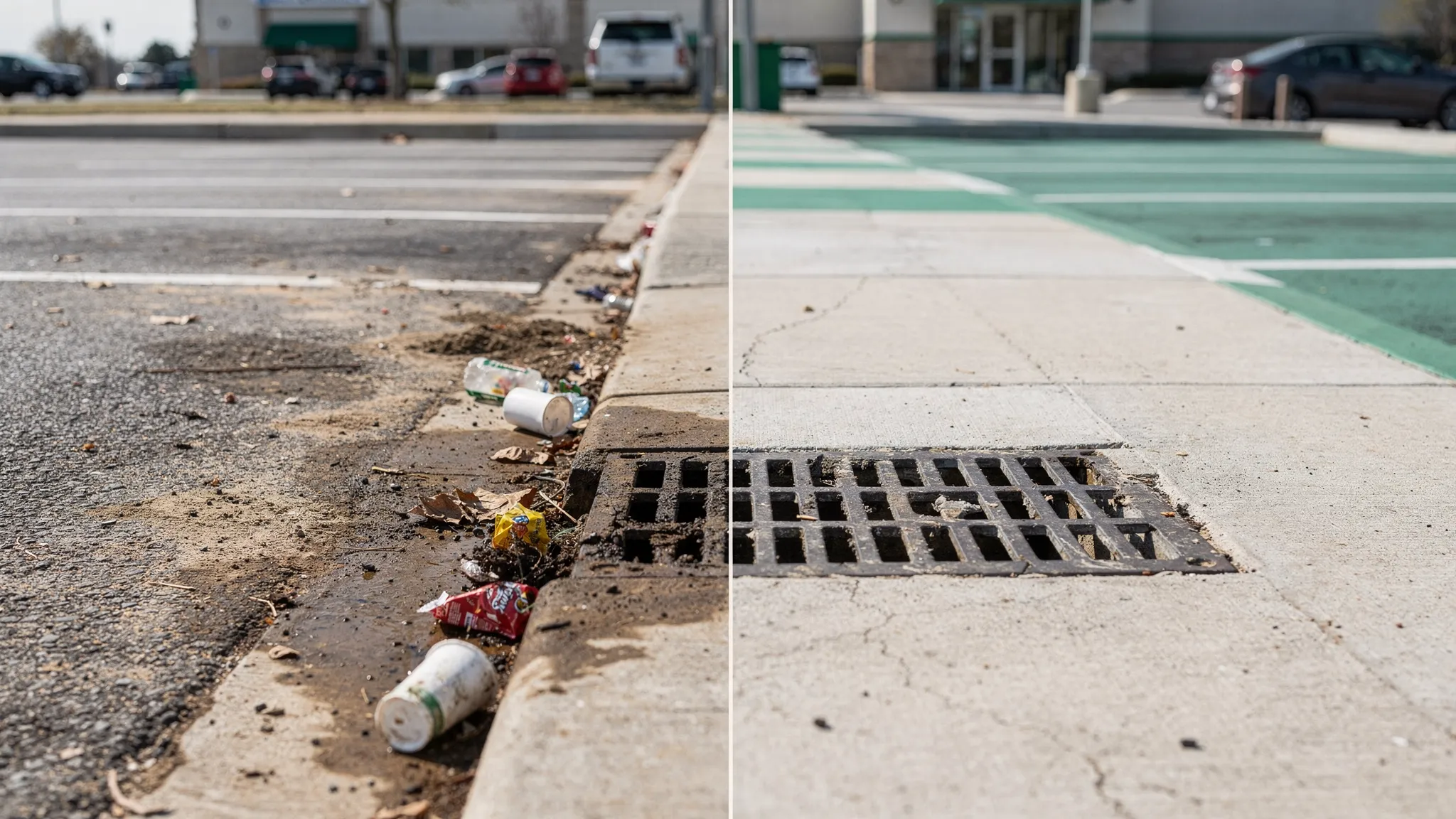
The classic mistake is washing track-out and dust into curb lines right before an inspection or handoff. A better sequence is:
This tends to reduce rework because you are removing, not redistributing.
Garages are “dust traps.” Air movement, tire wear, and tracked debris create a fine layer that power washing often turns into slick slurry.
Better results usually come from:
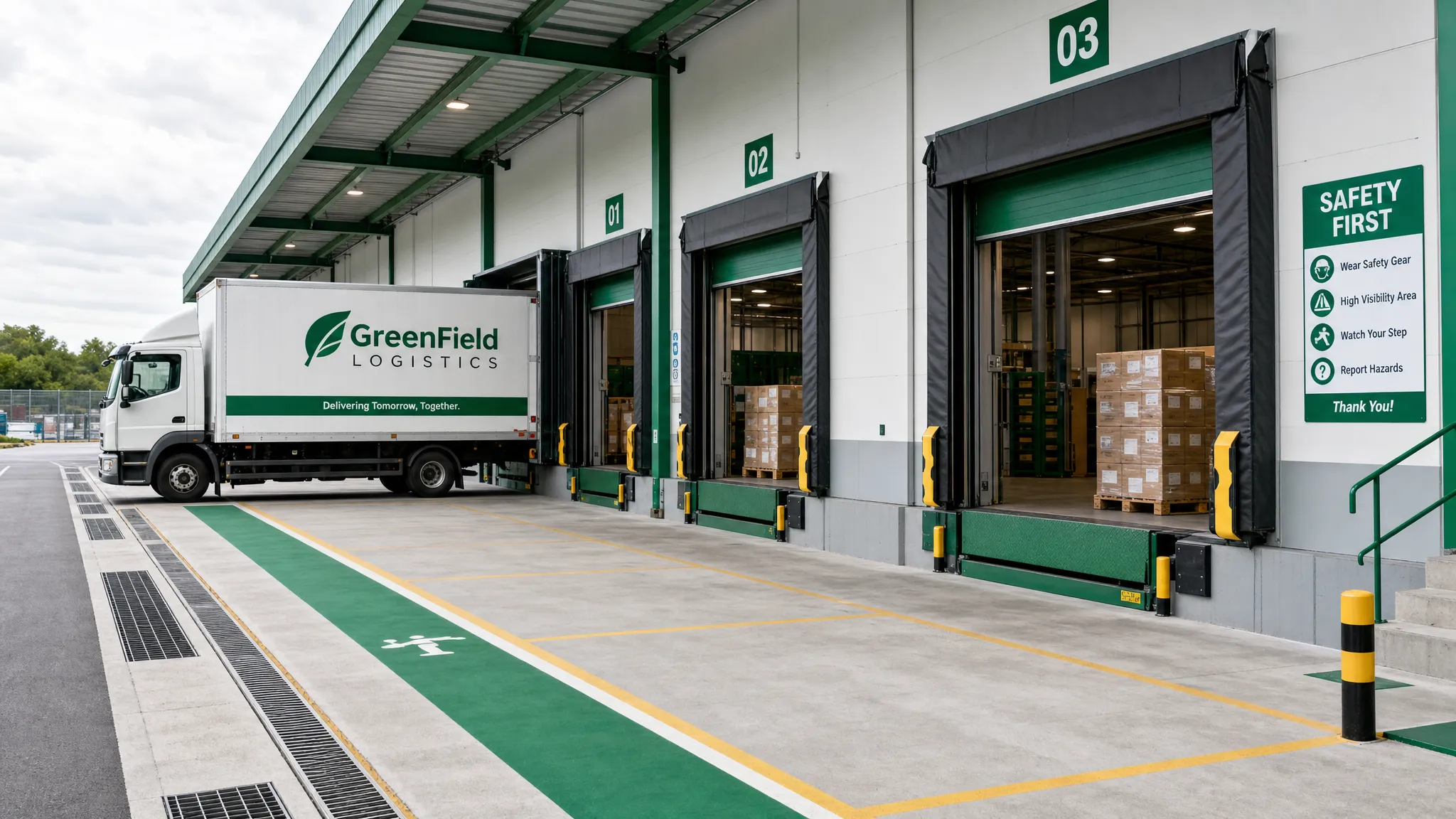
Dock aprons and drive lanes accumulate pallet fragments, strapping, metal bits, and grit. If you manage facilities that handle packaged goods, textiles, or consumer products, keeping exterior debris from migrating indoors can protect housekeeping standards and equipment. For example, apparel supply chains and development partners such as Arcus Apparel Group rely on predictable operations, and clean dock approaches are one of the simplest ways to reduce tracking and avoid “always dirty” thresholds.
Here, sweeping and magnet sweeping often deliver more value than water.
After heavy rain, debris concentrates where water slows down.
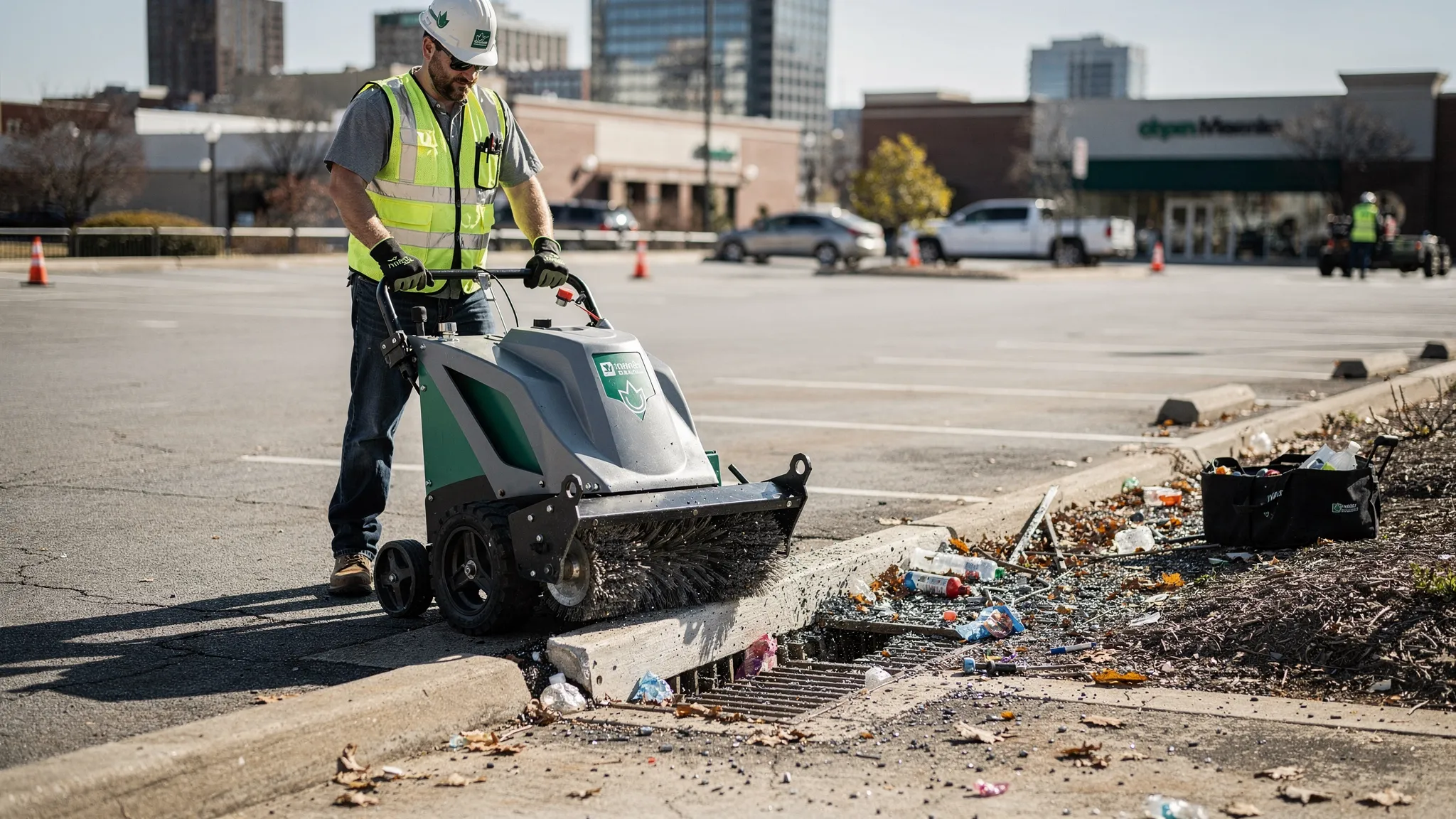
Power washing these areas can push more material into the exact places you are trying to protect. Sweeping and targeted curb-line cleanup are usually the practical first move.
If you are deciding between power washing and other pavement cleaning options, use three questions.
If the honest answer is “toward the storm drain,” start with sweeping, curb-line detailing, and recovery-based methods.
Recurring mess usually means an upstream driver is still active:
In those cases, power washing treats the symptom, not the source.
Whether you handle work in-house or hire a contractor, strong results are typically measurable and repeatable.
Instead of “power wash the lot,” define outcomes:
A common best-practice sequence is:
Photos of curb lines, entrances, and drain-adjacent zones (before and after) help prove the job was done and help you spot patterns that drive future mess.
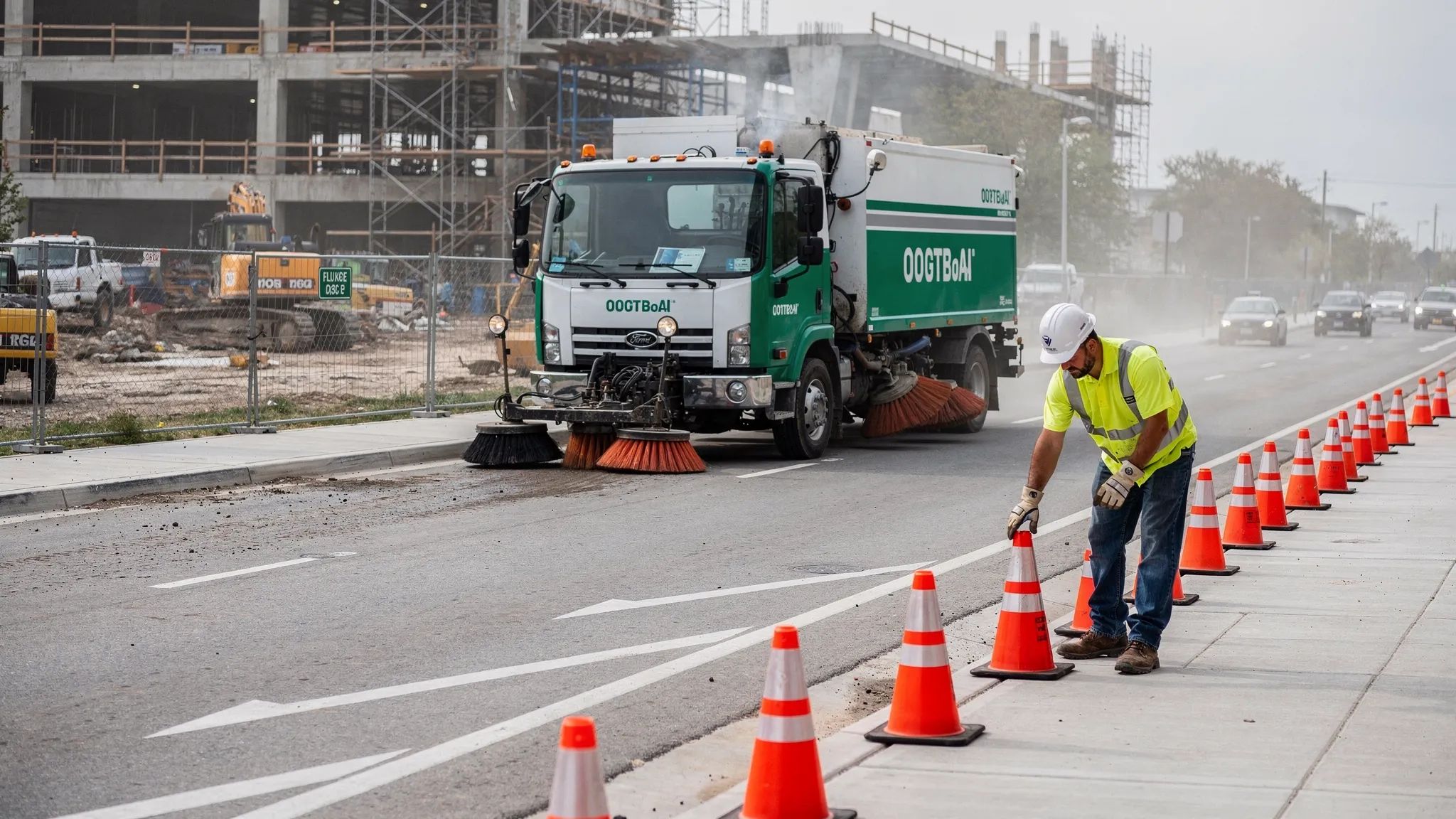
Small spills and light litter are often manageable. But if any of the items below are true, a professional pavement cleaning plan is usually more cost-effective than repeated power washing.
Power washing has a place, but it is rarely the whole solution. If you want pavement cleaning results that last, think like a maintenance planner, not a pressure-washing operator:
If you manage a commercial property, construction site, HOA, or municipal route in Nashville or Middle Tennessee, Reliable Sweepers can help you choose the right mix of street sweeping, parking lot and garage cleaning, magnet sweeping, dust and mud control, and emergency response so the site stays clean, compliant, and ready for traffic.