Choosing between parking lot sweeping companies is not just a maintenance purchase. It affects curb appeal, tenant complaints, slip and trip exposure, stormwater risk, pavement life, and how quickly your team can respond after storms, construction activity, or heavy traffic.
The challenge is that many bids look similar on paper. One vendor says they will “sweep the lot.” Another promises a low monthly rate. A third says they can handle everything, but gives few details about equipment, scheduling, documentation, or what happens when the lot is full of cars.
The real difference often shows up in the red flags. If you know what to watch for before you sign, you can avoid missed curb lines, surprise charges, poor drainage, repeat complaints, and last-minute cleanup emergencies.
A dependable sweeping partner should be able to explain the work in practical, site-specific terms. They do not need to overcomplicate the process, but they should be clear about what will be cleaned, how it will be cleaned, when it will be cleaned, and how results will be verified.
At minimum, a professional scope should define the parking lot zones, debris types, service frequency, access requirements, high-priority areas, exclusions, and any trigger events that require extra service. For many Nashville and Middle Tennessee properties, those triggers include heavy rain, clay mud track-out, leaf drop, nearby construction, paving work, major events, and high pollen periods.
If a company cannot describe these basics, the price may not tell you much. A low rate for vague work can become expensive when your property still has blocked drains, loose aggregate at entrances, or debris collecting around dumpster pads.
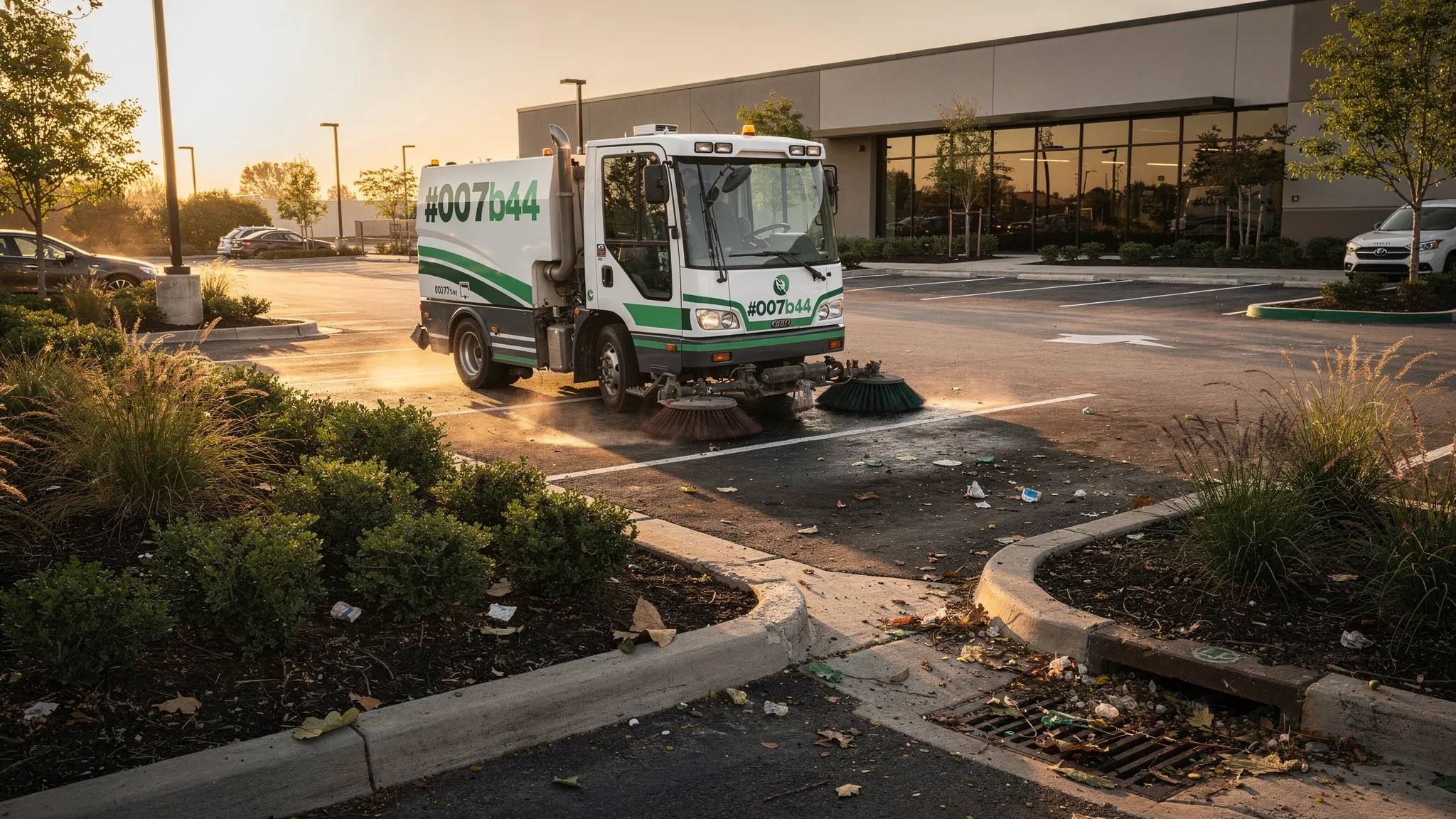
A parking lot is not just square footage. Layout, access, traffic flow, debris type, curb length, drainage points, islands, wheel stops, slopes, lighting, and parked vehicles all affect the work.
Be cautious if a company gives a firm quote after only asking for the property address or lot size. A quick estimate can be useful early in the conversation, but a final scope should reflect how your site actually operates.
A strong provider will ask questions such as:
If the vendor does not ask, they may be planning a generic pass that misses the details your property team cares about most.
A vague scope is one of the most common causes of disappointment. “Sweep parking lot” sounds simple, but it does not define whether the company will address curb lines, parking islands, pedestrian entries, loading areas, dumpster pads, garage ramps, drive lanes, or storm drain approaches.
This matters because debris rarely spreads evenly. It collects at edges, transitions, corners, wheel stops, and low points. Those are also the areas tenants and visitors notice, and they are often the areas that create drainage or safety issues.
Instead of accepting a one-line scope, ask the company to define the lot by zones. A better scope might distinguish main drive lanes, storefront parking, entrances, curb lines, loading docks, dumpster pads, storm drain areas, and construction-adjacent edges. That makes the work measurable and makes bids easier to compare.
For more on setting the right cadence, see this guide to parking lot sweeping services and frequency.
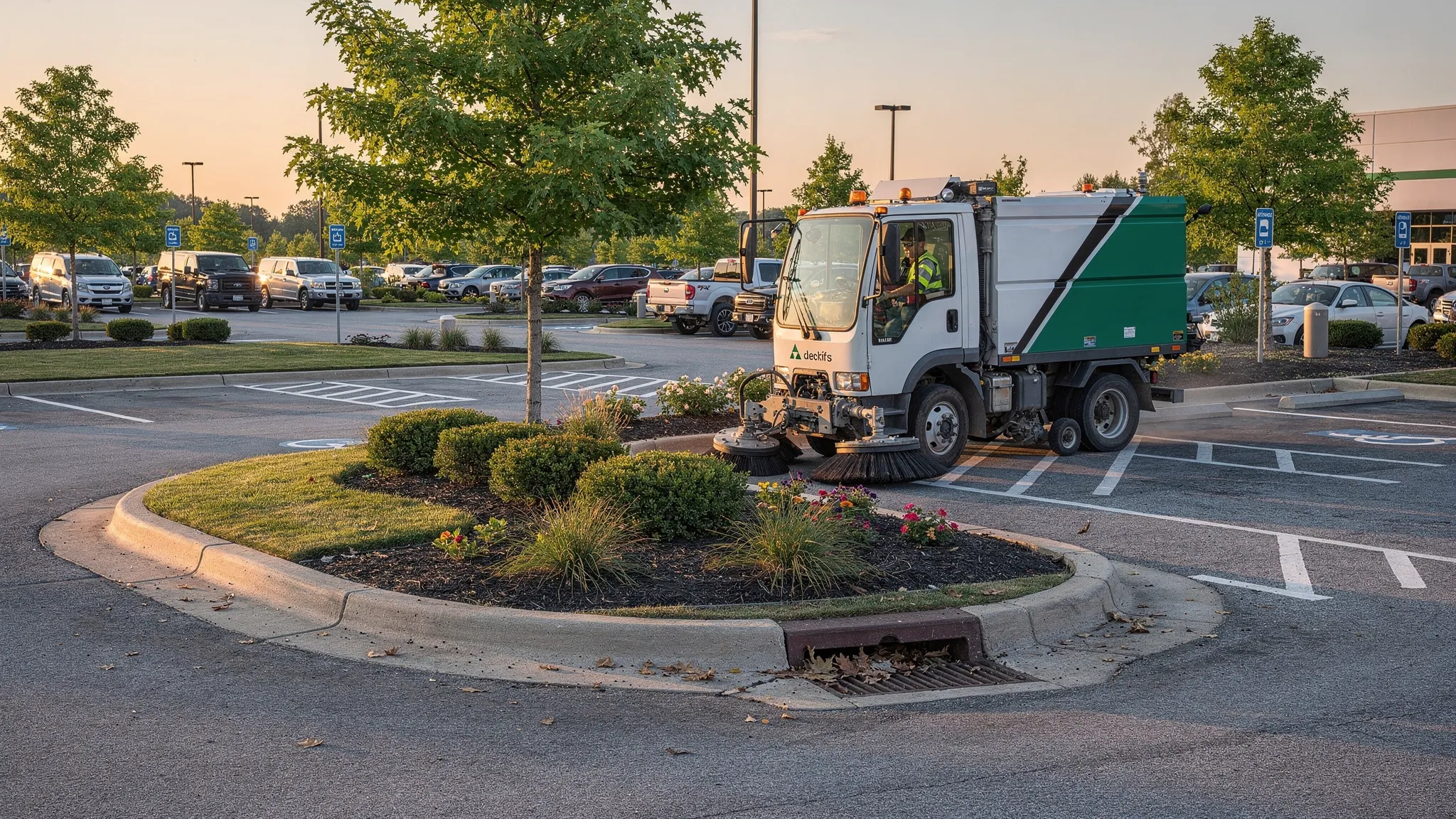
A lot can look acceptable from the center drive lane while still failing where it counts. Curb lines and corners catch leaves, sediment, glass, cigarette butts, plastic, gravel, and organic debris. Parking islands collect mulch, trash, and fine material. Low corners near drains can hold sediment after every rain.
If a company talks only about open-area sweeping, ask how they handle edges. Do they make detail passes? Do they use blowers responsibly to move debris into the sweeper path without pushing material into landscaping or storm drains? Do they inspect corners after the main pass?
Poor edge work is a sign the provider is focused on speed rather than outcomes. Over time, that creates buildup, complaints, and extra cleanup costs.
Different parking lots require different approaches. A tight retail center, a parking garage, a construction-adjacent lot, and an industrial yard do not all need the same setup.
A professional provider should be able to explain why their equipment fits your debris profile. For example, heavier aggregate, mud, and construction sediment may call for a different approach than fine dust, leaves, or light litter. Metal debris may require magnet sweeping. Tight areas may need compact equipment or detail work before the main sweep.
You do not need to become an equipment expert, but you should expect a clear answer. If the company says one machine works for every site, with no discussion of debris type or access, that is a warning sign.
For a deeper look at methods, this article explains parking lot sweeping equipment and what actually works.
Parking lot sweeping is closely tied to drainage and stormwater protection. Loose debris, leaves, sediment, and trash can move quickly into inlets during Middle Tennessee storms. Once material reaches the drainage system, it can create clogs, complaints, and compliance concerns.
The EPA’s NPDES stormwater program focuses on reducing pollutants in stormwater runoff, which is one reason clean pavement and inlet protection matter for commercial and construction-impacted properties.
A red flag is any provider that blows, rinses, or pushes debris toward drains. Sweeping should capture material before it reaches the inlet. If wet cleaning is needed, wash-water control may also need to be addressed depending on the situation.
Ask the vendor how they handle storm drain approaches, curb-and-gutter buildup, and post-storm sediment. If they cannot answer, they may not be thinking beyond surface appearance.
For properties near construction, roofing, tenant improvements, paving, loading docks, or industrial work, metal debris can be a serious issue. Nails, screws, wire, and sharp fragments may not be fully addressed by ordinary sweeping alone.
That does not mean every parking lot needs magnet sweeping every visit. It does mean the provider should recognize when it is appropriate. If you have recurring tire complaints, recent construction activity, or visible metal fragments, ask whether magnet sweeping is available and how it would be scheduled.
A company that dismisses metal debris without inspecting the site may be overlooking a preventable liability and customer-service issue.
Dust and mud require more planning than loose trash. In Nashville and Middle Tennessee, clay soils, rain events, construction entrances, and active development can create fast-moving track-out problems. If not handled quickly, sediment can spread across drive lanes, clog edges, and create a poor impression at entrances.
A sweeping company should be able to explain how it handles mud, fine dust, and sediment without simply spreading the problem. That may include timing service after messy operations, using dust-control practices where appropriate, prioritizing access points, and scheduling trigger sweeps after storms or heavy construction traffic.
If the provider talks about dust and mud as if they are no different from paper litter, the result may be a lot that looks better for a day but continues to generate complaints.
Parking lot sweeping often happens around moving vehicles, pedestrians, delivery trucks, parked cars, gates, and low-light conditions. Safety is not optional.
Before hiring, ask for proof of insurance and clarify how the company protects crews, vehicles, tenants, and visitors. The answer should fit your property. A quiet office lot at 5 a.m. is different from a mixed-use retail center, a garage, or a construction-adjacent site.
Watch for vague answers such as “we are careful” or “we have never had a problem.” A professional company should be able to discuss operator training, vehicle awareness, site access, backing risks, pedestrian areas, and any traffic-control needs for the work being performed.
Even the best sweeper cannot clean a curb line blocked by parked cars. If your property has overnight parking, tenant vehicles, shopping traffic, delivery schedules, locked gates, or security requirements, access planning matters.
A red flag is a company that promises perfect results without asking when the lot is most open. Strong providers discuss timing, access windows, gate codes, tenant communication, and what happens when areas are blocked.
This is especially important for retail centers, apartment communities, office parks, garages, and downtown properties where a missed access window can turn a scheduled service into a partial service.
A low price is not automatically a problem. Efficient companies can often provide competitive pricing, especially when the scope is clear and the schedule is consistent. The red flag is a price that is much lower than other bids while leaving out important details.
Before choosing the cheapest option, clarify whether the price includes disposal, mobilization, curb-line detail, dumpster pads, storm drain approaches, after-hours work, emergency callouts, photo documentation, and return visits for blocked areas.
Also ask what is excluded. Sweeping may not include pressure washing, deep stain removal, hazardous materials, catch basin cleaning, bulk hauling, landscaping cleanup, or pavement repair. Clear exclusions protect both sides. Hidden exclusions create disputes.
If you are comparing proposals, this guide on comparing commercial cleaning bids by outcomes can help you normalize different scopes.
Water has its place, but it is not always the first step. For many paved areas, dry removal should happen before wet cleaning. Sweeping captures loose dirt, dust, leaves, litter, and aggregate before water turns it into slurry or moves it toward drains.
Be cautious if a company presents rinsing as the answer to every parking lot problem. Wet cleaning may be useful for certain stains, gum, spills, or detailed resets, but it should be planned with drainage and wash-water considerations in mind.
For routine lot cleanliness, a capture-first process is usually more practical: remove loose debris, detail edges and drains, sweep the area, then use targeted wet methods only where needed.
If you manage multiple properties, oversee tenants, or answer to ownership, documentation matters. It does not need to be complicated. Completion notes, timestamps, service logs, and before-and-after photos can help verify that work was completed and identify areas that were blocked or need follow-up.
A company that provides no proof of service leaves you relying on complaints to discover problems. That is backwards. Good documentation helps you manage recurring issues, justify schedule changes, and show that routine maintenance is being performed.
Ask what you will receive after each service. If the answer is “nothing unless there is a problem,” consider whether that is enough for your property.
Some properties only call when the lot is visibly dirty. That may work for low-traffic sites, but it often fails for retail, medical, office, industrial, HOA, municipal, and construction-adjacent properties.
Reactive sweeping usually costs more over time because problems build up before anyone addresses them. A better model combines a baseline schedule with trigger-based service. The baseline keeps normal debris under control. The triggers handle storms, leaf drop, construction track-out, paving work, events, or tenant move-ins.
If a company only wants to show up after complaints, ask whether they can support a planned maintenance schedule. Consistency is often what separates good parking lot sweeping companies from short-term cleanup vendors.
The sales process often previews the service relationship. If a company is hard to reach, unclear in writing, late to the walkthrough, or slow to answer basic questions before you sign, those issues may continue after the contract starts.
Look for clear communication about scheduling, access, service windows, scope changes, and urgent requests. You should know who to contact, how quickly they respond, and what information they need when a problem occurs.
For property managers and contractors, responsiveness is not just a convenience. When a storm pushes sediment into a drive lane or a construction exit tracks mud onto the public edge, response time can affect safety, inspections, and tenant perception.
The best way to avoid red flags is to turn expectations into written requirements. You do not need a long contract to do this well. You need a scope that defines outcomes clearly enough that both sides understand what “done” looks like.
Before hiring, give each vendor the same basic information: site address, lot layout, known problem areas, preferred service windows, debris concerns, access limitations, and desired frequency. Ask each vendor to respond with the methods, equipment, zones, exclusions, and documentation they recommend.
Your written scope should define:
This approach makes quotes easier to compare and gives the selected company a clearer path to success.
Parking lot sweeping in this region is seasonal and event-driven. Spring pollen and rain can create visible buildup and runoff concerns. Summer construction and dry spells can increase dust. Fall leaf drop can overwhelm curb lines and inlets. Winter grit, storms, and freeze-thaw conditions can leave residue in high-traffic areas.
Properties near construction activity need special attention to mud track-out, metal debris, and sediment. Retail centers need clean entrances and visible curb appeal. Industrial and warehouse sites need dock, trailer, and access-lane attention. Garages often need dust control, ramp cleaning, and detail work around stair and elevator areas.
That is why the right sweeping partner should not sell the same plan to every property. The schedule, equipment, and detail level should match the site.
How often should a parking lot be swept? It depends on traffic, debris sources, property type, drainage risk, and season. Many commercial lots need routine weekly, biweekly, or monthly sweeping, with extra service after storms, construction activity, events, or leaf buildup.
Is the cheapest sweeping company always a bad choice? No. A lower bid can be a good value if the scope is clear and the provider has the right equipment, insurance, schedule, and documentation. The problem is a low bid with vague inclusions, weak communication, or no plan for detail areas.
Should parking lot sweeping companies clean storm drains? Sweeping companies typically help by removing debris around curb lines and storm drain approaches before material enters the system. Catch basin cleaning, inlet repair, or internal drain cleaning may be separate services and should be clarified in the scope.
Do I need magnet sweeping for a normal parking lot? Not always. Magnet sweeping is most useful when metal debris is likely, such as near construction, roofing, paving, loading docks, industrial areas, or after tenant improvement work.
Can parking lot sweeping be done after hours? Often, yes. After-hours service can improve access and reduce disruption, but it should be coordinated around gates, lighting, noise concerns, tenant parking, and safety requirements.
Reliable Sweepers provides professional street sweeping, parking lot and garage cleaning, construction site sweeping, magnet sweeping, dust and mud control, and emergency response services across Nashville and Middle Tennessee.
If you are comparing parking lot sweeping companies, we can help you define the right scope, identify problem zones, and build a practical schedule for your property. Learn more about Reliable Sweepers or review our guide to parking lot cleaning for appearance and drainage before your next bid review.