
Exterior messes rarely wait for a convenient time. A thunderstorm pushes mud across a drive lane. A delivery leaves broken pallet debris near a loading dock. A paving crew tracks loose aggregate into a public street. By the time complaints start, the problem is no longer just appearance. It can affect safety, drainage, access, inspections, and customer confidence.
That is where a clear emergency cleaning plan pays off. The goal is not to panic-clean everything at once. The goal is to identify the highest-risk areas, choose the right cleanup method, restore safe access, and document the result before the mess creates a bigger operational problem.
For property managers, contractors, facility teams, HOAs, and municipal buyers in Nashville and Middle Tennessee, this playbook outlines how to respond fast when exterior messes get out of hand.
An exterior mess becomes an emergency when it creates an immediate risk to people, vehicles, schedules, drainage, compliance, or public perception. A few pieces of litter in a far corner may be routine maintenance. Mud tracked into a travel lane before an inspection is different.
Common emergency cleaning triggers include:
The key question is simple: if this area stays as-is for the next few hours, what could go wrong? If the answer involves a slip risk, blocked drainage, tire damage, access disruption, inspection concern, or tenant complaint, it should move into an emergency response workflow.
Emergency cleaning should start with risk control. Before anyone focuses on spotless pavement, the area needs to be stabilized enough for people and vehicles to move safely.
The Occupational Safety and Health Administration’s walking-working surface standard requires workplaces to keep surfaces clean, orderly, and sanitary, with hazards addressed where they can affect employees. You can review the standard through OSHA 1910.22. Even when a property is not a traditional industrial workplace, the same practical principle applies: loose material, wet mud, and scattered debris can quickly become slip, trip, and vehicle hazards.
A good emergency response starts with temporary controls. Cone off the problem area if needed. Redirect traffic away from the heaviest debris. Keep pedestrians out of slick or unstable zones. Stop the source if material is still being tracked, dumped, blown, or discharged.
Then clean in the order that protects the site: access first, drainage second, appearance third. If entrances, drive lanes, curb lines, and inlets are under control, the rest of the cleanup becomes much easier.
The best emergency cleaning plans use time blocks. That keeps teams from losing 30 minutes deciding what to do while the problem spreads.
Start with a quick visual sweep of the affected area. Identify what type of material is present, where it is moving, and which zones matter most.
Ask four questions:
Take quick photos before moving material if it is safe to do so. Photos help communicate the issue to vendors, owners, tenants, inspectors, and internal teams. They also help prove that the response was timely.
If the situation involves fuel, chemicals, sewage, unknown liquids, medical waste, asbestos-containing materials, or other hazardous substances, stop and follow the appropriate spill or hazardous-material response procedure. Standard sweeping and exterior cleanup are not a substitute for specialized remediation.
Not all exterior messes should be handled the same way. The wrong method can make the problem worse, especially around storm drains.
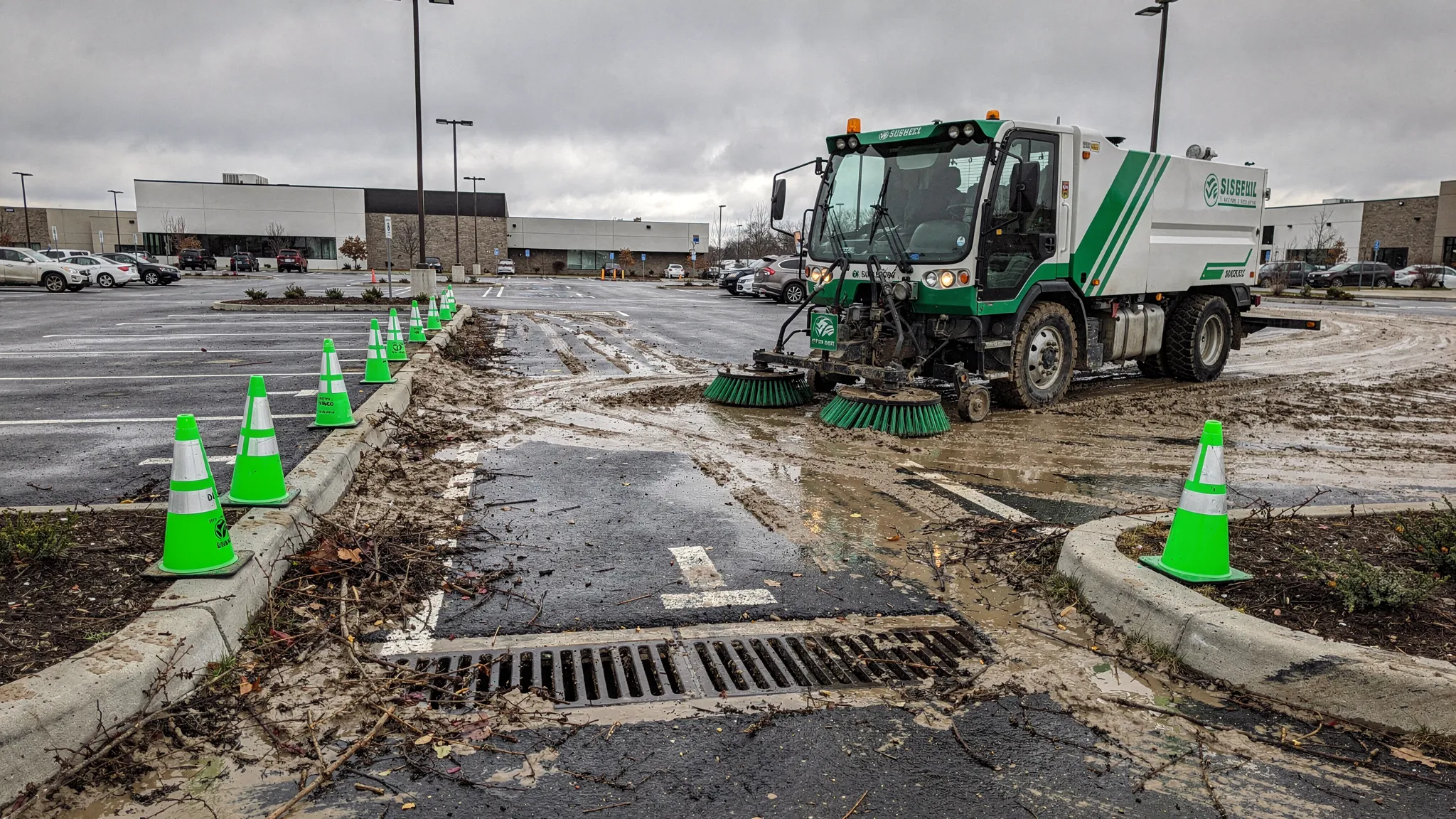
Mud and sediment usually need a dry-first approach. Bulk material should be captured, scraped, swept, or removed before any wet method is considered. Hosing mud toward a gutter may move the mess out of sight, but it can push sediment into the stormwater system.
The U.S. Environmental Protection Agency highlights street sweeping and good housekeeping as useful practices for reducing pollutants that can enter stormwater systems. For more background, see the EPA’s stormwater best management practices resources.
Metal fragments call for magnet sweeping, especially around construction access points, paving zones, loading docks, warehouses, and trailer yards. A visual cleanup may miss nails, screws, wire, and small sharp debris that can puncture tires or create injury risks.
Leaves, branches, and wind-blown trash often require a combination of pickup and sweeping. Large debris should be removed first so a sweeper can reach curb lines, corners, and inlets more effectively.
Fine dust and tracked material may require mechanical sweeping, air-assisted sweeping, or targeted dust and mud control depending on the surface and debris load. The objective is to capture material, not just relocate it to the next property line.
Once the method is clear, prioritize the zones that create the highest exposure. Emergency cleaning should not begin in the least visible corner simply because it is easy. It should begin where the risk is greatest.
For most exterior sites, the priority order looks like this:
This order helps teams restore function before focusing on polish. It is also useful when the cleanup window is short, such as before opening, before a tenant arrival, or ahead of a city inspection.
Emergency cleaning is not complete when the equipment leaves. Someone should verify the outcome against the original risk.
Walk the affected zone. Check whether curb lines are clear, drain areas are open, travel lanes are usable, and loose material has been captured. Look at the site from the viewpoint of the person most likely to complain or be affected: a customer walking from a parking space, a truck driver backing into a dock, an inspector approaching the entrance, or a tenant opening for the day.
Before-and-after photos are useful. So are short service notes that record the date, time, affected zones, material type, method used, and remaining exclusions. For construction sites, this documentation can support stormwater and housekeeping records. For commercial properties, it helps explain the response to ownership, tenants, and risk managers.
The right emergency cleaning plan depends on how the property operates. A retail center, construction entrance, warehouse yard, and HOA road all have different exposure points.
Construction sites often need emergency cleaning after rain, heavy hauling, grading, utility cuts, concrete work, paving, or large deliveries. Mud track-out is one of the most common urgent issues in Middle Tennessee because clay-heavy soils can move quickly from a stabilized entrance to adjacent pavement.
The immediate goal is to stop the source, protect the public edge, and remove sediment before it reaches curb lines or drains. A strong response often includes sweeping the haul route, detailing the curb line, cleaning around the construction entrance, and using magnet sweeping if metal debris is present.
For more construction-focused guidance, see Reliable Sweepers’ guide to pavement cleaning services for mud, dust, and debris.
Retail centers, office parks, restaurants, medical properties, and mixed-use sites need fast cleanup when exterior messes affect customer experience or create slip and trip concerns. Storm debris at entrances, dust in garage ramps, trash around dumpster areas, and mud near construction-adjacent edges can all lead to complaints.
The priority is to keep customer paths clean and predictable. Entrances, pedestrian crossings, accessible routes, curb ramps, cart return areas, and high-turnover parking stalls should be checked first. In garages, pay attention to ramps, corners, drains, stair tower entrances, and areas where dust collects from vehicle movement.
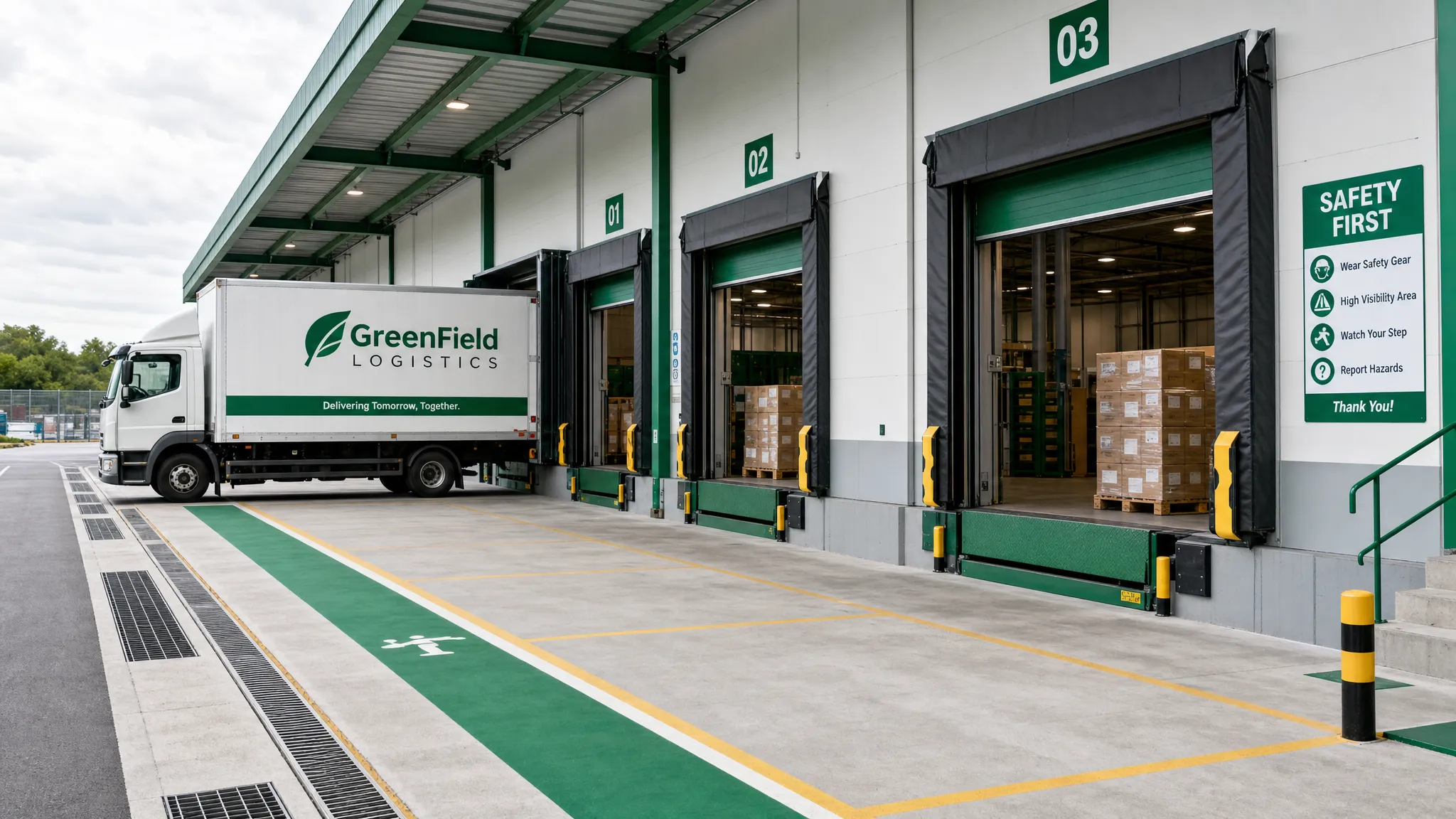
Industrial facilities often have heavier debris profiles than standard commercial lots. Pallet fragments, packaging, dust, metal pieces, trailer debris, and dock-area sediment can accumulate quickly.
Emergency cleaning at these sites should focus on keeping truck routes, dock approaches, trailer parking, employee entrances, and drainage paths clear. Magnet sweeping is especially useful where nails, staples, wire, strapping, or metal shavings may be present. Timing matters as well. Cleaning may need to be coordinated around shift changes, shipping windows, or yard traffic to avoid creating a new safety issue.
Neighborhood and municipal-style routes often need fast response after storms, leaf drop, nearby construction, or roadside debris events. The highest-risk areas are usually low points, curb returns, storm drain approaches, school or amenity access routes, and high-visibility entrances.
Parked cars can make emergency cleaning harder, so communication matters. If the cleanup is not immediate, send residents or stakeholders a short notice asking them to clear priority curb lines during the service window. Even a few hours of better curb access can improve results.
In a rush, teams often choose the fastest-looking option instead of the best one. That can create repeat work, complaints, or stormwater concerns.
Avoid these common mistakes:
The best response is disciplined, not dramatic. Stop the source, protect people, capture material, document results, and reset the site so the mess does not return immediately.
When you call a cleaning provider during an urgent situation, the quality of the information you provide can affect how quickly the work is scoped and scheduled. A vague request like “the lot is a mess” creates back-and-forth. A clear request helps the provider understand equipment, access, timing, and priority.
Send these details when possible:
If you manage multiple properties or active construction sites, it is worth building a pre-authorized emergency cleaning process. That can include approved contact names, billing information, site maps, after-hours access instructions, and trigger conditions for calling a sweeping partner.
The best emergency cleaning plan does more than react. It turns recurring messes into predictable triggers.
A baseline sweeping schedule handles normal debris. Trigger-based service handles abnormal conditions. In Nashville and Middle Tennessee, useful triggers often include heavy rain, high wind, leaf drop, grading work, utility cuts, paving, large deliveries, tenant move-outs, public events, and pre-inspection windows.
For example, a construction site might schedule routine sweeping twice a week but add trigger service after rain or heavy trucking. A retail center might maintain a weekly parking lot sweep but add same-day cleanup after a storm or dumpster overflow. An industrial facility might schedule dock-area sweeping on a cadence and trigger magnet sweeping after repairs, pallet breakage, or metal work.
This approach is usually more cost-effective than waiting for the site to fail visually. It also gives managers a simple way to explain why an extra cleanup was needed. The site hit a defined trigger, so the response followed the plan.
For more on stormwater-safe cleaning practices, read Reliable Sweepers’ guide to Nashville environmental cleaning basics.
A reliable emergency cleaning partner should do more than show up with equipment. They should help you make practical decisions under time pressure.
Look for a provider that can identify the debris type, recommend the right cleanup sequence, protect storm drain areas, coordinate around traffic, and document the completed work. For exterior messes, important capabilities may include construction site sweeping, parking lot and garage cleaning, industrial warehouse sweeping, magnet sweeping, dust and mud control, and emergency response services.
Local experience matters too. Middle Tennessee properties deal with fast weather shifts, clay soil, active construction, heavy pollen, leaf drop, and high-traffic commercial corridors. A local sweeping and exterior maintenance team is more likely to understand how those conditions affect timing, access, and cleanup priorities.
If you are comparing providers, Reliable Sweepers also has a practical guide on what to ask before hiring street sweeping companies near you.
What is emergency cleaning for exterior properties? Emergency cleaning is a fast-response cleanup for exterior conditions that create safety, access, drainage, compliance, or appearance problems. Common examples include mud track-out, storm debris, metal fragments, dust, gravel, and debris blocking entrances or drive lanes.
When should I request emergency cleaning instead of waiting for routine service? Request emergency cleaning when debris affects public areas, customer paths, loading access, storm drains, inspections, tire safety, or tenant operations. If waiting until the next scheduled visit could create a complaint, hazard, or delay, treat it as a trigger event.
Should I power wash mud or sediment during an emergency? Usually, no. Mud, dust, and sediment should typically be removed with a dry-first method before any wet cleaning is considered. Washing material toward gutters or storm drains can create stormwater problems and may not solve the root issue.
Does magnet sweeping help during emergency cleaning? Yes, when the mess includes nails, screws, wire, staples, pallet bands, or other small metal debris. Magnet sweeping is especially useful for construction sites, paving areas, warehouses, loading docks, and industrial yards.
What information helps a cleaning crew respond faster? Send the address, photos, debris type, priority zones, access instructions, time constraints, and the outcome you need. Clear details reduce scoping delays and help the provider bring the right equipment.
Can Reliable Sweepers help with emergency cleaning in Middle Tennessee? Reliable Sweepers offers exterior-focused sweeping and property maintenance services across Middle Tennessee, including emergency response, construction site sweeping, parking lot and garage cleaning, industrial sweeping, magnet sweeping, and dust and mud control. Availability depends on the site, scope, and schedule, so contact the team with the details of your situation.
If mud, debris, dust, or track-out is creating a problem on your property, do not wait for it to become a complaint, inspection issue, or safety concern. A clear emergency cleaning plan can help you stabilize the site, clean the right zones first, and document the response.
Reliable Sweepers supports commercial properties, construction sites, warehouses, parking facilities, neighborhoods, and municipal routes across Middle Tennessee with professional exterior cleaning and sweeping solutions.
Contact Reliable Sweepers to discuss your site, request a walkthrough, or build a response plan for the exterior messes your property is most likely to face.