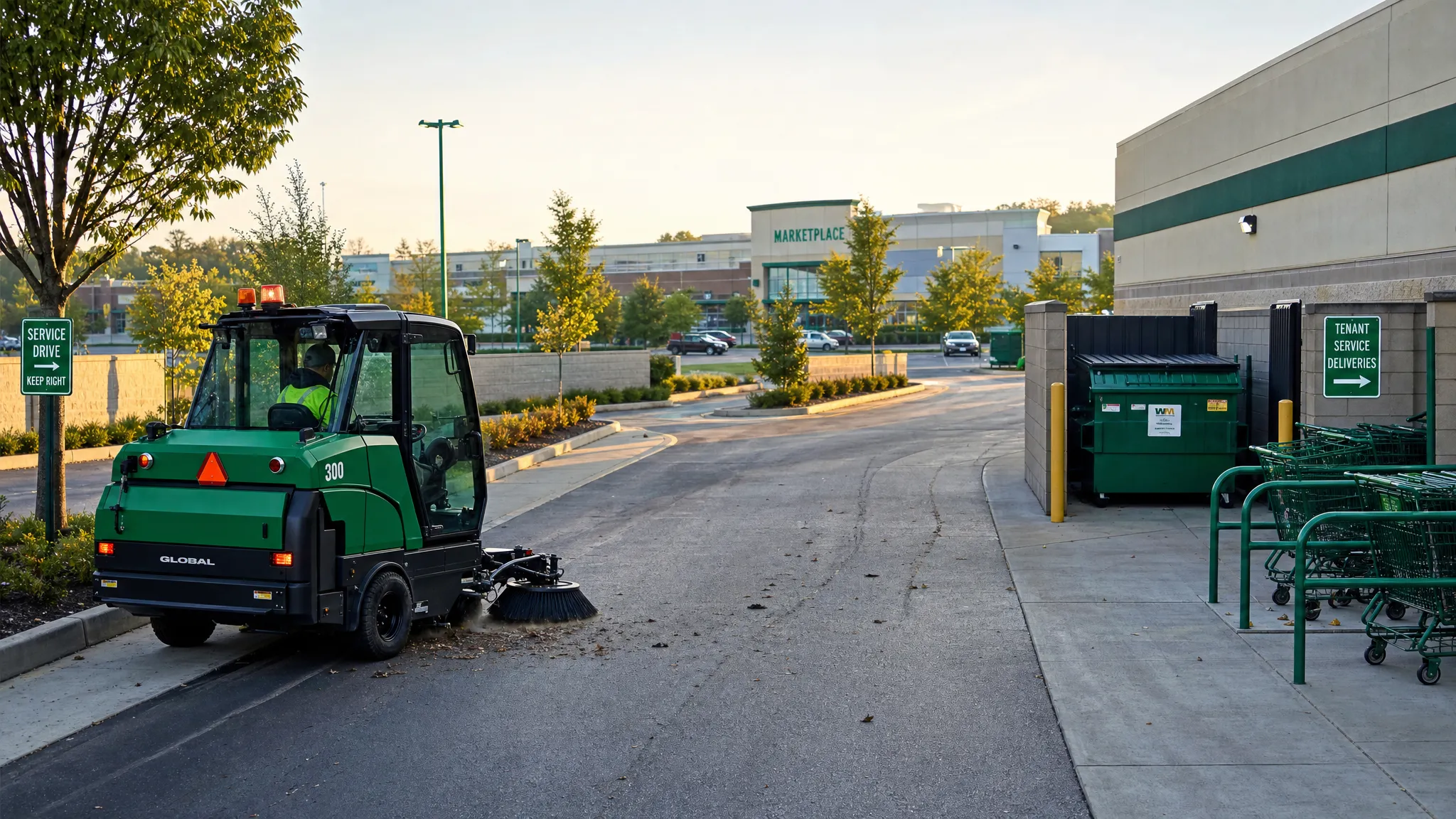
Retail centers do not get a second chance at a first impression. Before a shopper notices a storefront, menu board, sale sign, or tenant directory, they see the parking lot, sidewalks, curbs, landscaping edges, trash enclosures, and drive lanes. If those areas look neglected, customers may assume the same about the businesses on the property.
The good news is that an effective exterior cleanup plan for retail centers does not need to be complicated. It needs to be consistent, visible, and easy for property teams and vendors to follow. A simple plan helps prevent litter buildup, reduce slip and trip concerns, protect drainage, support tenant satisfaction, and keep the property ready for busy weekends or unexpected weather.
Below is a practical framework retail property managers can use to organize exterior maintenance without overbuilding the process.
A retail center cleanup plan should do more than make the property look tidy right before an inspection. It should create a repeatable system that keeps common exterior issues from turning into complaints.
For most retail centers, the plan should support four goals. First, it should keep customer-facing areas presentable every day. Second, it should reduce debris, sediment, and trash that can create hazards or clog drainage paths. Third, it should help tenants feel that the property is being actively managed. Fourth, it should give your team a fast way to respond when storms, spills, construction work, or heavy traffic create a sudden mess.
Retail centers are different from single-tenant commercial buildings because conditions can change quickly. A lunch rush, delivery delay, weekend event, overflowing trash can, or windy storm can affect the whole property in a matter of hours. That is why the best plans are built around zones, schedules, and response triggers.
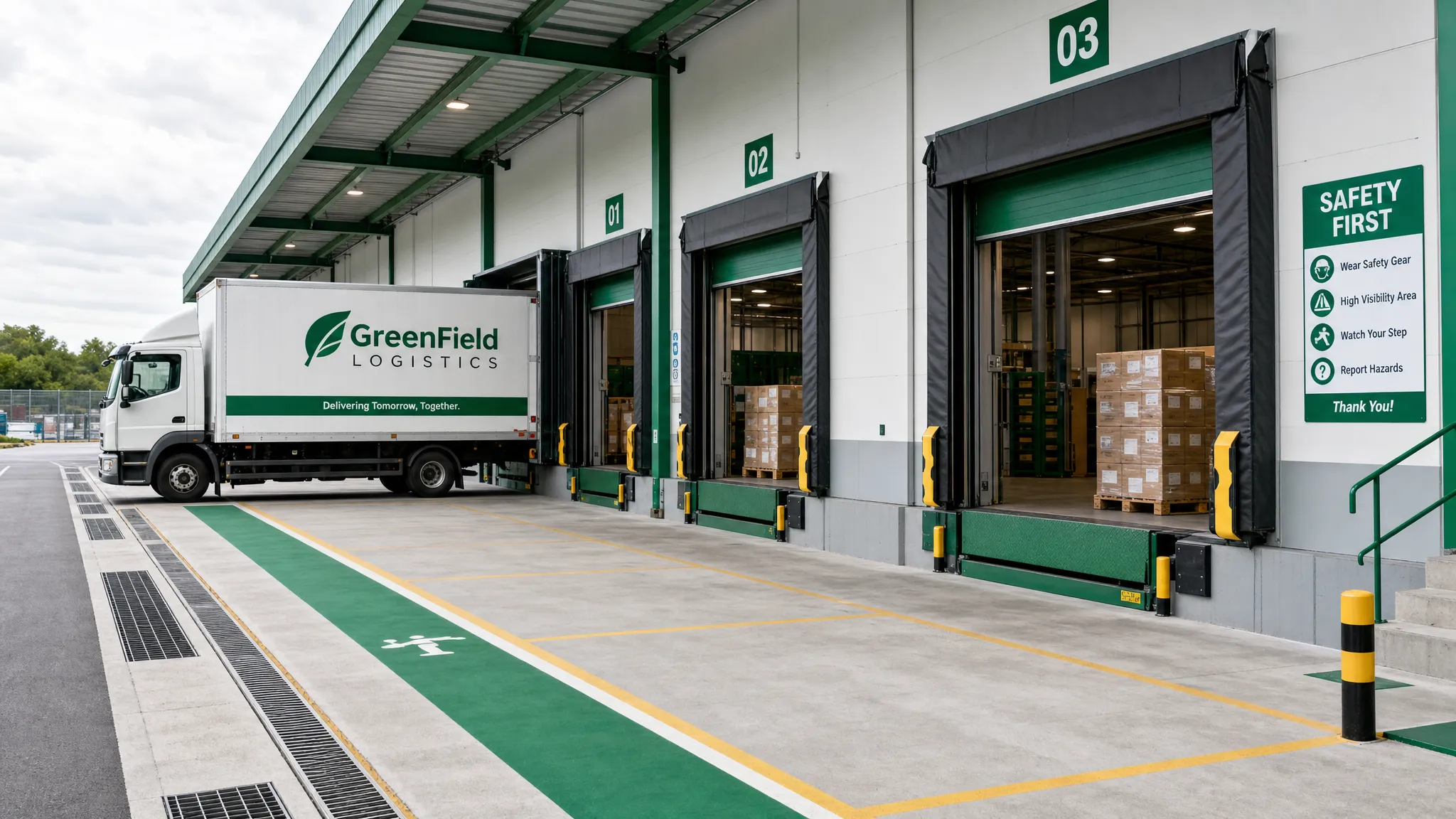
Start by dividing the retail center into practical exterior zones. This makes inspections easier and helps vendors understand what must be cleaned, how often, and to what standard.
Common retail center cleanup zones include:
This zone-based approach keeps your plan from becoming too vague. Instead of saying, “clean the parking lot,” you can identify the exact areas that collect litter, leaves, gravel, cigarette waste, mud, or packaging debris.
If you manage a larger center, prioritize the areas customers experience first. Entrances, sidewalks, curb lines, and drive lanes often deserve the most frequent attention because they shape the customer’s first impression. For a deeper look at which exterior areas matter most, Reliable Sweepers has a helpful guide on commercial building cleaning for high-traffic areas.
A cleanup plan only works when everyone understands the standard. “Clean” can mean different things to a property manager, tenant, maintenance technician, or sweeping crew. Set expectations in simple, observable terms.
For example, a retail center exterior may be considered in good condition when sidewalks are free of loose litter, parking lot debris is removed before it spreads, curb lines are not packed with leaves or sediment, dumpster areas are clear enough for service access, and storm drain inlets are not blocked by trash or landscaping debris.
The goal is not perfection every minute of the day. Retail centers are active properties, so some mess is inevitable. The goal is to prevent visible neglect. A clean standard gives your team a way to separate normal daily use from conditions that require action.
It also helps when communicating with tenants. If a restaurant has repeated packaging debris near its back door or a retailer’s deliveries leave cardboard and pallet fragments in the service lane, a written standard makes the conversation more objective.
Once you know the zones and standards, turn them into a realistic schedule. The schedule should reflect traffic levels, tenant mix, weather, and how visible each area is to customers.
A daily walkthrough works well for customer-facing areas. This does not need to be lengthy. A property representative or maintenance contact can check entrances, trash receptacles, storefront walks, obvious parking lot litter, blocked drains, and dumpster areas. The purpose is to catch anything that would create a poor impression before peak traffic begins.
Weekly service should focus on deeper exterior cleanup, including parking lot sweeping, curb line debris removal, drive lane cleanup, and service area attention. Retail centers with restaurants, grocery anchors, high turnover parking, or late-night activity may need more frequent sweeping.
Monthly or periodic service can address less visible areas, seasonal buildup, and recurring problem spots. This may include heavier attention to back-of-house areas, garage levels, remote parking corners, and areas affected by landscaping, construction, or nearby road work.
Seasonal adjustments matter, especially in Middle Tennessee. Spring pollen, summer storms, fall leaves, and winter deicing material can all change the type of debris on the property. A good plan leaves room to increase service when conditions call for it.
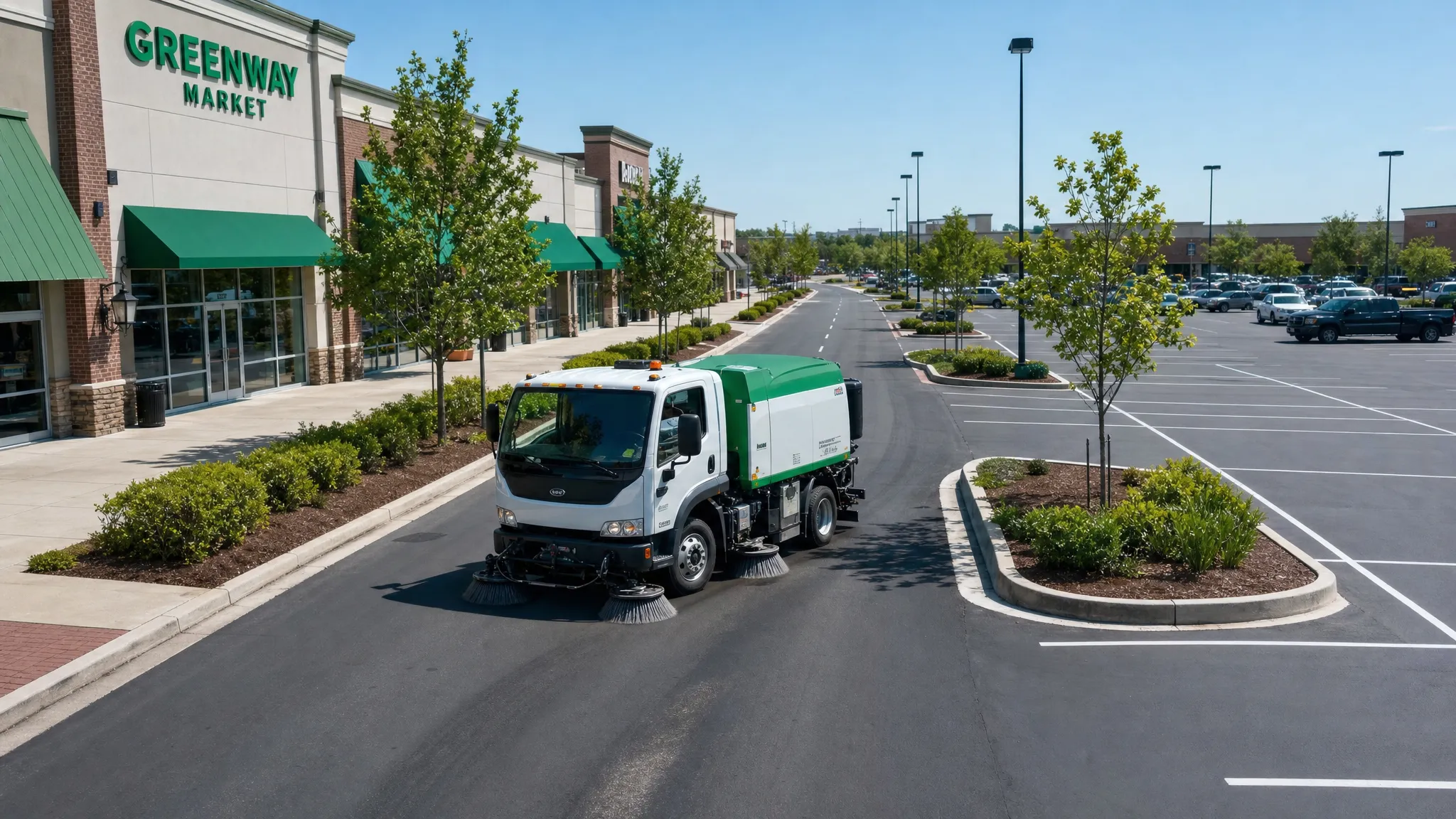
For retail centers, parking lot sweeping is not just cosmetic. It helps manage the areas where customers spend the most time outside their vehicles, including parking spaces, pedestrian paths, cart corrals, and curbside pickup areas.
Consistent sweeping removes litter, leaves, gravel, sand, cigarette waste, and loose debris before it spreads across the property. It also helps keep curb lines clear, which can improve the flow of stormwater to drains. When debris is allowed to collect around drains or low spots, water may pond, sediment can build up, and trash can migrate into stormwater systems.
The EPA’s stormwater program highlights how runoff can carry pollutants from paved surfaces into waterways. While every property has different requirements, routine sweeping is a practical way to reduce the amount of trash and sediment available to be moved by rain.
For retail centers with frequent traffic, parking lot sweeping should be planned around customer activity. Overnight, early morning, or other low-traffic service windows often allow for more thorough cleaning with less disruption. Properties with restaurants, entertainment tenants, or grocery anchors may need a different schedule than centers that primarily operate during standard retail hours.
If drainage is a recurring concern, review the guidance on parking lot cleaning for appearance and drainage, especially if curb lines, drain inlets, or low areas collect debris after storms.
The easiest exterior mess to clean is the one that never spreads across the property. A strong cleanup plan should identify where debris starts and how it moves.
At retail centers, common sources include overflowing trash cans, poorly managed dumpster enclosures, food service waste, delivery packaging, landscape material, loose gravel, tenant improvement work, and construction traffic. Wind can carry light debris across parking lots, while rain can move sediment into curb lines and drains.
Some source-control improvements are operational. Trash receptacles may need to be placed closer to high-use areas. Dumpster service schedules may need adjustment during busy seasons. Tenants may need reminders about keeping rear doors, loading areas, and patio edges clear.
Other improvements require the right cleanup method. Magnet sweeping can help remove nails and metal debris after construction activity, tenant build-outs, or paving work. Dust and mud control can be important when a retail center has active construction nearby, a new pad site under development, or resurfacing work in progress.
The key is to connect the source to the plan. If the same curb line fills with debris every week, it may need more frequent sweeping, better trash placement, landscaping adjustments, or tenant communication. Repeated messes are usually a signal that the plan needs refinement, not just more cleanup.
A routine schedule is the foundation, but retail centers also need trigger-based cleanup. These are situations where the normal schedule is not enough.
Useful triggers include:
Triggers help the property team act quickly. For example, if a storm pushes leaves and litter into drain inlets, waiting until the next scheduled sweep may allow water to pond or debris to spread. If a tenant improvement project leaves nails or metal scraps near customer parking, magnet sweeping may be needed before the area returns to normal use.
This is where emergency response cleaning becomes part of the plan. It does not replace routine service, but it gives you a backup process when conditions change quickly. For situations that require fast action, review this practical emergency cleaning response plan for exterior messes.
Inspections are most useful when they are simple enough to happen regularly. A retail property manager does not need a long checklist to spot problems. The best inspection routine focuses on visible conditions, repeat issues, and tenant or customer impact.
Walk the property from the customer’s point of view. Start at the main entrance drives, then look at parking fields, sidewalks, storefronts, cart areas, curb lines, trash receptacles, and exits. After that, check service areas, dumpster enclosures, loading zones, and any active construction or maintenance areas.
Take photos of recurring issues. A photo log can help you identify patterns, communicate with vendors, and document conditions before and after cleanup. It can also make tenant conversations easier because the issue is visible and dated.
For multi-tenant retail centers, a short weekly review often works better than an occasional deep inspection. Small exterior problems are easier to correct when they are caught early.
A cleanup plan should clarify who is responsible for what. Without clear ownership, exterior issues tend to bounce between tenants, property management, landscapers, waste haulers, maintenance teams, and sweeping providers.
The property team should typically own the overall standard and schedule. Tenants should understand expectations for storefronts, patios, loading areas, and trash handling. Waste haulers should have clear access to enclosures. Landscaping vendors should prevent clippings, mulch, and soil from being left in drive lanes or curb lines. Sweeping providers should know the priority zones, timing restrictions, and any areas requiring special attention.
Communication is especially important when multiple vendors work on the property. For example, landscape work may create debris that sweeping can remove, but only if the timing is coordinated. Construction work may require temporary adjustments to sweeping routes or additional magnet sweeping. Paving work may require cleanup before striping, reopening, or customer traffic.
A simple plan becomes more effective when everyone understands the sequence.
Many exterior maintenance problems come from a few avoidable mistakes. One is focusing only on storefront sidewalks while ignoring curb lines and parking lot edges. Customers may not consciously notice every curb line, but they do notice the overall condition of the property.
Another mistake is waiting for complaints before adjusting service. Tenant and customer complaints are useful signals, but they should not be the main inspection system. By the time complaints arrive, the issue has usually been visible for a while.
A third mistake is using the same schedule all year. Retail centers change with seasons, tenant turnover, weather, and traffic patterns. A property that looks clean in February may need more frequent attention during spring storms, summer restaurant traffic, or holiday shopping periods.
Finally, many centers treat exterior cleanup as separate from property performance. In reality, clean exterior areas support leasing, tenant satisfaction, customer comfort, and long-term pavement and drainage management.
Use this as a starting point, then adjust it to your property’s size, tenant mix, and traffic level.
This type of checklist is intentionally simple. The goal is to create a rhythm your team can actually follow.
How often should a retail center schedule parking lot sweeping? The right frequency depends on traffic, tenant mix, weather, and property size. Many retail centers benefit from weekly sweeping, while centers with restaurants, grocery stores, entertainment tenants, or heavy weekend traffic may need more frequent service.
What areas should be cleaned first at a retail center? Prioritize the areas customers see and use most, including entrances, storefront sidewalks, curb lines, parking spaces near tenants, cart corrals, and main drive lanes. Service alleys, dumpster pads, and loading areas should also be included because problems there often spread.
Why do curb lines matter so much? Curb lines collect leaves, sediment, trash, gravel, and cigarette waste. If they are not cleaned regularly, debris can spread across parking areas, block drainage paths, or create a neglected appearance.
When should a retail center request emergency cleanup? Emergency cleanup is useful after storms, spills, missed trash pickup, construction debris, mud tracking, special events, or any exterior mess that affects safety, access, appearance, or tenant operations.
Can exterior cleanup help with tenant satisfaction? Yes. Tenants want customers to feel comfortable visiting the property. A consistent exterior cleanup plan shows that management is protecting the shopping environment and addressing common property issues before they become complaints.
A clean retail center is the result of small, consistent actions: mapped zones, clear standards, routine sweeping, short inspections, and fast response when conditions change. When those pieces are in place, exterior cleanup becomes easier to manage and more reliable for tenants and customers.
Reliable Sweepers provides professional street sweeping, parking lot sweeping, construction site cleanup, industrial sweeping, magnet sweeping, dust and mud control, and emergency response services across Nashville and Middle Tennessee. If your retail center needs a dependable exterior cleanup plan, contact Reliable Sweepers to discuss a schedule that fits your property’s traffic, tenants, and maintenance needs.