
High-traffic sites do not get “a little dirty.” They get constantly re-contaminated by tires, foot traffic, deliveries, weather, and nearby construction. That’s why the best results rarely come from occasional spot cleanups or a once-a-month “make it look better” visit. They come from professional cleaning solutions that are planned around traffic patterns, risk zones, and trigger events, so the property stays safe, presentable, and inspection-ready.
This guide breaks down what to prioritize, which methods actually work on busy exterior sites, and how to build a realistic plan for Nashville and Middle Tennessee conditions.
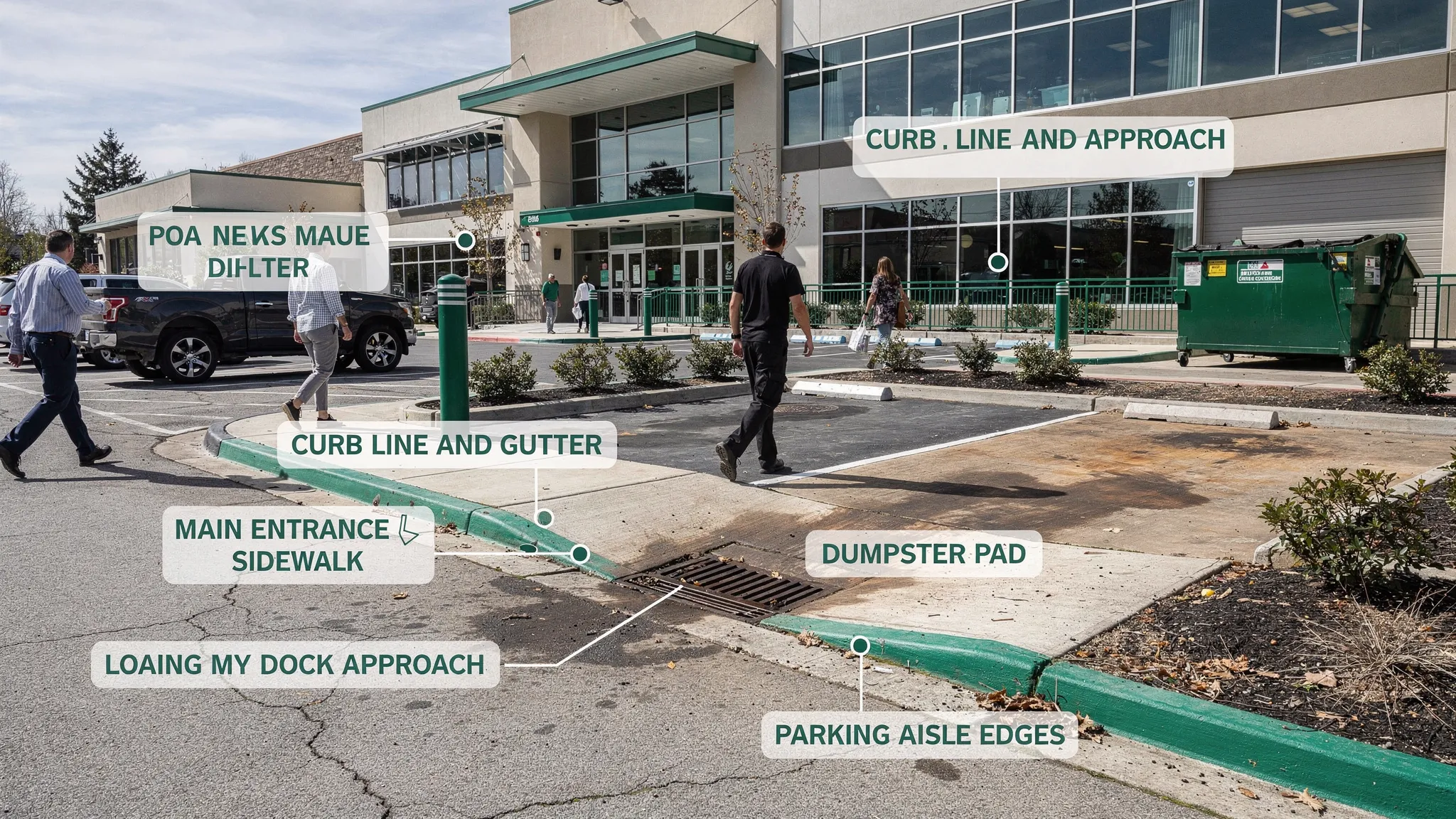
“High-traffic” is not just a bigger parking lot. It’s a site where debris is created and moved all day.
Common high-traffic site types in the Nashville area include:
What makes these sites hard is that the “mess” is not evenly distributed. It concentrates in a few predictable places, and those places usually overlap with your highest liability and visibility.
When traffic is heavy, exterior cleaning has to deliver outcomes you can defend to tenants, visitors, inspectors, and ownership.
Loose aggregate at curb returns, mud at entrances, and metal fragments in drive lanes create real risk. OSHA’s walking-working surfaces rule is clear that employers must keep walking surfaces in a condition that does not create hazards (good overview on OSHA’s Walking-Working Surfaces). Even when you are not thinking “OSHA,” the same logic applies to customer areas: reduce the hazards that generate incidents and claims.
If deliveries are blocked by debris piles, if docks are dusty and slick, or if entrances track mud inside, your cleaning program becomes an operations problem, not a cosmetic one.
Sediment and litter migrate to curb lines and inlets. If your team “cleans” by blowing or rinsing material toward drains, you may be moving the problem into the storm system. The EPA’s stormwater resources emphasize preventing pollutants from entering storm drains (see EPA stormwater program resources). A professional plan prioritizes capture and containment.
High-traffic properties get judged fast. The goal is not perfection for one hour, it is a repeatable baseline that holds up through normal traffic and weather.
If you want a deeper look at how exterior work fits with interior janitorial scope, see Nashville Commercial Cleaning Services: Exterior vs. Interior Scope.
High-traffic exterior cleaning succeeds or fails at the edges and transitions. These are the zones that typically drive complaints, slip risks, and drainage issues:
These areas combine foot traffic, visibility, and tracked contaminants. Gum, mud, fine dust, and organic film build up quickly.
Practical guidance on methods by contaminant type is covered in Sidewalk Cleaning: Remove Gum, Mud, and Slip Hazards.
This is where sediment settles, especially after storms and landscaping work. It is also where a property can look “messy” even if the center lanes look fine.
If you only have time to detail one area before a walkthrough or inspection, detail around inlets and water paths. Debris here is both visible and higher risk.
For an inspection-focused timeline, reference Site Cleaning: What to Do Before a City Inspection.
Dock areas generate unique debris (pallet wood, strapping, shrink wrap, banding). They also create fine dust that migrates into buildings and drains.
If a site “smells dirty” or attracts pests, this is often why. Pads also collect broken glass and saturated debris after rain.
Traffic pushes litter outward. Islands trap leaves and fast-food trash. Cart corrals become mini landfills on busy retail lots.
Track-out does not stay put. It moves into the public edge, into nearby parking, and into drains.
The best-performing programs use the same principle Reliable Sweepers emphasizes across many site types: dry removal first, then targeted wet cleaning only when needed.
If you want the full sequencing logic, see Cleaning and Sweeping: The Best Order for Faster Turnovers and Pavement Cleaning: When Power Washing Isn’t Enough.
Bulk trash, cardboard, pallet scraps, and wind-blown debris should be removed early. If it gets run over repeatedly, it becomes smaller, harder to capture, and more likely to migrate to drains.
Curb lines, corners, and curb returns need intentional detail work. On high-traffic sites, “center passes only” is a common reason results look inconsistent.
Different sites produce different debris:
A professional provider should be talking about methods matched to material, not a one-size-fits-all promise.
If your site sees construction traffic, metal banding, machining operations, tire service, or frequent pallet breakdown, magnet sweeping can prevent flat tires and injuries.
Wet cleaning can help with stains and film, but on busy sites it can also:
A stormwater-friendly plan treats wet cleaning as a targeted add-on, not the default.
High-traffic properties rarely stay clean on a simple calendar schedule. The most reliable approach is:
Examples of triggers that justify extra service on high-traffic sites:
For scheduling depth, including seasonal planning, see Parking Lot Sweeping Nashville: A Seasonal Schedule That Works and How to Maintain Clean Properties Year-Round in Tennessee.
High-traffic sites often need cleaning when access is possible, not when it is convenient.
Common strategies:
If your property requires off-hours planning, this guidance can help: Overnight Street Sweeping Nashville: Pros, Cons, and Permits.
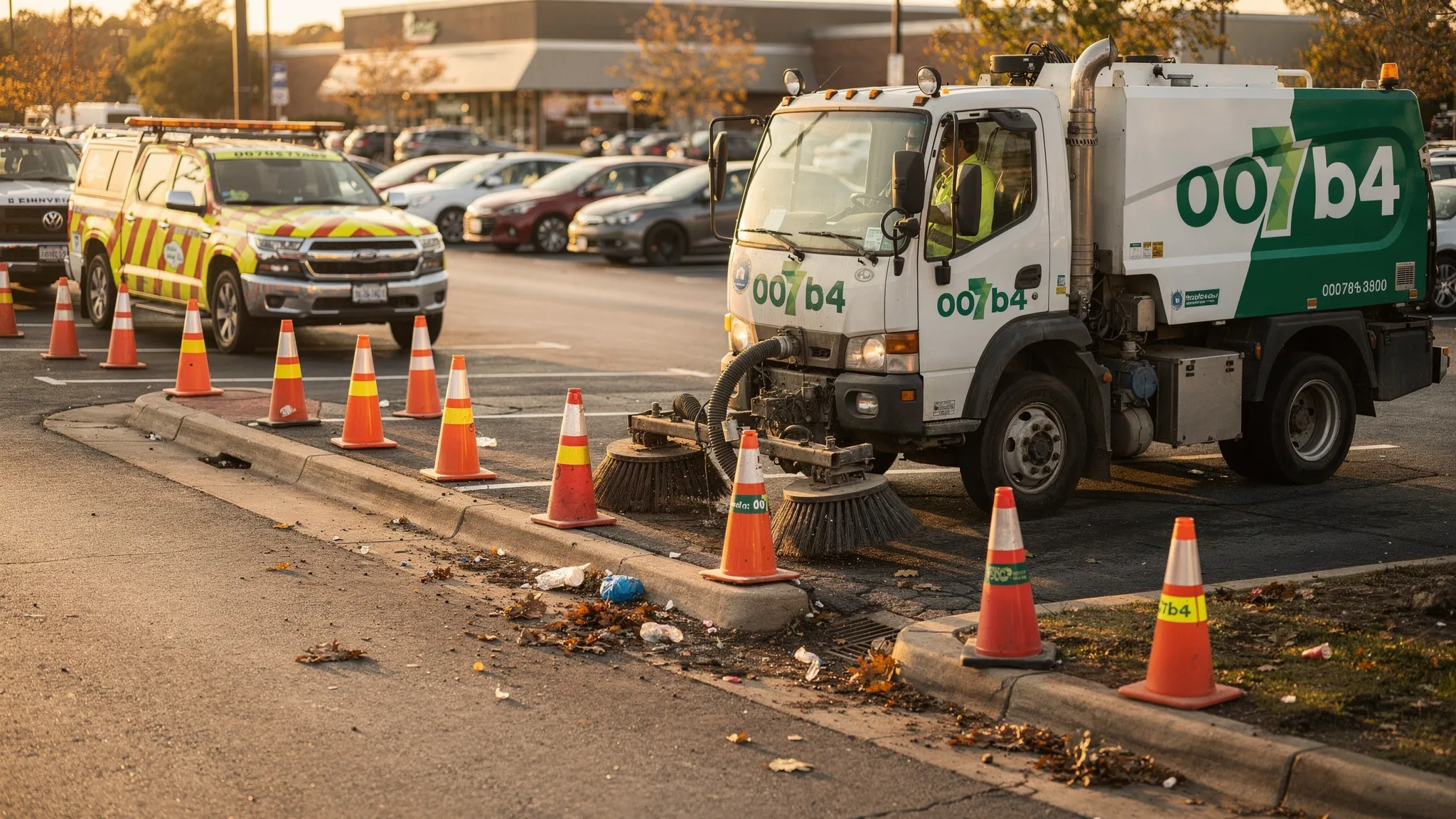
Before you change vendors or increase frequency, do a fast audit that identifies where your cleaning dollars are actually going.
Walk the site and note:
Then ask one key question: Are we cleaning the zones that create complaints and risk, or the zones that are easiest to clean?
If you manage warehouse or industrial sites, a zone-based approach is outlined in Industrial Facility Cleaning: Build a Zone-Based Maintenance Plan.
High-traffic sites need clarity, otherwise crews default to the fastest passes, and your worst zones stay bad.
Include these elements:
Define zones like “front-of-house entrance loop,” “loading dock apron,” “dumpster pad,” “perimeter curb lines,” and “storm inlet checks.”
Outcome-based standards prevent debates. If you want a structured template, see Commercial Street Sweeping: Specs That Prevent Complaints.
If magnet sweeping is needed, specify where and when. If dust control is critical, specify it. If wet work is allowed, specify containment expectations.
High-traffic properties fail when crews cannot reach curbs (parked cars, delivery staging, cones removed). Write down:
At minimum, request brief service notes and before/after photos of the worst zones, especially curb lines and inlets.
For bid normalization using outcomes rather than task lists, reference Commercial Cleaning Nashville: How to Compare Bids by Outcomes.
Even a strong baseline schedule will not cover every disruption. High-traffic sites should plan for rapid response when:
If you need a response playbook, see Emergency Clean Up Services: Rapid Response for Job Sites.
What are professional cleaning solutions for high-traffic sites? Professional cleaning solutions typically combine planned sweeping, detail work at curb lines and drains, debris removal, and add-ons like magnet sweeping or dust and mud control, based on site-specific risks and traffic patterns.
How do I know which areas to prioritize first? Start with entrances/sidewalks, curb lines, and storm drain inlets. These zones drive most complaints, slip risk, and drainage problems, and they show whether cleaning is truly effective.
Is power washing enough for busy exterior areas? Often no. Without dry removal first, power washing can push fines into joints and drains and spread contaminants. A dry-first plan with targeted wet cleaning (when needed and controlled) is usually more reliable.
How often should a high-traffic site be swept? It depends on debris drivers and traffic, but high-traffic sites usually need a baseline schedule plus trigger-based service after storms, heavy deliveries, landscaping, or nearby construction activity.
Why is magnet sweeping important on high-traffic sites? High traffic increases the chance that metal fragments get run over and moved into pedestrian paths and drive lanes. Magnet sweeping helps reduce flat tires, injuries, and cleanup rework.
What should I ask a contractor before hiring exterior cleaning for a busy site? Ask how they will handle your worst zones (curb lines, inlets, dock areas), what methods they use for your debris types, how they manage safety and traffic control, and what documentation you will receive.
If your site is busy enough that it never really “stays clean,” the answer is usually not a random add-on service. It’s a zone-based plan with the right methods, the right timing windows, and trigger response built in.
Reliable Sweepers provides street sweeping and exterior property maintenance across Middle Tennessee, including construction site sweeping, parking lot and garage cleaning, industrial sweeping, magnet sweeping, dust and mud control, and emergency response.
Request a walkthrough and a site-specific plan at Reliable Sweepers.
