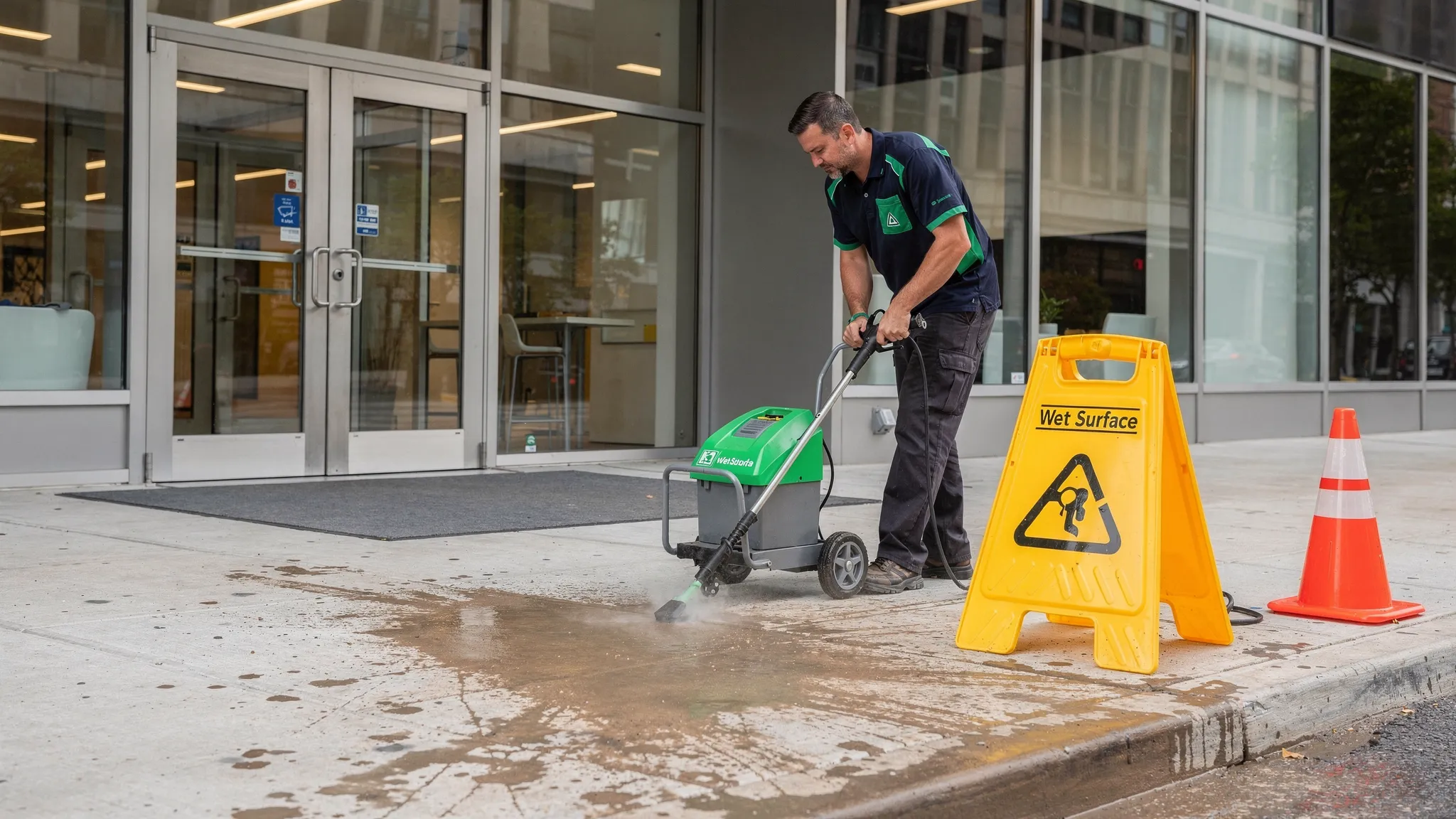
Sidewalks are a first impression, a safety zone, and a liability hotspot all at once. Gum spots at an entry, mud tracked from a job site, or a slick film after rain can turn a normal pedestrian path into a slip hazard. For property managers, facility teams, and contractors, sidewalk cleaning is not just cosmetic, it is about reducing complaints, preventing incidents, and keeping your site “inspection ready” year-round.
Below is a practical guide to removing gum, mud, and common slip hazards with methods that protect concrete, protect storm drains, and deliver repeatable results.
Sidewalks concentrate foot traffic at the exact places where people are distracted: entrances, crosswalks, curb ramps, loading office doors, and tenant storefronts. When contaminants build up here, the downsides stack quickly:
For general guidance on reducing slip and trip issues across exterior zones, see Reliable Sweepers’ related resource on maintenance tips to reduce slip and trip risks.
Different materials create different risks, so the fastest way to improve outcomes is to identify what you are dealing with before you choose tools.
Gum usually accumulates near entries, benches, bus stops, and storefront edges. Over time it traps grit, darkens, and becomes harder to remove.
Mud often shows up after rain, irrigation overspray, grading, utility work, or heavy deliveries. Besides being slippery, sediment also migrates toward curb lines and storm inlets.
Shaded sidewalks, areas near irrigation, and north-facing entries can develop a slick film that is hard to see until someone slips.
Dust looks harmless but can act like ball bearings on smooth concrete, especially at ramps. This is common near construction zones, warehouses, and high-traffic lots.
Even in Middle Tennessee, freeze events happen. De-icer residue and sand can reduce traction, track indoors, and create a gritty layer that needs removal once temperatures stabilize.
Before you clean, do a short walkthrough and document what you see. This prevents wasted effort and helps you set a repeatable standard.
Focus on:
Take a few timestamped photos so you can confirm improvement and justify future cadence. If your goal is to stay client-ready and reduce liability, this “before/after” habit pays off quickly.
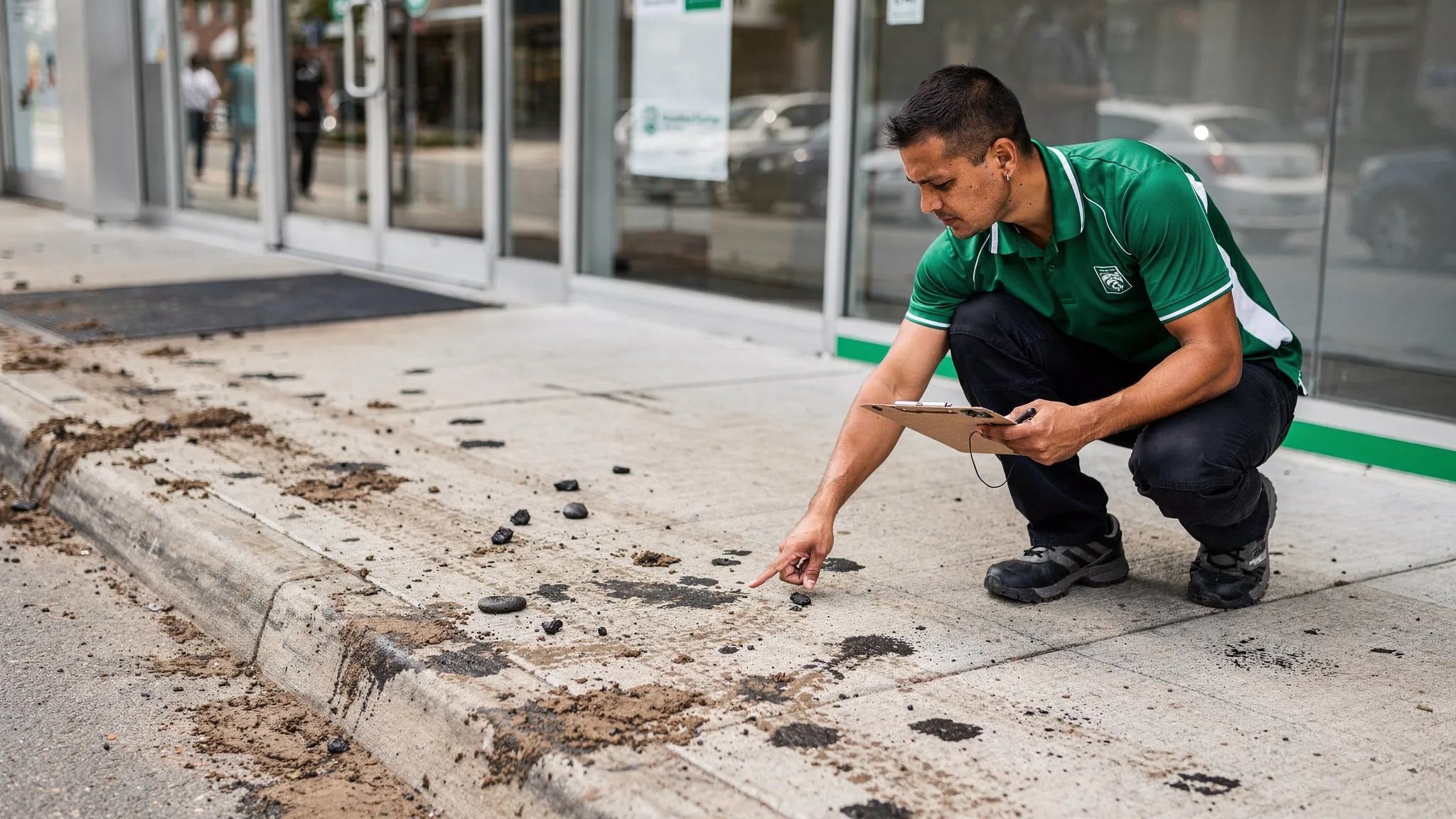
Gum removal works best when you match the method to the surface condition and volume of spots.
In most cases, the winning sequence is:
1) Manual scraping (small areas, quick wins) A handheld scraper can handle a few spots. It is cheap and immediate, but labor adds up fast and you can scar softer concrete if you rush.
2) Steam or hot-water gum removal (best for frequent storefront gum) Heat makes gum pliable so it releases cleanly. Dedicated gum removal tools often combine heat with a mild detergent. This is usually the most consistent approach for high-visibility sidewalks.
3) Pressure washing (use carefully) Pressure washing can work, but it is easy to:
If you use pressure, start lower than you think you need, keep the nozzle moving, and test a small area first.
If you are using water, cleaners, or hot rinse, plan for wash-water control. The U.S. Environmental Protection Agency (EPA) has extensive stormwater resources for preventing pollutants from entering drains (start here: EPA stormwater program). In many areas, it is not acceptable to wash contaminants directly into storm inlets.
Mud is a traction issue, but it is also a “migration problem.” If you only rinse, it often just relocates to curb lines, low spots, and drains.
For mud and sediment, the most reliable sequence is:
This aligns with the broader pavement-cleaning best practice of capture-first, then selective washing. If you are dealing with larger paved areas beyond sidewalks, Reliable Sweepers also explains this approach in Pavement Cleaning: When Power Washing Isn’t Enough.
Recurring mud typically comes from one of these:
For construction-adjacent sidewalks, track-out control is often the real solution (stabilized entrances, designated haul routes, and trigger-based resets after rain). When rain hits and mud starts moving fast, it can become an urgent issue. In those situations, an on-call plan helps, see Emergency Clean Up Services: Rapid Response for Job Sites.
If a sidewalk looks “clean” but still feels slick, organic film is a common culprit. This often shows up:
Organic film responds well to:
If you manage a property with stormwater requirements, your cleaning plan should include how you will keep sediment and wash-water out of inlets.
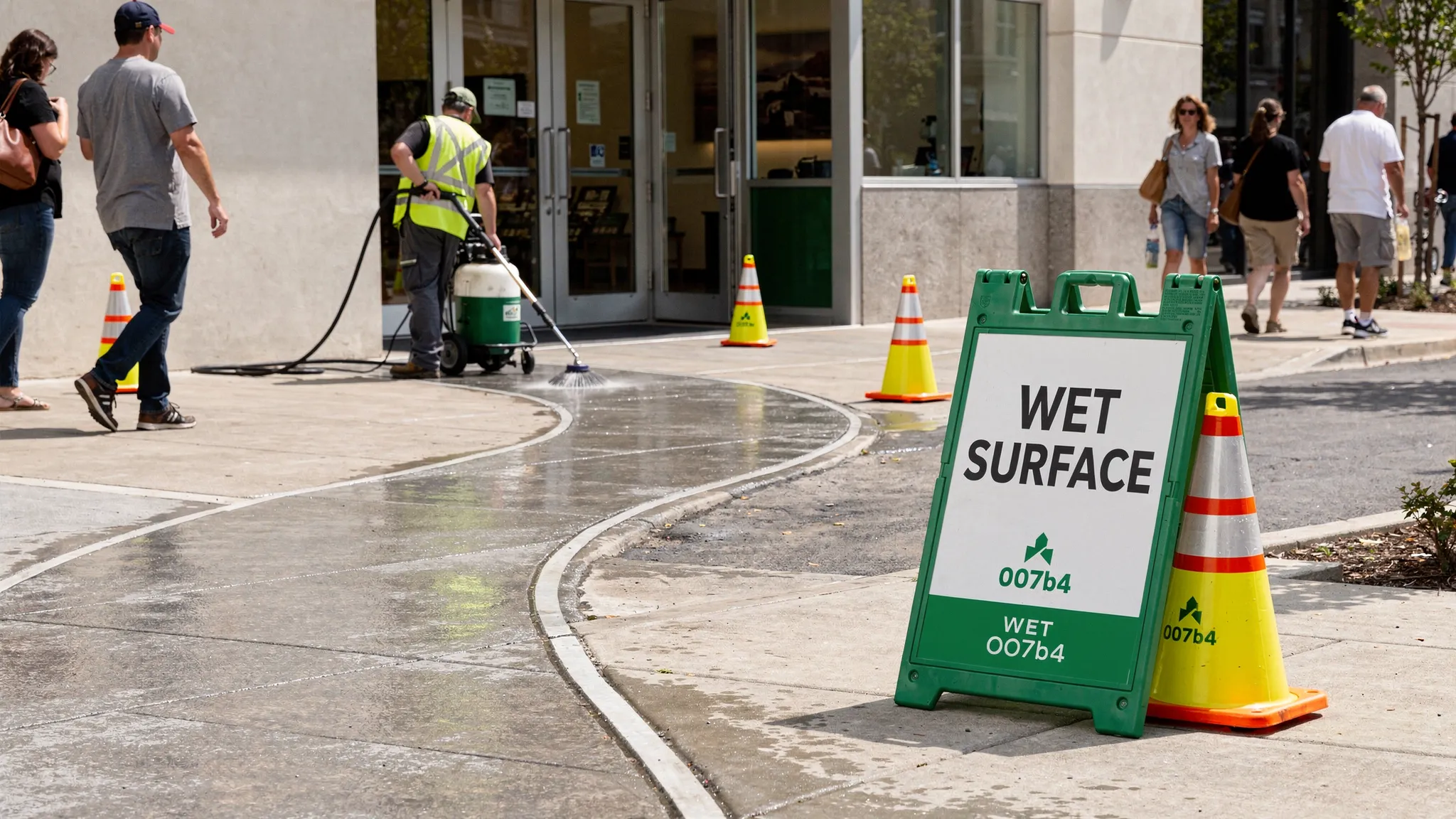
Cleaning can temporarily increase slip risk, especially during wet methods. A simple safety setup prevents avoidable incidents.
Most properties do better with a baseline rhythm plus trigger-based cleanups, instead of waiting until sidewalks look bad.
If you want a broader exterior plan that connects sidewalks to parking, curb lines, and drains, Reliable Sweepers also shares a planning framework in Property Maintenance and Cleaning: One Plan, Better Results.
DIY works when the area is small, the risk is low, and you can control runoff. Professional help usually makes sense when speed, consistency, and risk reduction matter.
Reliable Sweepers supports exterior cleanliness across Middle Tennessee with flexible, site-specific scheduling (construction cleanup, commercial property care, emergency response, dust and mud control). If you want help building a sidewalk and pedestrian-edge plan that actually holds up week to week, start with a walkthrough request at reliablesweepers.com.
What is the best way to remove gum from a sidewalk? Heat or steam plus light agitation is usually the most consistent method. Scraping alone works for a few spots, but gum often leaves residue without softening.
Will pressure washing remove gum from concrete? Sometimes, but it is easy to etch concrete or spread gum residue. For repeatable results, soften the gum first (heat/steam or an appropriate solvent), then lift and rinse in a controlled way.
Can I just rinse mud off the sidewalk into the street? It is better to remove mud dry first. Rinsing often pushes sediment to curb lines and storm inlets, creating drainage and compliance problems.
How often should sidewalks be cleaned on a commercial property? A practical starting point is daily spot checks at entrances and ramps, weekly detail cleaning for high-visibility zones, and trigger-based cleanups after storms or heavy activity.
Why do sidewalks feel slippery even when they look clean? Organic film (algae/mildew), fine dust, or de-icer residue can reduce traction without obvious buildup. These usually require pre-treatment, agitation, and a controlled rinse.
If gum, mud, or slick pedestrian edges are creating complaints or safety concerns, a simple “when to clean and how to clean” plan can prevent repeat issues. Reliable Sweepers helps contractors and property teams stay clean, compliant, and on schedule with tailored exterior cleaning support.
Request a walkthrough and scope help at Reliable Sweepers.