Most exterior property problems are not caused by a lack of effort. They come from fragmentation: one vendor handles landscaping, another handles porter service, someone else handles sweeping “as needed,” and nobody owns what “clean” actually looks like at the curb line, at the dumpster pad, or around storm drains.
A single, written property maintenance and cleaning plan fixes that. It turns scattered tasks into a repeatable system that protects curb appeal, reduces slip and trip risk, supports stormwater compliance, and keeps small issues from becoming expensive emergencies.
A unified plan does not require one vendor to do everything. It means you have one set of expectations, one schedule rhythm, and one process for handling exceptions.
In practice, “one plan” should answer:
When those elements are aligned, you stop paying for overlap, missed corners, and rushed “catch-up” work.
Task lists are useful, but outcomes keep the plan focused. For most commercial, industrial, HOA, and municipal sites in Middle Tennessee, the outcomes that matter are consistent:
“Looks good right after service” is not the same as “looks good for the next 10 days.” Define what should stay clean, especially the areas people judge instantly: entry drives, primary parking rows, storefront walks, and the first curb lines.
Dust, gravel, leaves, and mud track-out are not only aesthetic issues. They can reduce traction and hide hazards. OSHA’s walking-working surfaces guidance consistently emphasizes housekeeping and keeping surfaces free of hazards as part of a safer environment (OSHA Walking-Working Surfaces).
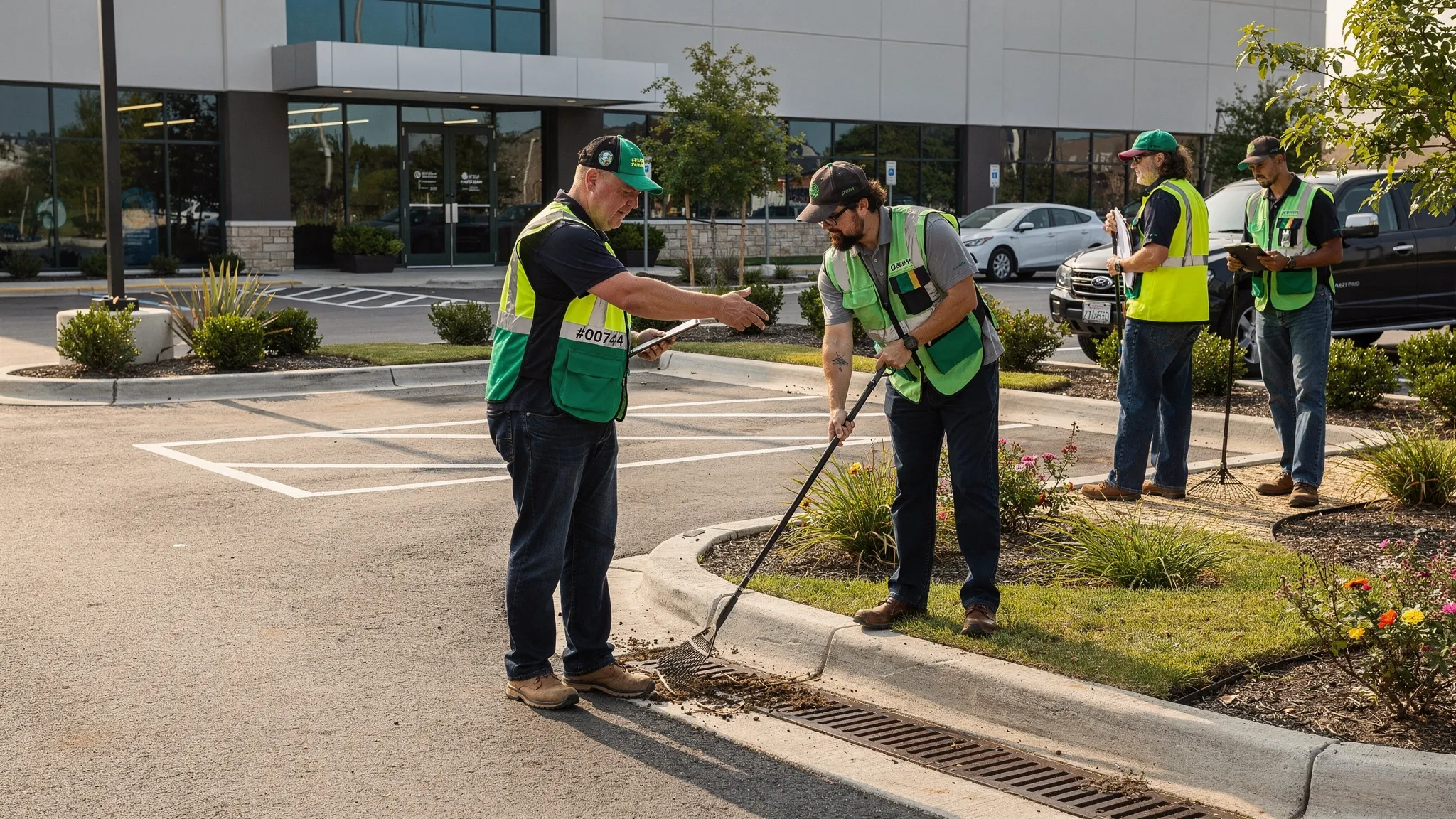
If curb lines and inlets fill with sediment and litter, you get ponding, algae growth, and faster pavement deterioration. Sweeping and edge-line detailing are drainage maintenance, not just “cleaning.”
For construction-adjacent and industrial sites, controlling sediment and debris is also about reducing pollutant discharge risk. If you operate under stormwater requirements, you want a plan you can prove with consistent maintenance and documentation. EPA’s construction stormwater overview is a useful reference point for why sediment control and housekeeping matter (EPA NPDES construction stormwater).
Once outcomes are clear, it is easier to choose methods (sweeping, magnet sweeping, mud control, litter pickup, pressure washing) and to set realistic service frequencies.
Most sites have a few “debris engines” that drive 80 percent of the mess. Your plan should name them.
Common debris engines in the Nashville area include:
When you map zones, think in terms of how debris moves:
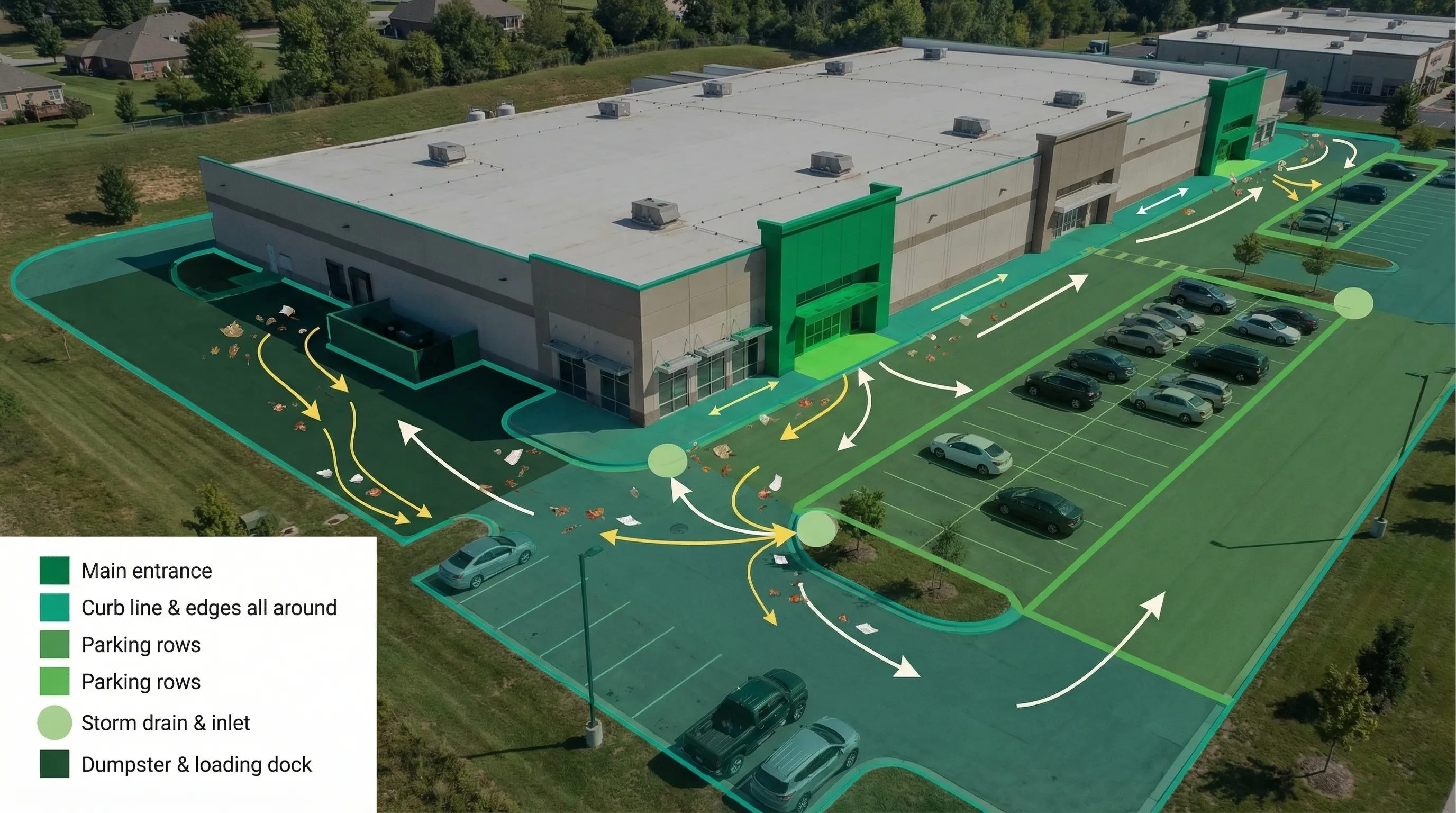
If you already have a checklist, keep it, but add this zone map. It is the difference between “we cleaned” and “we controlled the problem.”
A baseline schedule alone will always be wrong on the weeks that matter most: big storms, high delivery weeks, heavy leaf drop, or peak construction activity. The best plans combine:
Here are practical triggers that typically justify an extra visit or an expanded scope:
This approach is especially useful for construction and industrial properties, where conditions are inherently variable. If you manage active job sites, align your trigger plan with your compliance needs (Reliable Sweepers’ overview on documenting and controlling sediment and debris is a helpful companion resource: environmental compliance basics for construction cleanup).
Even strong vendors can produce weak results if the handoffs are unclear. A “one plan” approach defines who owns what, and in what order.
Typical vendor handoffs that cause problems:
Instead, set simple coordination rules:
This is also where flexible scheduling matters. You do not need perfection, you need a plan that can bend when the site changes.
Inspections fail when they are too long, too subjective, or too disconnected from the schedule. A quick, repeatable walkthrough is better than an occasional “deep dive” that never gets repeated.
A practical 10-minute exterior inspection looks like this:
If you want a more structured frequency-based checklist to pair with this walkthrough, Reliable Sweepers has a manager-friendly guide you can adapt to your site and staffing model: Commercial Property Maintenance Checklist for Busy Managers.
Documentation is not about creating busywork. It is about protecting the property and making vendor performance measurable.
Keep it lightweight:
For stormwater-sensitive sites, documentation also becomes a risk-management tool. When an inspector or owner asks, “How are you controlling sediment and debris?” you can show a consistent, repeatable program.
Middle Tennessee weather creates predictable exterior cleaning stress points. You do not need a new plan each season, you need small seasonal adjustments to the same plan.
Pollen and frequent rains can create a film on surfaces and push sediment into edges. Focus on:
Dry periods plus construction activity drive dust and track-out. Focus on:
Leaves are a drainage problem first and an appearance problem second. Focus on:
Even mild winters create grit accumulation and hidden hazards. Focus on:
If you want a deeper seasonal playbook, you can cross-reference this with Reliable Sweepers’ year-round Tennessee guide (without needing to adopt every detail): How to Maintain Clean Properties Year-Round in Tennessee.
A unified property maintenance and cleaning plan should show up in leading indicators, not just compliments.
Look for:
If you are not seeing those improvements within 30 to 60 days, the issue is usually one of three things: standards are too vague, triggers are missing, or inspections are not connected to action.
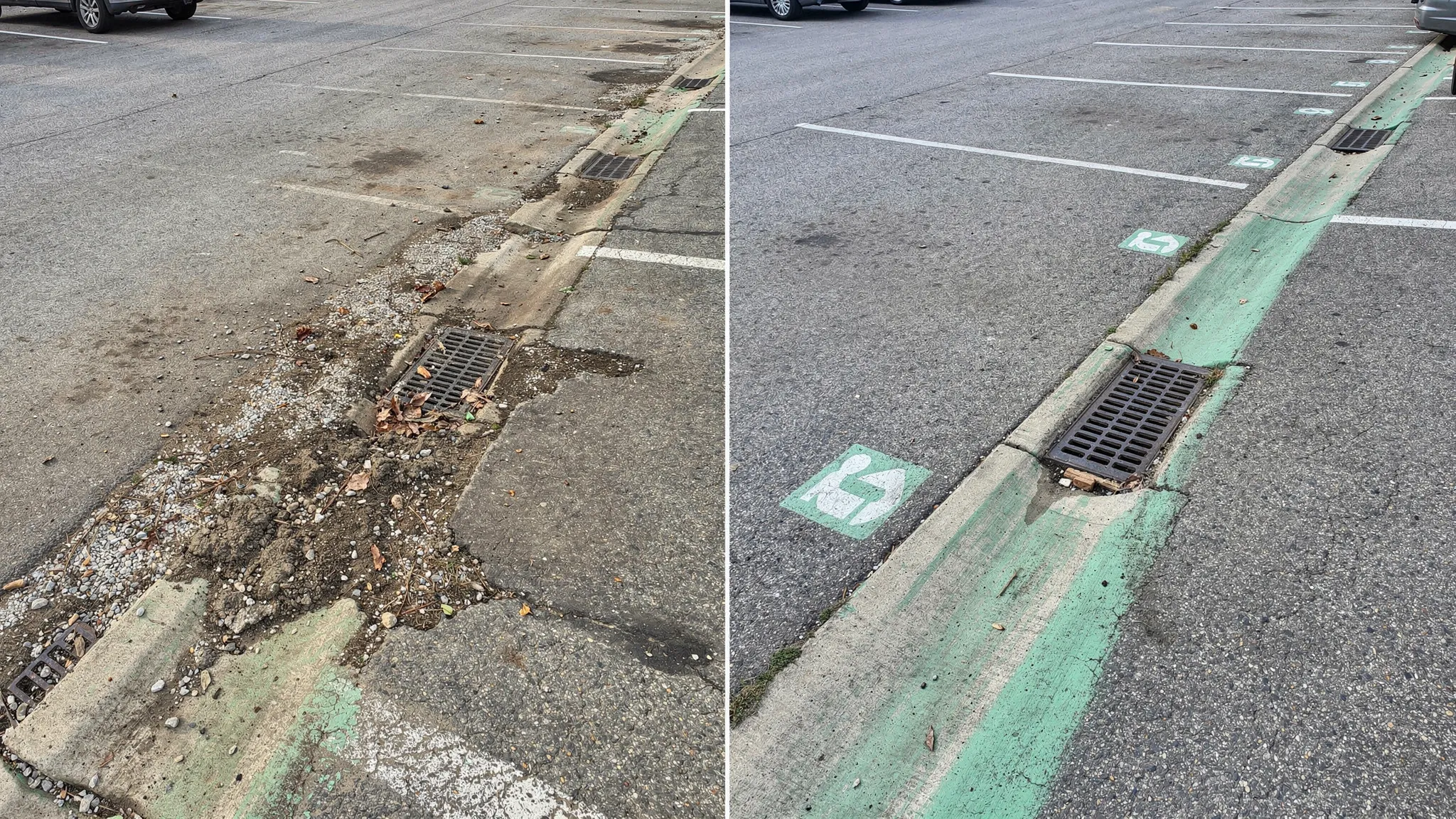
Some properties can keep up with basic policing using in-house staff. But once debris volume, compliance pressure, or site size increases, professional sweeping becomes the stabilizer that keeps your plan on track.
Consider outsourcing or supplementing your program when:
If you are evaluating providers and want to compare them based on results (not just price), this guide will help you ask better questions: Street Sweeping Companies Near Me: What to Ask Before Hiring.
A property that stays clean is not the product of one heroic cleanup. It is the product of a simple system that defines outcomes, assigns zones, sets a baseline cadence, adds triggers, verifies results, and keeps vendors coordinated.
Reliable Sweepers supports property maintenance and cleaning across Middle Tennessee with services like construction site sweeping, parking lot and garage cleaning, industrial and municipal sweeping, magnet sweeping, dust and mud control, and emergency response. If you want help turning your current “patchwork” into a single plan with clear standards and flexible scheduling, start with a site walkthrough and a scope that matches your highest-friction zones.
Learn what a professional engagement typically includes in this overview: Cleanup Services for Commercial Sites: What to Expect, or visit Reliable Sweepers to request a quote.