
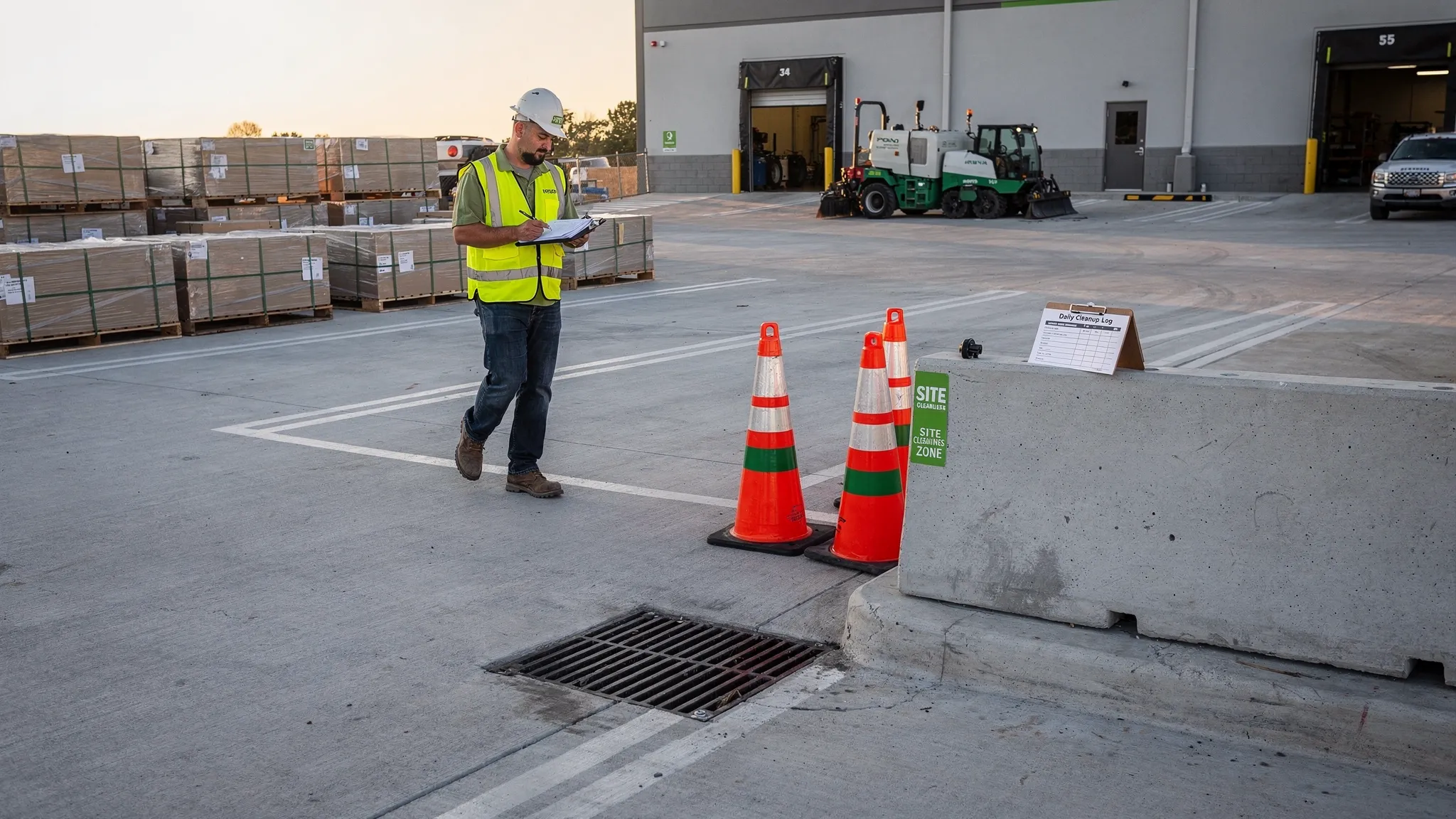
Inspection-ready sites are not created by a panic sweep on the morning of a walkthrough. They are built by daily cleanup habits that keep debris, dust, mud, and access issues from piling up in the first place.
That matters on construction sites, commercial properties, warehouses, parking areas, and HOA or municipal routes across Middle Tennessee. A sudden storm can move sediment into a curb line overnight. Clay soil can turn a clean entrance into a track-out problem before lunch. A few loose screws near a drive lane can become a tire-damage complaint before anyone notices.
The goal is not to make an active site look finished every day. The goal is to make it look controlled. When an inspector, owner, safety manager, tenant, or city representative walks the site, they should see that housekeeping is part of the operation, not an afterthought.
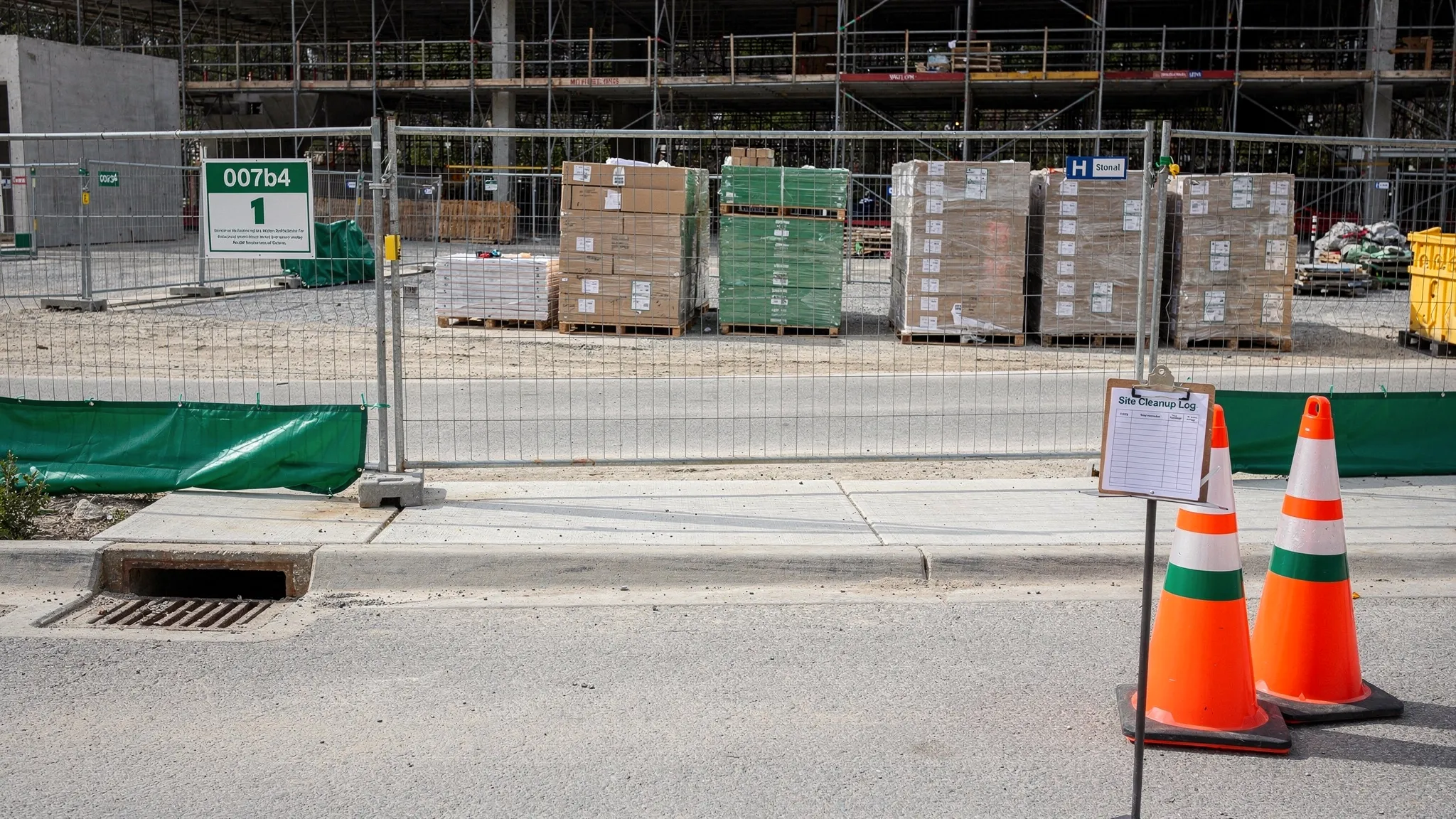
Most inspections begin before a checklist is opened. The first impression comes from access points, public edges, curb lines, dumpsters, sidewalks, storm drains, and active work zones. If those areas look neglected, the rest of the site usually gets a closer look.
Daily cleanup helps reduce three common inspection risks. First, it improves safety by keeping travel paths, stairs, entrances, and work areas free of loose debris. The OSHA construction housekeeping standard specifically addresses keeping debris cleared from work areas, passageways, and stairs, which is a reminder that housekeeping is not only about appearance.
Second, daily cleanup supports stormwater and environmental controls. Sediment at curb lines, dust on pavement, and trash near inlets can move quickly during a Nashville rain event. Once debris reaches a drain, cleanup becomes more complicated and the site may face more scrutiny.
Third, daily cleanup protects schedules. A site that needs a full reset before every inspection loses time, labor, and credibility. A site that is maintained in small increments can respond faster when inspections move up, weather changes, or a client visit is added to the calendar.
A useful cleanup program does not rely on one big push at the end of the day. It uses small, repeatable checkpoints that fit the way crews already work.
Begin with a short walk before major activity starts. The superintendent, foreman, facilities lead, or assigned crew member should check public-facing areas first, then move inward. Look for overnight wind-blown debris, sediment moved by rain, blocked access, loose materials, and anything that could affect the day’s first deliveries or inspections.
This scan should take 10 to 15 minutes on many sites. The point is not to solve everything immediately. The point is to catch the conditions that could become bigger problems by midday.
The middle of the day is when active sites often lose control. Trucks have entered and exited, materials have moved, dumpsters have filled, and work zones have shifted. A midday reset focuses on the areas that changed since morning.
This is especially important during grading, utility work, concrete pours, paving, demolition, tenant build-outs, or high-traffic warehouse operations. If the site produces mud, dust, packaging waste, pallet debris, metal fragments, or loose aggregate, waiting until the end of the day may be too late.
The closeout walk is the inspection-readiness checkpoint. Crews should leave the site in a condition that would not cause embarrassment if an inspector arrived first thing the next morning. That means travel paths are clear, waste is contained, public edges are clean, inlets are visible, and any known issue is documented with an owner and response plan.
The end-of-shift habit is also where photo documentation belongs. A few timestamped photos of entrances, curb lines, drains, and cleaned work zones can help prove that cleanup was completed, especially after weather events or subcontractor-heavy days.
Do not inspect the site only from the trailer, office, or main entrance. Walk the route an inspector, owner, tenant, or public works representative is likely to take. That usually includes the areas where site activity meets the public or shared property.
Key areas to check daily include:
The best daily cleanup routines use a consistent route. When the route changes every day, small issues get missed. When the route stays consistent, patterns become obvious.
Track-out is one of the fastest ways for a site to look out of control. Mud or sediment at the entrance can move onto public streets, tenant drive lanes, sidewalks, parking lots, and storm drains. In Middle Tennessee, clay soil makes this especially noticeable after rain.
Daily track-out control starts at the gate. Check the construction entrance, exit pad, or high-traffic transition point before trucks begin moving. If controls are overwhelmed, reset them before the day gets busy. On paved areas, dry sweeping is often the first step because it captures sediment instead of pushing it into drainage paths.
Do not wait until track-out reaches the public road. Once mud is visible beyond the site boundary, the cleanup becomes more urgent and more expensive. A short daily sweep at the entrance can prevent a larger response later.
Curb lines collect the evidence inspectors notice: sediment, leaves, aggregate, packaging, cigarette butts, nails, plastic wrap, and wind-blown trash. Storm drain inlets collect the same material, but with added compliance risk.
The daily habit is simple. Walk curb lines and drainage paths after major site activity, after storms, and before the end of the shift. Remove debris using dry methods whenever possible. Avoid blowing or rinsing material toward drains. If water is used for targeted cleaning, it should be planned so sediment and wash water are not simply moved into the storm system.
It is also important to know the limit of surface cleanup. If the issue is a damaged drain, failed underground line, or sewer-related problem, sweeping is not the fix. Those situations belong with qualified utility or drainage professionals, much like an authorized sewer contractor handles regulated sewer and drainage work in its market.
Inspection-ready sites keep people and vehicles moving safely. Loose debris in drive lanes, blocked fire lanes, cluttered stairways, and materials staged too close to entrances can quickly become safety concerns.
Each day, confirm that access routes match the site plan. If a delivery changed the layout or a subcontractor staged materials in the wrong area, correct it before the issue becomes normalized. On commercial properties and warehouses, include loading docks, truck courts, pedestrian crossings, and customer-facing entrances in the same review.
A helpful standard is easy to explain: if someone needs to walk, drive, deliver, inspect, or respond to an emergency, the path should be clear without last-minute cleanup.
A surprising amount of end-of-day cleanup comes from materials being handled more than once. Scrap gets dropped near the work area, moved to a pile, moved again to a cart, and then finally moved to a dumpster. Every extra step creates delay and increases the chance that debris blows, spreads, or gets missed.
Daily cleanup improves when crews use point-of-generation waste control. That means small containers, carts, or defined drop zones are placed close enough to the work that using them is easier than dropping debris on the ground.
For construction sites, separate waste streams when the project requires it and keep dumpster pads clean. For commercial and industrial properties, check compactors, pallet areas, dock edges, and trash enclosures daily. Overflow around a dumpster often becomes a litter, odor, pest, and stormwater issue at the same time.
Dust can create visibility problems, tenant complaints, equipment issues, and inspection concerns. On paved sites, dust often collects near exits, loading areas, garages, ramps, warehouse doors, and curb lines. On construction sites, it may come from saw cutting, grading, demolition, concrete work, or dry soil.
A daily dust habit starts with identifying the source. If the source is active work, adjust controls at that point instead of only cleaning the result. If dust has already spread across pavement, sweeping may be needed before it tracks into buildings, garages, or public areas.
The right method depends on the dust profile. Fine dust may need equipment that captures material effectively instead of redistributing it. Muddy dust may need to dry enough for efficient removal or require a planned dust and mud control approach.
Metal debris is easy to miss during a visual walk, but it can cause tire damage, worker injuries, and complaints. Daily hand pickup may catch large pieces, but small nails, screws, wire, and metal fragments often remain in drive lanes, parking areas, or staging zones.
Magnet sweeping should be considered after framing, roofing, fencing, utility work, demolition, racking installation, trailer activity, or any trade that creates fasteners and metal scraps. It is especially useful before opening a paved area to tenants, customers, residents, inspectors, or delivery fleets.
The daily habit is not always to magnet sweep every zone. The habit is to ask whether the day’s work created a metal-debris risk and to respond before vehicles or pedestrians are exposed.
Inspection readiness is easier to prove when cleanup is documented. A cleanup log does not need to be complicated. It should show what was checked, what was corrected, who handled it, and whether follow-up is needed.
Useful daily notes include weather conditions, high-traffic activities, cleaned zones, sweeping or magnet sweeping performed, problem areas found, photos taken, and any unresolved items. When a site has stormwater controls, this documentation can also support the broader inspection file.
Photos are most valuable when they are consistent. Use the same angles for entrances, curb lines, inlets, dumpsters, and key access routes. Over time, the photos show that cleanup is a repeatable process, not a one-time reaction.
Use this checklist at the end of each shift or before any scheduled inspection. It works best when one person owns the walk and assigns corrections immediately.
This checklist should be short enough to use daily. If it becomes too long, crews stop using it. Keep the daily version focused on inspection risk, safety, drainage, and public-facing appearance.
Construction sites need daily cleanup because conditions change quickly. The most important zones are entrances, haul routes, sidewalks, curb lines, storm drains, dumpsters, and areas where subcontractors finish work for the day. During heavy phases, a baseline cleanup routine should be paired with trigger-based sweeping after rain, large deliveries, pours, paving, demolition, or utility work.
For a deeper inspection timeline, Reliable Sweepers has a related guide on site cleaning before a city inspection.
Industrial facilities often need daily attention around loading docks, trailer rows, employee parking, trash areas, pallet storage, and exterior doors. The inspection risk is not always a formal city inspection. It may be a safety audit, customer visit, insurance review, or internal compliance check.
The daily habit should focus on keeping dock approaches clear, controlling packaging and pallet debris, checking for metal fragments, and preventing dust or sediment from entering warehouse doors.
For commercial sites, inspection-ready often means tenant-ready and customer-ready. Walk entrances, ADA routes, cart corrals, curb islands, garage ramps, stair towers, drainage paths, and dumpster areas. Look for litter, leaves, mud, sediment, loose aggregate, and anything that could create a slip, trip, drainage, or appearance issue.
A clean commercial exterior also reduces complaint volume. Tenants and customers may not notice every successful cleanup, but they notice when debris sits in the same corner for days.
Neighborhood and municipal routes need daily or routine attention around curb lines, drains, common parking areas, construction-adjacent streets, amenity areas, and high-traffic entrances. After storms or landscaping work, debris can move quickly into gutters and inlets.
Daily inspection-readiness here is about keeping shared areas safe, passable, and presentable while preventing sediment and debris from becoming a drainage problem.
In-house crews can handle many daily cleanup tasks, especially small debris pickup, material staging, and quick walks. Professional sweeping becomes more valuable when debris is widespread, inspection-sensitive, equipment-specific, or time-critical.
Bring in professional support when:
Reliable Sweepers supports sites across Nashville and Middle Tennessee with construction site sweeping, asphalt paving cleanup, industrial warehouse sweeping, parking lot and garage cleaning, HOA and municipal sweeping, magnet sweeping, dust and mud control, and emergency response services. If you are building a routine program, this building site clean up checklist can help define daily, weekly, and milestone tasks. If the issue is urgent, review what to expect from emergency clean up services.
What is the best daily cleanup routine for an active construction site? The best routine uses a start-of-shift scan, a midday reset, and an end-of-shift closeout. Focus on entrances, haul routes, sidewalks, curb lines, storm drains, dumpsters, access paths, and any zone affected by the day’s work.
How does daily cleanup help with inspections? Daily cleanup keeps small issues from becoming visible failures. It helps maintain safe access, reduces track-out, protects drainage paths, controls debris, and creates documentation that shows the site is being actively managed.
Should pavement be washed every day to keep a site inspection-ready? Usually no. Dry cleanup methods such as sweeping and debris pickup should often come first because they capture material before water moves it toward drains. Wet cleaning may be appropriate for specific stains or residues, but it should be planned with wash-water and sediment control in mind.
When should magnet sweeping be part of daily cleanup? Magnet sweeping is useful after work that creates nails, screws, wire, fasteners, or metal fragments. It is especially important near construction entrances, parking areas, delivery routes, roofing or framing zones, demolition areas, and warehouse docks.
What should be included in a daily cleanup log? A useful log includes the date, weather, zones checked, cleanup actions completed, photos, unresolved issues, and any trigger events such as rain, heavy trucking, paving, demolition, or complaints. Keep it simple enough that the team will use it every day.
Daily cleanup habits work best when they are supported by the right equipment, timing, and response plan. If your team is spending too much time reacting to mud, dust, debris, metal fragments, or curb line buildup, Reliable Sweepers can help build a practical exterior cleanup schedule around your site’s real conditions.
For construction sites, commercial properties, warehouses, parking facilities, neighborhoods, and municipal routes across Middle Tennessee, contact Reliable Sweepers to discuss routine sweeping, magnet sweeping, dust and mud control, or emergency response support.