Back
Article
March 24, 2026

Building Site Clean Up Checklist for Safer, Faster Projects

A messy job site does more than look bad. It creates slip and trip hazards, punctured tires, clogged storm drains, failed inspections, and rework that steals hours from the schedule. The good news is that most of those issues are preventable with a repeatable, zone-based cleanup routine and a few trigger points your crew can follow without guessing.

This building site clean up checklist is built for superintendents, PMs, and safety leads who need practical steps that keep projects safer and moving faster, especially on active commercial sites.
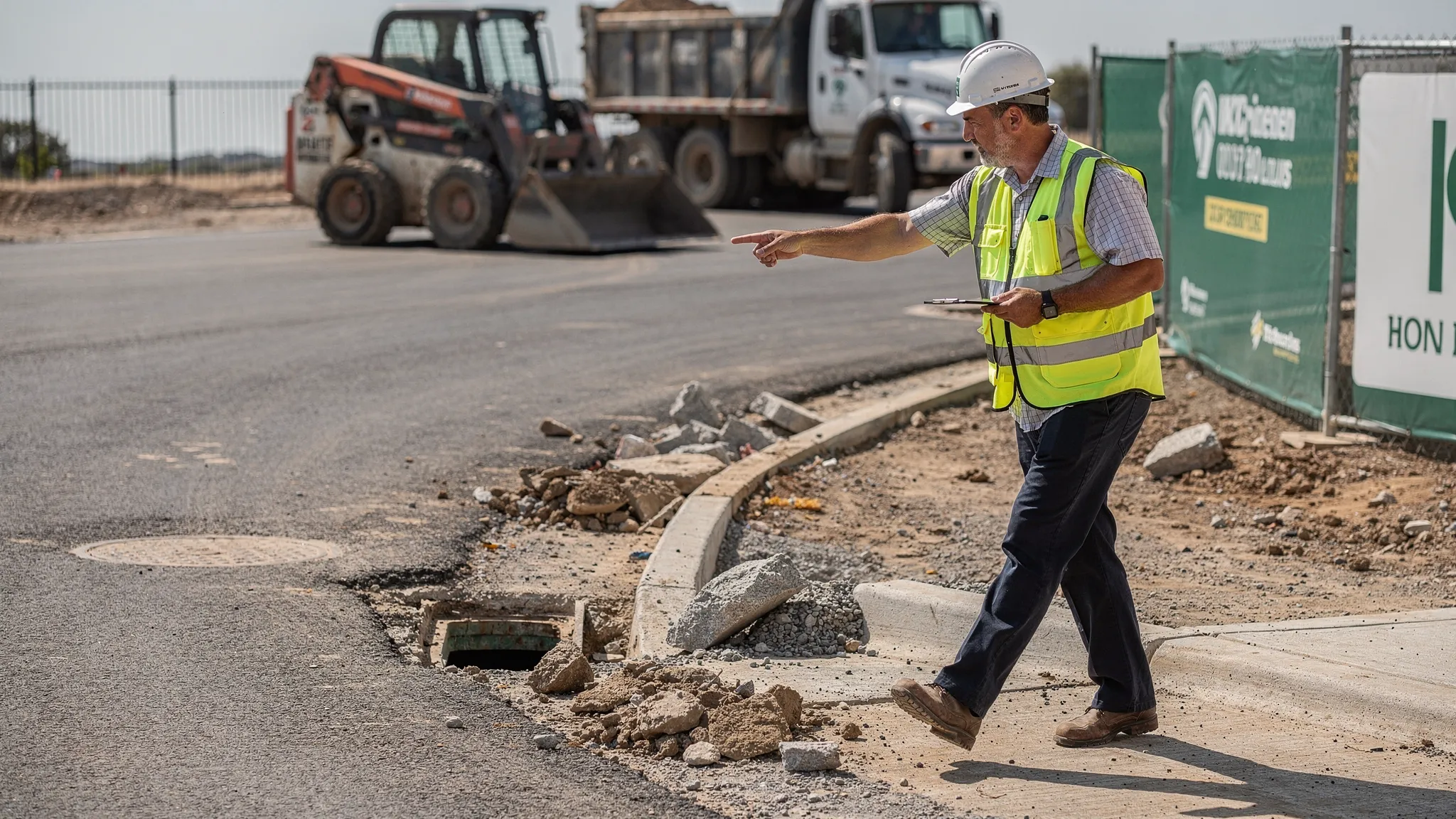
A construction site superintendent in a high-visibility vest walks a paved haul route near a stabilized entrance, pointing out debris near curb lines and a storm drain inlet while a skid steer and dump truck stage in the background.

What “clean” means on an active building site

On most projects, “clean” should be defined as an outcome, not a task list. If your standard is only “pick up trash,” you will miss the items that cause the biggest delays and safety problems.

A field-ready definition that works across phases is:

  • Safe travel paths: pedestrian routes, ramps, and access points are clear of loose material and trip hazards.
  • Controlled track-out: no mud, sediment, or aggregate is being carried onto public streets or adjacent occupied areas.
  • Clear drainage: curb lines, inlets, and low spots are not blocked by sediment, trash, or saw-cut slurry.
  • Managed debris and metal: nails, tie wire, banding, and scrap are contained and removed (not just pushed around).
  • Client-ready edges: entrances and public-facing boundaries look intentionally maintained.

If you can walk the public edge and the main haul route without stepping over debris, and water can reach drains without building a dam of sediment, you are close to “inspection-ready.”

Set up your cleanup system in 30 minutes (before the checklist)

The checklist works best when your site has three things: zones, ownership, and triggers.

1) Map the site into cleanup zones

Most building sites have predictable “debris engines.” Draw a quick map and label:

  • Stabilized entrance and first 100 to 200 feet inside the gate
  • Haul route and turns (where material falls off trucks)
  • Material staging and cutting areas
  • Dumpster pad and scrap pile areas
  • Curb lines, gutter lines, and storm drain inlets
  • Sidewalks, pedestrian paths, and parking used by trades or visitors
  • Perimeter fence line and neighbor-facing edge

2) Assign ownership by zone (not by trade)

Housekeeping fails when everyone is “responsible.” Assign one person (or one crew) to each zone for the day and make it visible in the trailer. Trades can still clean up their own mess, but the zone owner is accountable for the result.

3) Pick triggers that force an extra cleanup

Baseline cleanup (daily or a few times per week) is rarely enough by itself. Add triggers such as:

  • Forecasted rain, especially after grading or utility work
  • High trucking days, soil export/import, or aggregate deliveries
  • Concrete pours, saw cutting, or asphalt work
  • City inspections and owner/tenant walkthroughs
  • High-wind days that spread packaging and lightweight debris

For stormwater-related expectations, the EPA’s construction stormwater framework (NPDES) emphasizes controlling sediment and preventing off-site discharge, typically managed through your SWPPP and field practices like track-out control and inlet protection. See the EPA construction stormwater overview for background.

Building site clean up checklist (use it daily, then add triggers)

Use the sections below as a repeatable loop. The goal is to remove and contain debris, not just relocate it.

Daily checklist (start of shift, midday reset, end-of-day close)

  • Walk the stabilized entrance and public street edge, remove track-out, scrape heavy mud where needed, and capture loose aggregate before it migrates.
  • Check the main haul route and turns, remove piles of dirt, rock, and broken pallet wood.
  • Clear pedestrian paths, stairs, ramps, and access points, remove cords, banding, packaging, and loose debris.
  • Police nails, tie wire, and metal fragments in staging, laydown, and near tire paths (magnet sweep when needed).
  • Reset curb lines and gutter lines, pull sediment and trash away from water paths and inlets.
  • Check storm drain inlet protection, repair torn fabric, reset displaced blocks, and remove sediment buildup around the throat.
  • Consolidate scrap and trash, ensure dumpsters are usable (lids closed when possible) and the pad is not spilling.
  • Spot check “hot zones” that generate fines and complaints: fence lines, neighbor side, and any shared drives.
  • Do a final 10-minute perimeter loop before leaving, take 3 to 5 timestamped photos of the entrance, public edge, and the worst debris zone (for documentation and accountability).

OSHA’s housekeeping requirements are not optional on construction sites. The standard at 29 CFR 1926.25 is a useful reference for why consistent removal of debris and waste matters.

Weekly checklist (prevent buildup that costs hours later)

Most “surprise” cleanup bills come from slow accumulation. Once per week, plan a deeper reset:

  • Detail curb lines on the entire frontage and along interior curb-and-gutter.
  • Sweep or vacuum fine dust in areas where it is becoming slick or airborne (especially near loading, saw cutting, and dry material staging).
  • Walk the full fence line and perimeter, pull windblown trash and strap material.
  • Inspect drains and low spots after normal use, remove the beginnings of sediment dams.
  • Audit the stabilized entrance condition, refresh stone, repair rutting, and verify any track-out controls are still effective.

Milestone and phase triggers (the “don’t miss these” moments)

Some phases create contaminants that travel quickly or cause rework if ignored.

During these moments, schedule a focused cleanup (and plan it into the lookahead) rather than trying to squeeze it in “if we have time.”

  • Earthwork, grading, utilities: prioritize track-out control, haul route scraping, and inlet protection resets.
  • Concrete work and saw cutting: remove dry debris first, keep slurry and fines out of gutters and drains (avoid washing toward inlets).
  • Vertical construction (framing, exterior envelope): increase perimeter and windblown packaging policing.
  • Asphalt paving and striping: clean edges, curb lines, and the paving footprint so crews are not paving over debris (this is a common cause of call-backs).
  • Landscaping and closeout: final perimeter cleanup, curb line detailing, and magnet sweeping in pedestrian and parking areas.

Weather and inspection triggers

If you only add one rule, make it this: rain changes everything. A site that is “fine” in dry conditions can fail fast after a storm.

Use this simple trigger guidance:

  • Before rain: sweep the public edge, clear curb lines, and ensure inlet protection is intact.
  • After rain: check for sediment movement, reset the stabilized entrance, and remove new track-out immediately.
  • Before an inspection or owner walk: focus on the entrance, public-facing edge, curb lines, and obvious metal debris.

If you want a tighter timeline for inspections, Reliable Sweepers also has a step-by-step guide on what to do before a city inspection.

The 10-minute quality-control walk (how to verify “done”)

A cleanup checklist is only as good as the verification. Instead of walking randomly, do the same loop every time.

Start at the public street and move inward:

  1. Public edge and gutter line: is there visible track-out, sediment, or loose aggregate?
  2. Stabilized entrance: is it still stabilized, or has it turned into a mud conveyor?
  3. Haul route and turns: are there piles that will be spread by the next truck?
  4. Inlets and low spots: can water flow, or are you building sediment dams?
  5. Pedestrian routes: are there trip hazards, banding, or loose debris?

If the answer to any of those is “not really,” your cleanup is not done yet, even if the dumpster is full.

When to bring in professional sweeping (and what to ask for)

Many sites can handle light policing in-house, but exterior surfaces and public edges often need professional equipment and a fast response window.

Consider outsourcing sweeping or cleanup when:

  • Track-out is reaching public streets or adjacent occupied property.
  • Fine dust is becoming a visibility or slip issue.
  • Nails and metal fragments keep showing up (especially before turnover or striping).
  • You have an inspection, paving, or owner walk that cannot slip.
  • Your in-house labor is spending too many hours pushing debris around without actually removing it.

A professional crew can help with construction site sweeping, magnet sweeping for fasteners, dust and mud control, asphalt paving cleanup, and emergency response when weather or trucking days create sudden track-out.

If you are comparing options, this guide on construction site cleaning services and how to find the right fit explains how to scope work so you do not pay twice.

Nashville and Middle Tennessee notes (what makes sites messy here)

Local conditions influence how often you need to run this checklist.

Middle Tennessee’s clay-heavy soils create sticky mud that clings to tires and spreads quickly. Spring storms and sudden heavy rain events can move sediment in minutes. Summer brings dry dust (especially on haul routes and staging), and fall leaf drop can block curb lines and inlets at the worst time.

Practically, that means:

  • Treat rain as a cleanup trigger, not a surprise.
  • Keep the stabilized entrance overbuilt compared to what “seems fine” in dry weather.
  • Plan for dust control during dry stretches, especially when neighbors are close.

Frequently Asked Questions

What should be included in a building site clean up checklist? It should cover safety paths, track-out control, curb lines and storm drains, scrap and trash containment, metal debris control (magnet sweeping when needed), and a simple verification walk.

How often should a construction site be swept? Most active sites need a baseline routine (often daily or several times per week) plus trigger-based sweeping after rain, high trucking days, pours, paving, and before inspections.

What’s the fastest way to reduce track-out to public streets? Keep the stabilized entrance functional, scrape and remove mud from the first section of the haul route, and sweep the public edge immediately when you see track-out starting.

Do I need magnet sweeping on every project? Not always, but it is strongly recommended when fasteners, tie wire, or banding are present, and before paving, striping, and turnover when punctures and injuries become costly.

Is pressure washing a good substitute for sweeping? Usually not by itself. Dry removal and capture (sweeping, magnet sweeping, curb line detailing) should come first, especially near drains, then targeted washing if needed.

Need help keeping your site clean, compliant, and on schedule?

Reliable Sweepers provides professional exterior cleanup across Middle Tennessee, including construction site sweeping, asphalt paving cleanup, magnet sweeping, dust and mud control, and emergency response. If you want a site-specific plan that matches your phase, schedule, and risk areas, contact Reliable Sweepers to discuss your project needs at reliablesweepers.com.

Why Choose Reliable Sweepers?

Reliable Sweepers provides comprehensive street sweeping and property maintenance services across Middle Tennessee. Whether you're managing a construction site, commercial property, or residential development, our experienced team delivers the professional cleaning solutions you need.

Related Articles