Construction site cleaning is easy to underestimate until it starts costing you time and money. A muddy haul route can trigger track-out complaints, fine dust can become a slip risk, and loose fasteners can puncture tires right before a walkthrough. That is why construction site cleaning services are less about “making it look nice” and more about keeping production moving, protecting the public edge, and staying inspection-ready.
Finding the right fit comes down to a simple idea: the best vendor is the one whose scope, equipment, and response time match your project phase and risk profile, not the one with the shortest quote.
A lot of frustrating bids happen because “construction cleaning” can mean very different things. Before you compare providers, define your scope in three layers: phase, zones, and contaminants.
Most projects rotate through predictable cleanup moments:
If your goal is “pass city inspection Friday,” you do not want a vendor who only sells a monthly route. If your goal is “keep this entrance clean for 6 months,” you do not want a one-time detail crew that disappears afterward.
A good scope is zone-specific. You will get better results (and more accurate quotes) when you call out the areas that matter most:
If you want a field-ready way to define “done,” Reliable Sweepers shares a strong approach in their guide to outcome-based exterior maintenance planning.
Different debris requires different methods. For example:
If your scope does not specify the main contaminant types, you risk getting a “lowest common denominator” plan that looks fine on paper but misses the real problem.
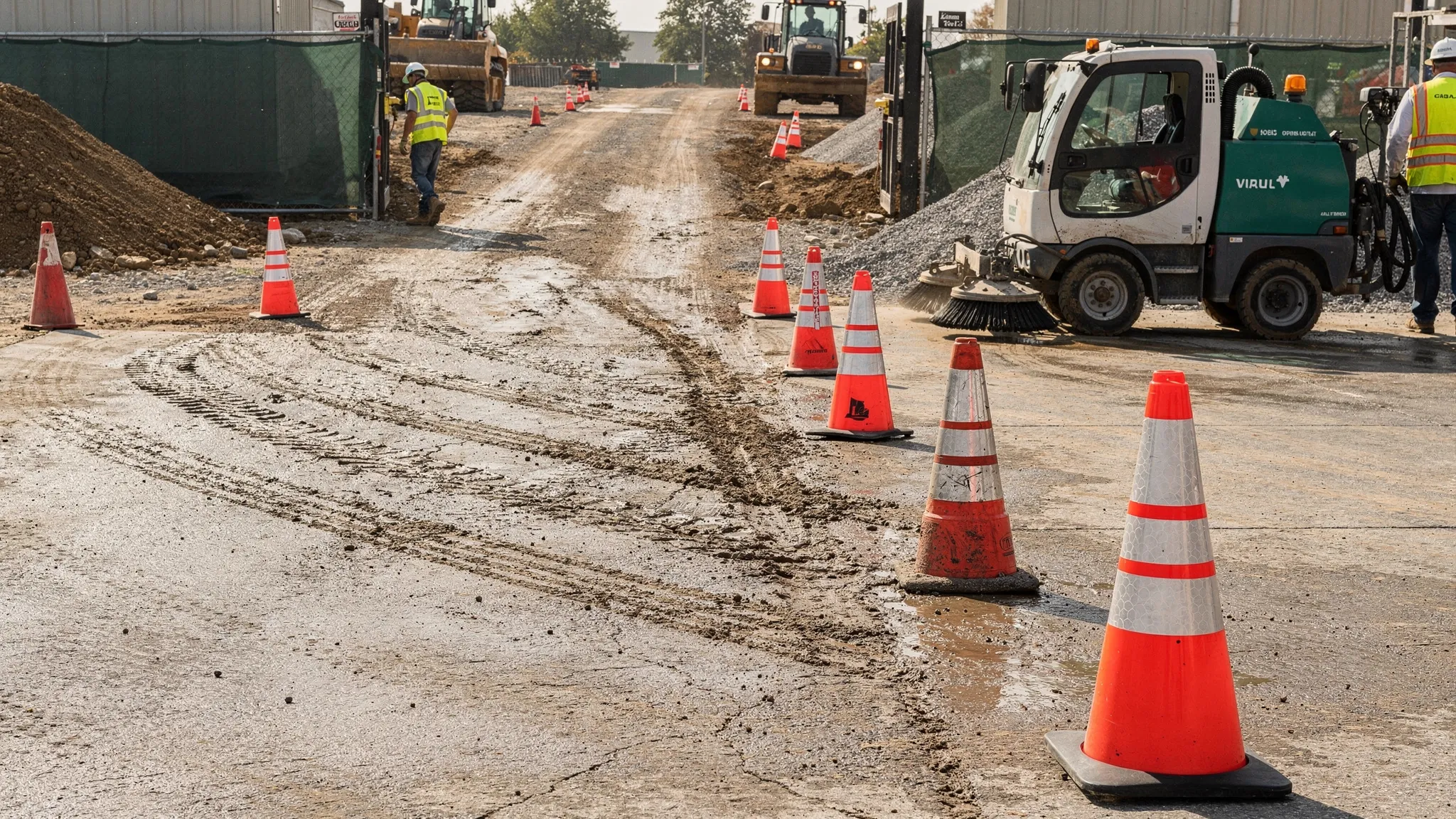
Many teams search for one vendor to “handle cleaning,” but construction exteriors usually involve multiple specialties. Knowing who does what helps you hire the right mix.
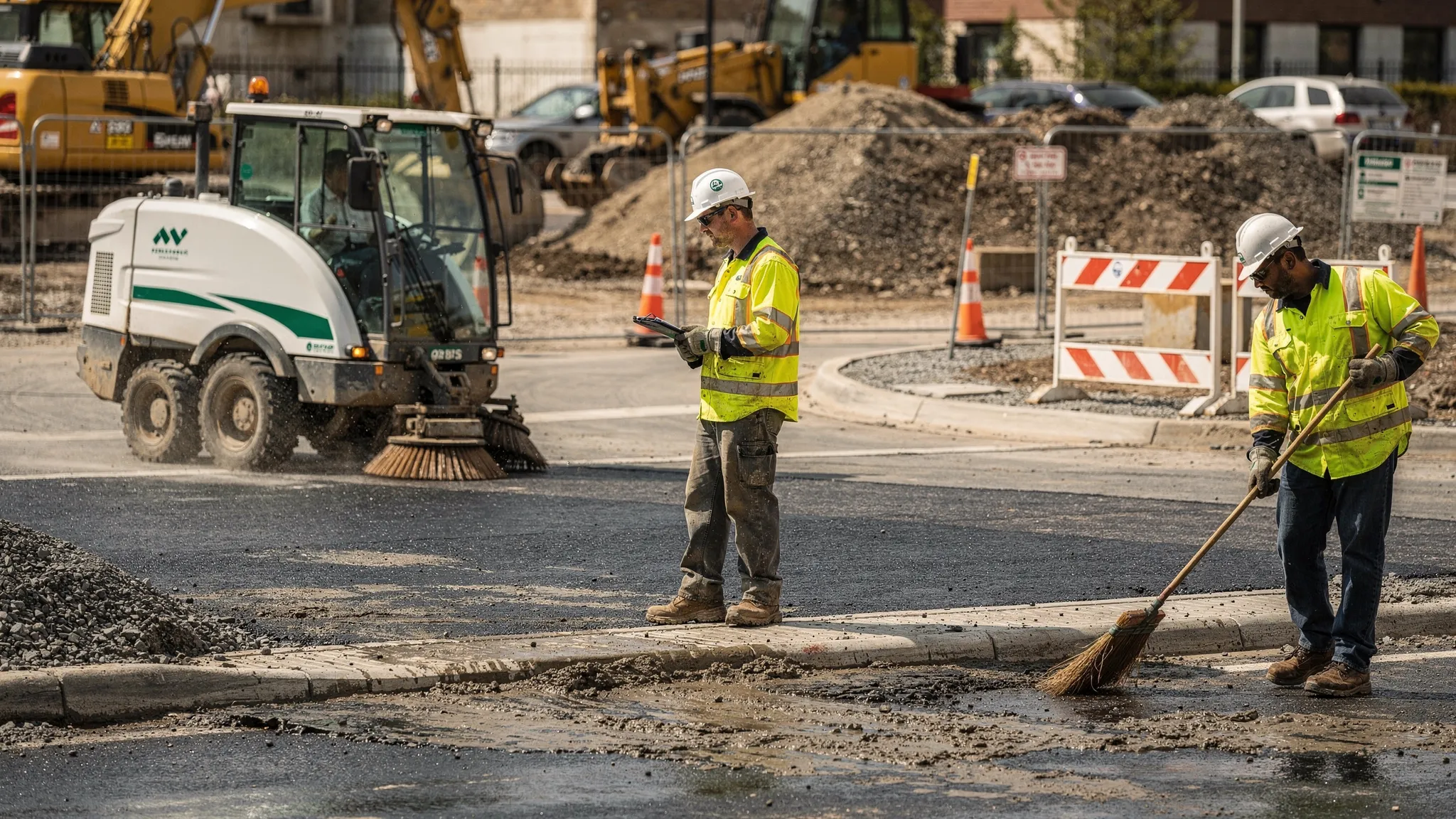
This is typically the best fit for exterior, hard-surface control: entrances, paved areas, curb lines, parking lots, and track-out. The right sweeping partner can also support magnet sweeping, dust and mud control plans, and emergency response.
If you are scoping exterior turnover specifically, compare against what is typically included in post-construction exterior work. This breakdown is helpful: Post Construction Clean Up Services: What’s Included?
Pressure washing can be valuable for staining, stuck-on material, or deep clean presentation, but it also introduces water management concerns. On many job sites, dry removal first (sweeping, scraping, collection) is the safer baseline near stormwater infrastructure, then washing only where runoff can be controlled.
For stormwater context, EPA provides a solid overview of construction stormwater expectations under the NPDES program: EPA Construction Stormwater.
If your project generates piles of material that need to be loaded and removed, sweeping alone will not solve it. Some sweeping contractors coordinate debris removal, but you should confirm what is included versus excluded.
Interior cleanup is its own trade (dusting, final wipe, floors, windows, adhesives). Do not assume your exterior sweeping provider will handle interior turnover, and do not assume an interior post-construction crew can manage track-out, curb-line sediment, or magnet sweeping.
Standard construction site cleaning services usually exclude hazardous material abatement. If there is any possibility of regulated waste, clarify early and route it to the right specialty provider.
Once you know your scope, you can evaluate vendors on what actually predicts results.
A professional scope should describe an outcome. Examples of outcome language that works:
If you want a practical model for writing and verifying a punch-style exterior standard, see Post Construction Clean Up: Punch List for a Clean Handoff.
Ask how they handle the specific contaminant you are fighting (mud, dust, metal, asphalt grindings), and what they do when conditions change after rain or heavy trucking.
A common red flag is vague language like “we’ll sweep it” with no mention of curb-line detailing, entrance focus, or metal debris control where fasteners are a known issue.
Site cleaning is a live-traffic activity: trucks, subs, deliveries, pedestrians, and sometimes public adjacency. A cleaning vendor should be able to explain their approach to job site safety and traffic control.
Housekeeping is also a real safety expectation on construction sites. OSHA’s construction housekeeping standard (29 CFR 1926.25) is a useful reference point when you are aligning internal standards with vendor work: OSHA 1926.25 Housekeeping.
The right fit is often the vendor who can hit your real constraints:
If rapid response is a major risk factor for your project, compare providers against a true emergency workflow, not just “call us.” This is a helpful reference: Emergency Clean Up Services: Rapid Response for Job Sites.
Documentation does not have to be complicated. The best partners provide simple proof that the work was done and that sensitive zones were addressed (entrances, curb lines, drains, magnet-sweep areas). That matters when you are dealing with complaints, backcharges, or stormwater-related questions.
For a compliance-first lens, this overview can help you align cleanup with environmental expectations: Environmental compliance basics for construction cleanup.
If you want bids you can actually compare, send providers a short “site cleaning brief” with the same inputs. Include:
This is also where you should clarify what is not required. For example, if you do not want any washing near inlets, say so.
The cheapest plan often assumes a clean, dry site with easy access and light debris. Construction sites are rarely that.
When you review proposals, look for whether the bid is built around outcomes and real site conditions. A quote is easier to trust when it clearly states:
If you need help turning “we need it clean” into a measurable exterior scope, Reliable Sweepers’ guide to cleanup services for commercial sites and what to expect lays out a solid scoping approach that translates well to construction-adjacent work.
Even with a good scope, the fastest way to learn fit is to test a vendor in your highest-risk zones.
A simple approach is to schedule one service window that includes your most failure-prone areas (typically entrance, curb lines, and a public-facing sidewalk). Then inspect those areas the next morning and again after the next rain.
If the vendor’s results disappear immediately or if the entrance looks untouched, you have your answer early, before you commit to a longer schedule.
Local conditions matter. In Middle Tennessee, the “right fit” often means a vendor who is realistic about weather, soil, and seasonal debris patterns.
If you want a field-tested timeline for inspection readiness, this guide is built for exactly that: Site Cleaning: What to Do Before a City Inspection.

Some cleanup can be handled in-house, especially early in a project. Professional support usually becomes the better call when:
For ongoing daily habits you can keep in your own team’s rhythm, pair vendor work with a simple routine like the one outlined in Job Site Clean Up: Daily Habits That Keep Projects Moving.
What do construction site cleaning services usually include? Most exterior-focused services include sweeping of paved areas, entrance and haul-route cleanup, curb-line detailing, debris control, and often magnet sweeping for metal fragments. Exact inclusions vary by provider and project phase.
How do I know if I need magnet sweeping? If your site has framing, roofing, MEP rough-in, demo, or frequent fastener use near drive paths, magnet sweeping is often worth it. A common signal is repeated tire punctures or visible nails and tie wire near entrances and parking.
How often should a construction site be swept? There is no single best cadence. Most projects do better with a baseline schedule plus event triggers (after rain, heavy deliveries, paving, or before inspections). The right frequency depends on traffic, soil conditions, and public adjacency.
Will sweeping help with stormwater compliance? Sweeping supports stormwater goals by reducing sediment and debris that can reach curb lines and inlets. It is not a substitute for your full SWPPP controls, but it is often a key maintenance component.
Should we pressure wash before turnover? Sometimes, but dry removal should usually come first. If washing is used, plan for wash-water management and avoid pushing sediment toward drains.
What information should I send to get an accurate quote? Share phase and dates, work windows, a simple site map, debris types, priority zones (entrance, curb lines, drains), expected cadence, and any documentation requirements.
Reliable Sweepers provides construction site sweeping, asphalt paving cleanup, magnet sweeping for debris, dust and mud control, and emergency response across Middle Tennessee. If you want help scoping a plan that fits your project phase and inspection timeline, reach out for a site-aware quote and schedule.
Learn more at Reliable Sweepers or start by reviewing their practical guide to construction clean up and site turnover.