
Street sweeping can look straightforward from the curb. A truck arrives, runs a route, and the pavement looks better when it leaves. But for property managers, contractors, HOAs, municipalities, and facility teams in Middle Tennessee, the quality of the result often depends on something a generic quote will not fully capture: local service.
A Nashville local service provider understands the real conditions that affect sweeping results, including traffic patterns, tight curb access, construction activity, clay soil, heavy rain, seasonal pollen, leaf drop, downtown events, and stormwater expectations. That local knowledge can be the difference between a lot that stays clean and a property that keeps generating complaints, rework, or urgent calls.
This is especially true for street sweeping because timing, access, debris type, and compliance are all connected. A provider may have good equipment, but if the crew arrives after the parking lot fills, misses the curb line before a storm, or does not understand construction track-out in Nashville soil, the result can fall short.
Being local does not simply mean a company has a Nashville phone number. In street sweeping, local service means the provider knows how properties in the area actually operate. It means understanding when traffic makes access impossible, which seasons create the most debris, how fast a storm can turn dust into sediment, and why some sites need a baseline schedule plus rapid response.
A true local partner is also more likely to notice patterns over time. If the same curb line fills with sediment after every rain, if a construction entrance keeps tracking mud onto a public road, or if a parking garage ramp collects grit faster than the rest of the facility, a local crew can help adjust the plan instead of simply repeating the same route.
For Nashville properties, that matters because sweeping is rarely a one-time appearance task. It affects safety, drainage, tenant satisfaction, public perception, and in many cases, job site progress.
Nashville weather can change a sweeping schedule quickly. A rain event can move sediment into curb lines and storm drain inlets. Dry summer conditions can make dust more visible around construction sites and industrial yards. Fall leaf drop can overwhelm parking areas and neighborhood streets. Winter grit and de-icer residue can linger in garages, entrances, and drive lanes.
A local sweeping provider can respond more effectively because crews, equipment, and dispatch decisions are already tied to the region. That does not mean every call can be handled instantly, but it does mean the provider is better positioned to work around real-time conditions, communicate realistic windows, and prioritize high-risk areas.
Local response matters most when the issue is visible, safety-sensitive, or compliance-sensitive. Examples include mud track-out on a public road, debris in a customer entrance, metal fragments near a construction access point, or sediment building up near a drain before expected rain.
If your property frequently needs urgent help, it is worth having a pre-planned response process. Reliable Sweepers offers emergency response services across Middle Tennessee, which can be especially useful for contractors, commercial managers, industrial sites, and municipalities that cannot wait for a distant provider to mobilize.
Street sweeping is only effective when the sweeper can reach the areas that need cleaning. In Nashville, that often comes down to timing.
A downtown property may need sweeping before deliveries, nightlife traffic, or event crowds. A retail center may need service before opening or after peak customer hours. An HOA route may require coordination around street parking. A construction site may need sweeping after heavy trucking but before an inspection, paving crew, or client walkthrough.
Reliability is the same reason organizations in other time-sensitive industries choose specialized partners instead of general vendors. For example, companies arranging executive or event transportation may rely on a dedicated chauffeur service when timing, route planning, and coordination cannot fail. Street sweeping has its own version of that challenge: the crew needs to arrive at the right window, bring the right equipment, and understand the site before debris becomes a problem.
A Nashville local service provider is more likely to understand how timing changes by neighborhood and property type. That can mean scheduling overnight for certain commercial areas, early morning for parking lots, off-peak windows for industrial drives, or event-aware service for downtown and mixed-use sites.
If access is a recurring issue, build it into the scope. Define where cars block curb lines, when gates open, where trucks can stage, and who should be contacted if the crew cannot reach a section. Local providers are often better at turning those details into a workable route.
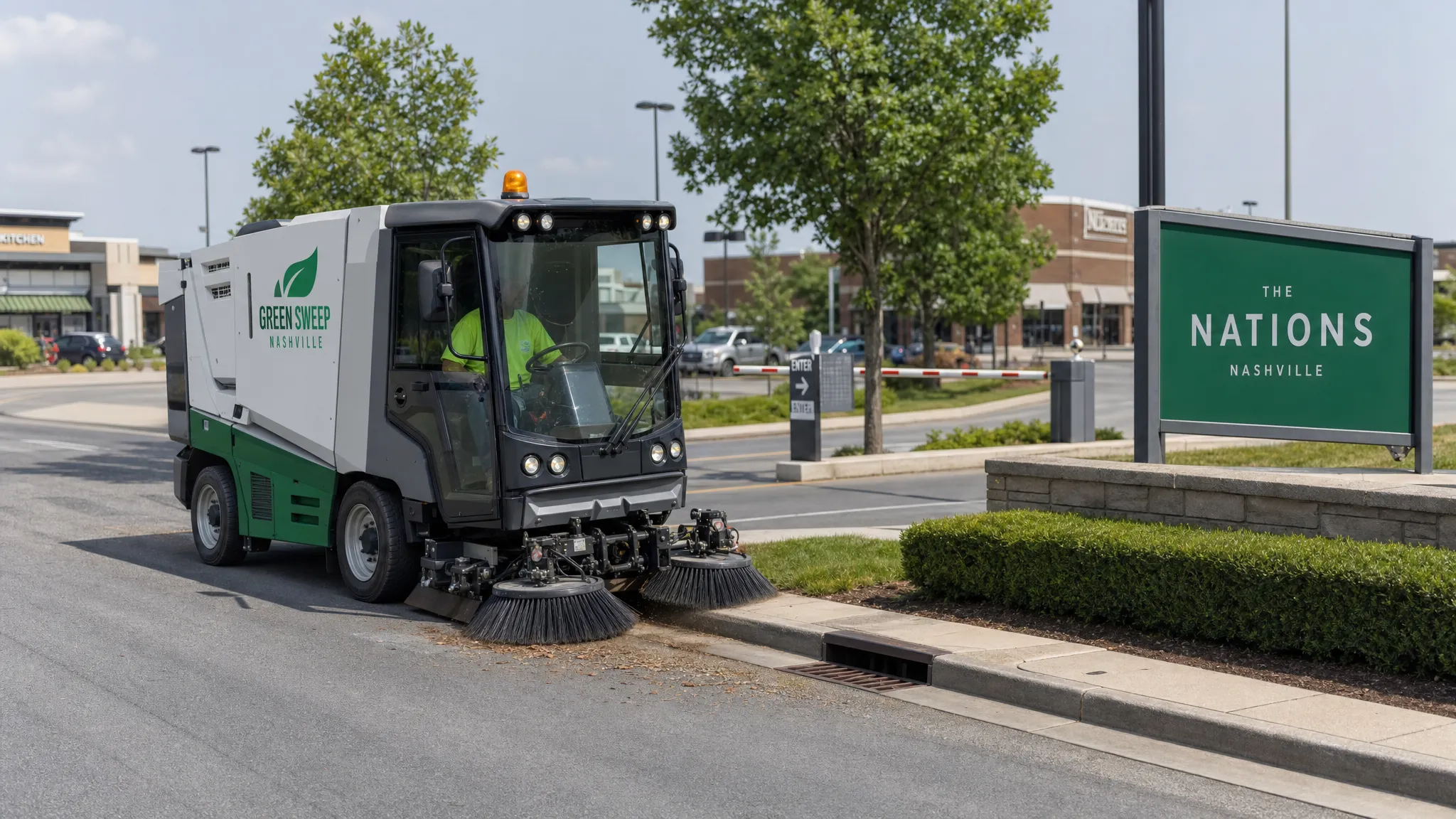
Street sweeping is not only about what visitors see. It also helps keep debris, sediment, leaves, trash, and construction material from reaching storm drains. For commercial properties, construction sites, industrial yards, HOAs, and municipal areas, this can support better stormwater housekeeping.
Nashville and Middle Tennessee properties face a few recurring stormwater challenges. Heavy rain can move loose debris quickly. Clay soil can create stubborn track-out. Leaf buildup can block drainage paths. Construction dust and sediment can settle at curb lines, inlets, and low spots. If those areas are ignored, sweeping becomes reactive instead of preventive.
A local sweeping crew should know where to look first. High-priority areas usually include curb lines, gutter pans, storm drain inlets, construction exits, loading docks, dumpster pads, garage entries, and low points where sediment collects.
The best approach is often dry-first. Remove loose debris with sweeping, pickup, or magnet sweeping before considering any wet cleaning. This helps avoid pushing material toward drains. For more detail on typical service inclusions, see this guide to Nashville street sweeping services.
Different properties create different debris, and the right method depends on the material. A local provider with experience across Nashville and Middle Tennessee will usually be better at matching equipment to the job.
Construction sites may need sweeping for mud, aggregate, dust, and track-out, plus magnet sweeping for nails, screws, and metal fragments. Asphalt paving projects may require cleanup around transitions, haul routes, and loose material. Industrial warehouses and yards may need recurring sweeping around docks, trailer rows, and drive lanes. Parking lots and garages may need curb-line detail, ramp attention, and dust control.
A local provider should be able to discuss the practical fit between your site and the service method, not just say a sweeper will be sent. The right plan may include:
This is where local experience becomes valuable. A crew that regularly handles Nashville construction sites, parking facilities, industrial areas, and neighborhood routes is more likely to recognize when a standard pass is not enough.
One of the biggest costs of poor sweeping is not the service price. It is the rework afterward.
If a site is swept too early before active work is finished, debris returns immediately. If the route misses parked-in curb lines, complaints continue. If a crew does not understand which entrances matter most to tenants or customers, the property can look neglected even after service. If drain-adjacent sediment is ignored, the issue can reappear after the next rain.
A local service provider can help reduce those problems by building a schedule around how the property actually functions. Instead of relying only on a fixed calendar, the plan can include trigger-based service after storms, heavy deliveries, paving work, major events, or high-volume construction activity.
That is especially important for property managers who answer to tenants, owners, inspectors, or residents. A reliable local crew can become part of the property’s operating rhythm, not just another vendor on a list.
Strong street sweeping results depend on communication before, during, and after the visit. Local providers tend to have an advantage because they can connect site conditions with local context.
For example, a property manager may say a lot is worst after weekend traffic. A local crew may know that nearby construction, event traffic, or a specific delivery pattern is contributing to the debris. A superintendent may need sweeping before a city inspection. A local provider can better understand the urgency, access limits, and likely problem zones.
Clear communication should include practical details such as site entry, gate codes, service windows, blocked areas, priority zones, debris type, and proof-of-completion expectations. For larger or recurring accounts, before-and-after photos, completion notes, and issue reporting can help everyone stay aligned.
If you are comparing providers, ask how they communicate when a section is blocked, when debris exceeds the agreed scope, or when weather changes the plan. A good local partner should not leave you guessing.
The cheapest sweeping quote is not always the lowest-cost option. A provider that misses the most visible areas, cannot respond when conditions change, or uses the wrong equipment can create higher costs through complaints, repeated visits, delayed turnover, or staff time spent managing problems.
Local service can control total cost in several ways. It can reduce mobilization delays, improve route efficiency, schedule work when access is best, prevent unnecessary add-ons, and help identify the right frequency. A local crew may also recommend focusing on high-impact zones instead of treating every square foot the same on every visit.
For many Nashville properties, the most cost-effective plan is not daily sweeping or occasional emergency cleanup. It is a practical mix of routine service, seasonal adjustments, and trigger-based response. If you are still building your budget, this article on street sweeping services pricing, schedules, and results can help you understand common cost drivers.
A strong local provider should do more than run equipment. The company should help you define the outcome, identify the priority zones, and match the service plan to the property’s real conditions.
Look for a provider that can explain:
You should also expect the provider to ask good questions. The best local sweeping plans are built around your site, not copied from another property.
Local service is useful for almost any recurring sweeping need, but it becomes especially important when the site is active, time-sensitive, or exposed to public complaints.
Construction sites benefit from local sweeping because mud, dust, debris, and metal fragments can affect safety, inspections, and project schedules. Commercial properties benefit because first impressions, tenant satisfaction, and drainage issues are often tied to visible exterior conditions. Industrial warehouses and yards benefit because docks, drives, and trailer areas collect material quickly. HOAs and neighborhoods benefit because street parking, leaves, and curb access need careful timing. Municipal and public-facing routes benefit because consistency and response time affect residents and road users.
Emergency situations also highlight the value of a local provider. If a storm, spill of dry material, mud track-out, wind-blown debris, or construction-related issue creates a sudden mess, a provider familiar with Nashville conditions can help triage the site faster. For planning guidance, see this emergency cleaning response plan.
Reliable Sweepers provides professional street sweeping and property maintenance services across Nashville and Middle Tennessee. The team supports construction site sweeping, asphalt paving cleanup, industrial warehouse sweeping, parking lot and garage cleaning, neighborhood and HOA sweeping, municipal sweeping, magnet sweeping, dust and mud control, and emergency response.
The value of working with a local provider is not only the truck on site. It is the ability to build a practical plan around Nashville weather, traffic, debris patterns, site access, and schedule demands. For busy property managers and contractors, that local understanding can help keep sites cleaner, safer, more presentable, and easier to manage.
Why does Nashville local service matter for street sweeping? Nashville local service matters because sweeping results depend on timing, access, weather, debris type, and stormwater conditions. A local provider is more likely to understand neighborhood patterns, construction activity, event traffic, and seasonal debris issues that affect your property.
Is a local street sweeping company better than a regional provider? Not always, but local experience is a major advantage when response time, site familiarity, and flexible scheduling matter. A regional provider may be fine for some predictable routes, but a Nashville-based team is often better suited for changing site conditions and urgent cleanup needs.
What types of properties benefit most from local sweeping service? Construction sites, commercial parking lots, garages, industrial yards, HOAs, neighborhoods, municipal routes, and mixed-use properties all benefit from local sweeping. The need is strongest where debris returns quickly, access is limited, or complaints and inspections are a concern.
How often should Nashville properties schedule street sweeping? Frequency depends on traffic, debris load, season, construction activity, and cleanliness standards. Many properties perform best with a baseline schedule plus extra sweeps after storms, heavy hauling, leaf drop, paving, major events, or tenant complaints.
What should I share when requesting a local sweeping quote? Provide the address, property type, service zones, debris type, preferred timing, access instructions, photos if available, and any urgent concerns such as mud track-out, metal debris, blocked drains, or inspection deadlines. Better details lead to a more accurate scope and quote.
If your property needs cleaner pavement, better curb appeal, safer access, or faster response after storms and construction activity, Reliable Sweepers can help build a site-specific plan. From routine parking lot sweeping to construction cleanup, magnet sweeping, dust and mud control, garage cleaning, municipal routes, and emergency response, our team supports properties across Nashville and Middle Tennessee.
Contact Reliable Sweepers to discuss your site, priority zones, schedule, and cleanup goals so you can get a local sweeping plan that fits how your property actually operates.
