Metal debris is easy to overlook because it blends into pavement, gravel, mud, and construction dust. A few nails near a curb line or a loose screw in a drive lane may not look urgent until a customer reports a flat tire, a tenant complains, or a project manager has to stop work before an inspection.
That is where magnet sweeping comes in. Unlike standard street sweeping, magnet sweeping targets ferrous metal debris such as nails, screws, staples, wire, rebar tie pieces, metal shavings, and small fasteners. It is especially valuable on construction sites, parking lots, industrial yards, warehouses, HOA streets, and paved areas affected by roofing, fencing, framing, paving, or demolition work.
If you manage a property in Nashville or Middle Tennessee, here are five signs your property needs magnet sweeping now, not after the next complaint.
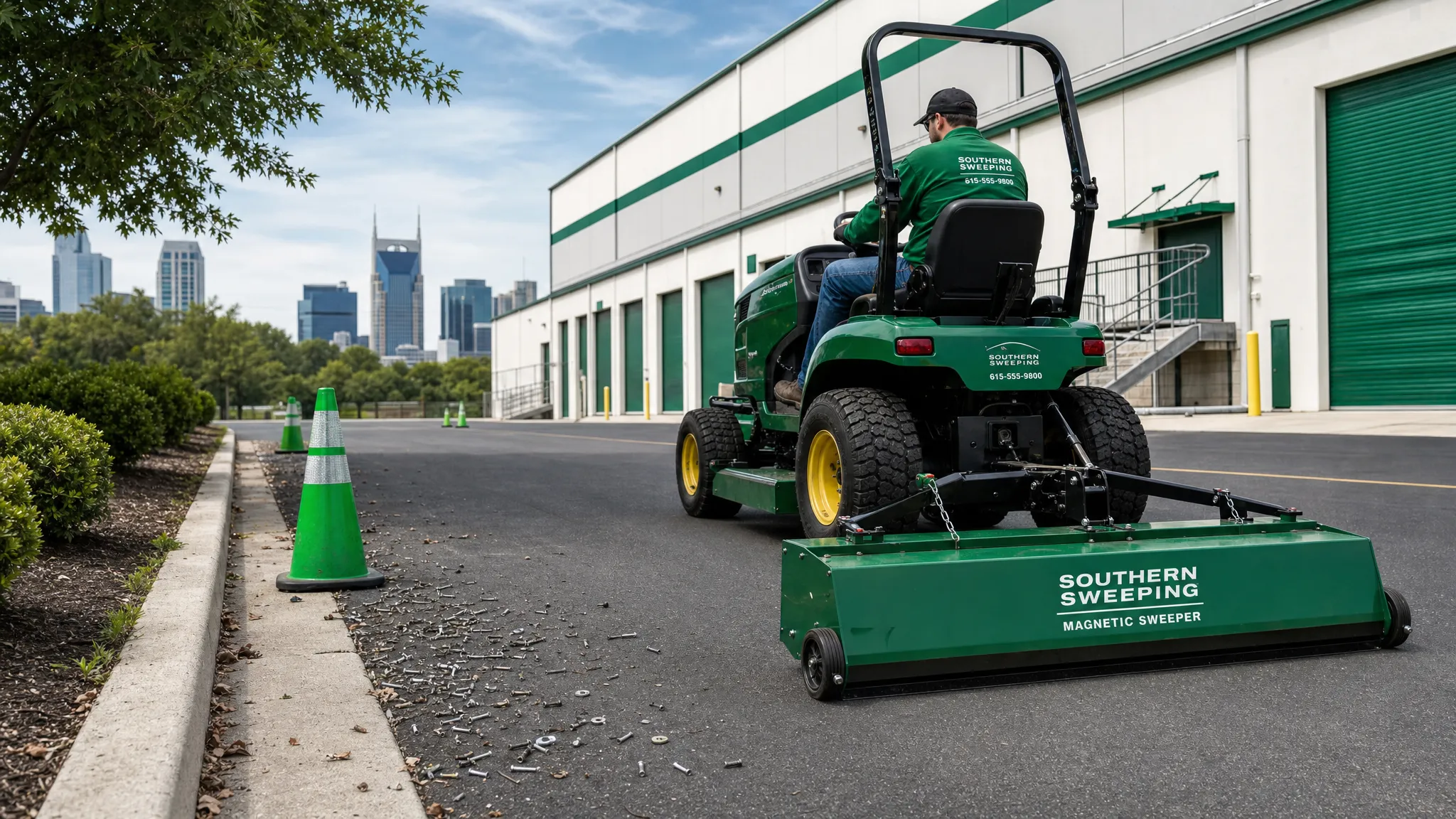
Magnet sweeping uses strong magnetic equipment to collect ferrous metal from paved or compacted surfaces. Depending on the site, the magnet may be pushed by hand, mounted to a vehicle, or used as part of a broader sweeping process.
It is not a replacement for all cleaning. Magnet sweeping will not remove glass, plastic, leaves, mud, loose aggregate, liquids, or nonmagnetic metals such as aluminum. Some stainless steel may also be weakly magnetic or nonmagnetic. For best results, it is often paired with mechanical sweeping, debris pickup, dust control, or targeted cleanup around curbs and drains.
The value is simple: magnet sweeping removes the small sharp debris that ordinary visual checks often miss.
Any property that has had recent trade activity should be considered a candidate for magnet sweeping. Even well-run crews can drop fasteners during framing, roofing, sign installation, utility work, landscaping, gate repair, concrete forming, or tenant improvements.
This is especially true when multiple subcontractors share the same staging areas, drive lanes, dumpsters, and access points. A single box of screws tipped near a loading zone can spread across a property as trucks, carts, rain, and foot traffic move debris outward.
For construction site cleanup, magnet sweeping is most useful after fastener-heavy trades and before clean zones are reopened to tenants, residents, customers, inspectors, or delivery vehicles. It is also smart after temporary fencing is removed, trailers are relocated, or materials are staged and restaged.
If the site has visible dust and debris, schedule magnet sweeping as part of a broader dry cleanup plan. If the site looks mostly clean but has had recent metal-producing work, magnet sweeping may still be necessary because small fasteners can remain hidden in cracks, pavement seams, curbs, gravel transitions, and drain edges.
Flat tire complaints are one of the clearest signs that metal debris has moved from a housekeeping issue to an operational problem. By the time tenants, employees, customers, residents, or delivery drivers report flats, the debris field may already be spread across traffic lanes and parking areas.
Do not wait for the pattern to get worse. Tire complaints can point to concentrated debris near one source, such as a dumpster pad, construction entrance, loading dock, garage ramp, or trailer staging area. They can also point to a broader issue when vehicles track fasteners across the entire property.
A quick response should include three steps. First, identify where complaints are coming from and where affected vehicles were parked or driving. Second, inspect high-contact zones such as entrances, turns, ramps, and loading areas. Third, schedule magnet sweeping for both the suspected source and the travel paths connected to it.
This matters for commercial property maintenance because tire complaints rarely stay private. A flat tire can become a tenant relations issue, a customer service problem, or an avoidable delay for crews and vendors. Magnet sweeping is a practical way to reduce repeat incidents before they become a reputation issue.
Visible metal is a warning sign, but it is also usually only part of the problem. If you can see nails, screws, wire, staples, or metal fragments on the surface, there may be more debris sitting in cracks, along curb lines, under dust, or near wheel paths.
Certain zones collect metal debris faster than open pavement because traffic slows, turns, loads, unloads, or changes direction there. These areas deserve extra attention during any Nashville street sweeping or exterior cleanup plan.
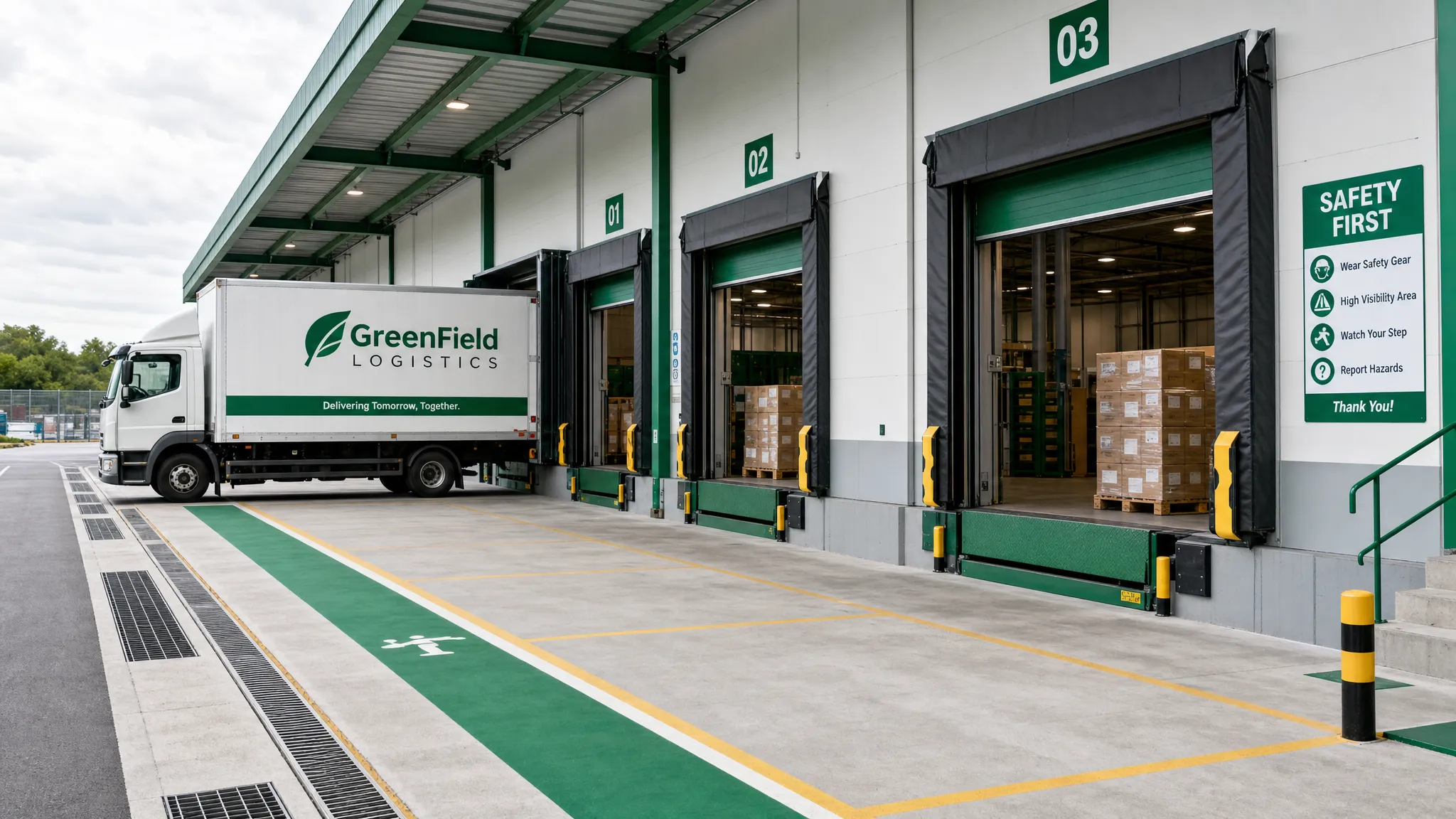
High-risk zones include:
If you are walking the property and find even a few sharp metal pieces in these zones, assume the surrounding area needs a magnet pass. A hand pickup may remove what you can see, but it will not reliably capture small fasteners that blend into rough pavement or sit just outside the obvious pile.
Magnet sweeping is also useful after mechanical sweeping because the first pass can expose hidden metal that was trapped beneath dust, leaves, mud, or loose debris.
Middle Tennessee weather can turn a contained debris problem into a sitewide issue quickly. Rain moves sediment and lightweight debris toward curb lines, storm drain inlets, low spots, and parking edges. Mud can hide nails and screws until it dries, breaks apart, and leaves sharp debris behind.
After rainy weeks, construction entrances, commercial lots, industrial drives, and HOA streets often need more than a quick visual inspection. Metal debris may be mixed with soil, gravel, leaves, and pavement dust. In those conditions, magnet sweeping should be part of a sequence, not an isolated task.
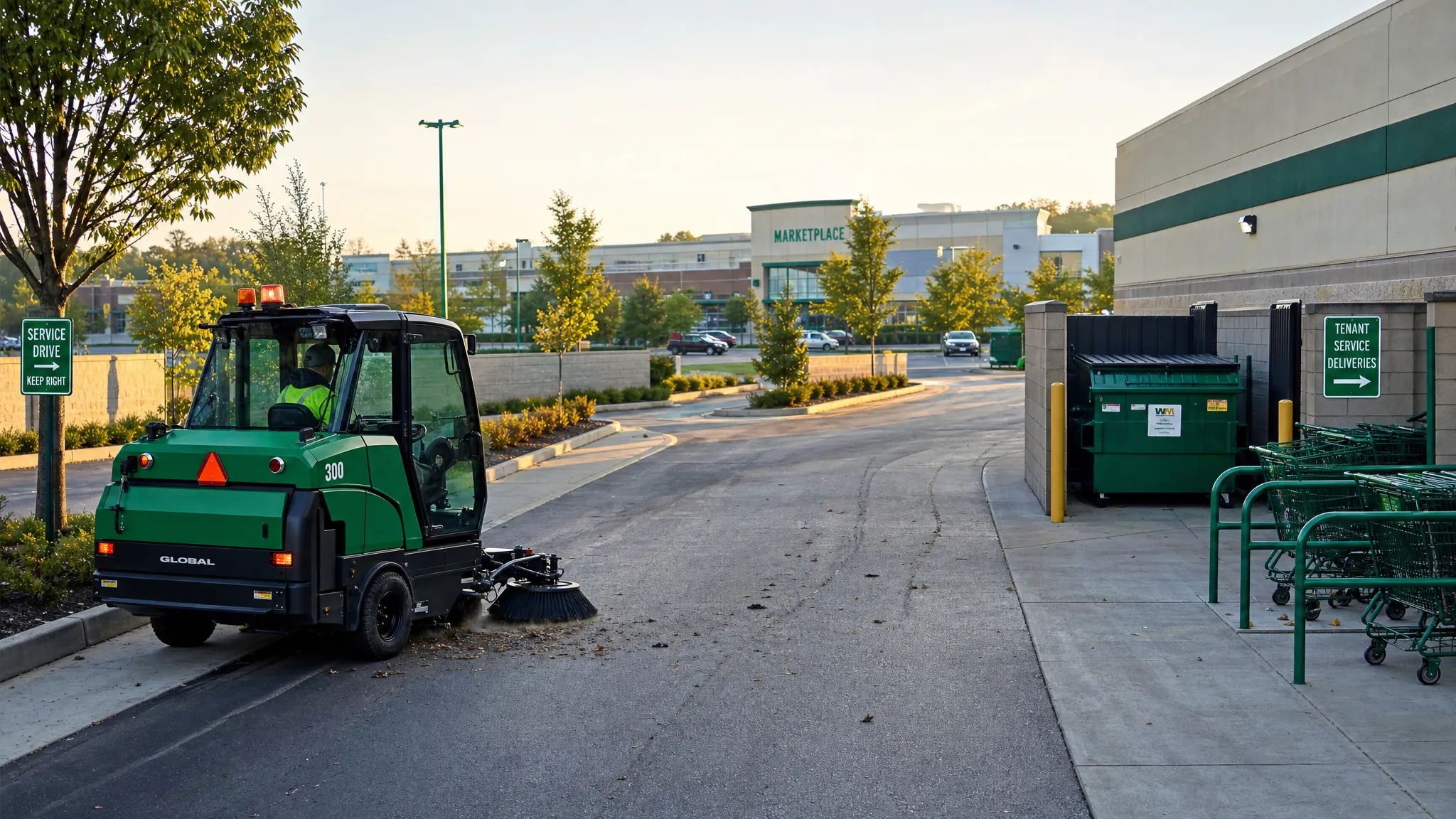
A practical order is to remove bulky debris first, sweep or clear the surface enough to expose the pavement, then use magnet sweeping in the zones most likely to hold fasteners. This dry-first approach helps prevent debris from being pushed into storm drains or spread farther across the property.
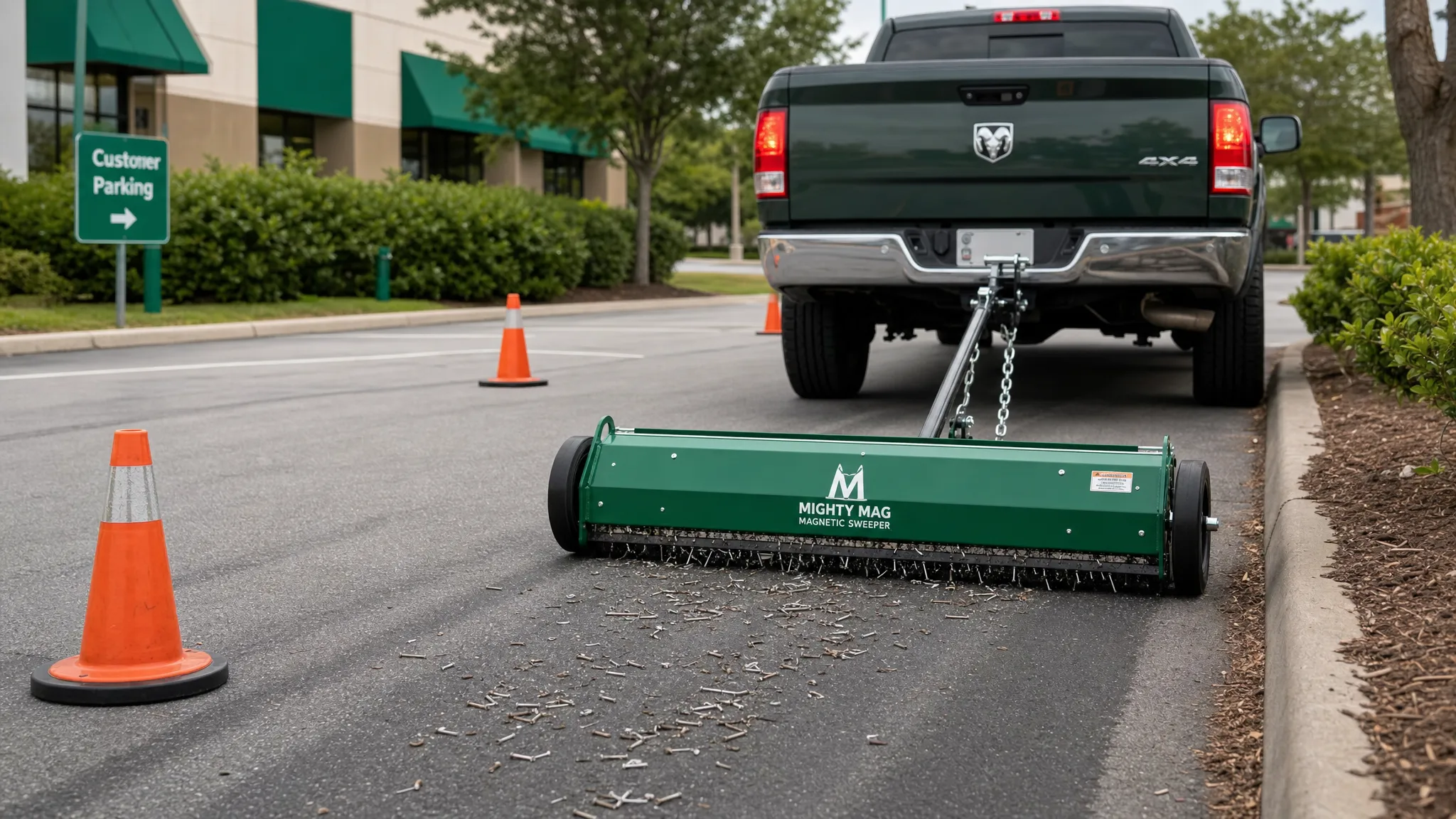
This is especially important near storm drains. A magnet will not solve sediment buildup or clogged inlets, but it can help remove metal fragments before they create puncture hazards or become mixed into material that later has to be handled during drain-area cleanup.
If your property is about to be inspected, opened, turned over, striped, paved, or heavily used, magnet sweeping should happen before the final walkthrough, not after.
This applies to construction closeouts, retail openings, office tenant move-ins, garage reopenings, warehouse operational resets, HOA street maintenance, and municipal or private road work. The closer you get to handoff, the less room there is for avoidable issues. A few fasteners in the wrong area can delay a clean presentation or create complaints immediately after turnover.
Magnet sweeping is also useful before pavement striping or sealcoating because sharp debris and loose fragments can interfere with surface preparation. It can support asphalt paving cleanup as well, especially around transition areas where tools, trucks, and materials have been staged.
For busy properties, consider magnet sweeping before peak traffic rather than after. A retail center may need it before a weekend event. A warehouse may need it before a heavy shipping cycle. A construction site may need it before a city inspection or major delivery. The goal is to remove metal hazards before vehicles and people spread them.
The fastest way to get useful results is to give the sweeping provider a clear picture of the problem. “We need magnet sweeping” is a start, but a better request explains where the debris is, what caused it, and what outcome you need.
Include these details when requesting service:
For larger facilities that route work orders, tenant notices, or vendor confirmations through automated email systems, it can also help to test those communication flows before urgent cleanup is needed. Developer-focused tools like programmable temporary inboxes can be useful for QA teams validating automated maintenance email workflows without relying on personal inboxes.
Good coordination matters because magnet sweeping works best when access is clear. Parked vehicles, blocked curb lines, locked gates, active deliveries, and heavy pedestrian traffic can limit coverage. If the property has tight access or high traffic, schedule the service during an off-peak window and identify any areas that must be handled first.
Some properties only need magnet sweeping after a specific event. Others benefit from recurring service because their debris sources never fully stop.
Construction sites often need magnet sweeping at key project phases, especially after framing, roofing, utilities, fencing, paving, and final cleanup. Industrial sweeping services may include recurring magnet passes around loading docks, fabrication areas, trailer parking, and warehouse approaches. Commercial properties may need periodic service if they sit next to ongoing construction or receive frequent contractor traffic.
Parking facilities can also benefit from scheduled magnet sweeping, especially garages with construction-adjacent entrances, service corridors, ramps, or maintenance areas. Even if the deck looks clean, screws and sharp fragments can sit along expansion joints, edges, and ramp transitions.
The right frequency depends on the debris source, traffic volume, surface condition, and risk tolerance. A property with active trades may need magnet sweeping weekly or after specific trade milestones. A stable commercial lot may only need it after repairs, storms, or nearby construction. A warehouse with constant dock activity may need it as part of a monthly or quarterly exterior maintenance plan.
Magnet sweeping is powerful when the problem is ferrous metal, but it should not be oversold. If the site has mud track-out, heavy sediment, trash, leaves, gravel, glass, or dust, the property may need additional cleaning methods.
For example, a construction entrance with wet clay and embedded fasteners may need bulk debris removal and pavement sweeping before a magnet pass can do its best work. A parking lot with clogged curb lines may need edge detailing and mechanical sweeping. A garage with fine dust may need a sweeping method matched to dust control, not just a magnet.
The best results come from matching the method to the debris. Magnet sweeping is not “extra” when metal is present. It is the correct tool for a specific risk.
What does magnet sweeping pick up? Magnet sweeping picks up ferrous metal debris, including many nails, screws, staples, wire pieces, rebar ties, and small steel fragments. It does not reliably collect aluminum, glass, plastic, leaves, mud, or all stainless steel.
How do I know if my parking lot needs magnet sweeping? Your parking lot likely needs magnet sweeping if you see metal debris, receive tire complaints, recently had construction or repair work, or have high-risk zones such as loading docks, dumpster pads, curb lines, or garage ramps.
Should magnet sweeping happen before or after regular sweeping? It depends on the site. If loose trash, mud, or heavy debris is covering the pavement, mechanical sweeping or debris pickup should happen first. Magnet sweeping can then target exposed metal more effectively.
Is magnet sweeping useful for construction site cleanup? Yes. Construction sites are one of the best use cases because nails, screws, wire, and metal fragments can spread through haul routes, staging areas, parking zones, and public edges throughout the project.
Can magnet sweeping prevent every flat tire? No service can guarantee that every sharp object will be removed, especially if new debris is being created daily. However, magnet sweeping can significantly reduce the metal debris that commonly causes punctures when it is scheduled at the right times and in the right zones.
If your property is showing any of these signs, do not wait for the next flat tire, complaint, inspection issue, or turnover delay. Reliable Sweepers provides magnet sweeping, construction site sweeping, parking lot and garage cleaning, industrial warehouse sweeping, dust and mud control, and emergency response services across Middle Tennessee.
For a site-specific plan, share the address, debris source, priority zones, timing needs, and any photos of the problem area. Reliable Sweepers can help match the right cleanup method to your property so your site stays cleaner, safer, and on schedule. Visit Reliable Sweepers to request service or discuss your cleanup needs.
Reliable Sweepers provides comprehensive street sweeping and property maintenance services across Middle Tennessee. Whether you're managing a construction site, commercial property, or residential development, our experienced team delivers the professional cleaning solutions you need.