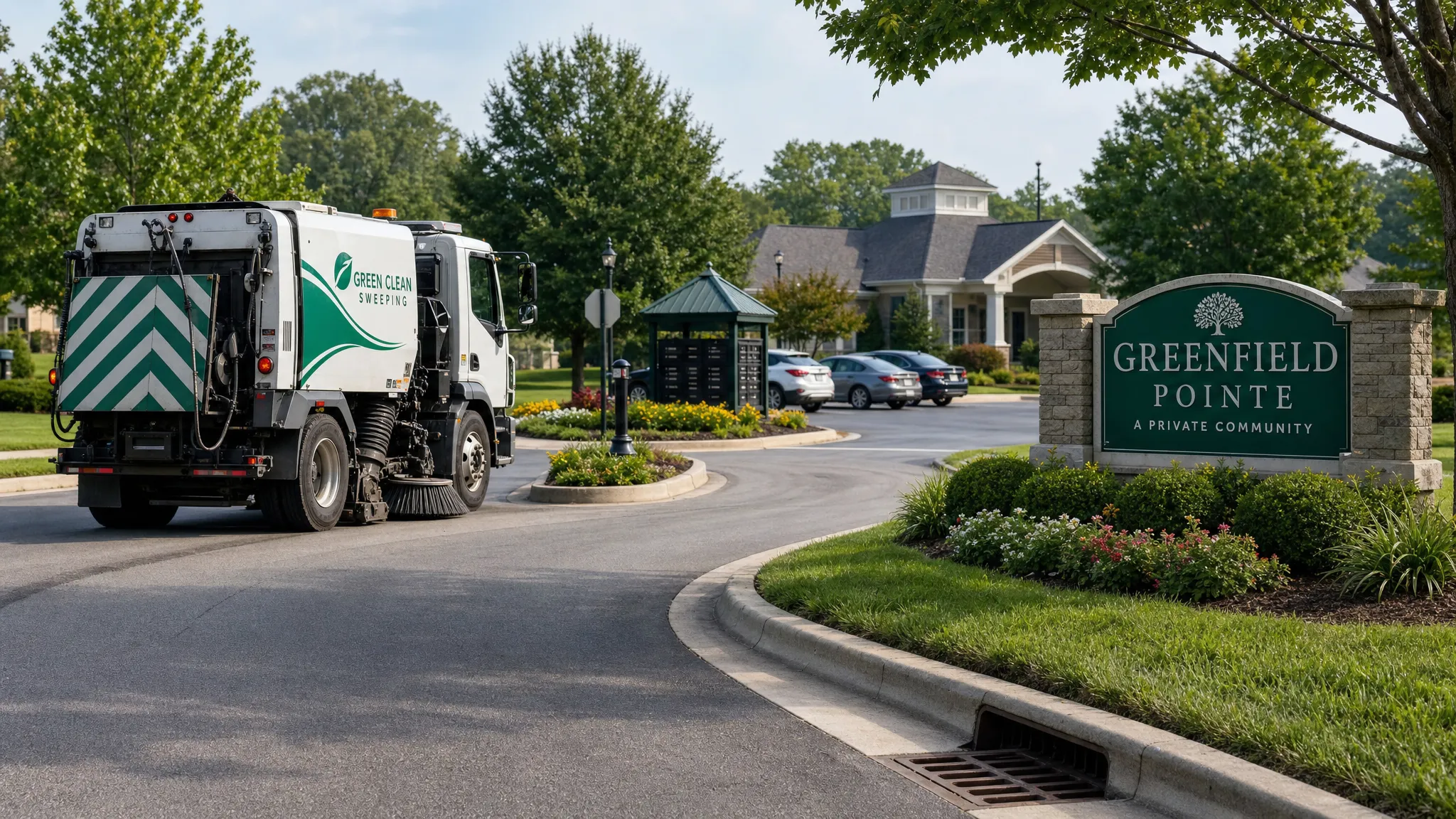
A safe neighborhood does not happen only at stop signs, speed humps, and well-lit entrances. It also depends on the everyday condition of the streets, curb lines, parking areas, and common spaces residents use without thinking about them. When loose gravel, leaves, mud, litter, nails, or clogged drains build up, small maintenance issues can quickly become safety concerns.
That is where HOA sweeping makes a practical difference. For homeowners associations, neighborhood sweeping is not just about looking polished before a board meeting. It helps reduce slip and trip risks, improves drainage, protects pavement, supports stormwater housekeeping, and keeps residents from feeling like common areas are being neglected.
In Middle Tennessee, where neighborhoods deal with rain, pollen, leaf drop, construction traffic, and fast-changing weather, a proactive sweeping plan can help an HOA stay ahead of complaints instead of reacting after a hazard appears.
Most residents notice a clean neighborhood because it looks better. Board members and property managers should also look at sweeping as a risk-control tool.
Loose debris often collects where people walk, park, turn, and enter the community. A pile of gravel at an intersection can affect traction. Wet leaves along a curb can become slippery. Mud tracked from a nearby construction entrance can spread across resident drive lanes. Nails or screws left from roofing, fencing, or construction work can lead to tire damage or injuries.
Routine sweeping reduces those hazards before they become bigger problems. It also supports smoother traffic flow by keeping entrances, loops, cul-de-sacs, and amenity lots cleaner and easier to navigate.
For HOAs, safety is also tied to perception. If residents repeatedly see debris around mail kiosks, clubhouses, pool lots, or neighborhood entrances, they may assume other maintenance standards are slipping too. A clean exterior environment signals that the association is paying attention.
Different neighborhoods have different debris patterns, but most HOA sweeping plans are designed around the same core problems. In Nashville and surrounding Middle Tennessee communities, the most common safety-related debris includes:
The issue is not always the size of the debris. Fine sediment and small fragments can be just as important because they migrate into drains, sit along pavement edges, and spread under traffic.
A well-planned neighborhood sweeping program removes both visible debris and the hidden buildup that causes recurring safety, drainage, and appearance problems.
Residents use HOA streets in many ways. Cars, delivery vehicles, service trucks, pedestrians, cyclists, children, golf carts, and maintenance crews may all share the same roads and common areas. Clean pavement gives everyone a more predictable surface.
Sweeping helps reduce common hazards such as loose material at turns, debris in parking stalls, glass near walkways, and leaves at curb ramps. Around amenity areas, sweeping can make a noticeable difference because people are often walking from vehicles to a clubhouse, pool, playground, dog park, or mail kiosk.
Parking lots and small neighborhood drives deserve special attention. They may not feel as high risk as busy public streets, but they often combine pedestrians, backing vehicles, children, and low visibility. Keeping these areas swept helps reduce the chance that loose debris, trash, or grit will create avoidable problems.
For HOAs with ongoing construction or frequent contractor activity, sweeping becomes even more important. New homes, roofing work, fencing projects, paving, and landscaping can all introduce material into streets and parking areas. Magnet sweeping can be added when metal debris is a concern, especially after work involving nails, screws, wire, or fasteners.
Drainage is one of the most overlooked safety benefits of HOA sweeping. When curb lines and storm drain inlets fill with leaves, sediment, mulch, trash, or mud, water has fewer places to go. That can create standing water, slippery pavement, localized flooding, and accelerated pavement wear.
In Middle Tennessee, rain can move debris quickly. A street that looked manageable in the morning can have sediment and leaves packed into low spots by the end of a storm. Routine sweeping helps keep debris from collecting in those areas in the first place.
A stormwater-friendly approach usually starts dry. Sweeping, curb-line detail work, and debris pickup should happen before anyone considers rinsing or washing pavement. That matters because pushing loose debris into drains can move the problem downstream instead of solving it.
For Nashville HOAs, this is especially important near:
When drainage stays open, neighborhoods are easier and safer to use after rain.
The best HOA sweeping plans are specific. A vague request like “sweep the neighborhood” can lead to inconsistent results because every community has different priorities, parking patterns, and debris sources.
A better plan divides the neighborhood into zones and defines what success looks like in each one. For most HOAs, the highest-value zones include entrances, main drives, curb lines, cul-de-sacs, amenity lots, mail kiosks, clubhouse areas, pool parking, sidewalks adjacent to common areas, and storm drain inlets.
A written scope should answer a few basic questions. Which streets are included? Are curb lines part of the service or only drive lanes? Are amenity lots included? Should the crew inspect drains visually? Is magnet sweeping needed after contractor work? Are before-and-after photos expected?
This kind of clarity is common in professional property oversight. For example, full-service property management teams such as Keshman Property Management emphasize coordinated maintenance, reporting, and owner communication, and HOAs can apply the same mindset when organizing recurring neighborhood sweeping.
The goal is to make service measurable, not subjective. Residents may still have preferences, but the board and manager can point to a clear standard instead of debating every complaint from scratch.
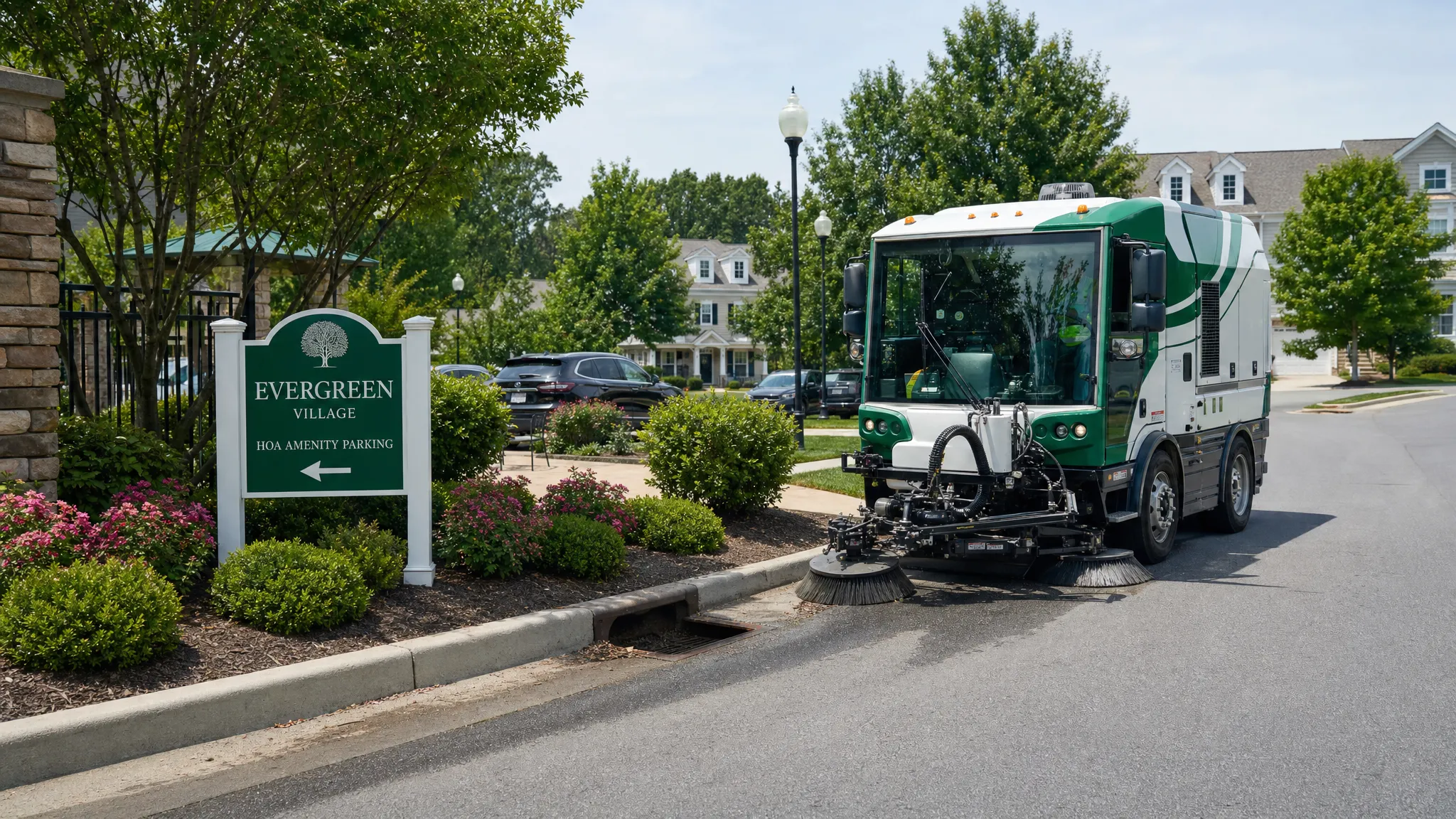
There is no single frequency that fits every neighborhood. A small community with light traffic and few trees may need a different cadence than a large HOA with active construction, wooded streets, amenity lots, and frequent deliveries.
A practical approach is to use two layers: a baseline schedule and trigger-based service.
The baseline schedule keeps normal debris from building up. Depending on the property, that could mean monthly, quarterly, seasonal, or more frequent sweeping. High-traffic communities, construction-heavy neighborhoods, and HOAs with large amenity lots may need service more often.
Trigger-based sweeping handles events that create sudden debris. These triggers may include heavy rain, wind storms, leaf drop, paving work, roofing projects, utility cuts, landscaping projects, neighborhood events, or a complaint tied to a visible hazard.
This approach helps boards control costs while still responding quickly when conditions change. Instead of overscheduling every area all year, the HOA can increase service when risk is higher and scale back when the site is stable.
If the budget is limited, start with the areas where debris creates the most safety risk or resident visibility. Entrances matter because they affect first impressions and often collect road grit. Curb lines matter because they control drainage. Amenity areas matter because they combine pedestrians, parked cars, and children. Construction access points matter because debris can spread quickly from one source to the rest of the neighborhood.
A simple inspection route can help board members or managers prioritize service. Drive the neighborhood slowly after rain, after trash pickup, and after major contractor activity. Look at where material collects instead of only checking whether the center of the road looks clean.
Pay close attention to:
Once these zones are mapped, it becomes much easier to request accurate pricing and consistent results from a professional sweeping provider.
Many neighborhoods in and around Nashville continue to experience new construction, infill development, remodeling, roofing, and utility work. Even when contractors are careful, debris can leave the work area and move into shared streets.
Mud, gravel, concrete dust, sawdust, fasteners, pallet fragments, and packaging can create safety and appearance problems. If the community has new homes under construction, residents may complain about dirty streets long before the project is complete.
This is where a routine plus trigger-based plan is especially useful. HOAs can schedule regular neighborhood sweeping while also calling for extra service after high-debris activities. Magnet sweeping can be added after roofing, fencing, framing, or other work where metal fragments may be present.
For boards, the key is to set expectations before the problem grows. If contractor activity is predictable, sweeping should be part of the community’s maintenance plan, not an emergency fix after residents start reporting tire damage or muddy streets.
Resident complaints often come from repeated small frustrations. A single pile of leaves may not cause a board crisis, but weeks of dirty entrances, clogged curb lines, and muddy streets can create the feeling that the HOA is not managing the property well.
A visible sweeping program helps reduce those complaints in two ways. First, it removes the debris that residents notice. Second, it gives the board a documented process for addressing common concerns.
Documentation does not need to be complicated. A short service log, basic notes, and photos of key zones can show when sweeping was completed and what areas were addressed. That can be especially helpful when residents ask whether the HOA is taking action.
For larger communities, photos of entrances, drains, amenity lots, and construction-adjacent roads can also help board members evaluate whether the current schedule is working or needs adjustment.
Even well-intentioned maintenance plans can fall short if the scope is unclear or poorly timed. HOAs can get better results by avoiding these common mistakes:
The most reliable results come from matching the cleaning method to the actual debris. Loose leaves, fine dust, gravel, mud, and metal fragments may require different tools or sequencing.
A professional sweeping partner should help the HOA define the right scope before service begins. That includes reviewing the site layout, access constraints, debris type, priority zones, timing needs, and any recent construction or storm impacts.
For neighborhood and HOA sweeping, the service may include mechanical sweeping of streets and lots, curb-line attention, debris pickup, magnet sweeping when appropriate, and emergency response when debris creates a time-sensitive hazard. The exact scope should be confirmed in writing so the board, manager, and provider share the same expectations.
Scheduling flexibility is also important. Neighborhoods may need early morning, low-traffic, or resident-aware service windows. If curb access is a challenge, the HOA may need to notify residents ahead of time so vehicles are moved from key areas.
Good communication before service often leads to better cleaning after service.
How often should an HOA sweep neighborhood streets? It depends on traffic, trees, construction activity, drainage issues, and resident standards. Many communities use a baseline schedule and add trigger-based sweeping after storms, leaf drop, construction work, or visible debris buildup.
Does HOA sweeping help with stormwater and drainage? Yes. Sweeping removes sediment, leaves, trash, and other debris before it blocks curb lines or storm drain inlets. A dry-first approach also helps prevent debris from being pushed into the drainage system.
Can sweeping remove nails and screws from HOA streets? Standard sweeping can remove many surface materials, but metal debris often calls for magnet sweeping. Magnet sweeping is especially useful after roofing, fencing, construction, or storm repairs, though it is most effective on ferrous metal.
What areas should an HOA include in a sweeping scope? Common priorities include entrances, main roads, curb lines, cul-de-sacs, amenity lots, mail kiosks, clubhouse and pool parking, construction access points, and storm drain areas.
Should residents be notified before neighborhood sweeping? Yes, when parked vehicles could block curb lines or priority areas. Clear communication helps improve access and makes the sweeping visit more effective.
HOA sweeping is a simple, visible way to reduce debris-related hazards, protect drainage, improve curb appeal, and show residents that common areas are being maintained with care.
Reliable Sweepers provides neighborhood and HOA sweeping, parking lot cleaning, construction site cleanup, magnet sweeping, dust and mud control, and emergency response services across Nashville and Middle Tennessee. If your community is dealing with leaves, sediment, construction debris, muddy streets, or recurring resident complaints, a site-specific sweeping plan can help.
Contact Reliable Sweepers to discuss a practical HOA sweeping schedule for your neighborhood.