
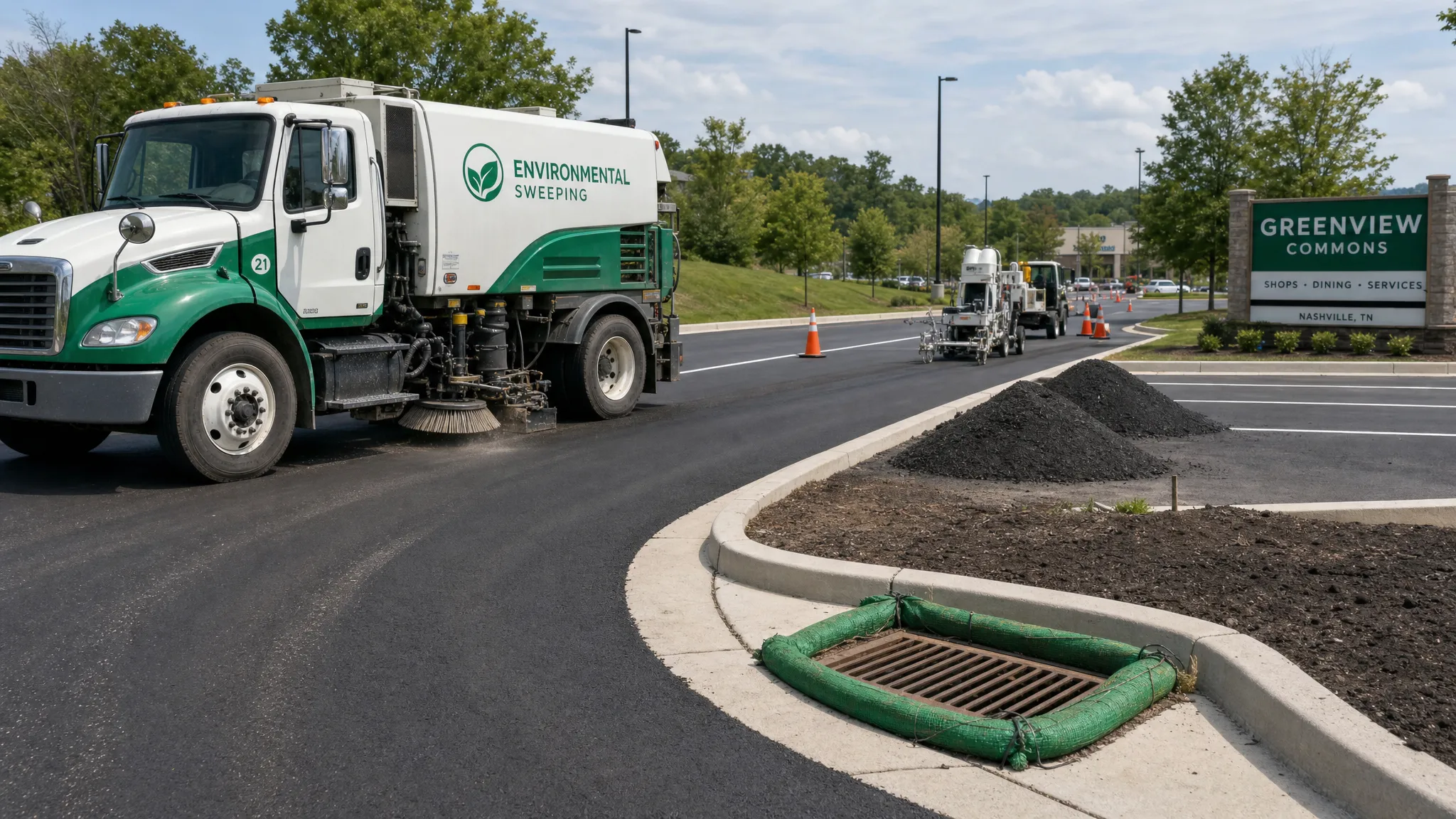
Fresh asphalt can make a job look complete, but paving crews know the work is not truly finished until the loose material, track-out, residue, and edge debris are under control. The first hour after paving often determines whether the site opens cleanly or creates complaints, tire damage, drainage issues, and rework.
For asphalt paving crews, cleanup is not just cosmetic. It protects the new surface, keeps nearby roads and parking areas safer, and helps the project stay inspection-ready. In Middle Tennessee, where sudden rain can move fines and sediment quickly, waiting until the next day can turn a simple sweep into a bigger cleanup problem.
Right away does not mean rushing onto hot asphalt or putting workers in unsafe traffic conditions. It means cleaning as soon as the area is safe to access, before vehicles spread debris, before rain reaches the site, and before striping, turnover, or public access begins.
Asphalt-related debris moves fast. Loose millings, aggregate, and dust that are manageable in a small work zone can spread into curb lines, storm drains, sidewalks, entrances, and public streets once haul trucks and traffic begin moving through the area. A site that looked acceptable at final roll can look messy by the end of the day if cleanup is delayed.
Immediate cleanup also protects workmanship. Loose aggregate on the surface can interfere with markings, create tracking into buildings, or make a finished lot look unfinished. Asphalt chunks along transitions and ramps can become trip hazards. Metal fragments and construction debris can cause tire complaints after the paving crew has already demobilized.
There is also a process lesson that applies far beyond paving. High-volume facilities often invest in contamination-control cleaning systems because residue is easier to manage at the source than after it spreads through the operation. Paving crews can use the same mindset: capture debris while the work zone is still controlled.
For Nashville-area projects, stormwater is a major reason to act early. Fine asphalt particles, soil, and sediment can wash toward inlets during a storm. Dry-first cleanup, including sweeping and pickup before water is introduced, is usually the cleaner, safer, and more stormwater-conscious approach.
Start with anything large enough to be kicked, driven over, or washed into a drain. Millings and broken asphalt often collect at the edges of the work zone, around saw-cut transitions, near curb returns, beside utility covers, and at the end of paving passes.
Bulk material should be picked up before mechanical sweeping. A sweeper is designed to collect loose debris and fines, not to act as a loader for large piles. Removing chunks first prevents the material from being crushed into the new surface or dragged into finished areas.
Pay special attention to parking lot entrances, driveway aprons, ramps, and tie-ins. These transition zones are where customers, tenants, inspectors, and owners are most likely to notice uneven debris.
Track-out is one of the fastest ways a paving job becomes a public-facing problem. Haul trucks, rollers, skid steers, and support vehicles can carry dust, mud, asphalt particles, and loose stone from the work zone onto adjacent pavement.
The exit point should be checked repeatedly, not just at the end of the shift. If a project connects to an active street, retail entrance, subdivision road, industrial drive, or shared parking lot, track-out can create complaints quickly. In rainy weather, dust and fines can turn into a slick film that spreads even farther.
A good cleanup plan treats the haul route as part of the paving footprint. If trucks used it, it should be inspected. If debris is visible in the tire path, curb line, or shoulder, it should be swept before the crew leaves.
Tack coat residue should never be ignored. Sticky tracking near entrances, sidewalks, ramps, or drive lanes can create appearance issues and may be difficult to remove once vehicles spread it.
Crews should contain the affected area, keep traffic off it where possible, and follow the material supplier’s guidance and the site’s safety procedures. Do not wash tack residue toward storm drains. If the residue has migrated beyond the paving zone, document the area and address it before public access resumes.
Fresh paving and milling can leave fine particles that are easy to underestimate. These fines settle along curb lines, at garage entries, near loading docks, and around storm drain grates. When dry, they become airborne or track into nearby buildings. When wet, they become slurry-like residue.
For fine dust, sweeping should capture the material instead of simply pushing it to the side. Blowers may have a place for detail work, but they should not be used to move debris into gutters, landscape beds, or drainage paths. On larger lots and streets, professional sweeping equipment is often the better tool.
Paving often happens around active construction, utility work, milling equipment, trailers, and staging areas. That means nails, screws, wire, blades, straps, and other metal fragments may be present even if they did not come directly from the asphalt crew.
If the job involved milling, demolition, utility adjustments, nearby building work, or heavy staging, magnet sweeping should be considered before the area opens to traffic. Metal debris can cause expensive tire complaints and can be hard to see during a quick visual walk.
Curb lines are natural collection points. So are curb returns, trench drain edges, low spots, and storm drain inlets. If asphalt fines, aggregate, or millings are left in these areas, the next rain can move them into the drainage system or create ponding.
Clean these areas before wet weather whenever possible. A dry-first approach helps capture material rather than spreading it. If the project has a SWPPP or stormwater housekeeping requirements, photos of cleaned inlets and curb lines can also support documentation.
The areas people walk through deserve a separate pass. Sidewalks, ADA ramps, storefront entries, office doors, loading docks, and pedestrian crossings should be checked for loose stone, asphalt crumbs, dust, and sticky tracking.
Even when the paved surface looks good, debris at the pedestrian edge can create the impression of an unfinished job. These areas often need hand detail, not just a machine pass.
A simple sequence helps crews avoid rework and keeps the cleanup moving in the right order.
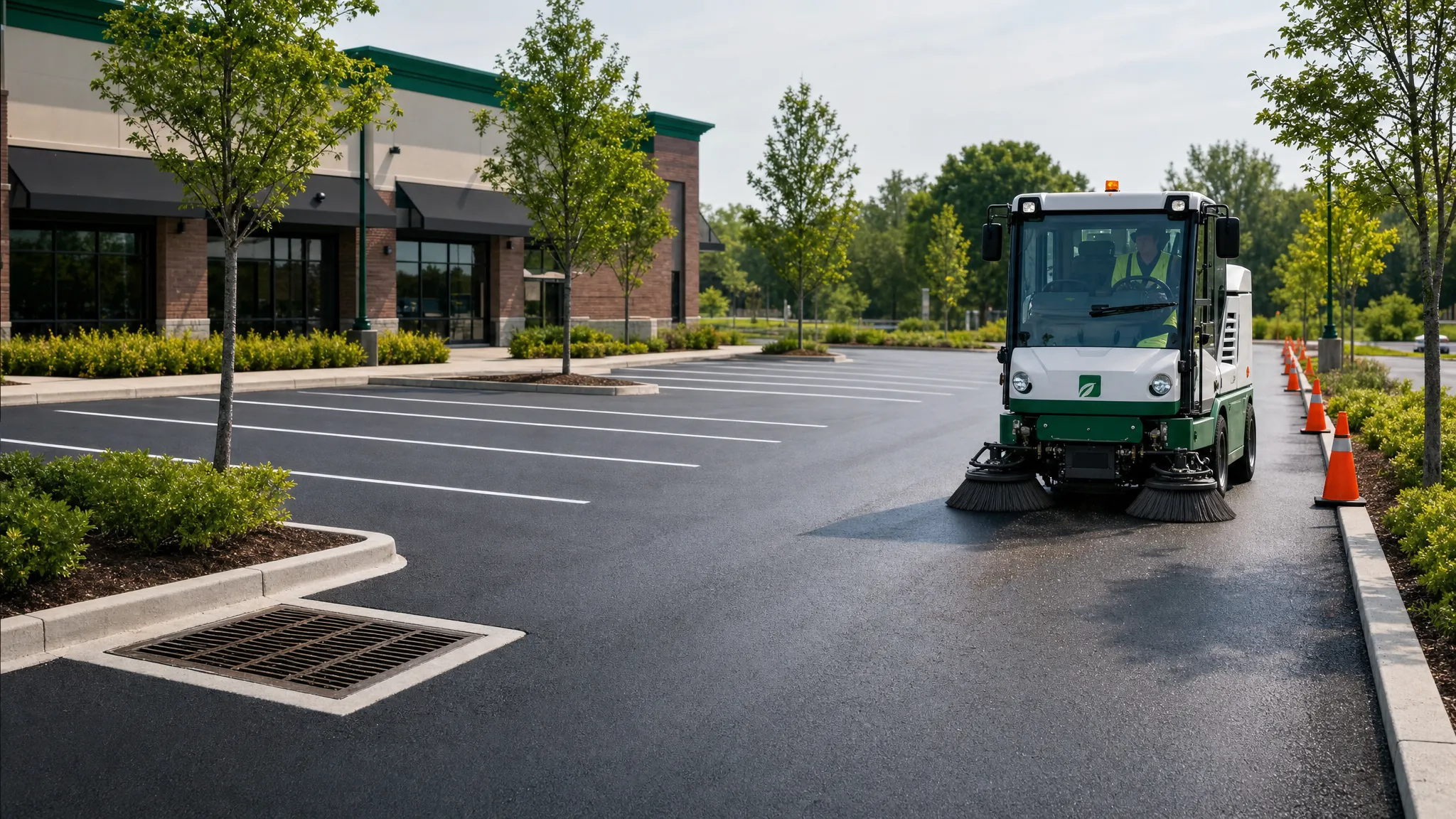
The best cleanup window depends on the phase of work. After milling, cleanup should happen before paving begins so old asphalt debris does not mix into the final surface or migrate into drains. During paving, crews should keep exits and staging areas under control so debris does not build up all day.
After the final roll, the cleanup focus shifts to edges, transitions, loose aggregate, and access routes. This is the moment to prepare the site for traffic, striping, owner walkthroughs, or tenant access. If striping is scheduled soon after paving, surface cleanliness becomes even more important because dust and loose particles can affect layout and appearance.
Weather should also drive timing. If rain is forecast, do not leave fines, millings, or loose sediment sitting in curb lines overnight. A short cleanup before a storm can prevent a longer emergency response later.
For active commercial sites, timing may need to work around customers, deliveries, tenants, and traffic flow. Early morning, evening, or off-peak sweeping may produce better results because parked cars and moving traffic are less likely to block the areas that need attention.
Rushed cleanup can create more problems than it solves. The most common mistakes are usually simple, but they can be costly.
The goal is not to over-clean a work area that is still active. The goal is to remove the debris that can spread, damage tires, block drainage, create slip or trip risks, or make the finished job look careless.
A paving crew can handle plenty of immediate cleanup with shovels, brooms, skid steers, and good housekeeping habits. But some situations call for dedicated sweeping equipment and a crew focused specifically on cleanup.
Professional sweeping is especially useful when debris extends beyond the immediate paving footprint, when curb lines and storm drains need detailed attention, when a public road or commercial access point is affected, or when fine dust and aggregate cover a large paved area. It is also helpful when the job needs magnet sweeping or emergency response cleaning before the site opens.
Reliable Sweepers supports contractors and property teams across Nashville and Middle Tennessee with construction site sweeping, asphalt paving cleanup, parking lot sweeping, magnet sweeping, dust and mud control, and flexible scheduling. For paving crews, that can mean a cleaner handoff without pulling skilled workers away from paving production.
If the project involves a retail lot, industrial drive, HOA street, municipal route, warehouse yard, or active construction site, a sweeping partner can help define the right cleanup scope before paving day. That reduces last-minute calls and helps everyone agree on what clean enough means.
Before traffic, tenants, inspectors, or owners return to the paved area, use this quick check:
This checklist takes only a few minutes, but it can prevent return trips, owner complaints, and avoidable cleanup disputes.
What should asphalt paving crews clean up first? Start with bulk debris, loose millings, asphalt chunks, and any material in travel lanes, exits, curb lines, or pedestrian paths. Large material should be picked up before mechanical sweeping.
Should cleanup happen before or after the asphalt cools? Cleanup should happen as soon as it is safe and appropriate for the surface. Crews should avoid damaging fresh asphalt, but they should not wait so long that vehicles, wind, or rain spread debris beyond the work zone.
Is magnet sweeping needed after asphalt paving? Magnet sweeping is recommended when paving happens near construction activity, milling, utility work, staging areas, or any place where nails, screws, wire, or metal fragments may be present. It helps reduce tire-puncture risk.
Can tack coat residue be washed away? Tack coat residue should be handled carefully according to the product guidance, SDS, and site procedures. Crews should not rinse sticky residue or contaminated water toward storm drains.
When should Nashville paving crews schedule professional sweeping? Schedule sweeping before traffic returns, before striping, before forecasted rain, or immediately after track-out reaches public or shared pavement. For tight timelines, it is best to coordinate sweeping before paving day.
If your paving job needs cleaner exits, safer haul routes, clear curb lines, magnet sweeping, or same-day cleanup support, Reliable Sweepers can help. Our team provides professional sweeping and exterior cleanup services for contractors, commercial properties, industrial sites, neighborhoods, and municipal routes across Middle Tennessee.
To plan cleanup around your next paving schedule, contact Reliable Sweepers and request a site-specific sweeping plan.