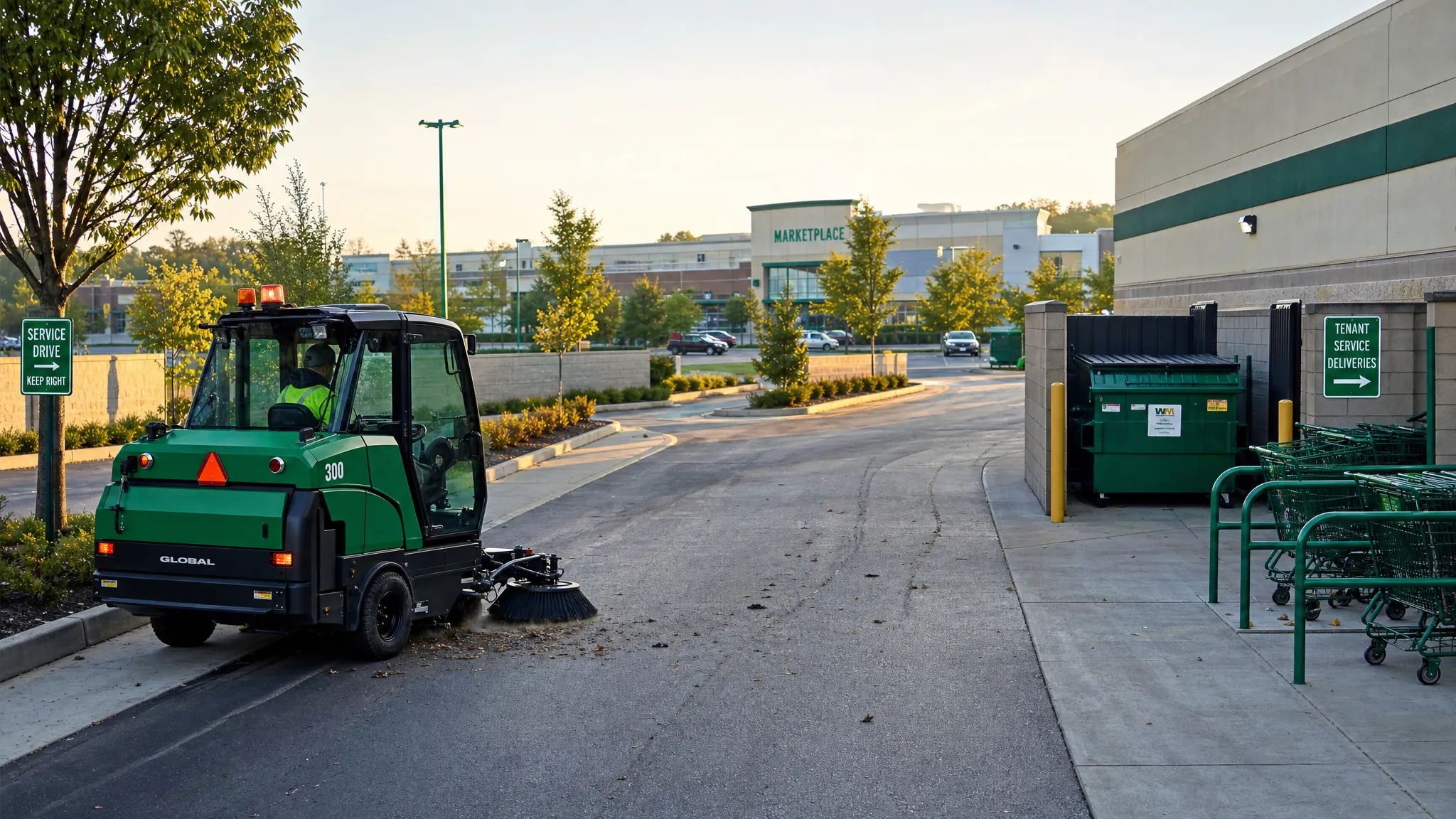
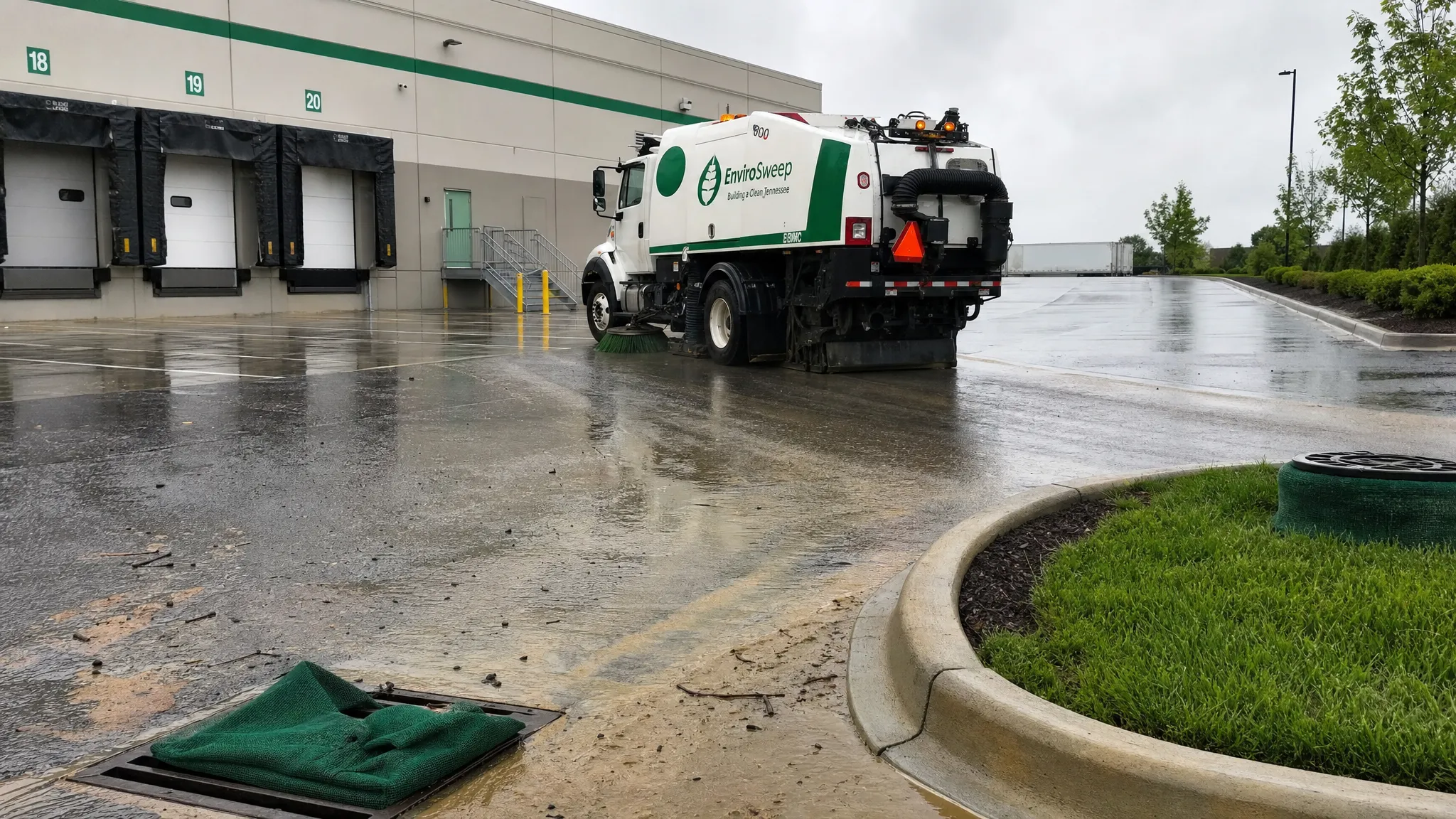
Rainy weeks in Middle Tennessee rarely create just one cleanup issue. They turn dry dust into slick mud, push loose debris to curb lines, fill low spots with sediment, and make routine sweeping harder to schedule. For contractors, property managers, warehouse teams, HOAs, and municipal buyers, the question is not simply whether the site looks messy. It is whether entrances stay usable, drains stay open, pavement stays safe, and cleanup can happen without rework.
A good rainy-week plan is different from a fair-weather cleaning schedule. It has to account for timing, drainage, soil conditions, safety, and the way water moves debris across a property. When that plan is in place, exterior cleanup becomes more predictable even when the forecast is not.
Middle Tennessee weather can shift from dry and dusty to saturated quickly. A site that looks manageable on Monday can have muddy tire paths, sediment at inlets, and leaf-packed curb lines by Friday. Nashville and the surrounding areas also have a mix of active construction, commercial traffic, clay-heavy soils, older drainage patterns, and tree-lined properties. Those conditions make rain a major factor in exterior cleanup.
Clay soil is one of the biggest reasons rainy weeks create headaches. When dry, it becomes fine dust that tracks through entrances, garages, and loading areas. When wet, it sticks to tires, boots, equipment, and pavement. That same material can dry again into a hard film that takes more effort to remove than ordinary litter.
Rain also exposes weak points in a property maintenance plan. If curb lines were already carrying leaves, gravel, pollen, or construction sediment, stormwater will move that material toward low spots. If a construction entrance was already tracking a little mud, a wet week can turn it into a public-edge problem. If a parking lot already had poor drainage, standing water may collect debris and create a slip risk near walk paths.
Before rain, dust may look like a visibility or appearance problem. After several wet days, that dust can become mud, and mud is much harder to control. It sticks to tires, spreads across drive lanes, and creates track-out at construction exits, warehouse yards, and retail entrances.
This is especially important for construction site cleanup. A few loads of soil, aggregate, or material deliveries during a wet week can move mud from a private site onto public pavement. Once that happens, cleanup is no longer just a housekeeping task. It can affect inspections, neighbor complaints, vehicle safety, and schedule coordination.
Rain does not remove debris. It relocates it. Leaves, mulch, sediment, gravel, cups, wrappers, and small fragments move with runoff until they reach a curb, inlet, wheel stop, low corner, or parking lot edge.
That is why a site can look clean in the middle of the pavement but still have a drainage problem. The high-traffic drive aisle may appear passable while the curb line is packed with wet debris. If that material reaches a storm drain inlet, water can pond across a lot or street. For property managers, this is where parking lot sweeping and detailed edge work matter most.
Rain can make hazards less visible. Wet leaves cover uneven pavement. Mud hides nails, screws, wire, and sharp fragments. Sediment collects around potholes and transitions. In garages, ramps and entries can become slick when tire dust, pollen, and water combine.
For commercial and industrial sites, magnet sweeping may be needed after rainy periods because metal fragments can settle into wet debris and remain hard to see. This is common near construction-adjacent properties, loading docks, paving work, and areas where trades have been active.
Rainy weeks compress cleanup timing. Crews may need to work between showers, after deliveries, before inspections, or during low-traffic windows. Sweeping too early can be inefficient if heavy mud is still being tracked out. Waiting too long can allow sediment to dry, harden, or move into drains.
The best approach is usually a mix of baseline service and trigger-based cleanup. Routine sweeping handles normal debris, while rain triggers extra attention to entrances, curb lines, inlets, and public edges.
Active construction sites are often the first to feel the impact of rainy weeks. The main issues are mud track-out, sediment migration, haul route debris, metal fragments, and blocked drainage points. Grading, utilities, concrete work, landscaping, and paving can all create different debris loads when the ground is wet.
A rain-aware construction cleanup plan should prioritize site exits, public road edges, curb lines, storm drain inlets, staging areas, dumpster zones, and any path used by delivery trucks. If a city inspection, paving date, or owner walkthrough is approaching, cleanup should be scheduled early enough to allow for touch-up after the next rain band.
Commercial properties often see rain-related issues at entrances, drive lanes, cart returns, dumpster pads, and curb returns. Water carries litter and sediment toward the edges, while foot traffic brings wet debris into entry zones. If the lot has trees, leaves and organic matter can create slick patches.
For retail centers and office properties, rainy-week cleanup is partly about appearance, but it is also about customer experience. A clean lot drains better, looks better, and reduces the chance that mud or debris will be tracked into interior spaces.
Industrial sweeping services become especially valuable when wet weather combines with truck traffic. Loading docks, trailer rows, gravel transitions, and yard entrances can accumulate pallet fragments, shrink wrap, dust, mud, and metal. Rain makes these materials heavier and more difficult for in-house crews to collect quickly.
Wet debris can also interfere with traffic flow. If truck lanes are narrowed by puddles or sediment piles, the site may operate less efficiently. A rainy-week plan should include dock aprons, yard drive lanes, entrances, perimeter curb lines, and any stormwater collection points.
Neighborhood streets and HOA areas often see debris gather after several days of rain. Leaves, pine needles, small branches, mulch, sediment, and litter move toward gutters and inlets. Parked cars can make it harder to reach curb lines, which means access planning matters.
For municipal and neighborhood sweeping, rainy weeks often call for targeted cleanup instead of a broad pass everywhere. The highest-value zones are low points, curb returns, ponding areas, mailbox clusters, common-area parking, and streets near active construction.
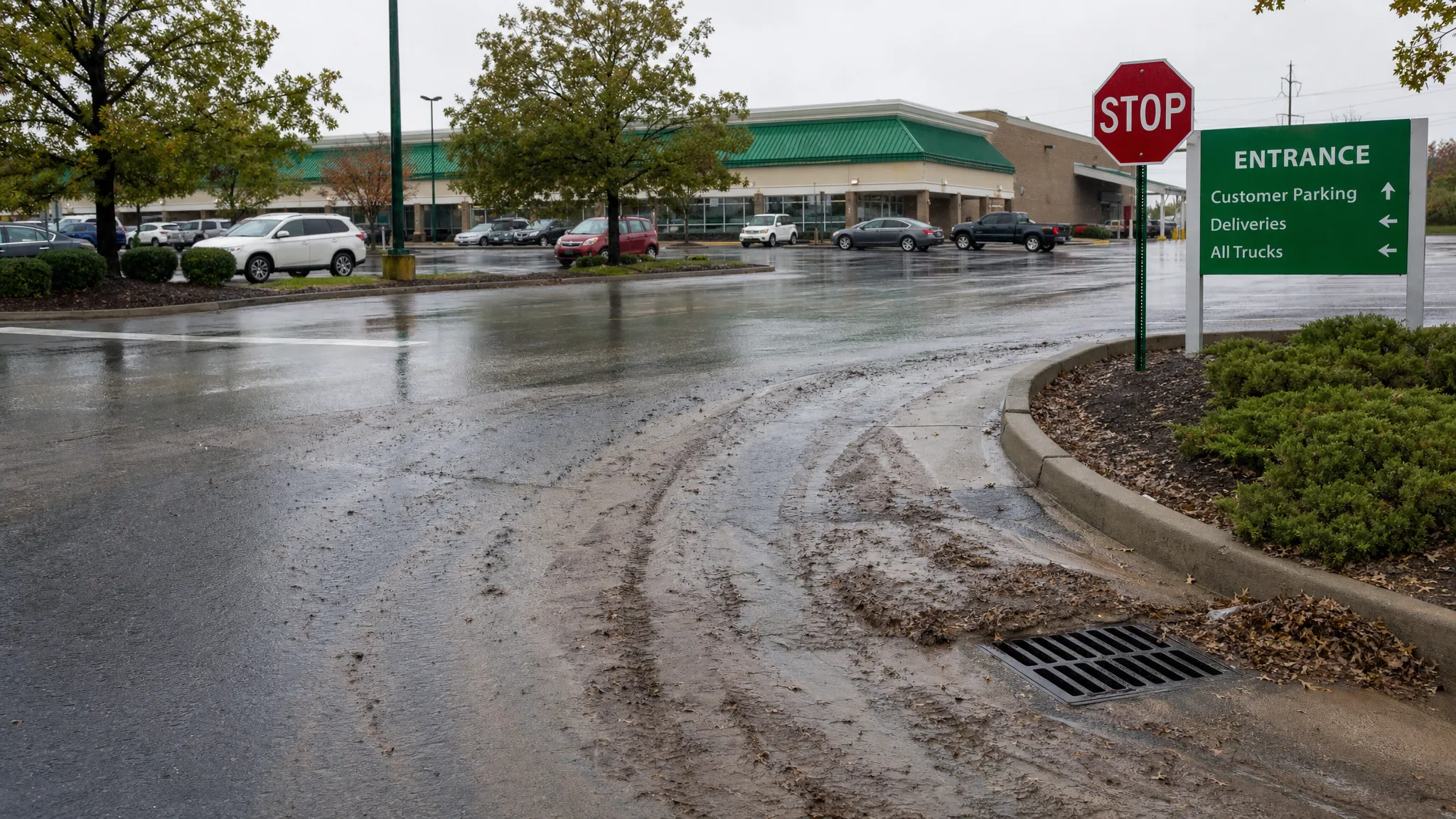
The best time to prevent a stormwater mess is before the rain starts. If loose material is already sitting on pavement, rain will move it. A pre-rain sweep reduces how much sediment, litter, and organic debris can migrate into drains or public edges.
Useful pre-rain actions include:
Pre-rain cleanup does not need to be a full property reset every time. The goal is to remove the material most likely to move, clog, smear, or create complaints.
During active rain, cleanup should focus on immediate access and risk reduction. Some sweeping may be practical in light rain, but heavy rain changes the equation. Visibility, traffic, standing water, and surface conditions all affect what can be done safely and effectively.
During rainy periods, site teams should focus on keeping entrances open, marking slick areas, watching for track-out, and documenting problem spots. Avoid pushing or rinsing debris toward drains. If sediment is moving off-site or into a public area, it may be time to schedule a rapid response rather than waiting for the weekly visit.
Once the rain slows or stops, sequencing matters. A wet-site cleanup that starts in the wrong order can create more work. For most exterior properties, a dry-first approach still applies, even when the site is damp.
Start with bulk debris, branches, trash, and heavy accumulations. Then address curb lines, drains, wheel stops, and edges where runoff collected material. After that, use mechanical sweeping to remove spread-out sediment, gravel, leaves, and dust. Add magnet sweeping where fasteners, wire, or metal fragments may be present. Use targeted wet cleaning only where sweeping cannot remove residue, stains, or slick buildup.
For a deeper look at sequencing, Reliable Sweepers has a related guide on the best order for cleaning and sweeping, which is especially useful after weather delays or construction activity.
Rain changes the workload. Wet debris is heavier, curb-line buildup is more concentrated, and crews may need more detailed passes around drains and entrances. If a property waits until the end of a long rainy stretch, one visit may not fully reset the site, especially if trucks, tenants, or construction activity continue during cleanup.
Scheduling also becomes more dependent on access. Parked cars, delivery traffic, active job-site hauling, and standing water can all limit what a sweeper can reach. The more clearly a property manager defines service windows and priority zones, the easier it is to get useful results.
Rain also has a way of exposing unclear responsibility. One tenant may control a loading dock, another may control trash handling, and a landlord may be responsible for shared drive lanes. Maintenance logs, before and after photos, and written scopes make those conversations easier. When responsibilities are tied to leases, ownership documents, or landlord-tenant questions, property owners should consult qualified counsel. For example, owners with holdings in New York or Connecticut can review resources from real estate and landlord-tenant counsel as a reminder that cleanup duties are often connected to broader property documents.
The key is to set expectations before the rainy season. A routine sweep may be enough for normal litter and dust. A rain-triggered cleanup may need extra curb detail, drain attention, mud control, or emergency response cleaning.
Stormwater-friendly cleanup is especially important during rainy weeks because runoff carries debris faster than people expect. Sediment, leaves, trash, and construction materials should be captured before they enter drainage systems whenever practical.
Good rainy-week practices include:
These practices support cleaner properties and better stormwater housekeeping. They do not replace site-specific compliance requirements, but they help property teams show that exterior maintenance is being handled intentionally. For more detail, see Reliable Sweepers’ guide to stormwater-friendly cleanup basics in Nashville.
A good service request saves time, especially during busy weather windows. Instead of simply asking for a sweep, provide the information that helps the crew match the right method to the problem.
Include these details when requesting rainy-week service:
This information helps the provider decide whether the site needs mechanical sweeping, compact equipment, magnet sweeping, debris pickup, mud control, or a combination of services. It also reduces the chance of paying for a broad pass when the real problem is a handful of high-risk zones.
Not every rainy week requires emergency service. Many properties can wait for a scheduled sweep if debris is light and access remains safe. But some conditions should move cleanup higher on the priority list.
Emergency or same-day response may be appropriate when:
In these situations, speed matters, but method still matters too. The safest response is not always to rinse everything away. Often, it is to remove bulk debris, sweep sediment, detail edges, protect drains, and document the result. Reliable Sweepers’ emergency cleaning plan explains how to triage exterior messes when time is short.
Busy managers do not need a complicated audit to catch the biggest issues. A 10-minute exterior walk after a rainy stretch can reveal whether cleanup should be scheduled.
Start at the main entrance and look for mud, slick leaves, sediment, or trash where vehicles and pedestrians first arrive. Walk the primary drive lane and check whether debris is spreading or collecting at turns. Visit the lowest curb line and inspect the nearest storm drain inlet. Check dumpster pads, loading docks, construction access points, and any area where trucks turn or back up.
If the site includes a parking garage, check ramps, entries, and drains. If the site includes a construction area, check public edges and haul routes first. If the site includes landscaped islands or tree cover, check where mulch, leaves, and pine needles are moving into pavement.
The goal is not to create a long report. The goal is to identify whether the property needs a normal sweep, a targeted detail visit, magnet sweeping, mud control, or emergency response.
Should you sweep before or after a rainy week? Both can be useful. Pre-rain sweeping removes loose material before runoff moves it. Post-rain sweeping removes sediment, leaves, mud, and debris that collected at curb lines, entrances, drains, and low points.
Can rainy-week sweeping help with stormwater concerns? Yes, sweeping can support stormwater housekeeping by capturing sediment and debris before it reaches drains. It should be paired with proper inlet protection, source control, and any site-specific compliance requirements.
Is pressure washing the best solution after rain? Not always. In many cases, dry-first cleanup is better. Remove debris, sediment, and mud with pickup and sweeping first, then use targeted wet cleaning only where residue or slick buildup remains.
How quickly should construction sites respond to mud track-out? As quickly as practical, especially if mud reaches a public road, storm drain, sidewalk, or inspection area. Waiting can create complaints, safety risks, and more expensive cleanup.
Does rainy weather make parking lot sweeping less effective? It can if debris is saturated, access is blocked, or rain is still heavy. However, targeted sweeping between storms or after rainfall can be very effective when the scope focuses on curb lines, entrances, drains, and drive lanes.
If a wet forecast has left mud, sediment, leaves, or construction debris across your site, Reliable Sweepers can help you build a practical response plan. Our team supports Nashville street sweeping, construction site cleanup, parking lot and garage cleaning, industrial warehouse sweeping, HOA and municipal sweeping, magnet sweeping, dust and mud control, and emergency response services across Middle Tennessee.
For a cleaner, safer, more predictable site after rainy weather, contact Reliable Sweepers to discuss a site-specific exterior cleanup plan.
Reliable Sweepers provides comprehensive street sweeping and property maintenance services across Middle Tennessee. Whether you're managing a construction site, commercial property, or residential development, our experienced team delivers the professional cleaning solutions you need.