
A well-designed cleaning facility does more than keep things looking presentable. It reduces slip and trip hazards, limits dust exposure, prevents cross-contamination between “dirty” and “clean” work, and helps you stay inspection-ready with less last-minute scrambling.
If you are responsible for a warehouse, yard, construction operation, parking facility, or multi-tenant commercial site, setting up a dedicated cleaning facility (or cleaning area within a facility) is one of the most practical ways to improve safety and consistency. Below is a field-tested way to set it up so your team can clean faster, verify results, and avoid common compliance mistakes.
Before you buy equipment or rearrange a bay, define what “done” means for your operation. This prevents the most common failure: building a cleaning room that looks organized but does not actually reduce risk.
A useful definition of “done” for safer operations usually includes:
If you manage outdoor pavements, align this goal with a “dry first, then wet” approach. Reliable Sweepers has a full walkthrough of the sequencing logic in Cleaning and Sweeping: The Best Order for Faster Turnovers.
The safest cleaning facility is the one people will actually use. Location determines whether cleaning becomes part of the workflow or an inconvenient side quest.
Look for a space that supports these realities:
For outdoor-heavy operations, place the cleaning facility so crews can “enter, clean, exit” without crossing public-facing areas. If the only path to your cleaning station runs past an entrance, you will constantly re-contaminate your own work.
A zone-based layout keeps the work safe and fast, and it prevents the classic problem of mixing muddy tools with clean supplies.
A simple, effective cleaning facility layout uses five zones:
Keeping this “one-way flow” reduces trip hazards and prevents the cleaning area from becoming a clutter zone.
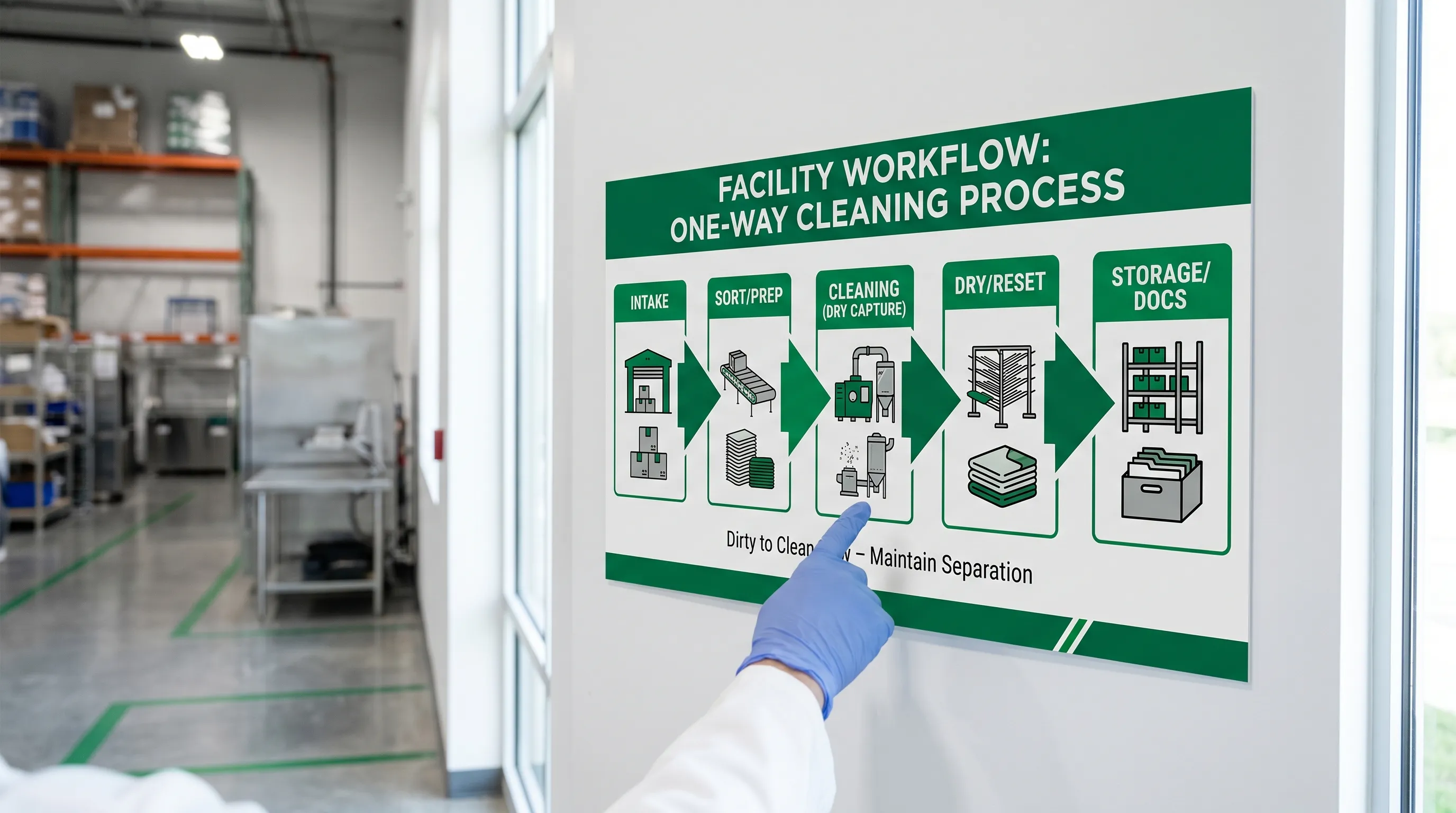
Many cleaning facilities fail because they accidentally create unsafe interactions:
If you are cleaning around loading docks and yards, a zone plan like the one described in Industrial Facility Cleaning: Build a Zone-Based Maintenance Plan translates well to your cleaning facility design.
A cleaning facility should be stocked for the mess you actually have, not the mess you wish you had.
Start by listing your top debris drivers:
Then match tools to that reality.
Most operations benefit from a small “core kit” that supports dry capture first:
If you use wet methods (pressure washing or rinse-down), treat them as a second step, not the first. Wet cleaning without prior dry capture often turns dust into slurry and moves pollutants toward drains. For stormwater-safe basics, see Nashville Environmental Cleaning: Stormwater-Friendly Cleanup Basics.
A cleaning facility touches multiple safety and environmental requirements. You do not need to overcomplicate it, but you should design it so safe behavior is the default.
Slips and trips are frequently tied to poor housekeeping and unmanaged debris migration. OSHA’s walking-working surfaces rules are a good baseline reference for keeping surfaces maintained and hazards controlled (see OSHA overview: Walking-Working Surfaces).
Practical controls to implement:
If your cleaning facility stores chemicals, build a simple system that supports OSHA Hazard Communication (HazCom). OSHA’s HazCom page is a helpful reference for required elements like labeling and access to Safety Data Sheets (SDS): Hazard Communication.
Keep it simple:
If any cleaning could contact rainfall runoff or storm drains, design the facility to prevent pollutants from leaving your site. In many operations, the safest default is:
For background on stormwater programs and why “non-stormwater discharges” matter, the EPA’s stormwater construction resources are a useful starting point: EPA NPDES Stormwater Program.
If you operate in Middle Tennessee, plan for intense rain events. Your cleaning facility should assume water will find the low point, and so will sediment.
A cleaning facility improves safety only when people use it consistently. That requires simple standard operating procedures (SOPs) that match real work conditions.
A practical SOP set includes:
If your operation includes outdoor pavements, tie SOPs to the same “hot zones” that cause most complaints and incidents, such as curb lines, entrances, dumpster pads, dock aprons, and drains. A helpful companion read is Commercial Building Cleaning: High-Traffic Areas to Prioritize.
Many facilities “have a cleaning room” but still struggle because nobody owns the process or time window.
Two scheduling concepts work especially well:
Decide what gets cleaned on a predictable rhythm (daily, weekly). This prevents debris accumulation that later becomes a slip hazard or a drain clog.
Add extra cleaning when specific events occur, for example:
This baseline-plus-trigger approach is used across many exterior maintenance programs because it matches reality better than a rigid schedule. You will see the same logic applied to pavement and sweeping in Parking Lot Sweeping Services: When and How Often to Sweep.
Safety improves when “clean” is observable.
Use lightweight verification methods:
If you manage active sites that face inspections, build a specific pre-inspection checklist and keep it in the documentation zone. Reliable Sweepers also shares a time-based approach in Site Cleaning: What to Do Before a City Inspection.
A cleaning facility is also your response hub when things go sideways.
Prepare for:
Define what your team can handle in-house versus when you call for help. If your site can become hazardous quickly (public roads impacted, complaints likely, inspection risk), having a rapid response plan matters. For construction and operational emergencies, see Emergency Clean Up Services: Rapid Response for Job Sites.
Even with a strong internal cleaning facility, some conditions are better handled by specialized equipment and crews:
That is where a professional exterior partner can complement your internal program. Reliable Sweepers supports Middle Tennessee sites with construction site sweeping, parking lot and garage cleaning, magnet sweeping, dust and mud control, and emergency response, depending on what your facility needs.
What is a cleaning facility in an industrial or commercial setting? A cleaning facility is a dedicated area (or set of zones) where tools, equipment, and site debris are handled in a controlled way to reduce hazards, improve consistency, and support compliance.
How big should a cleaning facility be? It should be big enough to support one-way flow (dirty intake to clean storage) without forcing hoses, cords, carts, or debris into walkways. Start with functions and zones, then size the space.
What is the safest order for cleaning operations? In most exterior and industrial settings, the safest order is dry removal and capture first (pickup, sweeping, vacuuming, magnet sweep), then wet cleaning only if needed and only with proper containment.
How do I keep cleaning from pushing debris into storm drains? Use dry methods first, detail curb lines and inlets, and avoid rinsing unless wash water can be contained and recovered. Train teams not to blow or rinse debris toward drains.
When should I outsource sweeping instead of doing it in-house? Outsource when debris volume, fine dust, time pressure, compliance risk, or site access requirements exceed what your in-house team can safely handle with available tools.
If you are setting up a cleaning facility and want it to actually reduce incidents (not just move supplies around), it helps to align your internal program with an exterior sweeping plan, trigger events, and stormwater-safe methods.
Reliable Sweepers provides professional street sweeping and property maintenance services across Middle Tennessee, including construction sweeping, parking lot and garage cleaning, magnet sweeping, dust and mud control, and emergency response.
Contact Reliable Sweepers to schedule a site walkthrough and get a cleaning and sweeping plan that fits your operations: reliablesweepers.com.
