
Cleanup expectations across Middle Tennessee are getting more practical, more preventive, and more documentation-driven. For property managers, contractors, facility teams, HOAs, and municipal buyers, the biggest Nashville and surrounding area cleanup trends for 2026 all point in the same direction: waiting until a site looks messy is no longer enough.
Growth, construction activity, heavy traffic, more mixed-use properties, and intense weather swings are changing what “clean” means. A clean site now has to support safety, drainage, curb appeal, tenant satisfaction, and schedule protection. That is especially true in high-traffic corridors from downtown Nashville to Franklin, Brentwood, Murfreesboro, Mt. Juliet, Hendersonville, Gallatin, Smyrna, and other surrounding communities.
Below are the cleanup trends worth watching in 2026, plus what they mean for your maintenance budget, vendor scope, and day-to-day property operations.
For years, the most obvious cleanup pressure was concentrated in downtown Nashville, event districts, construction-heavy blocks, and dense commercial corridors. In 2026, cleanup demand is becoming more regional.
As development continues across the Nashville metro, the same debris patterns that once felt “downtown only” are showing up in suburban growth areas. New retail centers, distribution facilities, multifamily communities, roadwork, and infill projects are increasing the need for sweeping and debris control outside the urban core.
That means properties in the surrounding area are seeing more:
The takeaway is simple: if your property is in a fast-growing corridor, you should not wait for complaints before creating a cleanup plan. Routine sweeping and trigger-based service are becoming standard operating tools, not optional extras.
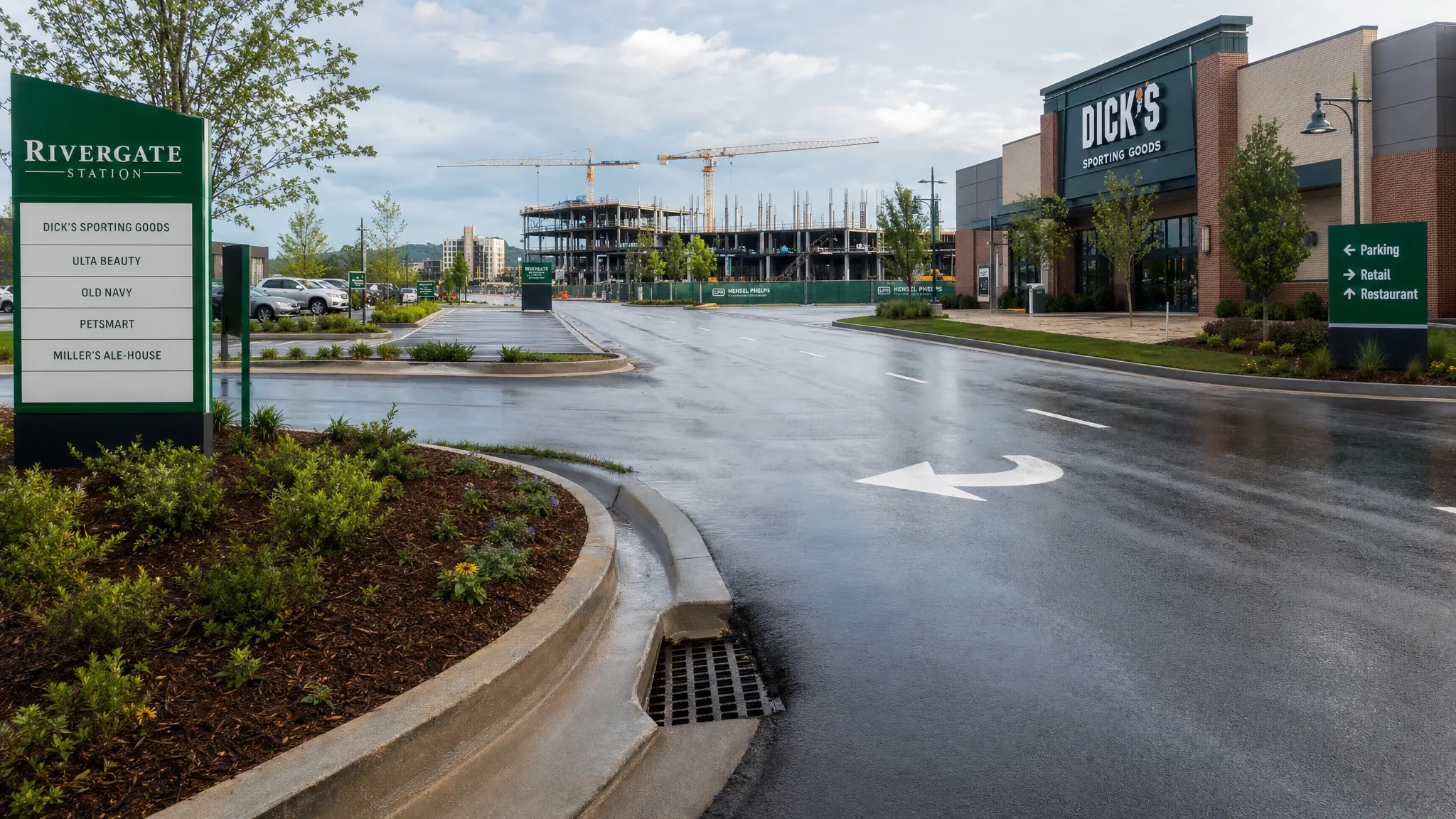
In 2026, exterior cleanup is increasingly tied to drainage and stormwater housekeeping. Property teams are paying closer attention to what happens to sediment, leaves, dust, and trash after it reaches curb lines.
That shift matters because debris does not stay where it falls. Rain can move sediment and pollutants toward storm drains, low points, ditches, and public streets. A parking lot that looks acceptable on a dry afternoon can become a drainage problem during the next storm.
For Nashville and surrounding area properties, stormwater-friendly cleanup usually means prioritizing dry removal first. Sweeping, curb-line detail work, debris pickup, and magnet sweeping help capture material before wet cleaning is considered. This approach can reduce the risk of washing pollutants into drains and can also prevent repeated cleanup after every rainfall.
If stormwater concerns are already part of your property planning, it may be worth reviewing Reliable Sweepers’ guide to Nashville environmental cleaning basics for more detail on dry-first cleanup and drain protection.
One of the biggest 2026 trends is the move from final-only cleanup to ongoing construction cleanup. Contractors and site managers are realizing that cleanup cannot wait until the week before turnover.
On active sites, debris affects more than appearance. Mud track-out can draw complaints. Fine dust can migrate to entrances and neighboring properties. Fasteners and metal fragments can create tire hazards. Loose material around drainage structures can create inspection headaches.
The better approach is to schedule cleanup around project milestones and triggers, such as:
This trend is especially important for projects in busy corridors where public edges, sidewalks, entrances, and neighboring lots are exposed to site activity. A phased cleanup plan helps keep access open and reduces the risk of expensive last-minute rework.
For project-specific planning, see this related guide on construction sweeping timing.
Fixed schedules still matter. Many commercial lots, garages, industrial yards, and HOA streets benefit from weekly, biweekly, monthly, or seasonal sweeping. But in 2026, the more effective cleanup programs are pairing baseline service with trigger-based response.
A fixed schedule might keep a site generally presentable. A trigger-based plan handles the events that actually create cleanup problems.
Common triggers include storms, leaf drop, construction activity, special events, inspections, tenant move-ins, paving, winter grit, and heavy truck traffic. For downtown and mixed-use properties, late-night activity and weekend foot traffic may also require early-morning resets.
This approach helps property teams avoid two common problems. First, they avoid paying for unnecessary service when conditions are light. Second, they avoid waiting too long after a messy event simply because the next scheduled visit is days away.
A good 2026 cleanup plan should answer three questions:
Dust is no longer treated as just a construction nuisance. In 2026, more Nashville-area property teams are recognizing dust as a tenant, customer, safety, and reputation issue.
Fine dust can settle on sidewalks, entry mats, garage ramps, loading areas, storefronts, and neighboring vehicles. It can also become slippery when mixed with moisture. On construction-adjacent commercial properties, dust can make a well-managed site look neglected within hours.
The trend is toward earlier intervention. Instead of waiting until dust coats entrances and curb lines, managers are building dust control into the cleanup scope. That may include mechanical sweeping, vacuum or air-assisted sweeping where appropriate, edge detailing, mud control, and targeted cleanup around high-traffic access points.
The most important shift is source-path-receiver thinking. In plain terms, identify where dust starts, how it travels, and who is affected by it. Then prioritize cleanup at the source and along the path before it becomes a front-door complaint.
As construction and industrial activity spreads across Middle Tennessee, magnet sweeping is becoming a more common add-on. It is especially useful in areas where nails, screws, wire, metal shavings, or small fragments may end up in drive lanes, staging areas, parking lots, or access roads.
In 2026, more property managers are asking for magnet sweeping after:
Magnet sweeping does not replace mechanical sweeping. It solves a different problem. A lot can look clean while still containing tire-puncture hazards. Combining regular sweeping with targeted magnet service can reduce complaints from tenants, residents, vendors, and project teams.
Parking garages and decks are getting more attention in 2026 because they concentrate dust, litter, leaves, tire residue, moisture, and pedestrian traffic in enclosed or semi-enclosed spaces.
Unlike open lots, garages often need a more zone-specific plan. Ramps, entries, exits, stair towers, elevator lobbies, corners, drains, and top decks collect different types of debris. A one-size-fits-all sweep can miss the areas that users notice most.
For garages in Nashville and surrounding communities, the most practical trend is targeted prioritization. High-visibility and high-risk zones should be cleaned more often than low-traffic spaces. Entry lanes, ramp transitions, and pedestrian paths should receive special attention because they shape first impressions and can affect slip risk.
If your property includes structured parking, this guide to parking garage cleaning scope, timing, and safety can help you define a better service plan.
The cleanup industry is becoming more outcome-driven. In 2026, property managers and contractors are asking vendors for clearer scopes, better communication, and proof that work was completed.
This does not have to be complicated. Useful documentation may include before-and-after photos, service notes, completed zone lists, exception reports, and weather or access notes. The goal is not paperwork for its own sake. The goal is accountability.
This trend mirrors a broader shift in business purchasing. Buyers are used to comparing options, reviewing details, and making decisions based on transparent information. Just as companies can now compare insurance plans online instead of relying only on one opaque quote, property teams are comparing cleanup vendors by responsiveness, methods, documentation, and total value.
For 2026 contracts, vague language like “clean parking lot as needed” is becoming less useful. Better scopes define zones, outcomes, debris types, frequency, trigger events, exclusions, and documentation expectations.
Emergency cleanup used to be viewed as an occasional add-on. In 2026, more teams are building it into their standard planning.
This is especially true for construction sites, retail centers, industrial facilities, event-adjacent properties, and HOAs with storm-sensitive streets. A sudden mud track-out issue, wind-blown debris, post-storm blockage, or metal spill can quickly become a safety, access, or complaint problem.
The best emergency cleanup plans are created before the emergency happens. Property teams should know:
A pre-planned response saves time when conditions are messy and decisions need to be made quickly.
The final cleanup trend for 2026 is a move toward outcome-based scopes. A task-only checklist says what a vendor should do. An outcome-based scope says what the property should look like when the work is complete.
For example, instead of only saying “sweep parking lot,” a stronger scope might define the expected result: curb lines free of loose debris, storm drain areas clear, drive lanes swept, dumpster pad approaches cleaned, visible construction sediment removed, and metal-prone areas magnet swept after active work.
This helps prevent misunderstandings. It also makes bids easier to compare because vendors are pricing the same result, not guessing at your standards.
For Nashville and surrounding area properties, outcome-based scopes are especially useful because conditions can change quickly with weather, construction, traffic, and seasonal debris.
The right cleanup strategy depends on the site. A construction project does not need the same plan as a retail center, HOA route, warehouse yard, or municipal street. Still, the 2026 trends point to clear priorities for each property type.
Commercial properties should focus on curb appeal, entrances, parking drive lanes, dumpster pads, curb lines, and storm drains. The goal is to prevent complaints while protecting drainage and customer access.
Construction sites should prioritize track-out control, public edges, haul routes, curb lines, inlet protection, and magnet sweeping where metal debris is likely. Cleanup should be tied to project phases and weather triggers.
Industrial properties should emphasize loading docks, trailer rows, yard entrances, dock approaches, and drainage paths. Dust, pallet fragments, metal, and sediment can build up quickly in operational zones.
HOAs and neighborhoods should watch curb lines, common areas, drainage inlets, leaf-heavy streets, and post-storm debris. Routine sweeping can help preserve appearance and reduce drainage complaints.
Municipal and public-facing routes should prioritize safety, drainage, event recovery, construction coordination, and seasonal debris patterns.
If you manage a site in Nashville or the surrounding area, use the trends above to update your maintenance plan. You do not need a complicated system. You need a plan that is clear enough to follow and flexible enough to respond to real conditions.
Start with these actions:
The most successful 2026 cleanup programs will not be the most complicated ones. They will be the programs that make expectations clear, respond quickly to changing site conditions, and focus effort where debris creates the most risk.
What is the biggest cleanup trend in Nashville for 2026? The biggest trend is the shift from reactive cleanup to planned, trigger-based cleanup. Property teams are combining routine sweeping with extra service after storms, construction activity, inspections, events, and heavy traffic.
Why are surrounding areas seeing more cleanup demand? Growth outside downtown Nashville is bringing more construction, traffic, retail activity, warehouses, and mixed-use development. That creates more mud, dust, litter, leaves, and debris in places that previously needed less frequent service.
How often should a commercial property schedule sweeping in 2026? It depends on traffic, debris sources, tenant expectations, trees, construction activity, and drainage risk. Many properties benefit from a baseline schedule plus trigger-based cleanups after weather, events, or nearby construction.
Is magnet sweeping necessary for every site? No. Magnet sweeping is most useful where metal debris is likely, such as construction sites, industrial yards, renovation areas, roofing projects, utility work, and paving-related zones.
What should be included in a 2026 cleanup scope? A good scope should define service zones, expected outcomes, debris types, frequency, trigger events, equipment or methods, exclusions, access needs, and proof-of-completion requirements.
Cleanup expectations are rising across Nashville and the surrounding area, but the solution does not have to be complicated. A clear plan, the right schedule, and a responsive sweeping partner can help keep your property cleaner, safer, and easier to manage.
Reliable Sweepers provides professional street sweeping and exterior property maintenance services across Middle Tennessee, including construction site sweeping, asphalt paving cleanup, industrial warehouse sweeping, parking lot and garage cleaning, neighborhood and HOA sweeping, municipal sweeping, emergency response, magnet sweeping, and dust and mud control.
If you want a cleanup plan built around your site, schedule, and risk areas, contact Reliable Sweepers to discuss a tailored sweeping and maintenance plan for 2026.
