Construction sites do not get messy all at once. They get messy in predictable spikes: after rain, during heavy trucking, right before inspections, and in the days leading up to paving and turnover. If you time construction sweeping around those spikes (instead of “when it looks bad”), you reduce track-out, prevent clogged inlets, protect pavement work, and avoid the kind of last-minute cleanup that slows the schedule.
Below is a practical timing playbook superintendents, PMs, and site managers can use to decide when to sweep during a project, what to prioritize in each phase, and which triggers should move sweeping to the top of the list.
The goal of construction sweeping (and why timing matters)
On active projects, sweeping is not just curb appeal. It is a production support task tied to three outcomes:
- Safety: loose aggregate, nails, mud, and dust increase slip, trip, and tire hazards.
- Compliance: stormwater rules typically require controlling sediment and preventing off-site discharge (including track-out onto streets). Many sites document routine cleaning as part of SWPPP execution.
- Schedule protection: debris and dust can ruin prep for asphalt, striping, concrete flatwork, and final inspections.
If you wait until the end, you typically pay twice: once for emergency cleanup to get back to “acceptable,” and again for detailed cleaning needed for closeout. A small, well-timed cadence usually costs less than reactive resets.
For stormwater context, see EPA’s overview of construction stormwater controls under the NPDES program.
A simple rule: set a baseline cadence, then add trigger sweeps
Most successful sites run sweeping in two layers:
Baseline sweeping (the minimum)
This is your “keep up with daily production” rhythm, often focused on:
- Site entrance and apron (track-out control)
- Primary haul route
- Public edge (sidewalks, adjacent streets, curbs)
- Active staging and dumpster areas
Trigger sweeping (the schedule savers)
These are extra sweeps you schedule immediately after specific events that create sudden mess or compliance risk.
If you want a broader framework for baseline plus triggers across property types, Reliable Sweepers covers the concept in Parking Lot Sweeping Services: When and How Often to Sweep (the same planning logic applies on job sites).
Best times to sweep by project phase
Think in phases because debris type changes as the job changes. Timing your sweeping to the phase keeps crews focused on the right contaminants.
1) Mobilization and early demo: sweep before the first “public impression”
Best time to sweep: right after mobilization, fencing, and initial deliveries, then again after first demo haul-offs.
Early on, the public edge and entrance set the tone. A quick sweep in week one often prevents repeated complaints later.
Prioritize:
- Sidewalks and curb lines at the site perimeter
- Street edge near the gate
- Loose demo debris (especially near drains)
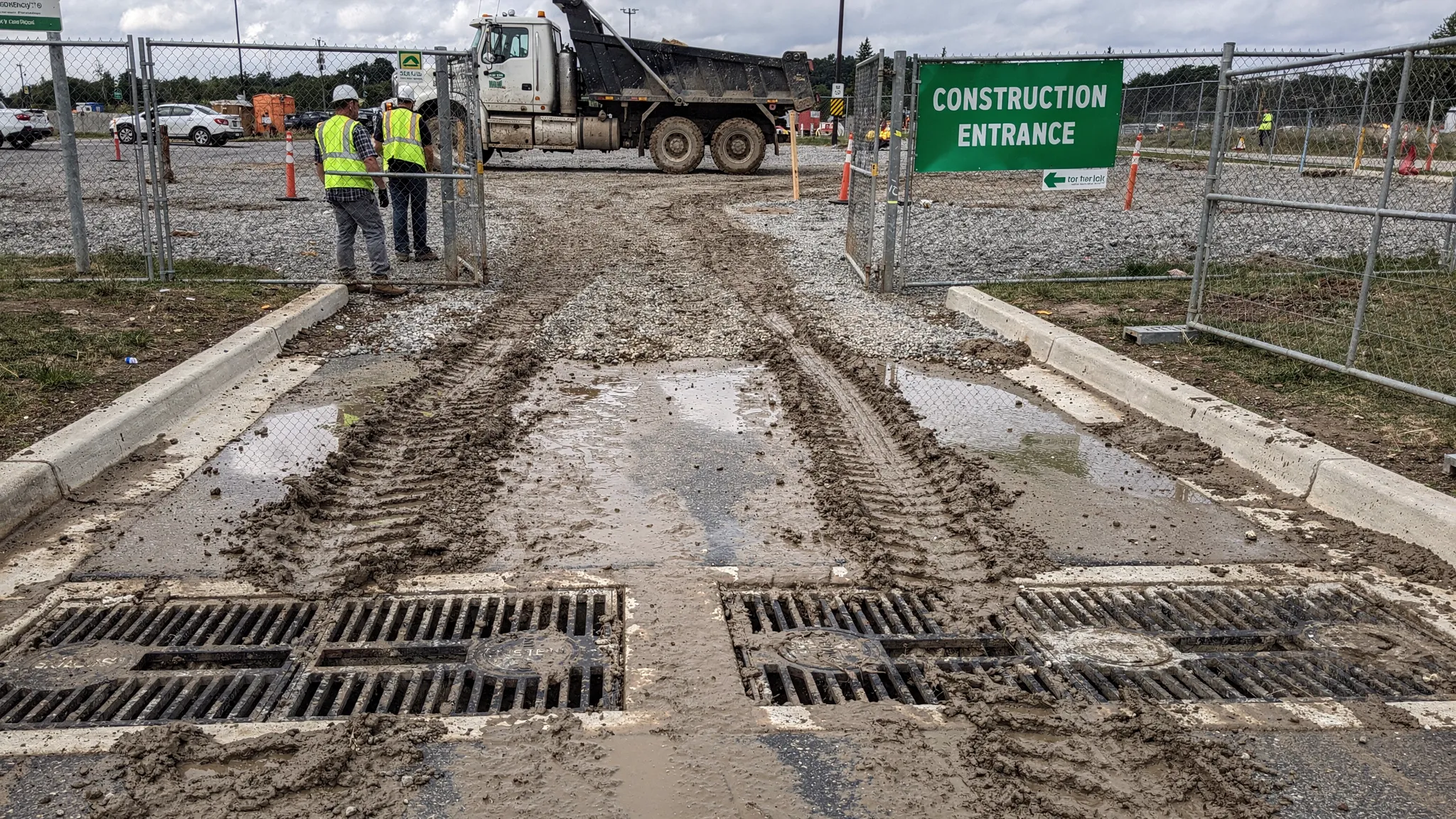
2) Mass grading and earthwork: sweep after rain and after heavy trucking days
Earthwork is when track-out typically spikes. In Middle Tennessee, spring storms and pop-up summer rain can turn haul routes into mud pumps fast.
Best time to sweep:
- After rainfall when haul routes start to track
- End of day on peak trucking days
- Before the next morning if the public street is already showing sediment
Prioritize:
- Gate area and stabilized construction entrance
- Street sweep of adjacent roadway if sediment has migrated
- Curb lines and inlets along the public edge
If you are building an inspection-ready routine, you may also like Site Cleaning: What to Do Before a City Inspection.
3) Underground utilities and base stone: sweep before compaction, not after
Utility work creates spoil piles, broken stone, and patchy mud. The mistake here is waiting until the end of the week when stone has already been crushed into dust and pushed into curb lines.
Best time to sweep:
- Right after major trench backfill and stone placement
- Before proof-rolls and compaction checks
- Before concrete crews arrive (so they are not pouring onto loose aggregate)
Prioritize:
- Travel lanes (keep stone out of tires)
- Curb-and-gutter lines and low points
- Inlet rings and sediment around drain openings
4) Vertical construction (structure, framing, envelope): add magnet sweeping to your rhythm
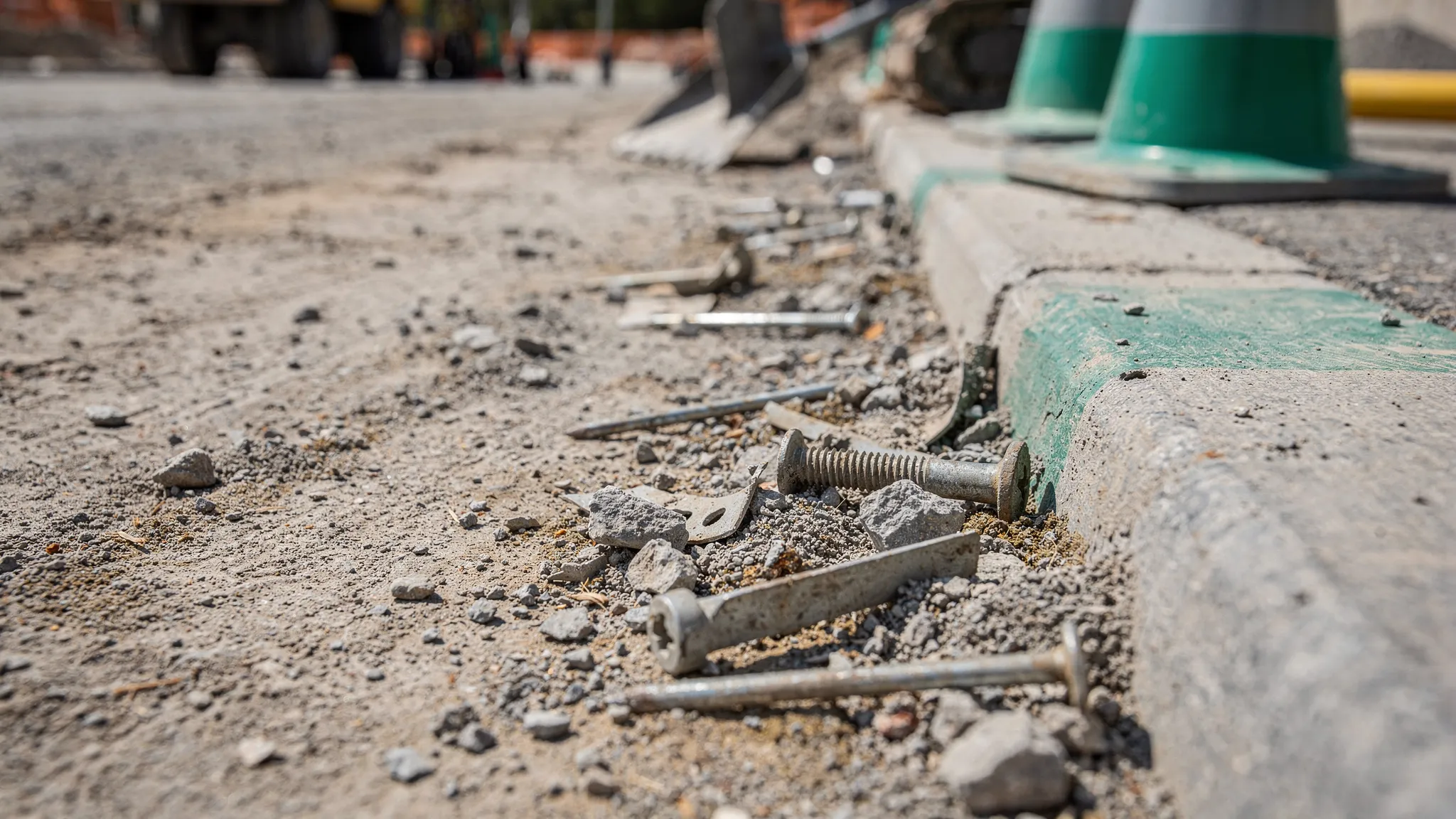
Once steel, rebar, framing, roofing, and exterior finishing ramp up, you start generating metal hazards (nails, tie wire, screws, strap cut-offs). These are small but costly.
Best time to sweep:
- After framing and roofing “push” days
- After exterior cladding crews stage fasteners outdoors
- Before paving and striping work begins
Prioritize:
- Drive lanes, parking pads, and access roads
- Gate and tire path to the street
- Staging areas where pallets and banding are cut
A targeted magnet pass is often the difference between “looks clean” and “actually safe for vehicles.” Reliable Sweepers mentions this approach in several resources, including All Environmental Compliance Basics for Construction Cleanup.
5) Concrete flatwork and site hardscape: sweep right before forming and pours
Concrete crews need clean edges and stable subgrade conditions. If you sweep too early, trucks and forklifts will undo it. If you sweep too late, you risk pushing dust into fresh work areas.
Best time to sweep:
- The afternoon or evening before a major pour
- The morning of a pour if there is overnight debris and dust, but only if you can keep traffic off afterward
- Immediately after saw-cutting and joint work, if dust is migrating
Prioritize:
- Pour access routes
- Forming perimeters and pedestrian paths
- Loose fines that will blow into curing areas
6) Asphalt paving and striping: sweep in a tight window (prep, then protect)
Paving is where sweeping timing has the highest ROI. Debris in the mat and loose stone at edges can compromise bond, appearance, and durability.
Best time to sweep:
- Right before tack and paving, after base is trimmed and cleaned
- Immediately after paving cleanup activities (cut-offs, edge work)
- Before striping, to keep dust from affecting adhesion and line clarity
Prioritize:
- Base and binder areas before lift placement
- Curb lines (especially where fines collect)
- Final surface immediately before striping
For sites that need paving-adjacent cleanup, Reliable Sweepers outlines common expectations in Pavement Cleaning Services: Remove Mud, Dust, and Debris Fast.
7) Landscaping and closeout: sweep after “final touch” trades, not before
Landscaping brings soil, mulch, and light debris that looks minor but blows into curbs and drains.
Best time to sweep:
- After topsoil and mulch placement near paved edges
- After final exterior punch list work (signage, fixtures, fencing)
- The day before owner walk and again the morning of turnover if traffic is expected
Prioritize:
- Curb lines and gutters (this is where turnover photos are judged)
- Inlets and drainage paths
- Entry drives and visitor parking
If you are planning the last stretch, Post Construction Clean Up: Punch List for a Clean Handoff is a strong companion checklist.
Best times of day to sweep on an active site
Beyond project phases, time-of-day decisions help you avoid rework and keep crews out of each other’s way.
Early morning (before the site ramps up)
Best for:
- Public-edge presentation (neighbors, inspectors, owner drive-bys)
- Removing overnight windblown debris
- Keeping a clean “starting condition” for the day
Watch out for: sweeping too early if mud is still being created immediately after gates open.
Midday reset (between production peaks)
Best for:
- Sites with continuous trucking
- Keeping entrances functional (less track-out accumulation)
- Preventing debris from getting crushed into fines
End-of-day closeout (protect tomorrow)
Best for:
- Reducing next-day startup friction
- Leaving streets and sidewalks clean overnight
- Supporting documentation with “end of shift” photos
This pairs well with the daily rhythm in Job Site Clean Up: Daily Habits That Keep Projects Moving.
Off-hours (when you need space)
Best for:
- Large commercial sites where daytime sweeping conflicts with deliveries
- Pre-paving, pre-striping, or pre-inspection detailed work
- Parking areas shared with active tenants
Trigger events that should automatically schedule sweeping
If you only remember one section, make it this one. These triggers cause the biggest problems when ignored.
- Rain forecast or post-rain conditions: if you see sediment moving, act before it reaches curb lines and inlets.
- Major trucking days: concrete pours, base stone deliveries, demolition haul-offs.
- Before any inspection or owner walk: do not gamble on “we can make it look good in an hour.”
- Before paving and striping: tight timing window, high cost of failure.
- After framing or roofing pushes: schedule magnet sweeping for fasteners.
- After wind events: especially when packaging, insulation, or light trash migrates.
- When inlets start “ringing” with debris: curb-line buildup is a leading indicator of drainage problems.
For emergency-level situations (sudden track-out, debris hazard, inspection scramble), Reliable Sweepers explains what rapid response typically includes in Emergency Clean Up Services: Rapid Response for Job Sites.
What to sweep first when time is tight (the 80/20 priority)
When you cannot do everything, prioritize the areas that create the most risk per minute:
- Entrance and apron: your #1 track-out driver.
- Public street edge and sidewalk: highest visibility and complaint risk.
- Curb lines and low points: where sediment collects and drains clog.
- Inlets (dry cleanup around them): remove surrounding sediment before it moves.
- Staging zones with metal debris: add magnet sweeping where fasteners are common.
A good field test is simple: if a vehicle can pick it up in tires, or stormwater can pick it up in the next rain, it belongs on today’s sweep scope.
How to coordinate sweeping with SWPPP and documentation
Sweeping is often easiest to “do,” but hardest to prove later if you do not document it. A light documentation habit helps with both compliance and client confidence.
- Define a quick “done” standard for key zones (entrance, public edge, curb lines).
- Take timestamped photos of the entrance, one curb line, and one inlet area after each sweep.
- Record trigger events (rain, major haul-off, inspection notice) next to the service date.
If your project is under a construction stormwater permit, confirm what your inspector expects for housekeeping and sediment control documentation. Tennessee-specific requirements are typically administered through the state program, so it is worth referencing TDEC’s stormwater resources starting at the Tennessee Department of Environment and Conservation.
When it makes sense to bring in a professional sweeping partner
Many projects handle light cleanup in-house, then supplement with professional sweeping when:
- The site is creating track-out faster than labor can keep up.
- You need magnet sweeping to reduce punctures and nail hazards.
- You are approaching paving, striping, inspection, or turnover.
- Mud and fine dust require consistent, repeatable results.
- You want a flexible plan that can scale up after storms or schedule shifts.
Reliable Sweepers provides construction sweeping, magnet sweeping, dust and mud control, and emergency response across Nashville and Middle Tennessee. If you want help setting a phase-based cadence for your site, start with the scope guidance in Construction Clean Up: A Step-by-Step Site Turnover Guide, then reach out through ReliableSweepers.com to discuss timing, access, and the debris types you are dealing with.