
Nashville commercial cleaning is often judged before a customer, tenant, inspector, or project owner ever steps inside. The first impression starts at the curb, the parking lane, the sidewalk, the loading dock, and the storm drain nearest the front door.
That is where many cleaning programs break down. Interior janitorial teams may keep lobbies, restrooms, and shared spaces looking sharp, while exterior problem areas quietly collect dust, mud, leaves, pallet fragments, loose aggregate, fast-food litter, and metal debris. Left alone, those small zones can create bigger issues: complaints, slip risks, clogged drainage paths, tire punctures, failed walkthroughs, and avoidable emergency cleanups.
For property managers, facility teams, contractors, HOAs, and municipal buyers in Middle Tennessee, the goal is not just to “clean outside.” The goal is to identify the exterior areas that cause the most trouble and build a repeatable plan around them.
Nashville properties deal with a mix of conditions that make exterior cleaning more than a cosmetic task. Heavy rain can push sediment toward curb lines and storm drains. Clay soils and construction activity can create mud track-out. Spring pollen can coat entrances, garages, and high-touch pedestrian areas. Fall leaf drop can hide debris and block drainage. Active development across Middle Tennessee can add dust, gravel, and nails to nearby lots and roads.
These issues tend to collect in predictable places. A parking lot may look acceptable from a distance while the curb line is packed with sediment. A warehouse yard may appear operational while dock edges are littered with pallet splinters and metal fragments. A retail center may have clean storefront glass while the entrance path is tracked with mud after a delivery or storm.
That is why effective Nashville commercial cleaning needs an exterior plan, not just a general cleaning checklist. It should define where debris accumulates, which areas create the most risk, what “clean” looks like, and when extra service is needed.
If your current scope is split between indoor janitorial and outdoor maintenance, it may help to clarify the boundary first. Reliable Sweepers has a related guide on Nashville commercial cleaning services and exterior vs. interior scope that explains how to prevent gaps between vendors.
An exterior problem area is any outdoor zone where debris, dust, water, or traffic repeatedly creates complaints, safety exposure, access problems, or compliance concerns. These areas are not always the largest parts of the property. In many cases, they are small, high-impact zones that everyone notices when they are neglected.
Common exterior problem areas include entrances, curb lines, storm drain inlets, loading docks, dumpster pads, parking lot edges, garage ramps, construction access points, delivery lanes, and industrial yard corners. They matter because they connect directly to how people and vehicles move through the property.
A clean center lane is helpful, but if dirt and litter remain pushed against the curb, the property still looks neglected. A swept drive aisle is valuable, but if metal fragments remain near a construction gate or loading dock, vehicle damage risk remains. A pressure-washed sidewalk may look better temporarily, but if loose sediment is rinsed toward a drain, the cleanup may create a different problem.
The best exterior cleaning programs focus on these high-consequence areas first.
Before changing vendors or adding services, walk the property with a simple route-based mindset. Instead of asking, “Is the site clean?” ask, “Where does debris move, settle, or create risk?”
Use these five paths during a 15-minute exterior scan:
This quick scan usually reveals that a small number of zones create most of the mess. Those are the places your commercial cleaning scope should prioritize.
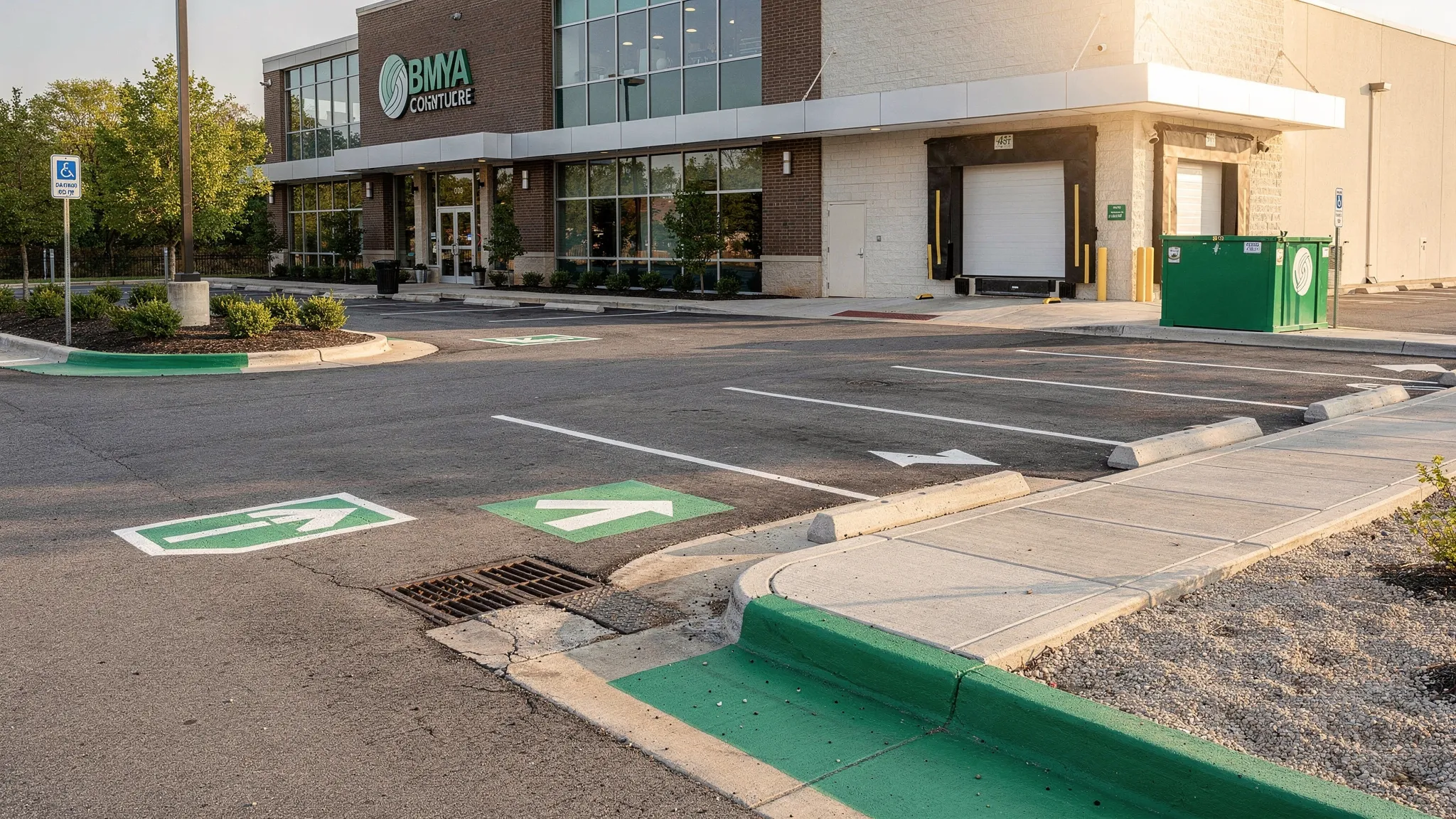
Entrances are where appearance, safety, and tenant satisfaction overlap. Dust, pollen, mud, wet leaves, gum, cigarette litter, and loose debris all stand out near doors because people slow down, look down, and interact with the surface.
For entrances, the cleaning plan should start with dry debris removal before any wet work. Loose grit, leaves, and trash should be captured, not blown into landscape beds or drains. If gum, stains, or sticky residue are present, targeted wet cleaning may be appropriate, but it should be coordinated so wash water does not carry debris into storm drains.
A good standard for entrances is simple: the walking path should be free of loose debris, visible mud, and recurring litter before business hours or peak traffic windows. For high-traffic retail, medical, office, and mixed-use sites, entrance checks may need to happen more often than full-lot sweeping.
Curb lines are one of the most overlooked areas in commercial exterior cleaning. Wind, rain, traffic, and routine blowing often push debris to the edge. Over time, sediment, leaves, mulch, broken glass, fasteners, and small trash collect where a quick center-lane pass will not reach.
This matters because curb-line buildup affects both appearance and drainage. When debris sits along the curb, it can migrate toward inlets during storms. The U.S. Environmental Protection Agency notes that stormwater can pick up pollutants and carry them into waterways through drainage systems, which is one reason properties should avoid pushing debris into storm drains. You can learn more through the EPA’s National Pollutant Discharge Elimination System resources.
The fix is not complicated, but it does require intent. Curb lines need edge-focused sweeping, not just open-area passes. Islands, corners, curb returns, and dead-end parking spaces should be included in the scope. If the property has frequent landscape debris or construction dust, these areas may need event-triggered service after storms, mowing, or nearby work.
Storm drain areas are not trash cans, but they often become the final destination for everything that moves across pavement. Leaves, sediment, gravel, mulch, packaging, and cigarette litter can gather around grates and low points. If ignored, these areas can create ponding, nuisance flooding, and compliance concerns.
The best practice is to keep debris away from inlets before rain moves it. Dry sweeping and debris capture should happen upstream, especially along curb lines and water paths. Crews should avoid rinsing or blowing material into grates. After major storms, a quick inlet check can determine whether a targeted cleanup is needed.
For construction-adjacent sites, storm drain attention is especially important. The EPA’s stormwater guidance for construction activities emphasizes preventing sediment and pollutants from leaving sites through stormwater. Even if your property is not the construction site, nearby work can still create sediment and track-out that settle around your drains.
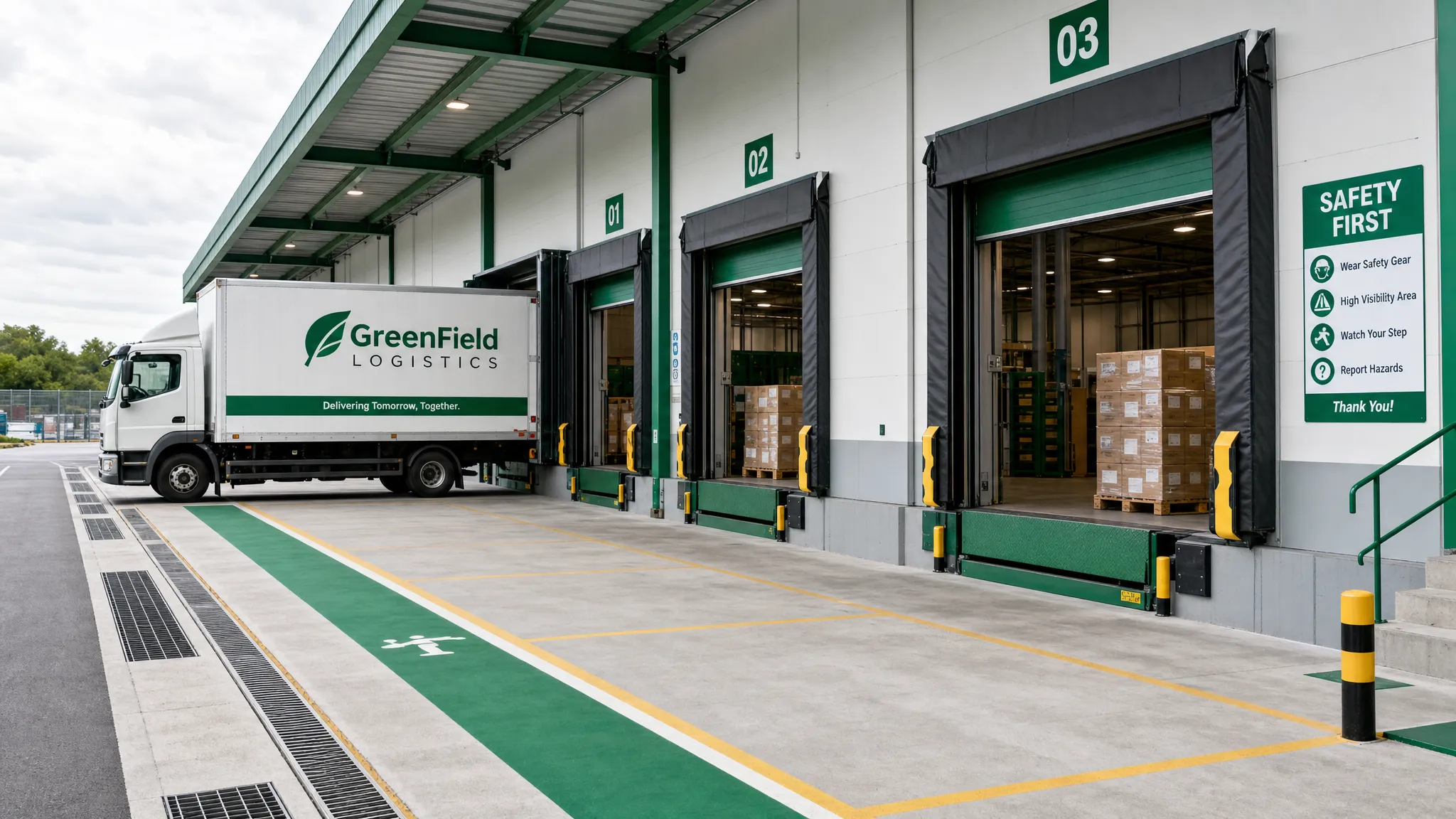
Loading docks work hard, and they often show it. Pallet fragments, shrink wrap, cardboard pieces, gravel, dirt, broken straps, metal bands, and spilled packaging materials can build up quickly. These areas are also full of turning movements, foot traffic, forklifts, carts, and delivery vehicles.
A dock cleaning plan should focus on keeping travel paths clear, edges detailed, and debris from being pushed into nearby drains or doorways. Magnet sweeping may be useful when nails, screws, wire, staples, or metal banding are present. Regular sweeping around dock aprons and trailer staging areas can reduce the chance of debris being tracked into warehouse floors or onto public-facing pavement.
Timing matters. Cleaning docks during peak delivery windows can create access conflicts. Many sites get better results by scheduling service before opening, after heavy receiving periods, or during planned low-traffic windows.
Dumpster pads are small, but they can generate big complaints. Loose trash, food packaging, broken glass, cardboard scraps, grease residue, odors, and wind-blown debris can spread from the pad into parking areas and landscape edges.
Sweeping can remove loose material, litter, and dry debris around the waste enclosure. If there are liquids, biological waste, hazardous materials, or heavy staining, those issues may require a different specialty service. The important point is to define the boundary clearly so no one assumes “cleaning” includes work the vendor is not equipped or authorized to perform.
For commercial centers and multi-tenant sites, dumpster pads should be checked after collection days, after storms, and after tenant turnover or large move-outs. A simple pad standard can prevent repeat complaints: no loose trash outside containers, no debris blocking access gates, and no dry material migrating toward drains or drive aisles.
Parking garages concentrate dust and track-out because air movement, vehicle traffic, ramps, and covered surfaces can keep fine material circulating. Problem areas include ramp transitions, corners, elevator lobbies, stair tower entries, pedestrian crossings, and drain channels.
A garage may need a different approach than an open lot. Fine dust often requires methodical sweeping rather than quick passes. Corners and columns need detail attention because debris accumulates where larger equipment cannot easily reach. If wet cleaning is needed, water control is essential because garage drains and runoff paths may have restrictions.
For more detail on this topic, see Reliable Sweepers’ guide to parking garage cleaning and reducing dust and track-out.
Even a well-managed commercial property can struggle when nearby construction adds mud, dust, gravel, and metal debris. Construction access points and haul routes are common sources of track-out. Once material reaches public-facing pavement, it can create complaints, vehicle damage risk, and inspection concerns.
The solution is to treat construction-related debris as a trigger, not a routine nuisance. If mud appears after rain, if aggregate is tracked across the drive lane, or if fasteners show up near tenant parking, the site may need a targeted response. Magnet sweeping is especially helpful when metal debris is suspected.
For active projects, Reliable Sweepers supports exterior cleanup needs such as construction site sweeping, asphalt paving cleanup, dust and mud control, magnet sweeping, and emergency response services across Middle Tennessee. For more planning detail, review this guide to construction sweeping and the best times to sweep during a project.
Industrial and warehouse sites often have wider pavement areas, heavier traffic, and more operational debris. Trailer rows, dock aprons, employee parking edges, outside storage areas, and fence lines can collect sediment, pallet fragments, wire, banding, broken packaging, and dust.
These sites benefit from zone-based cleaning because not every area has the same risk. A front employee lot may need curb appeal and litter control. A dock apron may need debris removal and magnet sweeping. A yard perimeter may need sediment control near drainage paths. Matching the method to the zone keeps the plan practical and cost-conscious.
If warehouse or industrial activity is a major concern, see Reliable Sweepers’ guide on industrial sweeping in Nashville.
Exterior commercial cleaning works best when the method fits the material. A blower may move leaves quickly, but it will not capture fine dust or remove metal fragments. Power washing may improve a stained area, but it can spread loose sediment if dry debris is not removed first. A general litter pickup may improve appearance, but it will not reset curb lines or drainage paths.
For most exterior problem areas, the best sequence is dry-first: remove bulk debris, detail edges, sweep the area, then use targeted wet methods only when needed and properly controlled.
Common methods include:
Reliable Sweepers focuses on exterior sweeping and property maintenance services such as construction site sweeping, industrial warehouse sweeping, parking lot and garage cleaning, neighborhood and HOA sweeping, municipal sweeping, magnet sweeping, dust and mud control, and emergency response. If a problem requires hazardous material response, interior janitorial work, deep stain restoration, or specialized wash-water recovery, that scope should be identified separately so the right provider is involved.
A common mistake is treating exterior cleaning as either fully routine or fully reactive. Most Nashville properties need both.
Baseline service keeps the property from slowly declining. This may include routine parking lot sweeping, curb-line attention, garage sweeping, dock area cleaning, or scheduled HOA and municipal sweeping. The right frequency depends on traffic, tenant mix, debris load, property size, nearby construction, and appearance standards.
Trigger-based service handles the events that routine schedules cannot predict. In Middle Tennessee, triggers often include heavy rain, wind events, leaf drop, paving work, construction deliveries, tenant move-outs, large events, inspections, and visible mud track-out. A trigger plan tells your team when to call for extra cleaning instead of waiting for the next scheduled visit.
For example, a retail center may need routine weekly or biweekly sweeping, plus extra service after storms or large weekend traffic. A construction-adjacent office property may need periodic baseline sweeping, plus immediate response when mud reaches the public drive. A warehouse may need scheduled dock and yard sweeping, plus magnet sweeping after maintenance work or pallet repair activity.
The best schedule is not the most aggressive one. It is the one that keeps problem areas below the complaint threshold while controlling cost.
If you want better results from Nashville commercial cleaning providers, avoid vague requests like “clean the exterior” or “sweep the lot.” Those phrases leave too much room for interpretation.
A strong scope should name the property zones, describe the debris problems, define the desired outcome, identify access constraints, and explain when extra service should be triggered. For example, instead of asking for “parking lot cleaning,” specify curb lines, drive lanes, storm drain approaches, entrances, dumpster pads, and loading areas. Then define what acceptable results look like: no visible loose litter in customer paths, curb lines reset, inlet approaches free of debris, and dock apron clear of loose material.
It also helps to request basic verification. Before-and-after photos, service notes, or completion logs can be useful for managers who are not on-site during service. Documentation is especially valuable for construction sites, multi-tenant commercial centers, industrial facilities, and properties with recurring drainage or complaint issues.
For more on comparing vendors by measurable outcomes, Reliable Sweepers has a guide on commercial cleaning in Nashville and how to compare bids by outcomes.
In-house teams can handle plenty of light maintenance, especially daily litter pickup, quick entrance checks, and simple spot cleaning. But professional sweeping support is often worth it when debris is widespread, recurring, heavy, safety-sensitive, or tied to compliance concerns.
Call a professional when curb lines stay dirty after routine maintenance, when mud or sediment reaches drive lanes, when metal debris is present, when storm drains are at risk, when a garage has persistent dust, when a construction project is affecting tenants, or when a walkthrough, inspection, or turnover deadline is approaching.
A specialized exterior partner brings the equipment, operator experience, and scheduling flexibility needed to remove debris efficiently rather than pushing it from one problem area to another. For busy property managers and contractors, that can mean fewer complaints, cleaner handoffs, safer traffic paths, and less time spent coordinating last-minute fixes.
What is included in Nashville commercial cleaning for exterior areas? Exterior commercial cleaning may include parking lot sweeping, curb-line detailing, garage cleaning, loading dock sweeping, dumpster-area cleanup, construction site sweeping, magnet sweeping, dust and mud control, and emergency response. Exact scope depends on the property, debris type, and service provider.
How do I know which exterior areas need cleaning most often? Start with entrances, curb lines, storm drain approaches, loading docks, dumpster pads, garage ramps, and construction access points. These areas usually collect the most visible debris and create the highest complaint, safety, or drainage risk.
Should exterior cleaning happen before or after pressure washing? In most cases, dry debris should be removed first. Sweeping, edge detailing, and litter pickup help prevent sediment and trash from being spread by water. Wet cleaning should be targeted and handled with appropriate wash-water and stormwater controls.
How often should a commercial property in Nashville be swept? Frequency depends on traffic, debris load, season, nearby construction, and appearance standards. Many properties use a baseline schedule plus trigger-based service after storms, heavy leaf drop, paving work, construction activity, or major events.
When is magnet sweeping necessary? Magnet sweeping is useful when nails, screws, wire, staples, metal banding, or other ferrous debris may be present. It is especially relevant near construction sites, loading docks, industrial yards, maintenance areas, and post-paving or turnover zones.
If your property looks clean in some areas but still gets complaints near entrances, curb lines, docks, drains, garages, or construction access points, the issue may not be effort. It may be scope.
Reliable Sweepers helps property managers, contractors, industrial teams, HOAs, municipalities, and commercial facilities across Middle Tennessee build practical exterior cleaning plans for the areas that cause the most trouble. From routine parking lot and garage sweeping to construction site cleanup, magnet sweeping, dust and mud control, asphalt paving cleanup, and emergency response, the team can help match the right service to the right problem area.
To discuss a site-specific exterior cleaning plan, visit Reliable Sweepers and request a walkthrough or quote for your Nashville-area property.