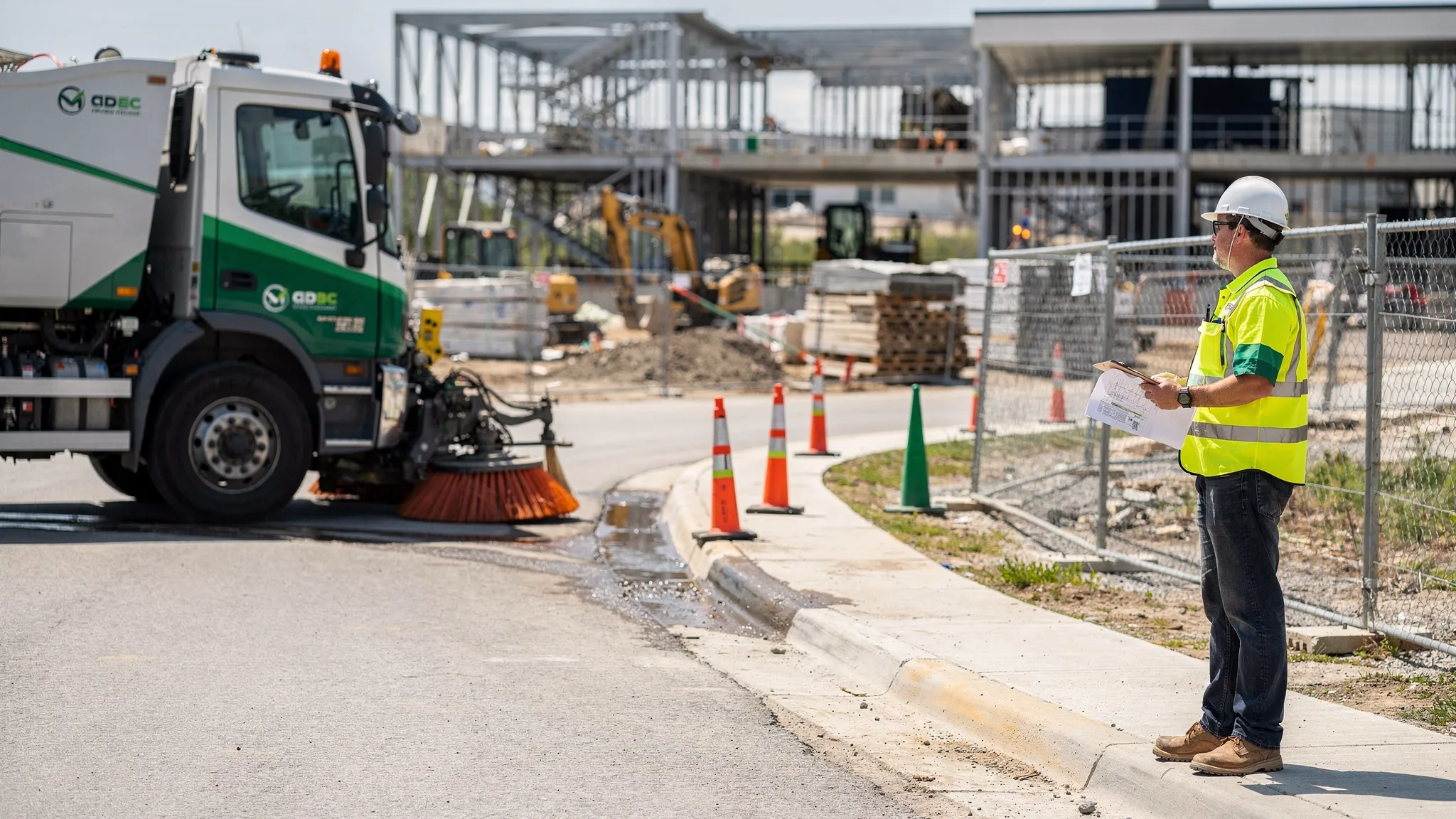
Choosing a job site cleaning service is less about finding someone who can show up with a sweeper and more about protecting your schedule, safety record, access routes, and inspection readiness. On active projects, small debris problems can quickly become costly operational problems: mud tracked onto public roads, nails in drive lanes, blocked curb lines, dusty entrances, or a site that looks unprofessional during an owner walkthrough.
The right provider should make your job easier, not add another vendor to manage. That means clear scopes, the right equipment, practical scheduling, and a cleanup plan that fits the phase of work you are in. For contractors, superintendents, property managers, and facility teams in Nashville and Middle Tennessee, it also means accounting for local conditions like clay soil, sudden storms, pollen, leaf drop, and heavy construction traffic.
Use this guide to evaluate a job site cleaning service before you hire, compare quotes fairly, and avoid the common gaps that lead to rework.
Before asking for pricing, define what success looks like. A vague request like 'clean up the site' leaves too much room for interpretation. One vendor may assume a quick pass through the main drive lane. Another may include curb lines, storm drain areas, magnet sweeping, and final photo documentation. Those are very different scopes.
A better starting point is to describe the operating outcome you need. For most job sites, that includes:
This outcome-first approach helps you compare proposals by results rather than task labels. If you are working through multiple vendor bids, Reliable Sweepers has a related guide on how to compare commercial cleaning bids by outcomes.
Job site cleaning can mean several different things. Some providers focus on interior final cleaning. Others handle waste hauling, pressure washing, janitorial work, or exterior sweeping. Few companies are equally strong in every category.
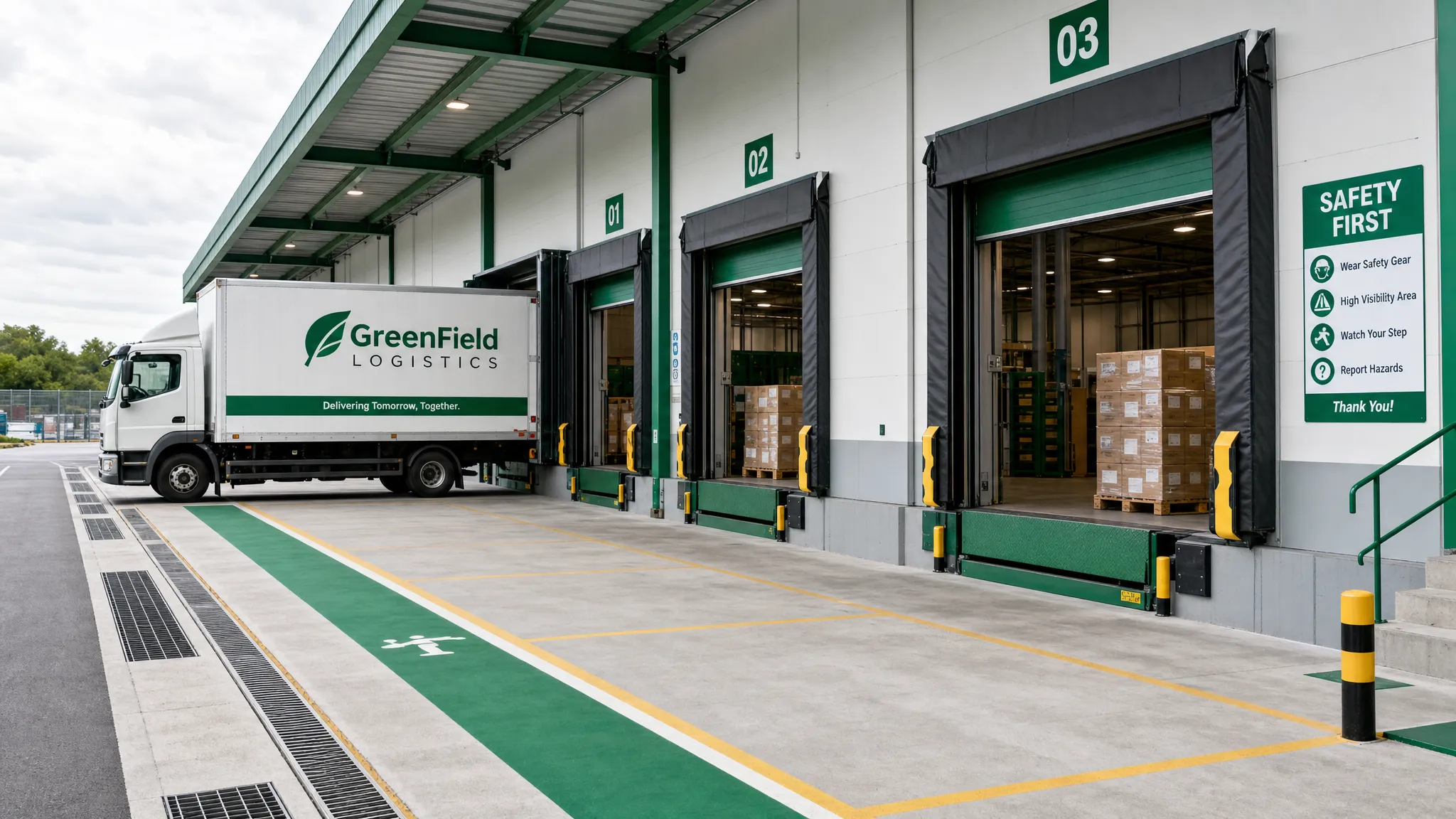
For active construction and exterior property work, the most common needs include paved surface sweeping, construction entrance cleanup, dust and mud control, asphalt paving cleanup, parking lot or garage cleaning, and magnet sweeping for metal debris. If your main risk is outside the building envelope, an exterior-focused cleaning and sweeping provider is often a better fit than a general janitorial company.
Your project phase matters too. Early civil work creates different cleanup needs than closeout. Match the provider to the phase, not just the project address.
For a construction-specific overview of fit, scope, and timing, see Reliable Sweepers’ guide to construction site cleaning services.
Most job site cleanup failures happen at the edges. Crews may keep the central work area passable, while debris builds up where the site meets the public, the customer, or the drainage system.
During your walkthrough, mark the zones that matter most. Start with the construction entrance, haul route, curb line, gutter line, storm drain approaches, dumpster pad, laydown area, material staging zone, sidewalks, public frontage, parking areas, loading docks, and any transition from dirt to pavement. If the site is next to an occupied business, school, apartment community, or neighborhood, include the adjacent travel path in your review.
A simple red, yellow, and green map can help. Red zones are high-risk areas that need frequent attention. Yellow zones are routine maintenance areas. Green zones are lower-risk areas that can be checked less often. When every bidder sees the same zones, your quotes become much easier to compare.
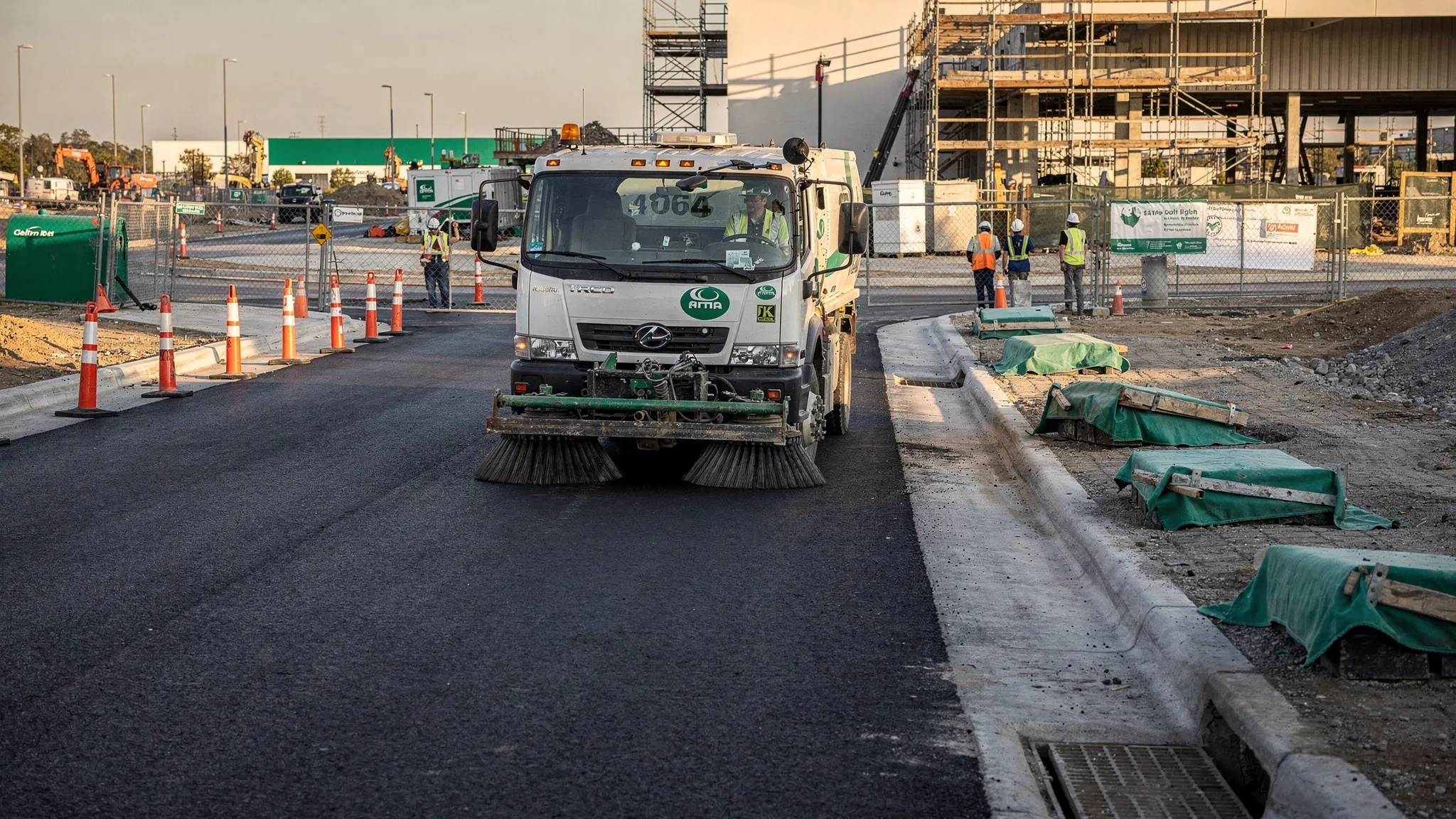
A reliable job site cleaning service should be able to explain which methods fit your debris profile. If every problem gets the same answer, that is a warning sign.
Mechanical sweeping works well for many paved surfaces, drive lanes, parking lots, and street edges. It is useful for loose dirt, sand, leaves, construction dust, and general debris, especially when paired with good edge work. Magnet sweeping is important when metal debris is present, such as nails, screws, wire, blades, fasteners, or small ferrous fragments that can puncture tires or create hazards.
Dust and mud control may require a mix of sweeping, source control, construction entrance maintenance, and timing around weather or haul activity. Wet cleaning can be useful in some situations, but it should not be the first move when loose sediment can be captured dry. Rinsing debris toward a storm drain can create bigger problems than it solves.
This is not just about appearance. OSHA’s construction housekeeping standard requires debris and waste materials to be kept cleared from work areas, passageways, and stairs. For stormwater, the EPA’s guidance on construction stormwater discharges explains why sediment, pollutants, and runoff controls matter on regulated sites.
A good provider should understand these practical risks and help you choose a method that removes material rather than moves it somewhere else.
Cleaning crews often work near moving vehicles, pedestrians, trades, deliveries, and active equipment. That makes safety planning essential. Ask for proof of insurance, but do not stop there. Confirm how the provider handles operator training, traffic awareness, work zones, nighttime visibility if applicable, dust control, and communication with your superintendent or site contact.
The contractor should also know how to work around active operations. For example, cleaning a haul route while dump trucks are still moving through it may not deliver lasting results. Sweeping too early before a major delivery may create rework. A capable provider will ask about trade schedules, delivery windows, gate access, locked areas, and site rules before service day.
Specialized support matters wherever compliance and operations overlap. In business administration, companies may rely on experts for company formation and compliance when the rules are complex. On a job site, the same principle applies: use a cleaning partner that understands the operational and regulatory consequences of debris, sediment, dust, and access problems.
A short phone call is rarely enough for an accurate job site cleaning quote. You will get a better result if you ask direct questions that reveal the provider’s process.
The answers should be specific. If a provider cannot explain what is included, what is excluded, and how success will be verified, you may be setting yourself up for disputes later.
The best job site cleaning plans combine routine service with trigger-based response. A baseline schedule keeps the site from sliding into poor condition. Trigger events handle the spikes that happen after weather, deliveries, earthwork, paving, inspections, or high-traffic days.
For Middle Tennessee sites, rain can turn clay soil into track-out quickly. Spring pollen and summer dust can coat paved areas. Fall leaf drop can clog curb lines and drains. Construction activity can also change from week to week, which means a fixed schedule may need adjustment as the project moves from grading to vertical work to closeout.
Ask your provider to recommend a cadence by zone. The entrance and haul route may need more frequent attention than a low-traffic parking area. A public frontage may need a different standard than a back staging area. If the vendor offers emergency response services, clarify how requests are made, who can authorize the work, and what response window is realistic. For urgent situations, this related guide on emergency clean up services for job sites can help you plan ahead.
The cheapest bid is not always the lowest-cost option. If a low bid misses curb lines, skips magnet sweeping, ignores storm drain approaches, or requires repeated callbacks, the true cost can show up as rework, schedule delays, complaints, tire damage, or inspection pressure.
To compare bids fairly, give each provider the same information: site address, phase of work, marked zones, debris types, expected frequency, access restrictions, service windows, documentation requirements, and any trigger events. Ask each bidder to separate routine service from extra work so you can see what is included in the base price.
A strong quote should identify the work area, methods, frequency, assumptions, exclusions, disposal responsibilities, access needs, and proof of completion. It should also make clear whether detail work is included. A machine-only pass through the middle of a parking area is not the same as a cleaning plan that includes edges, entrances, curb lines, and problem zones.
Some warning signs are obvious, like missed appointments or vague pricing. Others are easier to overlook until the first cleanup fails. Be cautious if you see these patterns:
A job site cleaning service does not need to be complicated, but it does need to be specific. The more active or compliance-sensitive the site, the more important that specificity becomes.
Even a strong proposal should be validated in the field. Use the first 30 days to test the provider’s reliability and adjust the plan.
Start with a kickoff walkthrough and agree on pass/fail standards for the highest-risk zones. After the first service, walk the site with your superintendent or property contact. Check entrances, curb lines, drain approaches, parking areas, dumpster pads, and any public-facing edge. If debris remains, determine whether the scope was unclear, the schedule was wrong, or the method did not match the debris.
After two or three visits, you should know whether the provider communicates well, shows up on schedule, cleans the right zones, and responds to site conditions. If the plan is close but not perfect, adjust the frequency, trigger rules, or detail zones. If the basics are not happening, it may be time to re-bid before the cleanup gap turns into a schedule or safety issue.
What does a job site cleaning service usually include? It depends on the provider and scope, but exterior job site cleaning often includes sweeping paved areas, clearing entrances and haul routes, removing loose debris, cleaning curb lines, controlling mud or dust, and magnet sweeping where metal debris is present.
How often should a job site be cleaned? Active construction sites often need a baseline schedule plus extra service after rain, heavy hauling, paving, inspections, deliveries, or complaints. The right frequency depends on soil, traffic, project phase, and public exposure.
Do I need magnet sweeping on every job site? Not always. Magnet sweeping is most useful where nails, screws, wire, metal shavings, or other ferrous debris may be present. It is especially valuable after framing, demolition, trade work, and turnover preparation.
Can job site cleaning help with inspections? Yes, good cleaning can support inspection readiness by reducing visible debris, track-out, sediment near drainage areas, and access problems. It does not replace required compliance programs, but it can help keep the site in better condition.
Should I hire one company for interior and exterior cleaning? Sometimes, but only if the provider has the right equipment and experience for both. Many projects get better results by using an interior cleaning team for building finishes and an exterior sweeping specialist for pavement, entrances, curb lines, and debris control.
Reliable Sweepers provides professional street sweeping and property maintenance services across Nashville and Middle Tennessee, including construction site sweeping, asphalt paving cleanup, industrial warehouse sweeping, parking lot and garage cleaning, magnet sweeping, dust and mud control, and emergency response.
If your site needs a cleanup plan that fits your schedule, phase of work, and risk zones, contact Reliable Sweepers to discuss a site-specific approach.