If you manage a commercial property in Nashville, “street sweeping” is rarely just about appearances. It is about keeping entrances safe, protecting drainage, avoiding tenant complaints, and staying ready for inspections and high-traffic days. The challenge is that sweeping plans often fail for three predictable reasons: the schedule does not match debris reality, the scope is not specific enough to quote accurately, and pricing gets compared without equal specs.
This guide breaks down commercial street sweeping in Nashville through three decision-making lenses: schedules (how to set a cadence that actually works), specs (how to write a scope vendors can execute consistently), and pricing (what drives cost and how to budget without surprises).
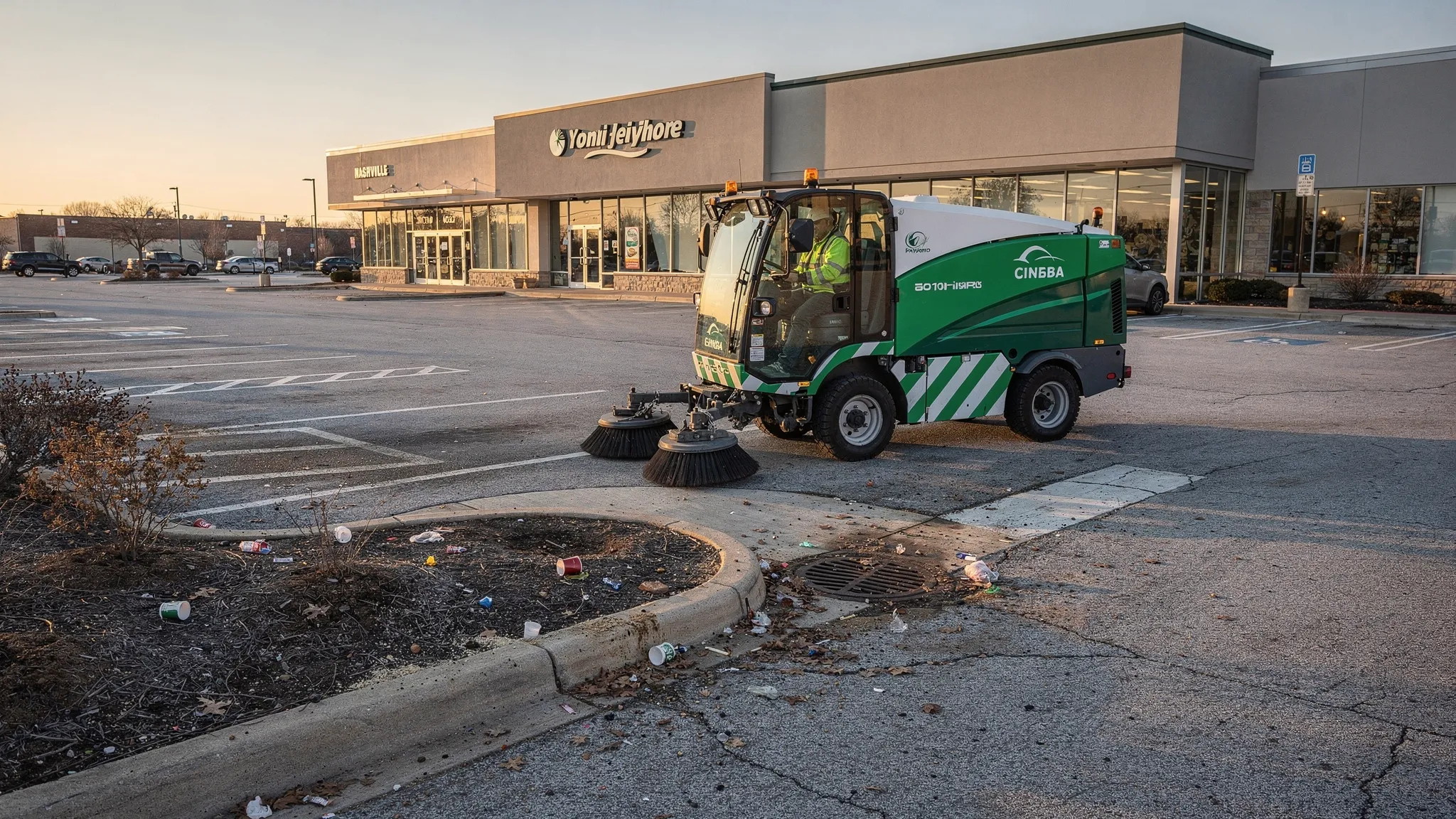
Commercial street sweeping typically refers to exterior pavement cleaning for:
Depending on the site, a provider may also include add-ons like magnet sweeping (for nails and metal fragments), dust and mud control, and emergency response after storms or high-debris events.
What sweeping usually does not include (unless specified) is pressure washing, gum removal, hazardous materials cleanup, or construction debris hauling. If you need those outcomes, build them into the spec so the quote reflects reality.
A good schedule is not a single number, it is a baseline cadence plus trigger-based cleanups. Nashville’s debris pattern makes triggers especially important (spring pollen, summer construction dust, fall leaf drop, and heavy rain that creates track-out and sediment movement).
Use your site’s “debris drivers” to set the minimum routine frequency:
As a practical rule, your baseline should be frequent enough that debris does not become a “second job” to remove. Once sediment packs into curb lines and low spots, it takes more time (and cost) to reset.
If you want a deeper frequency discussion by property type, this Reliable Sweepers guide is a good companion: Parking Lot Sweeping Services: When and How Often to Sweep.
Triggers are what keep you compliant and client-ready when conditions change. Common triggers for commercial street sweeping in Nashville include:
Reliable Sweepers’ inspection-focused timing guidance can help if you are preparing for a deadline: Site Cleaning: What to Do Before a City Inspection.
Sweeping results depend on access. If cars block curb lines, you pay for a “best effort” pass, then you pay again to detail what was inaccessible.
For many commercial lots, the most effective windows are:
Your vendor should be able to recommend a window based on traffic flow, noise sensitivity, and access constraints.
If your sweeping spec is vague (“sweep the lot weekly”), you will get vague results and inconsistent pricing. A strong spec makes quality measurable and quoting predictable.
Most properties need zone-based specs. Common zones include entrances, drive lanes, curb lines, dumpster pads, loading docks, and drain-adjacent low spots.
A simple site map with labeled zones is often enough to prevent misunderstandings.
Nashville sites vary. “Trash and leaves” is not the same as “fine construction dust and aggregate” or “metal fasteners at the public edge.” List the top 3 debris types you see.
If metal fragments are a risk (construction-adjacent sites, warehouses, areas after paving), specify magnet sweeping explicitly.
Many complaints come from curb lines that still look dirty after a visit. If curb line detailing matters, your spec should say so.
Example acceptance language you can adapt:
Sweeping is often part of stormwater best practices because it removes pollutants before they enter inlets.
If you have recurring drainage issues, specify:
For background on why this matters, the EPA’s overview of the NPDES stormwater program is a helpful reference: EPA NPDES Stormwater.
Verification reduces disputes and keeps performance consistent across crews.
Common, lightweight options:
Specs should also protect both sides by stating what is not included.
Examples:
If you want to avoid the common “power washing made it worse” scenario near drains, this article explains the dry-removal-first approach: Pavement Cleaning: When Power Washing Isn’t Enough.
Use this as a starting point when requesting quotes:
Service objective: Maintain a clean, safe, and inspection-ready exterior surface by removing litter, leaves, sediment, and site-specific debris from defined pavement zones.
Zones included: [List zones or attach a marked site map].
Frequency: Baseline schedule: [example: weekly]. Trigger cleanings: after heavy rain, pre-event, post-landscaping, post-construction activity.
Quality standard: Drive lanes and parking lanes free of visible loose debris. Curb lines and corners detailed to a consistent clean edge. Dumpster pad perimeter and loading approaches cleared.
Special requirements (if applicable): Magnet sweeping in [zones]. Dust and mud control at entrances as needed.
Verification: Before/after photos of entrances and curb lines, brief completion log noting exceptions.
Access window: [Days/times], with note on blocked areas and how re-service is handled.
Because properties and debris conditions vary, sweeping is typically priced based on time, coverage, frequency, and risk. Instead of hunting for a one-size-fits-all number, you will get better bids by understanding which levers move price.
Cost reduction should come from removing friction, not from reducing quality.
If you are deciding between hiring a contractor and running your own program, this cost framework is useful: The Sweeping Company vs In-House: Which Costs Less?.
To get apples-to-apples pricing, send the same inputs to each provider:
This approach reduces the chance you receive a low quote that later turns into change orders.
A professional result is less about “the lot looks better” and more about consistent, repeatable outcomes:
If your goal includes risk reduction, not just appearance, this is a useful read: Professional Maintenance Tips to Reduce Slip and Trip Risks.
How often should a commercial property schedule street sweeping in Nashville? Most properties do best with a baseline cadence (weekly, biweekly, or monthly) plus trigger cleanups after heavy rain, landscaping cycles, or debris-producing events. The right plan depends on traffic, trees, and nearby construction.
What should be included in a commercial street sweeping spec? At minimum, define zones, debris types, curb-line expectations, stormwater-sensitive areas (inlets, low spots), access windows, and verification (photos or completion notes). Vague scopes lead to inconsistent results and pricing.
Is curb-and-gutter detailing automatically included with sweeping? Not always. Many providers will sweep drive lanes but treat curb lines as a higher-detail add-on. If curb lines matter to your tenants or inspections, put it in writing.
When is magnet sweeping worth adding? Magnet sweeping is especially useful for construction-adjacent properties, warehouses, and any area where nails, screws, or metal fragments can cause tire damage or safety issues. Specify where and when it should be performed.
Why do bids vary so much between sweeping companies? Differences usually come from access assumptions, curb-line detailing, debris type, disposal expectations, frequency, and how much documentation and compliance sensitivity is built into the scope.
Can sweeping help with stormwater compliance? Yes. Sweeping is widely used as a preventative practice to remove sediment and pollutants from pavement before they reach storm drains. Requirements vary by site and permit context, so align your sweeping plan with your overall stormwater practices.
If you want commercial street sweeping that stays consistent through Nashville’s seasonal debris shifts and real-world site constraints, the next step is a site-specific scope and schedule.
Reliable Sweepers provides commercial street sweeping, construction site cleanup, parking lot and garage cleaning, magnet sweeping, dust and mud control, and emergency response across Middle Tennessee. Share your site map, a few photos, and your preferred service window, and you will get a quote built around clear specs and measurable results.
Contact Reliable Sweepers to request pricing and a tailored sweeping schedule for your property.