A construction site can look “clean enough” from the cab of a truck and still fail a walkthrough, frustrate a neighbor, or create a stormwater problem after the next rain. Most misses are not about effort, they are about blind spots: areas where debris hides, migrates, or builds up faster than crews notice.
This guide breaks down what gets missed most often in construction site cleaning, why it matters, and how to catch it early with a fast, repeatable inspection.
A few predictable dynamics make certain areas chronic problem zones:
Track-out carries sediment and gravel farther than most teams expect, especially on turns and at the first stop sign outside the gate. Wind pushes light trash into fence lines. Water concentrates fines into curb lines and inlets. If you clean only where you “see the work,” debris will still show up where inspectors and clients look first.
OSHA requires work areas to be kept clear “as far as practicable” (see 29 CFR 1926.25), but on active projects, no single trade owns the entire exterior. The result is predictable: everyone cleans their immediate zone, while shared edges (roads, drains, staging transitions) get ignored.
Under the EPA Construction General Permit, sites must control pollutants in stormwater discharges, which includes sediment and debris control and good housekeeping (overview: EPA CGP). The most visible compliance failures are rarely in the middle of the site, they are at the perimeter, the outfall path, and the public interface.
These are the areas Reliable Sweepers sees overlooked most often across Nashville and Middle Tennessee projects, especially when schedules compress near paving, punch lists, and inspections.
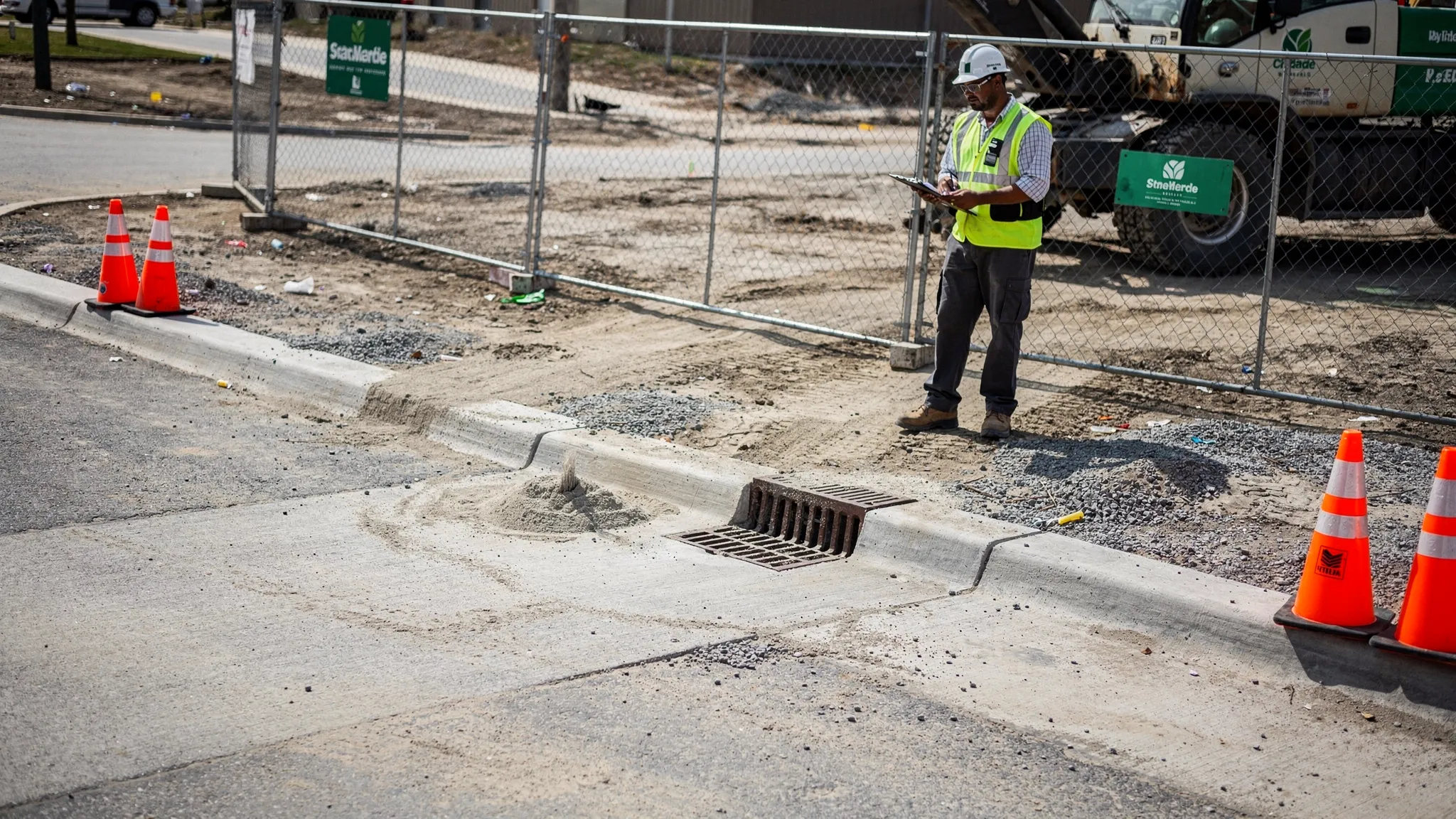
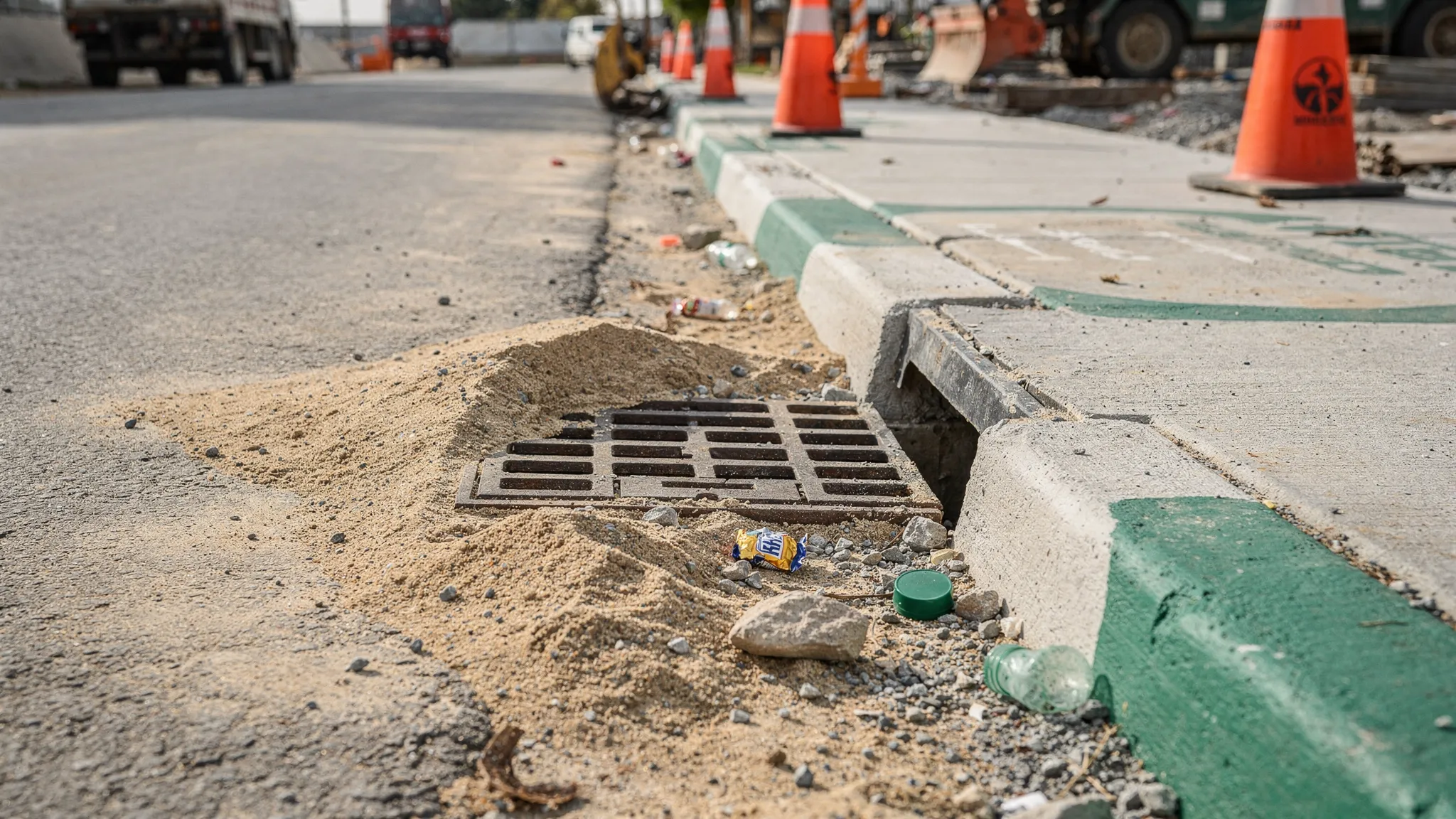
Curb lines collect everything: aggregate, saw-cut slurry, straw, fasteners, wrappers, and windblown trash. They also make a site look messy even when the open pavement is swept.
What to look for:
Why it matters: curb-line debris is a leading cause of clogged drainage, dirty water leaving the site, and failed first impressions during owner and city walkthroughs.
Crews may clear the grate and still leave sediment that washes right back in.
What to look for:
Best practice: remove material dry when possible (sweeping and vacuum methods), and avoid pushing sediment toward the inlet.
If you only clean “inside the limits,” you can still get complaints.
Common misses:
Why it matters: track-out is one of the fastest ways to trigger calls from neighbors, GCs, and municipalities because it is visible, slippery, and can migrate into storm systems.
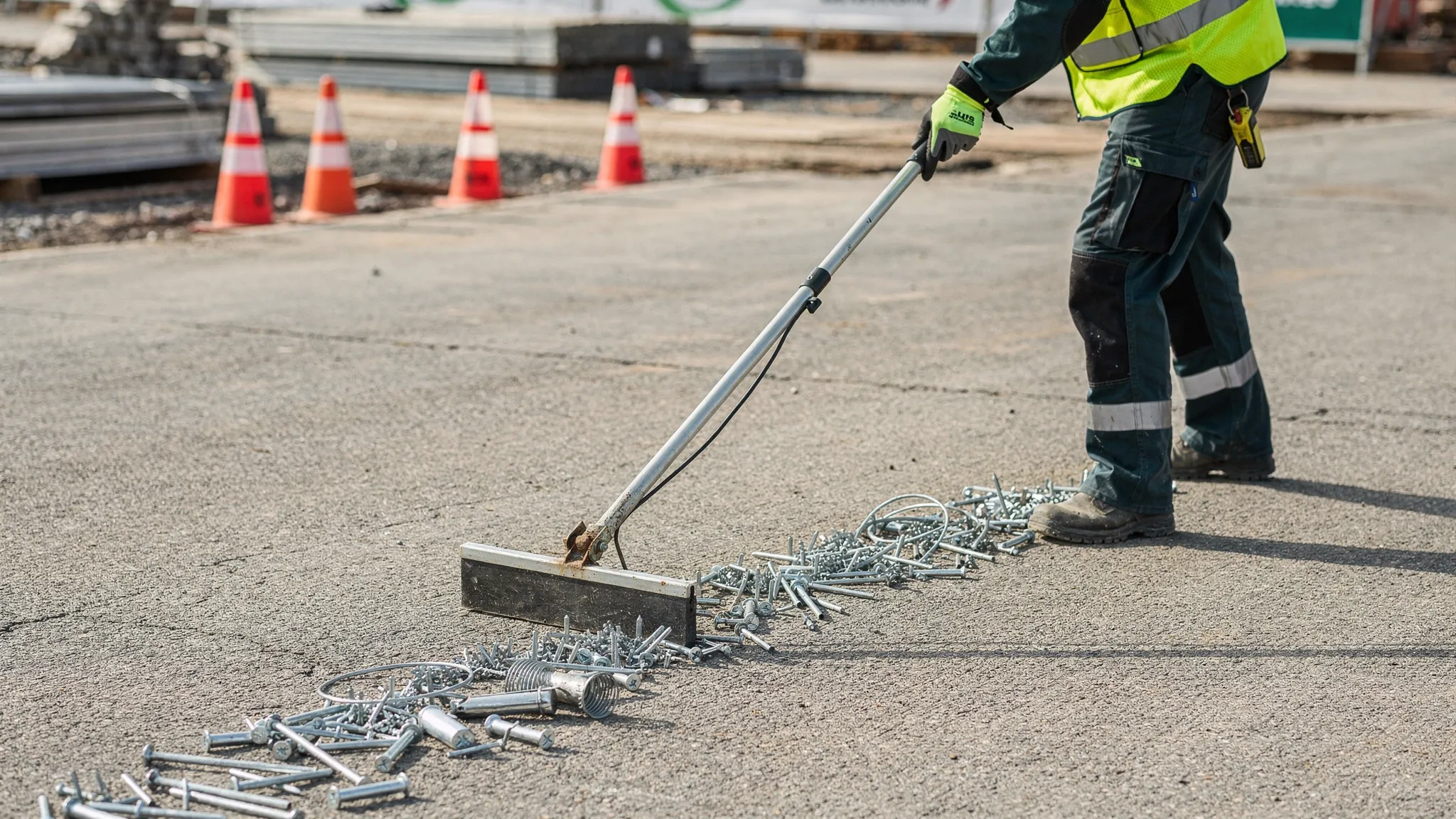
Fasteners are small, sharp, and easy to miss in a quick broom pass.
What to look for:
What works: magnet sweeping is often the most efficient way to find what eyes miss, particularly before striping, turnover, or when the site opens to public traffic.
Dust is the stealth contaminant. It reduces traction, tracks into finished interiors, and creates a constant “dirty” look.
Where it hides:
Why it matters: dust becomes a safety issue when mixed with moisture, and it accelerates wear by acting like abrasive grit.
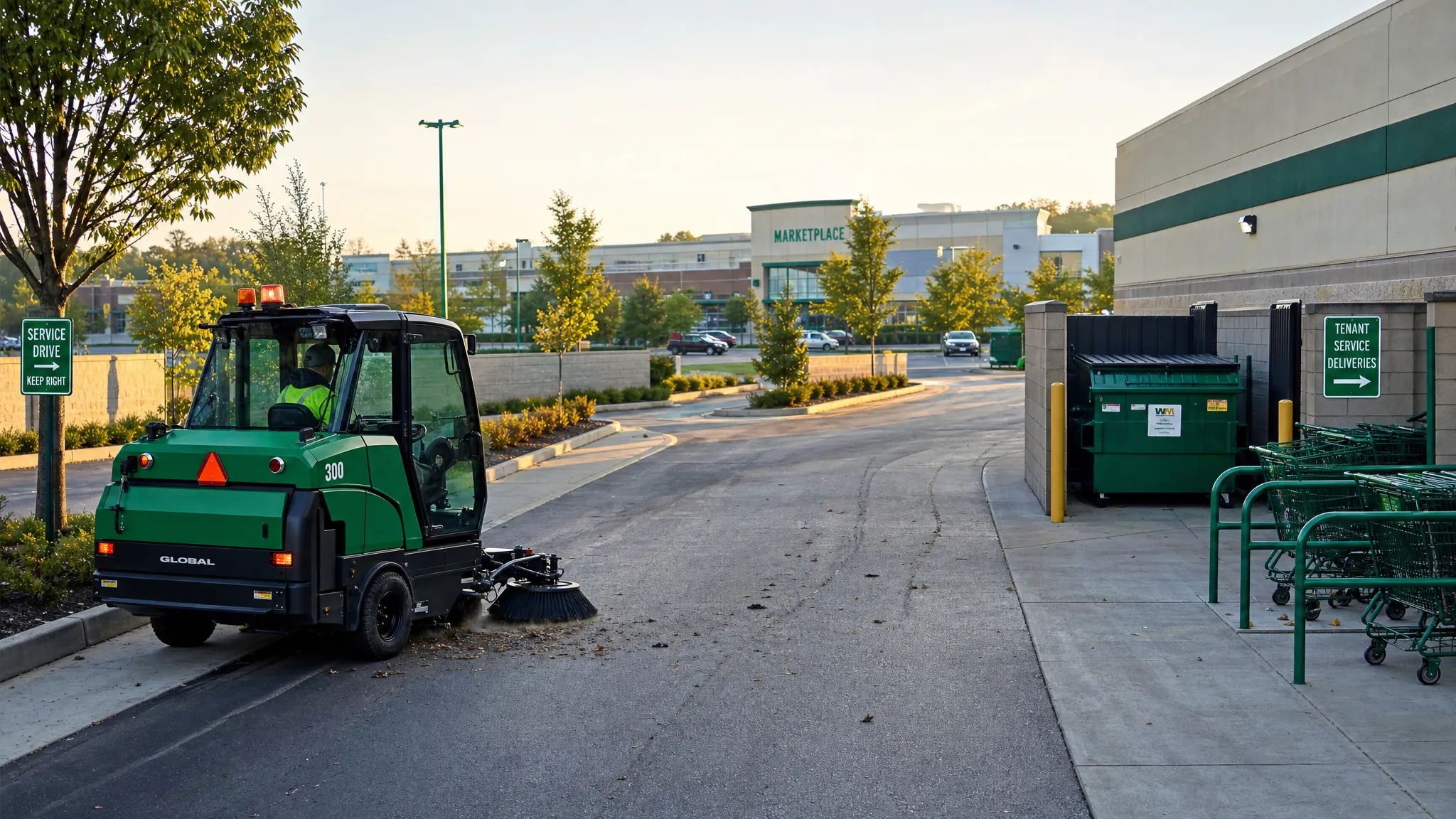
Dumpsters are magnets for windblown trash and small debris. They also create staining and odor problems.
Common misses:
Tip: treat the dumpster pad as a dedicated zone with its own standard (no loose trash, no visible pile line, no tracked grit into travel lanes).
A rock entrance can work on day one and fail by week two if it is not maintained.
What to look for:
If the entrance is failing, sweeping alone becomes reactive. You typically need entrance maintenance plus a cleaning cadence that matches traffic and weather.
These are the “blend points” where material spreads.
Typical problem spots:
Why it matters: these are high foot-traffic areas. Small debris becomes slip and trip risk quickly.
After heavy rain, yesterday’s clean can turn into today’s failure.
What to check after storms:
A good rule: if rain changed the water path, it changed where debris settled.
You do not need a long checklist to catch most issues. You need a repeatable route and a clear definition of “done.” Use this approach before inspections, owner walkthroughs, and any time the site gets busy.
Start where complaints and citations come from: public edge, curb lines, inlets, sidewalks, and entrances.
Where would water run if a storm hit right now? Check the low points, then the drains, then the downstream curb line.
Look down the curb line at a shallow angle. Fine debris shows up as a continuous line that is easy to miss from straight above.
If the project phase includes framing, roofing, or punch work, assume fasteners exist.
Consistency beats volume. Pick the same locations every time.
A simple set of photo points:
If you need a city-focused timeline, Reliable Sweepers also outlines a practical countdown in Site Cleaning: What to Do Before a City Inspection.
Cleaning misses repeat for operational reasons. Fixing the process usually reduces cost and emergencies.
If nobody owns the curb line, it will fail. Assign zones the same way you assign safety responsibilities.
Practical approach:
A calendar-only schedule breaks on real sites. Build triggers that automatically prompt cleanup.
Common triggers:
For a broader framework on planning, see Construction Clean Up: A Step-by-Step Site Turnover Guide.
Brooms are fine for some areas, but they struggle with fine dust and they do nothing for nails. Pressure washing can spread sediment toward drains if not controlled.
Match the method to the problem:
For stormwater-focused fundamentals, Environmental Compliance Basics for Construction Cleanup is a useful companion.
Some misses are hard to eliminate with in-house labor because they require specialized equipment, fast mobilization, or consistent verification. Consider calling a professional sweeping partner when:
If you are dealing with a time-sensitive problem, Reliable Sweepers also explains what to expect during a rapid mobilization in Emergency Clean Up Services: Rapid Response for Job Sites.
The most expensive construction site cleaning is the kind you do twice: once quickly, then again when someone spots what was missed. If you focus your inspections on curb lines, inlets, entrances, the public edge, and metal debris zones, you will prevent most of the rework that derails schedules.
If you need help tightening up an exterior cleaning scope, scheduling around project phases, or getting a site inspection-ready in Nashville or Middle Tennessee, you can learn more about Reliable Sweepers at reliablesweepers.com.
Reliable Sweepers provides comprehensive street sweeping and property maintenance services across Middle Tennessee. Whether you're managing a construction site, commercial property, or residential development, our experienced team delivers the professional cleaning solutions you need.