
Exterior turnover is when a project stops being “in progress” and starts being judged like a finished property. The pavement is striped, the landscaping is in, the signage is up, and suddenly every bit of mud, metal, and loose aggregate looks like a quality issue. That’s why final clean up construction is less about one big sweep and more about a punch list, sequencing, and a short window where you stop making new messes.
This guide is built for superintendents, PMs, and closeout teams who need an exterior-ready handoff (especially on commercial sites, multifamily, municipal work, and any job with a public edge).
On the exterior, “final clean” is the stage where your site should read as complete, safe, and compliant to an owner rep, inspector, tenant, or the public.
It is different from:
A true exterior final clean typically includes:
For housekeeping and hazard control expectations on construction sites, OSHA’s construction housekeeping standard is a good baseline reference: 29 CFR 1926.25.
The fastest way to “fail” final cleaning is to do it before the site is ready.
Exterior turnover cleaning works best when you create a short, protected window (often 24 to 72 hours) where:
If you clean while trucks are still tracking mud, crews are still cutting concrete, or landscape crews are still pushing soil across sidewalks, you will pay for the same work twice.
Final clean up construction goes smoother when you define outcomes that are easy to verify on a walkthrough.
Here are practical exterior standards that work across most sites:
If your project is under a stormwater permit, keeping pollutants out of storm drains is not optional. EPA’s construction stormwater program and permit framework is a helpful reference point: EPA Construction Stormwater.
Instead of one giant checklist, run your final clean punch list by zones. That prevents the common problem where the center looks good but edges fail the walkthrough.
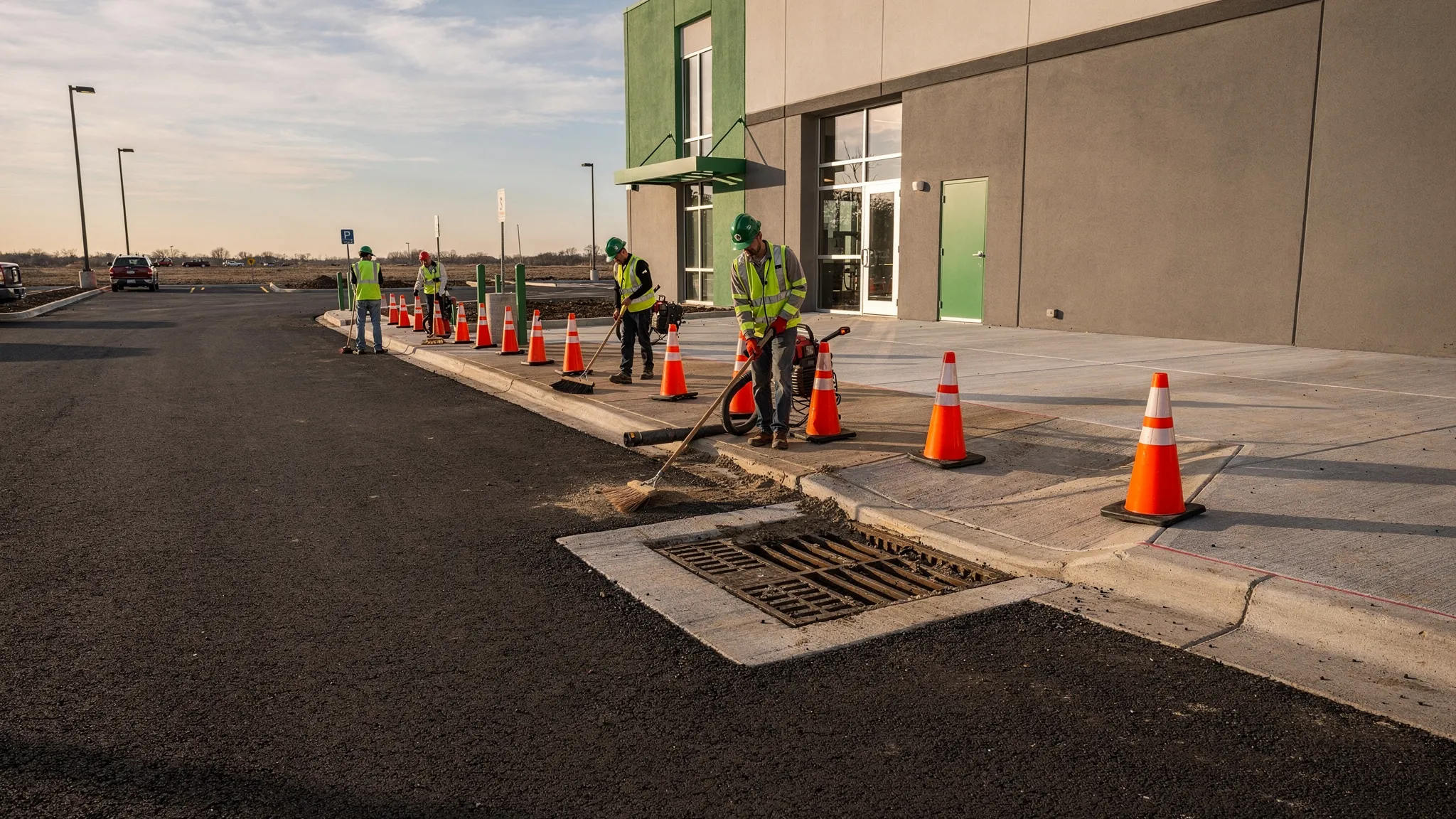
This is the first-impression zone and the complaint zone.
Focus your punch list on:
A quick verification method is a slow walk from the street toward the entrance, looking back occasionally. If you can see scattered debris from normal viewing distance, the site is not turnover-ready.
These areas often “look clean” but still fail for safety and stormwater.
Punch list priorities:
If you need a timeline-driven approach for inspection readiness, this pairs well with a pre-inspection routine like the one in Site Cleaning: What to Do Before a City Inspection.
Final pavement cleanliness is not just cosmetic. Loose aggregate and fine sediment cause slip risk, tracking into buildings, and clogged drains.
Punch list priorities:
If you are coordinating multiple methods, a “dry first, then wet” approach prevents turning dust into slurry. Reliable Sweepers explains the field order in Cleaning and Sweeping: The Best Order for Faster Turnovers.
This is where projects lose points on both appearance and stormwater.
Punch list priorities:
A helpful mindset is: “If it rains tonight, where will this debris go?” If the answer is “into a drain,” treat it as a must-fix item.
Inlet areas are high-risk and often missed because crews assume “someone else has it.”
Punch list priorities:
If you have a SWPPP, this is also one of the easiest zones to document with before/after photos because the “pass” condition is visually obvious.
Owners and tenants look here first because it predicts operational cleanliness.
Punch list priorities:
If your project has heavy debris or you keep finding bulky material that sweeping cannot capture, see Nashville Debris Removal Services: When Sweeping Isn’t Enough.
Garages collect fine dust and track-out faster than most teams expect.
Punch list priorities:
(For a deeper garage-specific approach, Parking Garage Cleaning: How to Cut Dust and Track-Out is a strong companion read.)
Most exterior turnover recontamination comes from landscape work.
Punch list priorities:
If landscaping is still active, consider doing your final sweep as a two-step: an initial “presentation sweep” for the walkthrough, then a touch-up after the landscape crew demobilizes.
A reliable sequence reduces rework and prevents the most common mistake: rinsing or wet-washing dust into storm drains.
A practical exterior turnover sequence is:
Stabilize the site: stop heavy traffic in finished zones and consolidate dumpsters.
Remove bulk debris first: hand-pick, scrape, and stage piles for disposal so machines are not trying to “eat” trash.
Detail edges and drains: curb lines, corners, and inlets before full-field sweeping.
Mechanical sweeping: run the open areas after the detail zones are addressed.
Magnet sweep where metal is likely: entries, parking stalls, sidewalks near work zones, and around dumpsters.
Final walk and spot fixes: treat remaining stains, gum, or mud tracking only where needed and with stormwater-safe controls.
If you expect to do any wet cleaning, keep it targeted and controlled. EPA and most local programs expect wash water to be contained and managed, not allowed to run into storm drains.
Most closeouts benefit from a short countdown that aligns trades and prevents last-minute messes.
48 to 24 hours before turnover is when you win the job.
24 hours before turnover is execution and verification.
Morning of turnover is a light touch-up.
This approach complements a broader phase plan like Building Works Cleaning: A Practical Plan From Rough to Final.
A few patterns show up on nearly every exterior turnover:
Curb lines look dirty even after a sweep. The fix is usually curb-line detailing first, then a full pass. If fines have compacted, they may need agitation or targeted removal before sweeping.
Inlets are technically clear but still fail visually. Crews remove the obvious trash but leave the sediment ring and debris tucked along the grate edge. Treat inlets like a detail zone, not a drive-by.
Metal hazards keep showing up. If you have tie wire, roofing fasteners, or steel work, schedule magnet sweeping as a closeout requirement, not a “nice to have.”
Landscaping recontaminates sidewalks. Hold a short “clean window” where landscape work is limited to areas that will not push soil onto finished hardscape, or plan a final touch-up after demobilization.
Local conditions affect final clean up construction more than most schedules account for:
If your closeout date is tight, build in a trigger plan for weather. Reliable Sweepers covers trigger-based scheduling logic in several posts, including Road Sweeping Nashville TN: Frequency, Pricing, and Results.
Some final cleaning can be handled in-house, but exterior turnover has a short window and high expectations. It often makes sense to call a sweeping partner when:
For a scope-level view of what exterior post-construction providers typically include (and what they usually exclude), see Post Construction Clean Up Services: What’s Included?.
What is final clean up construction? Final clean up construction is the last cleaning phase before turnover, focused on delivering a safe, presentable, inspection-ready site. On exteriors, it typically includes sweeping, edge detailing, drain checks, and metal debris removal.
What should be on a final construction clean punch list for the exterior? Prioritize the public edge, entrances, curb lines, storm drain inlets, parking areas, loading docks, dumpster pads, and landscape-to-pavement transitions. These zones drive most walkthrough failures.
Should final construction cleanup happen before or after striping? Usually after the major debris-producing work is done and coordinated with striping so you do not recontaminate fresh markings. Many projects do a sweep before striping, then a final touch-up sweep after.
Why is magnet sweeping important at turnover? Magnet sweeping helps remove nails, tie wire, and sharp metal fragments that can puncture tires and create injury risk, especially in parking stalls, entrances, and pedestrian paths.
Can we just power wash the exterior instead of sweeping? Power washing without dry removal can push sediment into storm drains and create compliance issues. In most cases, dry removal (detail + sweeping) comes first, with wet cleaning only where needed and properly controlled.
Reliable Sweepers provides professional street sweeping and exterior site cleanup across Middle Tennessee, including construction site sweeping, asphalt paving cleanup, magnet sweeping, dust and mud control, and emergency response.
If you want a clean, compliant exterior turnover without paying for the same cleanup twice, contact Reliable Sweepers to schedule a site walkthrough and build a closeout plan around your timeline and problem zones.
