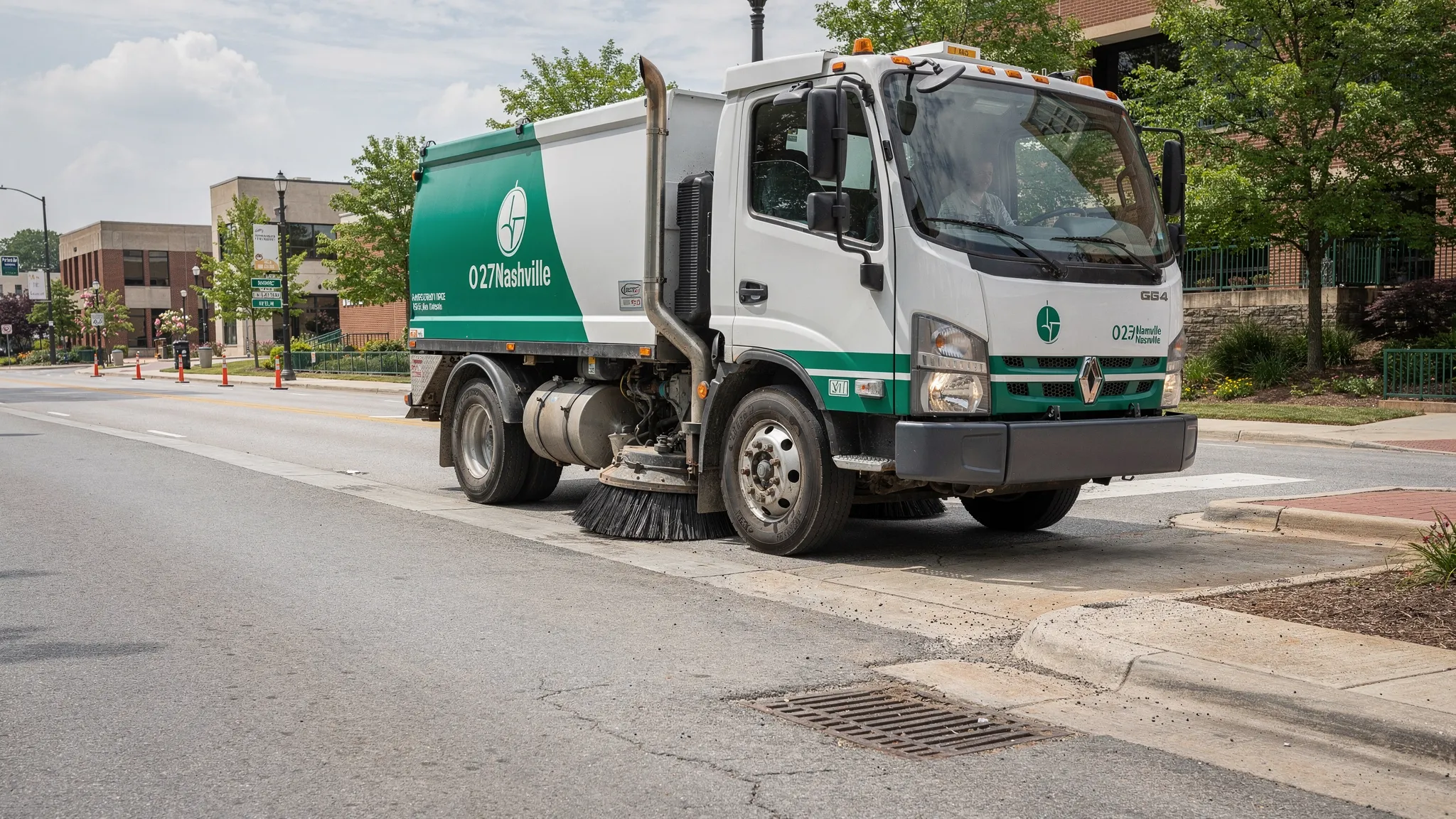
If you manage a construction project, commercial facility, HOA, or municipal route, road cleanliness is not just about curb appeal. In Nashville, road debris can quickly turn into clogged storm inlets, track-out violations, cracked windshields, slip hazards for bikes and pedestrians, and complaints from neighbors and tenants. A smart road sweeping Nashville TN plan focuses on three things: the right frequency, a clear pricing scope, and measurable results.

Road sweeping is different from parking lot sweeping because the work is often linear, curb-driven, and tied to drainage. A good road sweep is typically scoped around:
What road sweeping usually does not include (unless specifically contracted): hazardous spill response, removal of hardened concrete slurry, or major hauling of stockpiled material. If you need a broader “site reset,” it often becomes a combined pavement cleaning and debris removal scope. (This distinction is also why power washing alone is often the wrong first step for road debris.)
If you want a deeper overview of what a service day includes, see Nashville street sweeping services: what’s included and when.
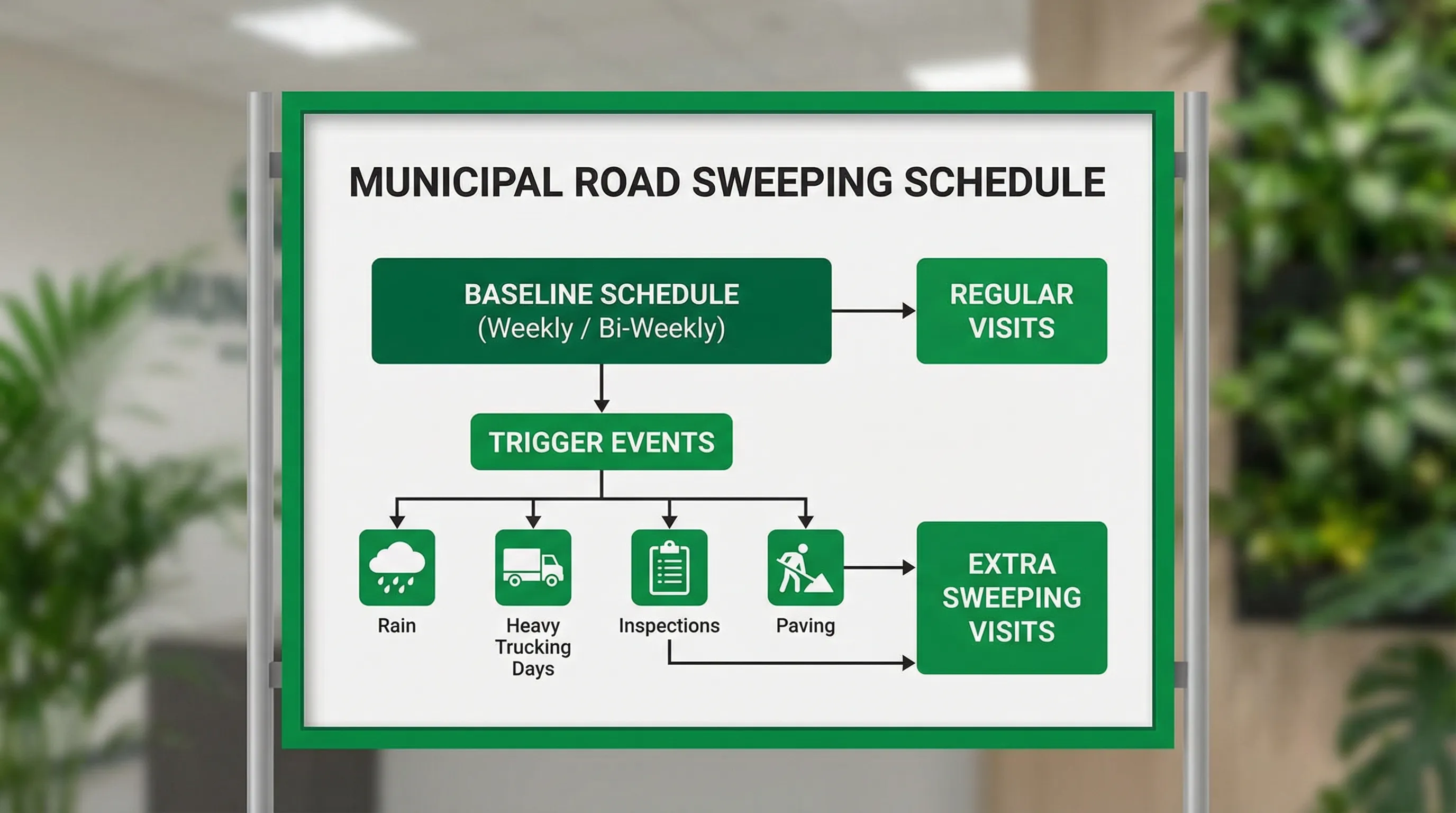
The best frequency is rarely “weekly” by default. In Middle Tennessee, you will usually get better results by setting:
Roads get dirty for different reasons. Identify the main source:
Higher speed traffic breaks down debris into fines and spreads it farther. It also raises the risk cost of “waiting until next week.”
If your route has frequent curb returns, low points, and storm inlets, your sweeping frequency should be built around keeping those lines clear.
Frontage roads, entrances near leasing offices, and roads adjacent to retail or schools typically need a tighter cadence.
5) Seasonal acceleration (Nashville-specific)
For a broader seasonal planning approach, reference how to maintain clean properties year-round in Tennessee.
These are starting points. Your site layout, debris type, and compliance risk should finalize the schedule.
If you have daily trucking, exposed soil, or recurring track-out, road sweeping often needs to be
If you want timing guidance by project phase, see construction sweeping: best times to sweep during a project.
Build-out phases tend to create fine dust, small gravel, and nails/screws. A common approach is
Industrial zones usually do well with
During peak leaf drop, curb lines can fill fast. Expect
Even if your baseline is modest, treat these as “must-pass” events where you schedule a detail sweep (and often magnet sweeping) 24 to 72 hours ahead.
For inspection prep, use site cleaning: what to do before a city inspection.
A simple trigger list prevents 80 percent of the “why is the road dirty again?” cycle:
If you need a rapid playbook, see emergency clean up services: rapid response for job sites.
Pricing is usually straightforward once the scope is specific. The biggest pricing problems happen when “sweep the roads” is the entire scope, because vendors will assume different detail levels.
You can also compare how sweeping bids vary in street cleaning companies Nashville: how to compare quotes.
Long straight runs are faster than routes with many curb returns, islands, on-street parking conflicts, or multiple dead ends.
“Looks clean at 30 feet” and “curb-and-gutter is reset” are different outcomes. If you need drainage protection and compliance confidence, curb detail matters.
Light litter is different than heavy sediment, gravel, or construction track-out. Dense material takes more passes and more disposal effort.
Where debris can be legally dumped and how far that location is from the route can influence total cost.
Working around peak traffic, school zones, or tight windows can add time and planning.
Add-ons that are worth it when needed
For more on sweeping cost logic and pricing models in general, read street sweeping services: pricing, schedules, and results.
Most savings come from clarity, not from asking for a cheaper “sweep.”
If your team is weighing outsourcing vs internal equipment, this breakdown helps: the sweeping company vs in-house: which costs less?.
“Clean” should be measurable, especially if your goal includes stormwater protection or keeping a project client-ready.
Use a quick walk after service (5 to 10 minutes) and check:
For construction compliance context, the EPA’s Construction General Permit resources are a useful reference point for why sediment control and housekeeping matter: EPA Construction General Permit.
This kind of documentation is also helpful when multiple contractors affect cleanliness.
If the problem is dust, fines, and loose aggregate, dry capture is usually step one. Power washing can:
A common best practice is a two-stage approach: sweep and capture first, then use targeted washing only where needed. For more detail, see pavement cleaning: when power washing isn’t enough.
Some situations should skip the normal schedule:
If you call for emergency support, it helps to share photos, the highest-priority stretch, and any access constraints so the crew can bring the right equipment and plan.
To avoid back-and-forth and surprise add-ons, prepare:
If you are also scoping broader exterior cleanup, this guide can help define expectations: cleanup services for commercial sites: what to expect.
How often should roads be swept near active construction in Nashville? Many sites need multiple sweeps per week during heavy trucking, plus trigger sweeps after rain or before inspections. The right cadence depends on track-out risk, curb-line loading, and traffic.
What affects road sweeping pricing the most? Route complexity, curb-and-gutter detail expectations, debris volume/type (sediment vs litter), disposal logistics, and any time-of-day or traffic control constraints.
Is road sweeping the same as street sweeping? The terms overlap, but “road sweeping” is often used for longer routes, haul roads, and public-edge segments where curb lines, inlets, and traffic patterns drive the scope.
When is magnet sweeping worth adding? When you have recurring screws, nails, wire tie, or metal fragments from construction, staging, or industrial operations, especially near entrances and pedestrian paths.
How can I tell if sweeping improved drainage? Look for cleared curb flow, reduced sediment windrows at low points, and storm inlet throats that are not dammed by leaves and fines after a rain.
If you need reliable road sweeping or commercial street sweeping services in Nashville, TN for construction haul routes, commercial frontage, industrial access roads, HOAs, or municipal-style routes, Reliable Sweepers can build a plan around your baseline cadence and trigger events, with clear scope and documented results.
Request a walkthrough and quote at Reliable Sweepers and tell us your route, timing window, and debris concerns so we can tailor the most efficient schedule.