
Getting multiple bids is smart, but it can also be frustrating. Two street cleaning quotes in Nashville might differ by hundreds (or thousands) of dollars for what looks like the same job. In most cases, the gap is not “one company is expensive” and another is “a great deal.” It’s that the quotes are built on different assumptions about scope, detail level, disposal, and response expectations.
This guide shows you how to compare quotes from street cleaning companies in Nashville so you can choose the best value and avoid surprise add-ons, missed areas, or compliance headaches.
Before you compare prices, align everyone on what “done” means. Street cleaning can mean anything from a quick pass to remove loose gravel, to curb-and-gutter detailing for inspection readiness.
A useful way to frame the scope is to write one sentence that describes the outcome:
When you lead with outcomes, you reduce quote gamesmanship (low price, low detail) and you make it easier to hold the vendor accountable.
If you want examples of measurable sweeping specs, Reliable Sweepers’ guide on commercial street sweeping in Nashville (schedules, specs, pricing) is a good reference.
In Nashville, small details move costs quickly, especially for construction-adjacent sites where mud, sediment, and fasteners show up after rain or heavy trucking.
Share the same baseline information with every company so the quotes are truly comparable:
If you are managing a job site, keep stormwater compliance in mind. The EPA’s Construction General Permit (CGP) and SWPPP programs emphasize controlling sediment and preventing pollutants from reaching storm drains, which often makes proactive sweeping a practical control. Start here for the regulatory context: EPA NPDES Construction General Permit.
Most quote disagreements come down to what area was assumed.
Ask each vendor to break the site into zones and state exactly what is included. For example:
If a quote simply says “sweep the lot” without defining curb lines, corners, and edges, you are not comparing the same service.

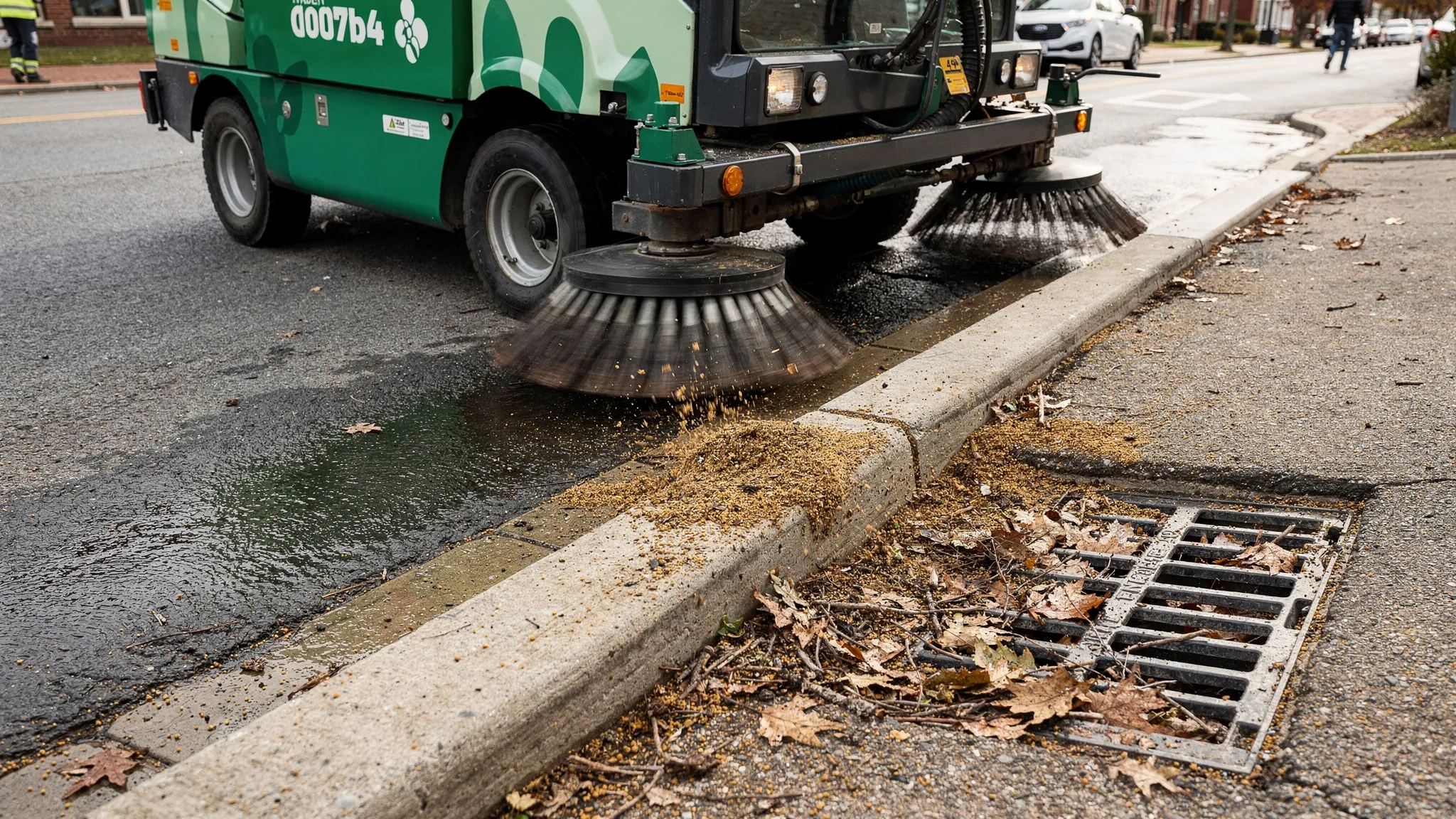
Different machines and approaches excel at different problems. A low bid can be “correct” for leaves and litter, and completely wrong for fine dust, sediment, or metal debris.
When reviewing quotes, look for clear language on:
If your primary issue is fine dust (common in warehouses, construction staging, and dry summer stretches), ask how the vendor plans to capture fines and prevent re-circulation.
For more on why dry removal often matters before any washing, see pavement cleaning, when power washing isn’t enough.
If your site has roofing work, framing, concrete form hardware, or paving activity, confirm whether the quote includes magnet sweeping and where it will be applied (drives, transitions, parking stalls, pedestrian paths). Nails and fasteners are a leading cause of tire damage and callbacks.
If the problem is mud after rain, the quote should mention a plan that fits the situation (for example, focus on entrances and haul routes first, then reset curb lines and drains). If a vendor assumes “one pass” will fix recurring mud without upstream controls, expect repeat costs.
Reliable Sweepers covers these scenarios in pavement cleaning services (mud, dust, debris).
In Nashville, sweeping needs are often event-driven: storms, heavy trucking days, inspections, or tenant turnover. Two quotes can differ because one assumes routine, predictable work, and the other builds in flexibility.
Make sure each quote answers:
If rapid response matters (construction track-out, emergency debris, wind events), compare the vendor’s emergency plan and communication process, not only the hourly rate. Reliable Sweepers outlines what a good rapid-response workflow looks like in emergency clean up services for job sites.
When you line up quotes, highlight these cost drivers. They explain most price gaps, and they are also where surprise charges tend to appear.
Ask whether the quote includes:
A “cheap” hourly number can become expensive if the vendor bills multiple minimums or adds mobilization to every call.
Street cleaning produces real material that has to go somewhere. Confirm:
If work occurs near active traffic, tight garages, or high pedestrian areas, see whether the quote includes cones, signage, and a safe work plan. If it’s excluded, you might pay later, or worse, accept risk you did not intend to accept.
If you need proof for a property owner, GC, or compliance file, confirm what documentation is included:
This is where many “apples-to-apples” comparisons fail.
Scan each proposal for exclusions like:
Exclusions are not inherently bad, but they must match your reality. If you routinely deal with mud after storms, or metal debris after subcontractors roll through, you need those addressed in the base plan, or at least priced as a clear add-on.
A good quote also clarifies how change orders are handled when conditions differ from expectations.
Street cleaning is deceptively high-liability work. You have moving equipment, public edges, dust, and sometimes tight schedules.
At a minimum, ask for:
If you are coordinating multiple vendors (paving, striping, landscaping), local experience helps prevent sequencing mistakes, like sweeping too early and paying twice.
To make a decision that stands up to stakeholder scrutiny, separate your evaluation into four buckets, then choose the vendor that wins the overall job, not just the lowest line item:
Look for defined zones, curb lines, entrances, and drain approaches.
Look for measurable outcomes, verification (photos, logs), and a rework policy.
Look for scheduling options, response time commitments, and communication expectations.
Normalize the bid by estimating a realistic month:
If you want more guidance on questions that reveal real service differences, see street sweeping companies near me, what to ask before hiring.
When comparing street cleaning quotes, treat these as warning signs:
Paying more is often justified when:
Paying more is usually not justified when:
The key is not “premium vs budget.” The key is matching the bid to your actual risk and expectations.
Reliable Sweepers provides street sweeping and property maintenance across Middle Tennessee, including construction site sweeping, asphalt paving cleanup, warehouse sweeping, parking lot and garage cleaning, HOA and municipal sweeping, magnet sweeping, dust and mud control, and emergency response.
If you want a quote you can compare cleanly, send:
You can also review how pricing is typically structured in Nashville in street sweeping services (pricing, schedules, results), then request a site-specific quote through Reliable Sweepers.