
A clean parking lot does more than make a property look cared for. It tells customers, tenants, inspectors, vendors, and employees that the business pays attention to details before they ever step inside.
For local businesses in Nashville, keeping lots cleaner is not a one-time project. Between storms, pollen, leaves, construction traffic, clay soil, event crowds, delivery vehicles, and daily customer turnover, debris can build up quickly. The businesses that stay ahead of it usually rely on a simple system: inspect the right zones, remove debris before it spreads, schedule sweeping around traffic patterns, and bring in professional support when dust, mud, metal, or volume becomes too much for in-house staff.
This guide breaks down how Nashville businesses can keep parking lots, drive lanes, garages, loading areas, and customer entrances cleaner without wasting time or overcomplicating the process.
Parking lot cleaning is not only about appearance. It affects how safely people move through the property, how well water drains after rain, how long pavement lasts, and how confident visitors feel about the business.
A cleaner lot supports several business priorities at once:
In Middle Tennessee, this is especially important because exterior debris often moves downhill toward curb lines, inlets, and low points. A stormwater-friendly maintenance plan starts by capturing dry debris before rain pushes it across the site. If you manage a property where runoff and drainage are recurring concerns, Reliable Sweepers has a related guide on Nashville environmental cleaning and stormwater-friendly cleanup.
Nashville properties deal with a mix of urban, seasonal, and construction-related debris. A lot may look fine on Monday, then show visible buildup by the end of the week after heavy rain, deliveries, tenant activity, or nearby construction.
The most common debris drivers include:
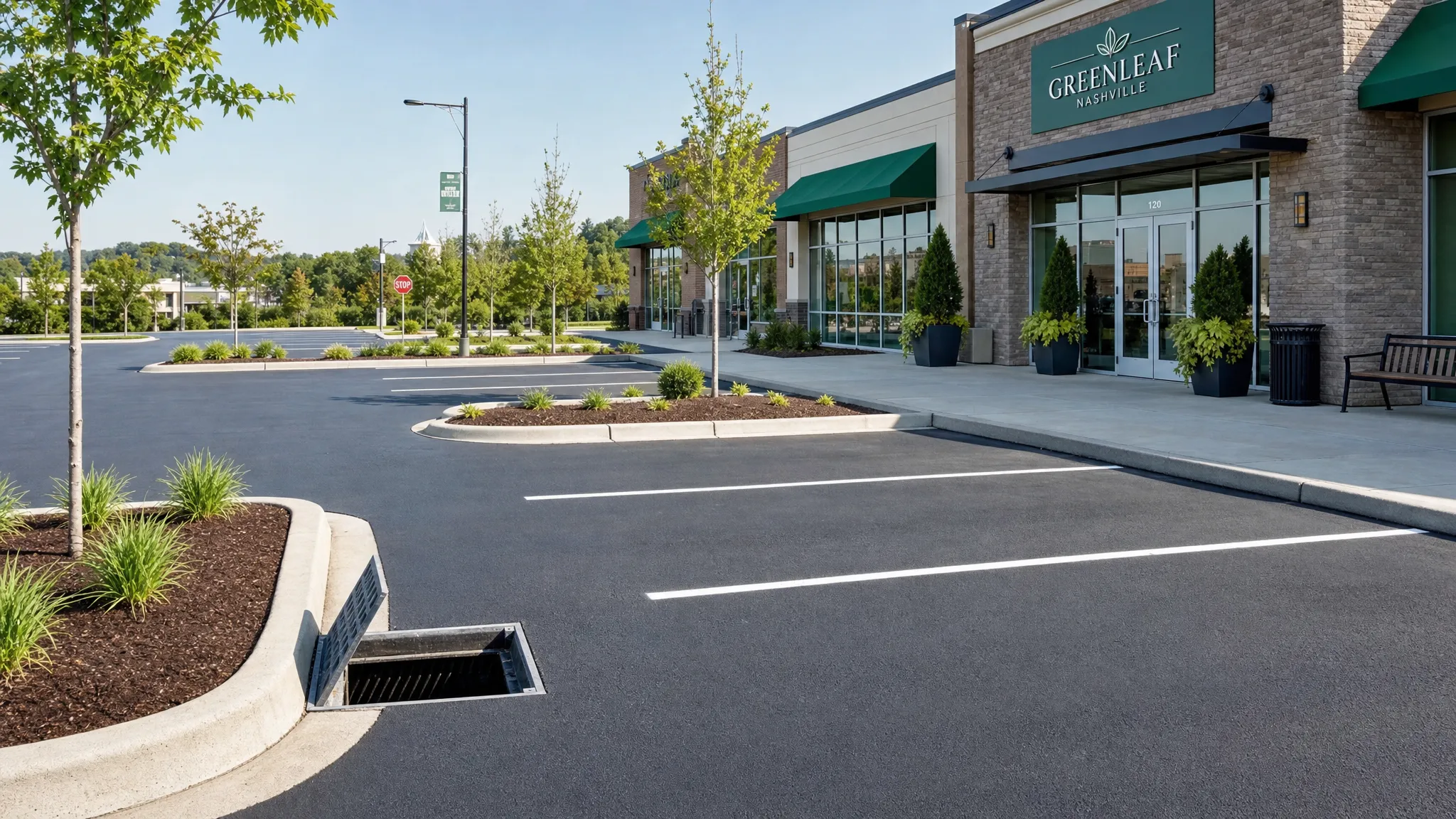
The goal is not to make every inch of pavement spotless every day. The goal is to keep high-impact areas consistently clean, prevent debris from spreading, and respond quickly when conditions change.
Cleaner lots usually come from repeatable routines, not occasional cleanup pushes. The best system is simple enough for staff to follow and clear enough for a sweeping partner to execute.
A common mistake is treating the lot as one large surface. In reality, some zones affect safety, appearance, and drainage more than others. Start by walking the property and marking where debris collects first.
High-priority zones usually include:
Once those zones are mapped, cleanup becomes easier to scope. In-house staff can focus on daily visible issues near entrances, while professional sweeping can handle broader pavement, curb lines, sediment, dust, and recurring debris loads.
Different businesses need different standards. A medical office may prioritize accessible walkways, patient drop-off areas, and curb appeal. A warehouse may care most about loading docks, trailer lanes, dust control, and metal debris. A restaurant or retail center may need more frequent attention around storefronts, cart corrals, patios, and dumpster paths.
A practical cleanliness standard should answer three questions. What areas must look clean at opening? What debris should never remain overnight? What conditions trigger an extra sweep?
For example, a retail lot standard might say that entrances, drive lanes, cart corrals, and curb lines should be free of loose trash, visible sediment, and leaf piles before morning traffic begins. A construction-adjacent commercial site may add that mud track-out, fasteners, and dust near public edges need same-day attention.
For most exterior lots, dry removal should come first. That means collecting trash, loosening debris from edges, sweeping the paved surface, and capturing material before any targeted washing is considered.
This sequence matters because water can move sediment, trash, and contaminants toward drains if dry debris is not removed first. Power washing can be useful for certain stains, gum, or surface film, but it is not a substitute for sweeping when the issue is leaves, gravel, dust, mud, litter, or construction debris.
A strong dry-first process usually includes bulk debris pickup, edge detail where material collects, mechanical sweeping across travel lanes and stalls, magnet sweeping when metal is a concern, and targeted wet cleaning only where it is truly needed.
A cleaner lot does not always require more frequent service. It requires better timing. Sweeping at the wrong time, such as when parked cars block curb lines or delivery activity is still underway, can leave the most important debris behind.
Nashville businesses should think in two layers: a baseline schedule and trigger-based service. The baseline schedule keeps the property from falling behind. Trigger-based service handles the events that create sudden messes.
Baseline service may be weekly, biweekly, monthly, or seasonal depending on traffic, site use, trees, tenants, and debris load. High-traffic retail, food service, medical, and mixed-use properties often need more frequent attention than low-traffic office or light industrial sites. Properties with many trees may need extra fall service, while construction-adjacent sites may need short-term increases during active phases.
Trigger-based service is what keeps a lot from looking neglected between routine visits. Useful triggers include heavy rain, wind events, leaf drop, large deliveries, nearby construction, paving work, tenant move-ins, special events, complaints, inspections, and visible debris at drains or entrances.
For a deeper seasonal plan, see this guide to parking lot sweeping in Nashville.
Sweeping is much more effective when debris sources are controlled. If the same mess returns every day, the real issue may be a dumpster process, a landscaping edge, an unprotected construction entrance, poor vendor staging, or traffic cutting through an unpaved area.
Look for patterns. If trash collects near a drive-thru exit, the property may need better receptacle placement or more frequent hand pickup. If mulch washes across the sidewalk after rain, landscape edging may need attention. If gravel gathers at one curb return, vehicles may be tracking it from a service area. If fasteners appear near tenant build-outs, magnet sweeping may need to be added after contractor work.
Cleanliness is also part of brand consistency. A customer may first find a business online, then judge whether the physical property matches that promise when they arrive. The same business that invests in clear digital presentation through partners such as fixed-price web design specialists should treat its parking lot and exterior areas as part of the customer experience.
If the website, signage, and service promise feel professional, but the lot is full of grit, litter, and blocked drains, visitors notice the mismatch.
Retail and restaurant lots need consistent attention around the areas customers see and use most. Entrances, cart corrals, patio edges, drive-thru lanes, dumpster routes, and curb lines should be checked frequently. Food packaging, cups, napkins, leaves, and cigarette waste can spread quickly when wind or traffic moves through the site.
For these properties, the best strategy is a combination of daily spot checks and routine sweeping during lower-traffic windows. Early morning, late evening, or off-peak service can make it easier to access curb lines and stalls.
Office and medical properties usually need a clean, calm arrival experience. Accessible routes, drop-off lanes, sidewalk transitions, garage entries, and tenant entrances deserve special attention. Even small debris can create a poor impression when visitors are arriving for appointments or meetings.
Mixed-use sites may need more coordination because residents, retail customers, office workers, and delivery vehicles use the same pavement in different ways. A written zone map helps prevent gaps between janitorial, landscaping, property management, and sweeping responsibilities.
Industrial and warehouse properties often deal with heavier debris, including pallet fragments, packaging, metal pieces, dust, tire grit, and sediment around docks or trailer rows. These sites should focus on safety, drainage, and operational flow.
Magnet sweeping is especially useful where nails, screws, wire, or metal fragments may affect tires or foot traffic. Routine sweeping around loading docks, yard entrances, and drive lanes can also reduce dust migration into buildings and vehicles.
Nashville businesses near active construction can see dust, mud, aggregate, and track-out even if the work is not happening on their own property. If a property is under renovation, adding construction-specific cleanup triggers can prevent complaints and reduce rework.
Important moments include grading, utility work, concrete pours, heavy deliveries, paving, landscaping, and the days before inspections or turnovers. Reliable Sweepers covers this timing in more detail in its guide to construction sweeping during a project.
Garages need a different approach than open lots. Dust, tire residue, leaves, and trash often collect on ramps, stair tower entries, elevator areas, corners, and drainage channels. Because access is tighter and visibility can be lower, timing and equipment choice matter.
Garage cleaning should prioritize drive aisles, ramps, entries, pedestrian paths, and any areas where debris affects drainage or traction. If construction or tenant work is happening nearby, magnet sweeping may be worth adding.
In-house teams are often the best fit for small, frequent tasks. Daily litter pickup, quick entrance checks, replacing trash liners, reporting hazards, and light broom work near doors can often be handled internally.
Professional sweeping becomes more valuable when the problem is larger, recurring, equipment-specific, or tied to safety and compliance. A professional sweeping partner is usually the better choice when:
Reliable Sweepers supports Middle Tennessee properties with parking lot and garage cleaning, construction site sweeping, asphalt paving cleanup, industrial warehouse sweeping, magnet sweeping, dust and mud control, municipal and HOA sweeping, and emergency response services.
A good cleaning plan should make the property easier to manage over time. You should see fewer complaints, fewer surprise messes, better drainage after rain, cleaner entries, and less debris collecting at the same problem spots.
Simple tracking helps. Property managers can take quick before-and-after photos, note blocked areas, record storm or event triggers, and review whether service timing needs to shift. The most useful photos are not beauty shots. They are practical records of entrances, curb lines, drains, dumpster pads, loading areas, and any recurring debris sources.
It also helps to write service expectations clearly. Instead of asking for the lot to be cleaned, define the zones, debris types, timing, and pass-fail standard. If you are comparing vendors or updating a maintenance scope, this guide to commercial street sweeping specs can help you avoid vague expectations.
One of the biggest mistakes is cleaning only the middle of the lot while ignoring edges. Debris naturally migrates to curb lines, corners, islands, fence lines, drain inlets, and low points. If those areas are skipped, the lot may look clean for a few hours, then messy again after traffic or wind moves material back into view.
Another common mistake is using blowers or water to push debris away without capturing it. Moving trash, leaves, sediment, or dust toward gutters and drains may create a bigger problem after the next rain. Dry capture is usually the safer first step.
Waiting for complaints is also costly. By the time customers or tenants complain, debris has often been visible for days. A short weekly inspection and trigger-based sweeping plan usually costs less than repeated emergency cleanups or tenant frustration.
Finally, many properties forget to adjust for seasons. A schedule that works in January may fail during spring pollen, summer dust, fall leaves, or a nearby construction phase. Local conditions should shape the plan.
How often should a Nashville business sweep its parking lot? It depends on traffic, debris load, trees, tenant use, construction activity, and appearance standards. Many businesses use a routine baseline schedule, then add trigger sweeps after storms, events, leaf drop, or construction activity.
What areas of a parking lot get dirty first? Curb lines, entrances, dumpster pads, loading docks, storm drain inlets, landscape islands, drive-thru lanes, cart corrals, and garage ramps usually collect debris first.
Is sweeping better than pressure washing for parking lots? Sweeping should usually come first because it captures dry debris before water moves it. Pressure washing may help with stains or surface film, but it should not be used to push sediment or trash toward drains.
Can cleaner lots help with stormwater concerns? Yes. Removing leaves, sediment, litter, and debris before rain helps reduce the amount of material that can move toward storm drains and low points.
When should a business use magnet sweeping? Magnet sweeping is helpful after construction, roofing, fencing, paving, tenant build-outs, or any activity that may leave nails, screws, wire, or other metal fragments on pavement.
Cleaner lots come from consistent routines, smart timing, and the right equipment for the debris on site. If your property is dealing with litter, dust, mud, leaves, metal debris, garage buildup, construction track-out, or recurring curb-line issues, a site-specific sweeping plan can make maintenance easier.
Reliable Sweepers provides professional street sweeping and property maintenance services across Nashville and Middle Tennessee, with flexible scheduling for commercial lots, construction sites, warehouses, parking facilities, HOAs, municipal routes, and emergency cleanup needs.
To build a cleaner, more reliable exterior maintenance plan, contact Reliable Sweepers and request a site-specific service recommendation.
